An adult interest in balloons that may centre on colour, shape, surface, movement, sound, inflation imagery, fragility or the anticipation of a pop. Community language includes “looning”, but people differ substantially and may enjoy, dislike or avoid popping.
Sources and evidence type
Manual claim and limitation notes are shown where an individual source audit is complete. Other evidence-type labels are a publisher aid awaiting source-by-source confirmation.
Brown et al. (2026), UK survey of five adult interest groupsResearch study
Source design
Peer-reviewed research or review
What it can support
The specific population, measures and findings reported by the paper.
Important limitation
It cannot automatically establish UK prevalence, causation, diagnosis, consent or an individual outcome. Check recruitment, definitions and study design.
Open the original source Brown et al. (2025), minority stress in five adult interest groupsResearch study
Source design
Peer-reviewed research or review
What it can support
The specific population, measures and findings reported by the paper.
Important limitation
It cannot automatically establish UK prevalence, causation, diagnosis, consent or an individual outcome. Check recruitment, definitions and study design.
The specific population, measures and findings reported by the paper.
Important limitation
It cannot automatically establish UK prevalence, causation, diagnosis, consent or an individual outcome. Check recruitment, definitions and study design.
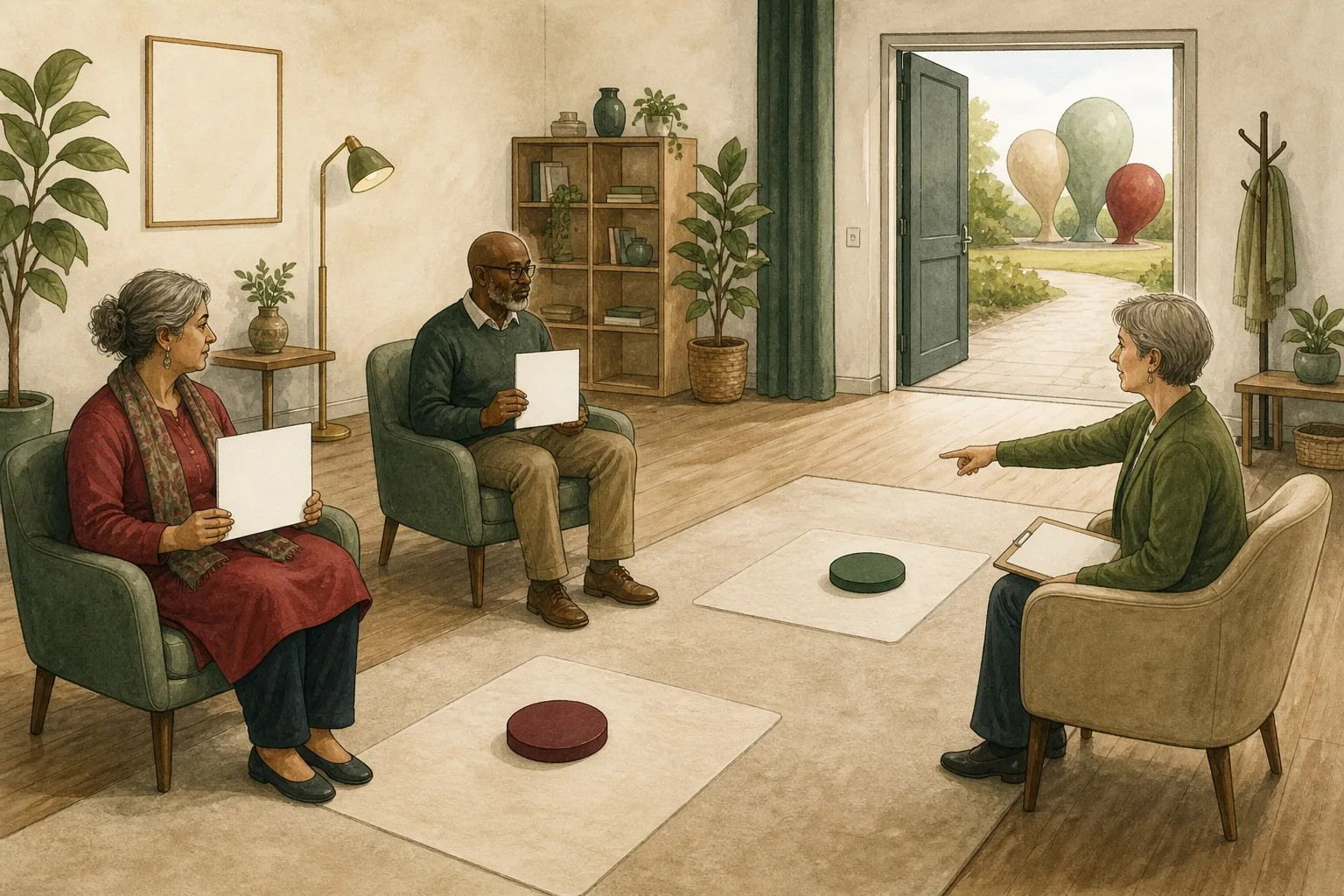
Illustration created using generative AI; not documentary evidence.
In brief
A varied object interest, not a single profile.
Balloon fetishism, sometimes called looning, is an adult object-focused interest rather than one fixed activity. A balloon can matter as a bright visual form, a smooth or yielding material, a changing shape, a source of squeaks and movement, or a symbol of tension, fragility and release. Some adults describe pop-focused and non-pop-focused preferences; those informal labels communicate a boundary, not a diagnosis or a complete account of anyone's sexuality.
What research can—and cannot—show
Brown and colleagues' 2026 UK survey included balloon fetishists within a self-selected sample of 470 adults across five overlapping interest groups. It provides rare direct evidence that balloon-focused interests occur alongside varied identities, relationships and other interests. The design cannot estimate how common looning is among UK adults, establish a cause or show that every participant understood the label in the same way.
A second analysis of the same broad research programme included 53 participants reporting balloon fetishism and examined minority stress across five overlapping groups. Self-stigma and prejudice were associated with psychological distress across the combined sample, but the cross-sectional data cannot establish cause and effect or attribute every result specifically to balloon fetishists. Neither study supports stereotypes about gender, personality, childhood experience or mental illness.
Recent direct research uses small self-selected samples with overlapping interests. It documents diversity but cannot establish population prevalence, a cause or a universal participant profile.
Illustration created using generative AI; not documentary evidence.
Status
Detailed editorial draft
Publisher
The UK Kink Guide
Reviewed
Structured draft present; individual review date not recorded
Evidence
8 cited sources · types labelled below
Jurisdiction
UK-focused general education
Read the rest: evidence, law, safety and sources
Balloon fetish / looning
An adult erotic or intimate focus on balloons, their materials, appearance, sounds, movement or associated anticipation. Not every feature is wanted, and the interest may be central, occasional or mainly imaginative.
Pop-focused interest
A community description for adults for whom bursting, the build-up to it or the resulting sound carries meaning. It does not imply that surprising another person with a loud noise is acceptable.
Non-pop-focused interest
A community description for adults who value intact balloons and may dislike, fear or exclude popping. Preference for preservation is not evidence of phobia or pathology.
Inflation fantasy
Fantasy about a body, garment or character expanding, usually represented through fiction, art or visual effects. It can overlap with balloon imagery but is not the same object-focused interest.
Objects, materials and sensory features
Natural-rubber latex balloons tend to have a matte or glossy stretch surface, a characteristic smell and squeaking or rubbing sounds. Foil or plastic-film balloons feel and sound different and may hold sharper printed imagery or reflective colour. Shape, scale, translucency, changing tension, drifting movement, the tied neck and the contrast between an intact object and fragments may each carry meaning; none is universal.
Packaging and material labels matter because appearance alone does not establish whether an item contains natural-rubber latex. Paper shapes, fabric inflatables, colour swatches, silent animation, recorded non-startling ambience and object-only photographs can preserve visual or symbolic elements without latex, sudden noise or a physical balloon. Text descriptions should identify material, movement and whether popping is depicted so readers can make an informed accessibility choice.
EDITORIAL ILLUSTRATIONMaterial and sensory features differ
Surface, movement, sound, scent and fragility may matter separately. Material information and silent or non-latex alternatives can support allergy and sensory access without assuming one preference.
Illustration created using generative AI; not documentary evidence.
Consent, sound and shared spaces
Partnered or group contexts need separate agreement about touching, inflation imagery, popping, proximity, sound, recording and publication. A person who agrees to be around balloons has not agreed to an unexpected pop, latex exposure, being filmed or having the interest disclosed. Public or shared settings also include people who have not joined the activity and may have allergies, sound sensitivity or trauma-related responses.
NHS guidance describes hyperacusis as a condition in which ordinary sounds can feel unusually loud or painful, and it distinguishes sound sensitivity from phonophobia and misophonia. That does not mean discomfort with popping is a diagnosis. It does mean that advance information, a genuine no-pop option, captions or visual alternatives and the ability to leave can be accessibility features rather than signs of disapproval.
EDITORIAL ILLUSTRATIONPresence is not consent to a surprise
Being near balloons does not authorise touching, popping, unexpected noise, recording or disclosure. Each adult and other people sharing the space retain separate boundaries.
Illustration created using generative AI; not documentary evidence.
Wellbeing, physical safety and clinical distinction
Natural-rubber latex can cause immediate or delayed allergic reactions, and NHS guidance treats sudden throat or tongue swelling, breathing difficulty, confusion or collapse as a 999 emergency. Balloons filled with helium or another gas are visual objects, not a source of breathable air: ONS data record deaths involving helium and nitrogen in England and Wales. This entry therefore gives no gas-inhalation, enclosure, inflation or popping instructions.
An unusual or object-focused consensual adult interest is not a paraphilic disorder merely because it is uncommon. WHO's ICD-11 clinical requirements distinguish interests from disorders by considering marked distress, significant impairment, serious risk or harm and non-consent; distress arising only from social rejection should not be confused with pathology. Clinical support may be useful when a person wants help with persistent distress, compulsive behaviour, risk or functioning, but a glossary cannot diagnose anyone.
Non-graphic examples
What the umbrella may include
An adult enjoying an object-only photograph of colourful inflated forms without wanting to handle a balloon.
Partners agreeing that balloons may be present but that popping, surprise sounds and recording are outside their boundaries.
An adult preferring reflective foil forms because the visual surface matters more than stretch or latex scent.
A designer using silent animation and written sound warnings to make balloon imagery accessible without an unexpected pop.
Someone treating a balloon-focused interest as one optional part of adult sexuality rather than assuming it determines identity, relationships or mental health.
Prepare for an appointment
Questions you could ask a professional
What information would help you understand my question?
What are the realistic options and uncertainties?
How can disability, communication or privacy needs be accommodated?
When should the situation be reviewed again?
These prompts do not replace assessment and do not imply that every reader needs professional care.
Continue learning
Take the next step from definition to context.
Continue with independent guidance connecting balloon fetish to evidence, consent, safety, uncertainty and practical decisions.