A hand fetish is an adult erotic or strongly pleasurable focus on hands, fingers, nails, gestures or manual activity. The interest may be visual, tactile, symbolic or connected with movement and skill.
 The UK Kink GuideEvidence-led glossary
 Back to the glossaryBody & object focusIn plain English Words in context A non-graphic adult example What not to assume
Hand fetish
What it means
Also known as cheirophilia
A pronounced focus on hands, fingers, nails, gestures or manual activities. It can overlap with glove fetishism but does not require an interest in clothing or objects. An adult may appreciate appearance or movement without wanting touch, photographs or any interaction involving another person.
Start here
New to this term?
Cheirophilia is a synonym. A glove fetish centres on a garment, while hand worship is a negotiated form of admiration or service. These may overlap without being the same experience.
An adult may value a consenting partner's gestures, nail style or dexterity, while another person focuses on hand jewellery or gloves. A professional interest in hands—for example in art, care or craft—need not be erotic.
Aesthetic attention does not grant permission to touch, photograph or comment on someone's body. A hand preference does not reveal a person's role, behaviour or clinical status. Research can record body-part interests, but specific evidence about hand fetish is limited and cannot supply a universal cause or reliable prevalence.
Sources and evidence type
Manual claim and limitation notes are shown where an individual source audit is complete. Other evidence-type labels are a publisher aid awaiting source-by-source confirmation.
Scorolli et al. (2007), relative prevalence of fetish discussionsResearch study
- Source design
- Peer-reviewed research or review
- What it can support
- The specific population, measures and findings reported by the paper.
- Important limitation
- It cannot automatically establish UK prevalence, causation, diagnosis, consent or an individual outcome. Check recruitment, definitions and study design.
Joyal, Cossette & Lapierre (2015), sexual-fantasy studyResearch study
- Source design
- Peer-reviewed research or review
- What it can support
- The specific population, measures and findings reported by the paper.
- Important limitation
- It cannot automatically establish UK prevalence, causation, diagnosis, consent or an individual outcome. Check recruitment, definitions and study design.
NHS, contact-dermatitis causesClinical guideline
- Source design
- Current public-health or clinical guidance
- What it can support
- Service pathways, health definitions and recommended public-health or clinical actions within its stated scope.
- Important limitation
- General guidance cannot assess an individual’s symptoms, exposure, medicine, contraindications or urgency.
WHO ICD-11 clinical requirements (2024)Clinical guideline
- Source design
- Current public-health or clinical guidance
- What it can support
- Service pathways, health definitions and recommended public-health or clinical actions within its stated scope.
- Important limitation
- General guidance cannot assess an individual’s symptoms, exposure, medicine, contraindications or urgency.
NHS Every Mind Matters: healthy relationships and boundariesProfessional guidance
- Source design
- Professional guidance · source record checked manually
- What it can support
- General communication, checking understanding and support boundaries.
- Important limitation
- Not activity-specific safety research or a validation of a kink label.
- Destination checked
- 15 October 2026
Mental Health Foundation: communication and respect for boundariesProfessional guidance
- Source design
- Professional guidance · source record checked manually
- What it can support
- General listening and boundary-setting principles.
- Important limitation
- Does not establish clinical effects, causes or safety of a particular activity.
- Destination checked
- 15 October 2026
Body & object focus
Illustration created using generative AI; not documentary evidence.
In brief
Gesture, touch and symbolism meet in a familiar body part.
Hand fetish, sometimes called cheirophilia, is an adult erotic or intensely pleasurable focus on hands. Shape, fingers, nails, veins, movement, strength, dexterity, touch or a particular manual activity may matter, and the interest may overlap with gloves, jewellery, service or body worship. A descriptive label does not reveal which features matter or grant access to another person's hands.
What research cannot count well
Large online-fetish research groups hands within broader body-part categories, and dedicated cheirophilia studies are scarce. Discussion-group membership cannot establish general-population prevalence or distinguish curiosity, fantasy, identity and behaviour.
Broader sexual-fantasy and kink studies show diversity rather than a clean boundary between common appreciation and fetish. They do not support claims about one cause, gender, orientation or personality type.
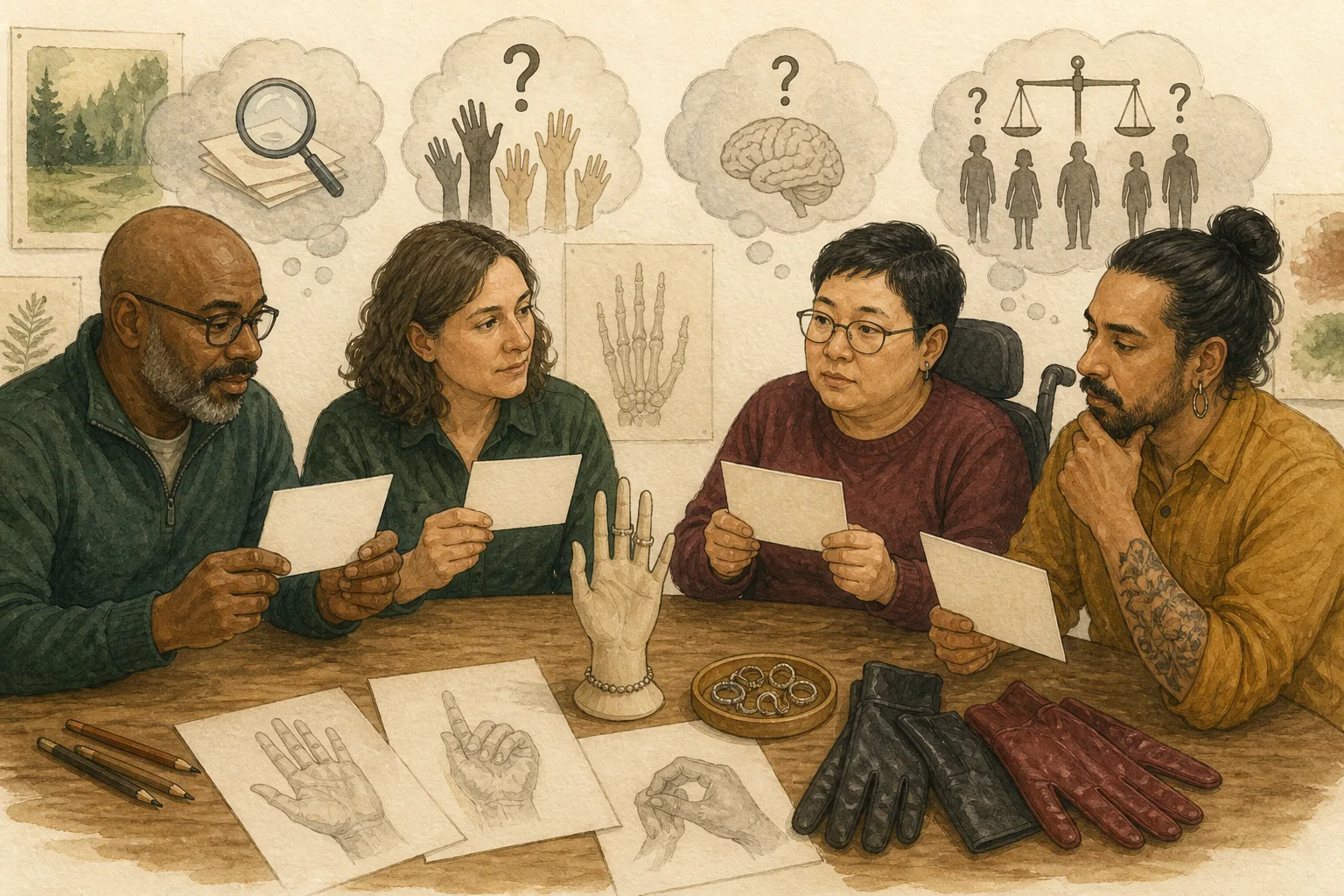
Hands are usually grouped inside wider body-part research. Those sources cannot establish representative prevalence, a single cause or a particular gender or personality.
Illustration created using generative AI; not documentary evidence.- Status
- Source-checked editorial page
- Publisher
- The UK Kink Guide
- Reviewed
- Targeted additions checked 15 October 2026
- Evidence
- 6 cited sources · types labelled below
- Jurisdiction
- UK-focused general education
Read the rest: evidence, law, safety and sources
Focused erotic or sensual interest in hands, fingers, nails, gestures or manual activity.
Interest in a garment and its material, fit or symbolism; hands may be secondary or irrelevant.
Negotiated admiration or service directed toward a partner's hands, sometimes within power exchange.
Aesthetic notice, affection or professional interest that is not necessarily fetishistic.
Features, adornment and movement
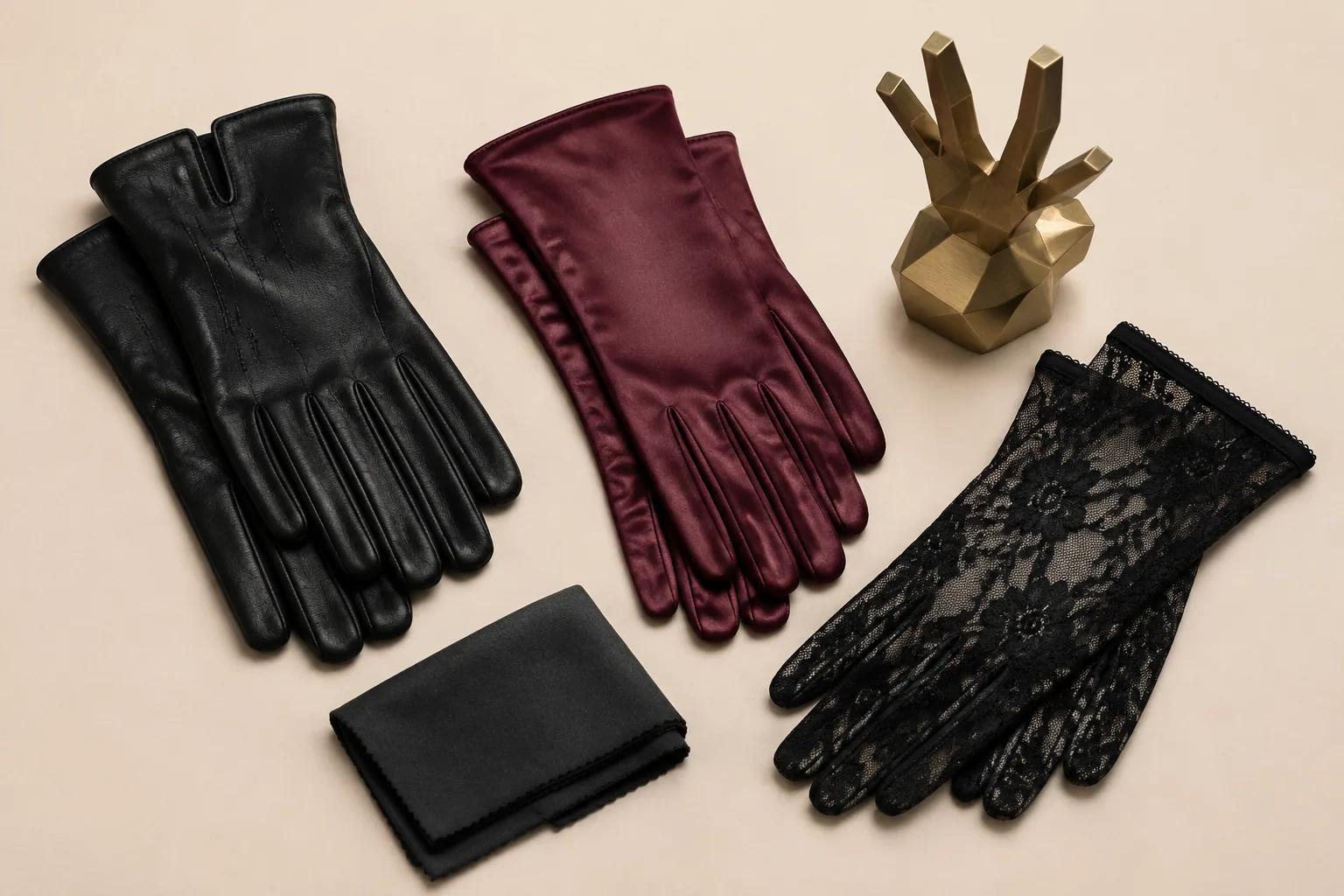
Associated visual objects include an abstract hand-shaped jewellery stand, an unworn glove, rings displayed separately, a care cloth or a gesture drawing. Nail finish, jewellery, texture, warmth, calluses, fine movement and sign language may each carry different meanings.
Hands are also tools for communication, mobility and work. Disability, tremor, pain, arthritis, sensory difference or use of signed language should not be turned into an assumption about availability, meaning or consent.
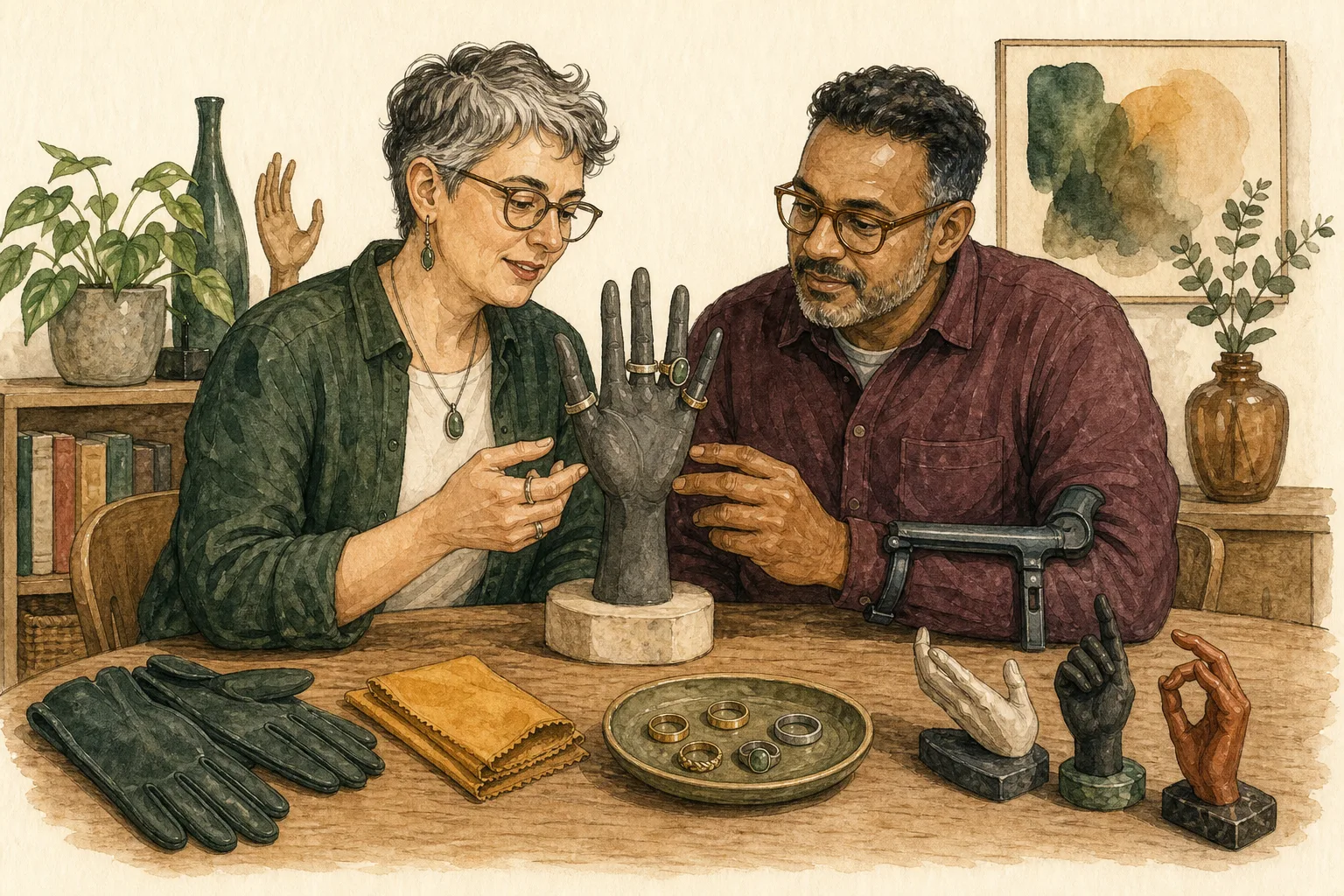
Shape, adornment, movement, dexterity and touch can carry different meanings. Disability, pain or signed communication never imply availability or consent.
Illustration created using generative AI; not documentary evidence.Touch, hygiene and accessibility
Consent should cover looking, touch, nail contact, jewellery, photographs and any service or power role separately. A hand placed in someone's reach is not an invitation, and a person who communicates with their hands may need them kept free.
Broken skin, dermatitis, infection, long or sharp nails, rings and fragranced products can affect comfort and hygiene. Persistent pain, swelling, numbness or loss of movement needs appropriate clinical advice rather than being explained as scene soreness.
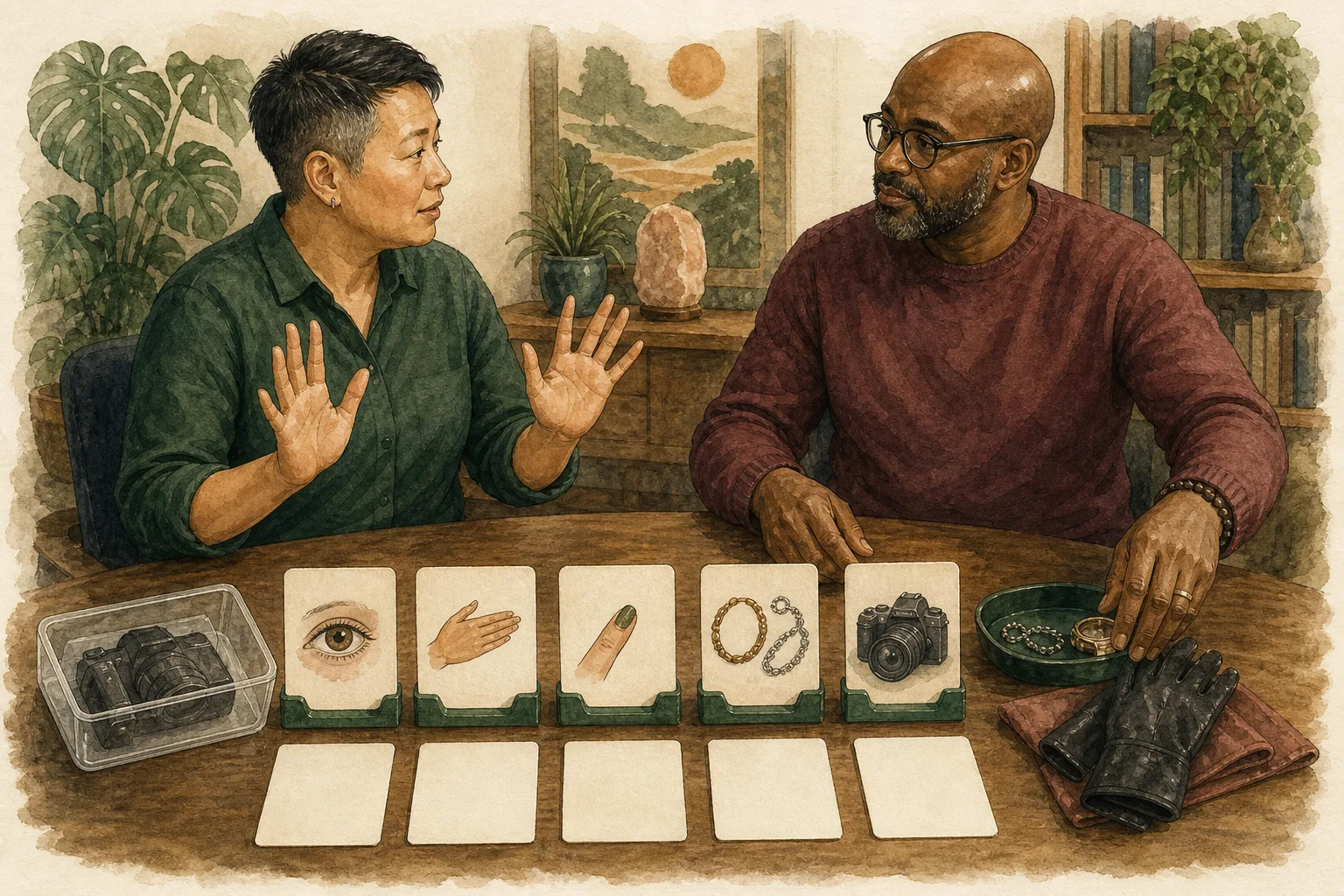
Looking, touch, nail contact, jewellery, service and photographs require separate agreement. Skin damage, numbness or loss of movement needs appropriate care.
Illustration created using generative AI; not documentary evidence.Interest versus disorder
WHO guidance does not make a consensual adult body-part focus a disorder by default. Clinical concern depends on marked distress, significant impairment, serious risk or non-consent, not the presence of a preferred gesture or hand shape.
A preference can be central, occasional or purely imaginative. Non-consensual touching, covert photography or harassment is not excused by calling the focus cheirophilia.
Common misunderstandings
Admiring hands does not imply interest in every gesture, nail style or accessory. Glove interests may overlap but are not required. A public gesture, signed conversation or ordinary service interaction is not an invitation to sexual attention, touching or photographs.
Safety and consent
Ask before touching or photographing another adult, and accept a refusal without making the person explain it. Hands may be needed for communication, mobility, work or personal care; those needs take priority over a proposed interaction. Avoid interpreting professional attention as personal permission.
The broader body-part and object-focused interests guide explains how to distinguish attraction, fantasy and behaviour. It does not teach activities or establish a diagnosis. If there is pain, skin damage or another worrying symptom, address the health concern directly rather than explaining it through the interest.
Non-graphic examples
What the umbrella may include
- Enjoying the expressiveness of a partner's gestures with their knowledge.
- Being drawn to rings, nail colour or callused texture rather than every hand.
- Finding an unworn glove appealing as a material object without a hand focus.
- Keeping a signing hand free so communication remains accessible.
- Asking before photographing hands or jewellery in a private setting.
Prepare for an appointment
Questions you could ask a professional
- What information would help you understand my question?
- What are the realistic options and uncertainties?
- How can disability, communication or privacy needs be accommodated?
- When should the situation be reviewed again?
These prompts do not replace assessment and do not imply that every reader needs professional care.
Continue learning
Take the next step from definition to context.
Continue with independent guidance connecting hand fetish to evidence, consent, safety, uncertainty and practical decisions.
Explore body-part and object-focused interests through meaning, consent, privacy, partner discussion and UK support.
Read the full guide