Focused, consensual admiration or ritual attention directed toward an adult partner's body or chosen feature, potentially expressing praise, devotion, service or power exchange.
Sources and evidence type
Manual claim and limitation notes are shown where an individual source audit is complete. Other evidence-type labels are a publisher aid awaiting source-by-source confirmation.
Kafka (2010), historical clinical definitions of fetishism and partialismResearch study
Source design
Peer-reviewed research or review
What it can support
The specific population, measures and findings reported by the paper.
Important limitation
It cannot automatically establish UK prevalence, causation, diagnosis, consent or an individual outcome. Check recruitment, definitions and study design.
The specific population, measures and findings reported by the paper.
Important limitation
It cannot automatically establish UK prevalence, causation, diagnosis, consent or an individual outcome. Check recruitment, definitions and study design.
Illustration created using generative AI; not documentary evidence.
In brief
Focused admiration should affirm the person—not erase their consent or complexity.
Body worship can be affectionate, erotic, ceremonial or role-based. It may focus on a whole body, physique or one feature, but the person remains more than the focus and controls how they are described and touched. It is distinct from bodyweight pressure play, which involves physical load and different risks. Praise is not automatically welcome: language about size, disability, scars, gendered anatomy or racialised features can affirm one person and distress another. Negotiation should cover words, body areas, privacy and whether power exchange is involved.
Meaning and consent
Ask which features, words and forms of attention are welcome and which are private, dysphoric, painful or off limits. Consent to praise is not consent to touch or photography.
A worshipper may take a submissive, dominant or non-power-exchange role. The label alone does not establish authority.
EDITORIAL ILLUSTRATIONPraise, touch and images are separate
Agree the words, body areas, attention, audience and role. Welcoming admiration does not by itself authorise touch, photography or a power exchange.
Illustration created using generative AI; not documentary evidence.
Status
Detailed editorial draft
Publisher
The UK Kink Guide
Reviewed
Structured draft present; individual review date not recorded
Evidence
3 cited sources · types labelled below
Jurisdiction
UK-focused general education
Read the rest: evidence, law, safety and sources
Body worship
Agreed ritual or attention expressing admiration, devotion or service.
Partialism
A focused sexual interest in a specific body part, which may exist without a worship dynamic.
Objectification play
A negotiated performance of object status; it is not inherent in admiration.
Appearance compliment
Ordinary praise that should still respect personal boundaries and context.
Body image and dignity
Avoid comparison, ranking or pressure to maintain a physique. Admiration should not become surveillance of weight, disability, ageing, transition or health.
If praise triggers body-image distress, pause and use the person's own neutral or affirming language. Kink is not a substitute for eating-disorder or dysmorphia treatment.
EDITORIAL ILLUSTRATIONAdmiration should not become ranking
Body worship can affirm without comparing or monitoring weight, disability, ageing, transition or health. The person chooses the language used about them.
Illustration created using generative AI; not documentary evidence.
Touch, skin and access
Check pain, sensation changes, scars, medical devices, skin conditions and mobility before prolonged contact or posing. Offer non-touch and seated forms.
Use body-compatible products and stop after irritation, swelling, numbness or unexpected pain. A desired body part is not automatically medically robust.
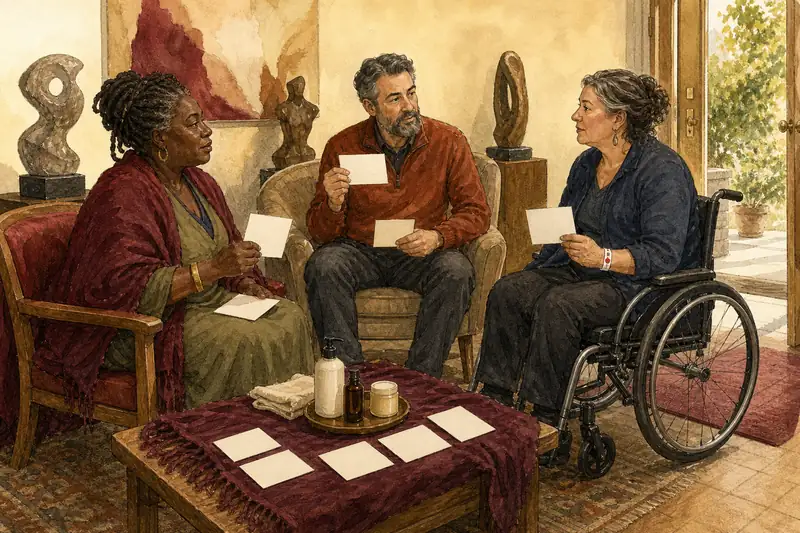
EDITORIAL ILLUSTRATIONAccess and skin health shape contact
Pain, sensation, scars, devices, skin and mobility can change what is comfortable. Non-touch, seated and verbal forms are equally valid choices.
Illustration created using generative AI; not documentary evidence.
Clinical and evidence context
Focused interests have historically been described through partialism and fetishism, but unusual interest alone is not a disorder. ICD-11 requires additional distress or serious risk for consenting-adult patterns.
Research cannot infer pathology, exclusivity or relationship quality from admiration of a body feature. Individual meaning matters more than an outsider's label.
Non-graphic examples
What the umbrella may include
Offering negotiated praise without touch.
Using a partner's preferred words for scars.
Worshipping hands without implying submission.
Choosing a seated ritual for mobility access.
Stopping when attention becomes body-image pressure.
Prepare for an appointment
Questions you could ask a professional
What information would help you understand my question?
What are the realistic options and uncertainties?
How can disability, communication or privacy needs be accommodated?
When should the situation be reviewed again?
These prompts do not replace assessment and do not imply that every reader needs professional care.
Continue learning
Take the next step from definition to context.
Continue with independent guidance connecting body worship to evidence, consent, safety, uncertainty and practical decisions.