Partialism is a technical, historically changeable word for a pronounced intimate or erotic focus on a particular non-genital adult body feature, such as hands, feet or hair. The focus may concern appearance, movement, texture, grooming or symbolism and need not be exclusive.
 The UK Kink GuideEvidence-led glossary
 Back to the glossaryFoundationsIn plain English Words in context A non-graphic adult example What not to assume
Partialism
A pronounced focus on a particular non-genital body part or feature. Feet, hands and hair are commonly discussed examples, although the focus and its significance differ between individuals.
Start here
New to this term?
An ordinary preference is attraction to a feature without it becoming a pronounced focus. A body-feature focus can overlap with an object fetish—for example, feet and footwear—but the two are not identical. ICD-11 does not list partialism as a named diagnosis.
One adult may find hands especially meaningful because of movement and jewellery. Another may enjoy gloves as objects but have no special focus on hands. A third may notice attractive hands as one ordinary preference and never use the word partialism.
The term does not reduce a person to one feature, prove behaviour or grant permission to stare, comment, touch or photograph. Visible online groups show what was discussed in those spaces, not how common the interest is or why it develops.
Sources and evidence type
Manual claim and limitation notes are shown where an individual source audit is complete. Other evidence-type labels are a publisher aid awaiting source-by-source confirmation.
Kafka (2010), DSM diagnostic criteria for fetishism and partialismResearch study
- Source design
- Peer-reviewed research or review
- What it can support
- The specific population, measures and findings reported by the paper.
- Important limitation
- It cannot automatically establish UK prevalence, causation, diagnosis, consent or an individual outcome. Check recruitment, definitions and study design.
Scorolli et al. (2007), relative prevalence of different fetishesResearch study
- Source design
- Peer-reviewed research or review
- What it can support
- The specific population, measures and findings reported by the paper.
- Important limitation
- It cannot automatically establish UK prevalence, causation, diagnosis, consent or an individual outcome. Check recruitment, definitions and study design.
Ventriglio et al. (2019), fetishism overviewResearch study
- Source design
- Peer-reviewed research or review
- What it can support
- The specific population, measures and findings reported by the paper.
- Important limitation
- It cannot automatically establish UK prevalence, causation, diagnosis, consent or an individual outcome. Check recruitment, definitions and study design.
Joyal and Carpentier (2017), adult population study of interests and behavioursResearch study
- Source design
- Peer-reviewed research or review
- What it can support
- The specific population, measures and findings reported by the paper.
- Important limitation
- It cannot automatically establish UK prevalence, causation, diagnosis, consent or an individual outcome. Check recruitment, definitions and study design.
WHO ICD-11 clinical descriptions and diagnostic requirements (2024)Clinical guideline
- Source design
- Current public-health or clinical guidance
- What it can support
- Service pathways, health definitions and recommended public-health or clinical actions within its stated scope.
- Important limitation
- General guidance cannot assess an individual’s symptoms, exposure, medicine, contraindications or urgency.
Sexual Offences Act 2003, section 74 (England and Wales)Law or regulator
- Source design
- Primary legislation, prosecutorial or regulator guidance
- What it can support
- The legal provision or official regulatory position for the jurisdiction and date stated.
- Important limitation
- It is not fact-specific legal advice. Commencement, amendments, jurisdiction and case law may affect application.
Sexual Offences (Scotland) Act 2009, section 12Law or regulator
- Source design
- Primary legislation, prosecutorial or regulator guidance
- What it can support
- The legal provision or official regulatory position for the jurisdiction and date stated.
- Important limitation
- It is not fact-specific legal advice. Commencement, amendments, jurisdiction and case law may affect application.
Sexual Offences (Northern Ireland) Order 2008, article 3Law or regulator
- Source design
- Primary legislation, prosecutorial or regulator guidance
- What it can support
- The legal provision or official regulatory position for the jurisdiction and date stated.
- Important limitation
- It is not fact-specific legal advice. Commencement, amendments, jurisdiction and case law may affect application.

Foundations
Illustration created using generative AI; not documentary evidence.
In brief
A focused feature, not a whole-person judgement.
Partialism is a technical and historical term for a focused erotic or intimate interest in a particular non-genital adult body part or feature. The focus might concern appearance, movement, shape, texture, grooming or symbolism, and it can exist as one preference among many rather than an exclusive interest. The term describes a focus; it does not establish behaviour, consent, distress or a clinical disorder.
Terminology and changing classifications
Kafka's review of fetishism criteria traced how partialism moved between separate and combined categories in successive editions of the DSM. The paper concluded that body-part and object-focused interests can overlap and are not necessarily exclusive domains. This history helps explain why definitions found in older clinical writing do not always match current research or everyday language.
ICD-11 no longer provides a named partialism diagnosis. Its broader paraphilic-disorder framework asks whether the relevant diagnostic requirements are met rather than treating a specific consensual adult focus as disordered by name. Community terms such as foot fetish, hand fetish or hair fetish may be more familiar, but people differ in whether they use any label at all.

Terminology and classification have changed over time. A focus on one feature does not by itself establish distress, impairment or disorder.
Illustration created using generative AI; not documentary evidence.- Status
- Detailed editorial draft
- Publisher
- The UK Kink Guide
- Reviewed
- Structured draft present; individual review date not recorded
- Evidence
- 8 cited sources · types labelled below
- Jurisdiction
- UK-focused general education
Read the rest: evidence, law, safety and sources
Finding a particular feature attractive without it becoming a pronounced or defining focus. There is no objective line that can be read from appearance alone.
A pronounced focus on a particular non-genital body part or feature. The term has shifted across diagnostic history and is often used descriptively rather than as a diagnosis.
A focus on an object or material, such as footwear, gloves, hosiery or leather. It may be associated with a body feature but is not the same focus.
A clinical diagnosis with requirements beyond unusual interest. Consensual adult partialism is not a disorder merely because it differs from convention.
Body features and associated objects
A body-feature focus may concern feet, hands, hair or another non-genital adult feature. Associated objects can acquire separate or overlapping importance: footwear, boots and hosiery may be linked with feet; gloves, rings or nail care with hands; and combs, ribbons or salon materials with hair. The object may matter because of texture, scent, craft, fashion, association or the way it frames the feature.
These links should not be assumed. An interest in adult footwear does not prove an interest in feet, and admiring a body feature does not imply attraction to every object associated with it. Clothing, accessories, photographs and grooming items are ordinary objects whose meaning depends on the person and context; possession is not diagnostic evidence.
What research can—and cannot—show
Scorolli and colleagues examined 381 internet discussion groups involving an estimated 5,000 people. Within that selected online dataset, preferences for body parts or features and objects associated with the body were the most visible categories, with feet and foot-associated objects particularly prominent. The study measured relative activity across discussion groups, not prevalence in the general population.
The method could not identify everyone represented, distinguish interest from behaviour, or show why a focus developed. Online communities also reflect platform access, language, visibility and willingness to participate. Later adult population surveys by Joyal and Carpentier reinforce the importance of measuring interests and behaviours separately. Current evidence does not support one universal cause, personality profile or life course for partialism.
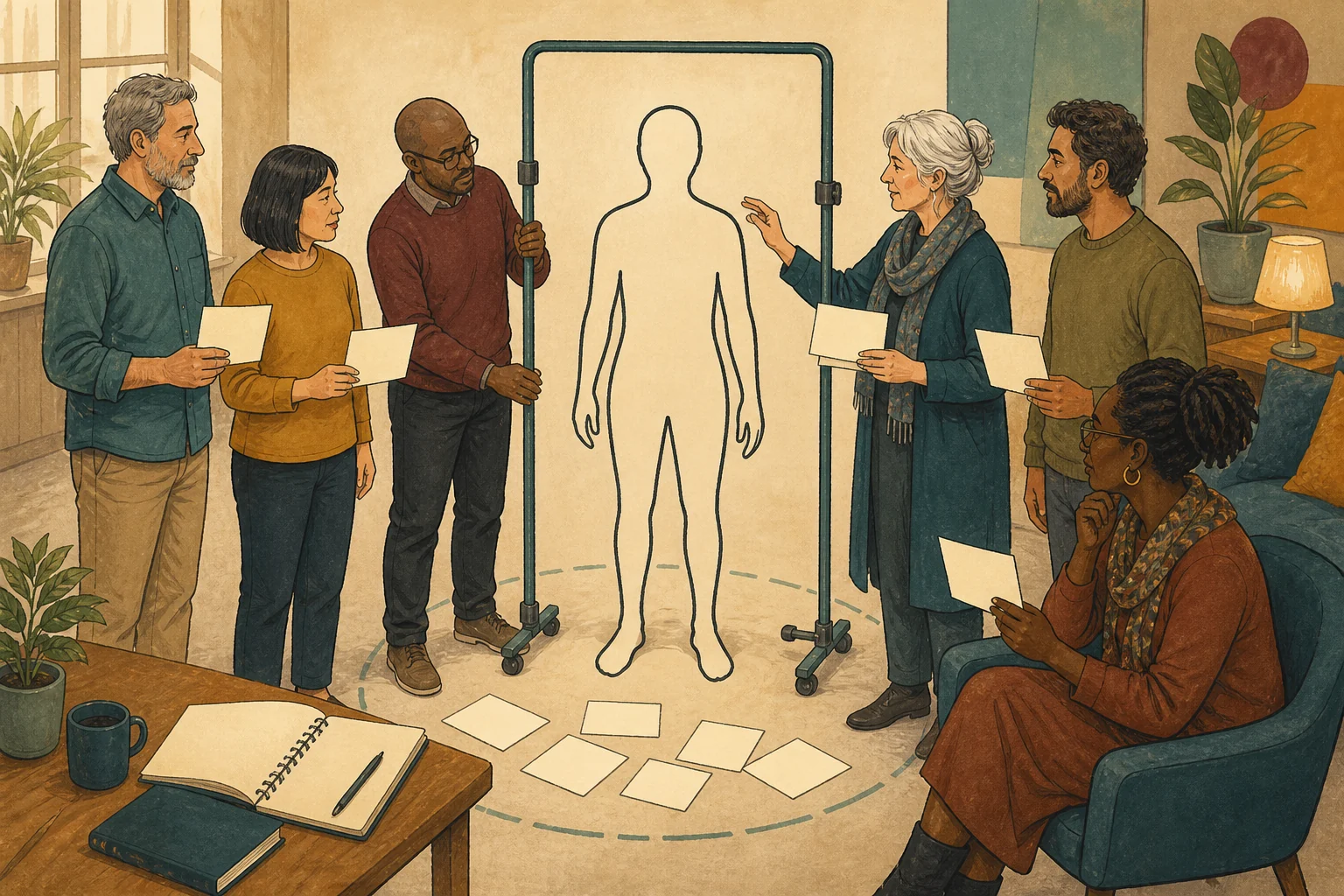
Studies often group different body-feature interests or rely on self-selected samples. Their categories should not be treated as a complete profile of an individual.
Illustration created using generative AI; not documentary evidence.Consent, privacy and whole-person respect
A focused interest never creates entitlement to look closely, comment, touch, photograph or share an image without the relevant adult's agreement. Consent to one interaction does not imply consent to another, and a relationship or previous participation does not provide permanent permission. The person remains more than the feature that attracts attention.
Consensual adults may choose to discuss a preference, select clothing or accessories together, pose for an agreed photograph, or include attention to a feature within clear boundaries. Others may prefer to keep the interest private or purely imaginative. UK consent law applies to conduct rather than the partialism label, with separate statutory definitions in England and Wales, Scotland and Northern Ireland.

Admiration never creates entitlement to comment, stare, touch, photograph or share an image. Consent should remain specific and the person should not be reduced to one feature.
Illustration created using generative AI; not documentary evidence.Clinical distinction and wellbeing
Under the WHO's ICD-11 framework, an atypical interest involving consenting adults or solitary behaviour is not a paraphilic disorder simply because it is unusual. The relevant category requires marked distress that is not explained solely by rejection or feared rejection, or significant risk of injury or death. Only a suitably qualified clinician can assess an individual diagnosis.
Support may still be useful where someone experiences persistent distress, impaired daily life, unwanted compulsive behaviour, physical risk or difficulty respecting consent. Seeking help does not itself confirm a disorder. Appropriate care can address the person's actual concerns without treating a consensual adult preference as pathology.
Non-graphic examples
What the umbrella may include
- An adult may find hands especially attractive because of their movement, shape, jewellery or associations with craft.
- Someone may focus on adult hair through colour, texture, styling or movement, while having no particular interest in combs or salon objects.
- A foot-focused interest and a footwear fetish may overlap for one person but remain entirely separate for another.
- Two adults may agree that a feature-focused photograph is private and must not be stored, reused or shared beyond their stated agreement.
- A person may enjoy a pronounced feature preference as one part of attraction without needing it in every relationship or encounter.
Prepare for an appointment
Questions you could ask a professional
- What information would help you understand my question?
- What are the realistic options and uncertainties?
- How can disability, communication or privacy needs be accommodated?
- When should the situation be reviewed again?
These prompts do not replace assessment and do not imply that every reader needs professional care.
Continue learning
Take the next step from definition to context.
Continue with independent guidance connecting partialism to evidence, consent, safety, uncertainty and practical decisions.
Plain-language distinctions among kink, fetish, BDSM, roles and clinical terms, with questions that turn labels into clear choices.
Read the guide