Consensual ritual or focused attention to boots as objects, symbols of authority, materials, fashion or items worn by an adult partner.
Sources and evidence type
Manual claim and limitation notes are shown where an individual source audit is complete. Other evidence-type labels are a publisher aid awaiting source-by-source confirmation.
Agarwal et al. (2002), contamination of operating-room bootsResearch study
Source design
Peer-reviewed research or review
What it can support
The specific population, measures and findings reported by the paper.
Important limitation
It cannot automatically establish UK prevalence, causation, diagnosis, consent or an individual outcome. Check recruitment, definitions and study design.
The specific population, measures and findings reported by the paper.
Important limitation
It cannot automatically establish UK prevalence, causation, diagnosis, consent or an individual outcome. Check recruitment, definitions and study design.
Illustration created using generative AI; not documentary evidence.
In brief
Treat boots as meaningful objects and potentially contaminated surfaces.
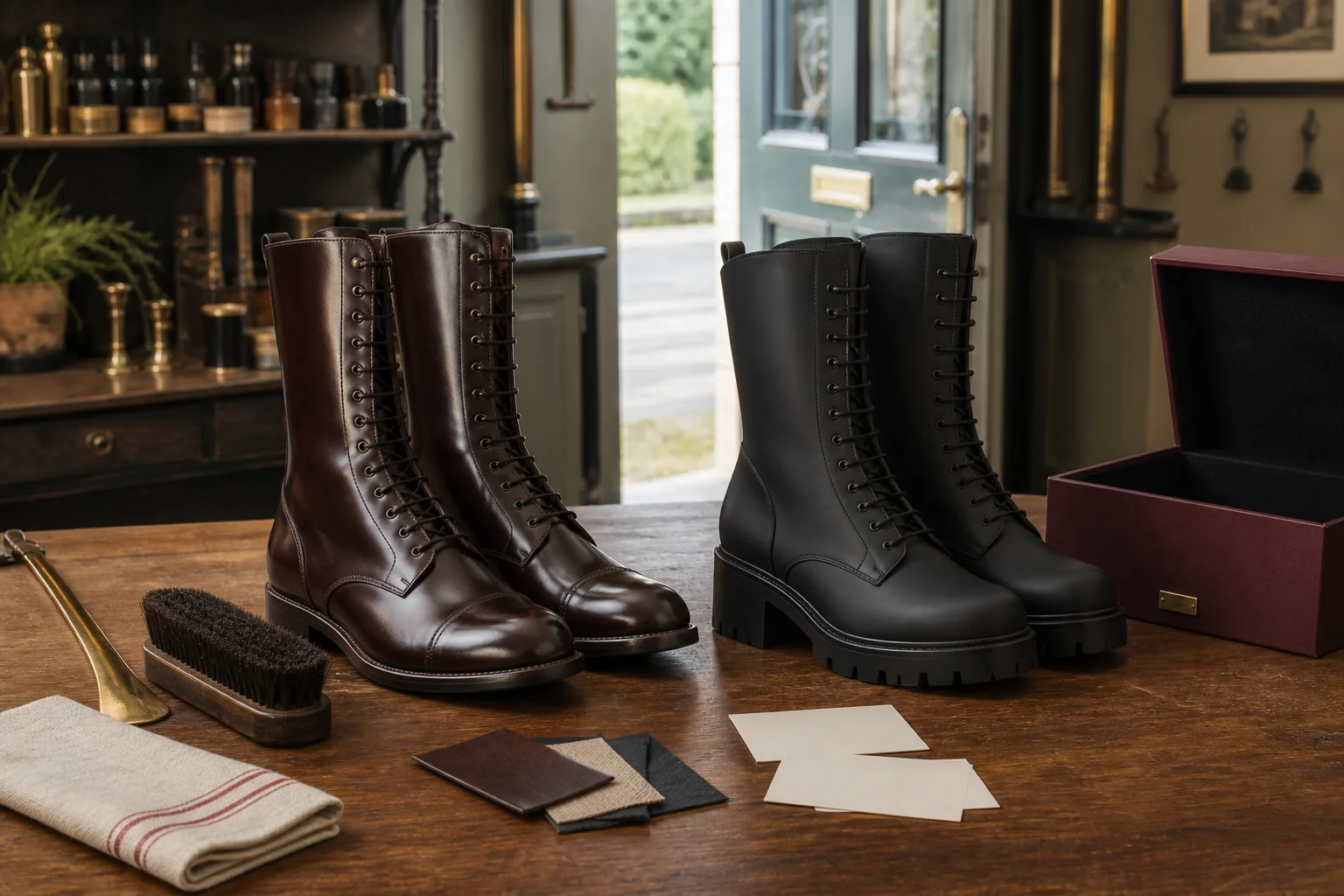
Boot worship may overlap with footwear fetish, leather culture, uniform aesthetics, service and power exchange. The interest may concern shape, scent, material, history, care ritual or what the boots symbolise. A boot worn outdoors can carry dirt, chemicals and microorganisms, while cleaners and polishes may irritate skin or damage materials. Object meaning does not create permission to touch the wearer or use contaminated footwear on the body.
Meaning, ownership and consent
Agree whether attention involves viewing, handling, cleaning, wearing or symbolic service. Permission from the boot owner does not automatically include contact with the wearer.
Do not infer dominance, availability or relationship status from someone's footwear. Public clothing is not a consent signal.
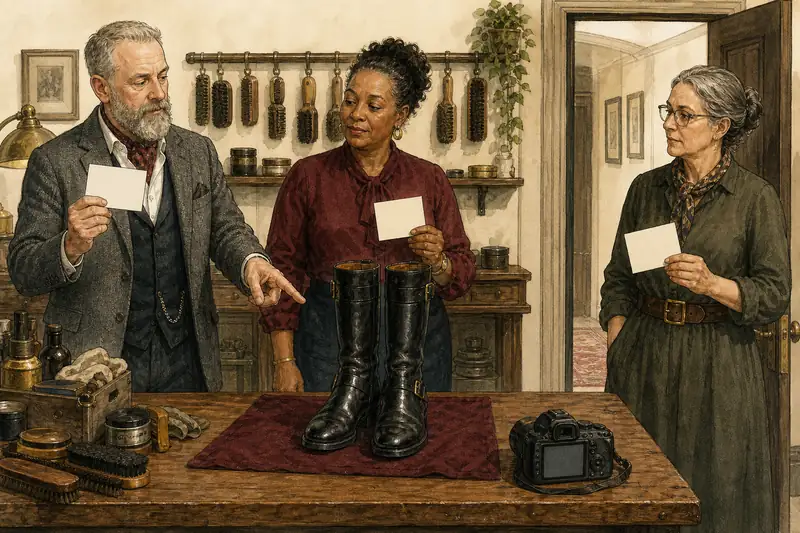
EDITORIAL ILLUSTRATIONObject access is not access to a person
Viewing, handling, cleaning, wearing and photographing are separate choices. Permission from a boot owner does not automatically include contact with the wearer.
Illustration created using generative AI; not documentary evidence.
Status
Detailed editorial draft
Publisher
The UK Kink Guide
Reviewed
Structured draft present; individual review date not recorded
Evidence
3 cited sources · types labelled below
Jurisdiction
UK-focused general education
Read the rest: evidence, law, safety and sources
Boot worship
Ritualised admiration, care or attention to boots within an agreed adult context.
Footwear fetish
A broader attraction to shoes or boots that may not involve worship, a wearer or power exchange.
Bootblacking or leather care
A material-care craft and cultural practice that is not inherently sexual.
Trampling or pressure play
A separate body-weight activity with substantial injury risks; worship does not imply it.
Contamination and cleaning
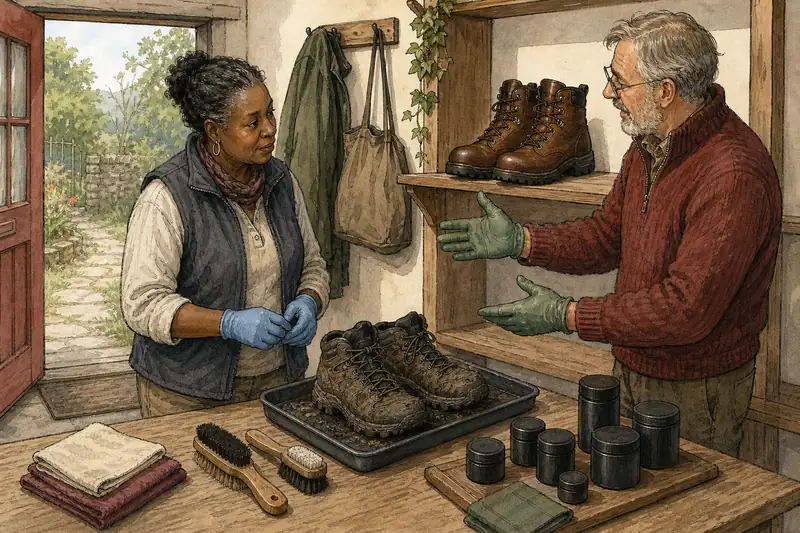
Outdoor soles may contact animal waste, bodily fluids, pesticides, oils and sharp debris. Keep contaminated soles away from the face, broken skin and mucosa.
Clean according to the material maker's instructions and allow products to dry or cure. Disinfectant, polish and conditioner are not interchangeable or necessarily skin-safe.
EDITORIAL ILLUSTRATIONSeparate contamination from close contact
Outdoor soles and care chemicals may carry contaminants or irritants. Keep them away from faces, broken skin and mucosa, and follow material-specific cleaning guidance.
Illustration created using generative AI; not documentary evidence.
Materials and condition
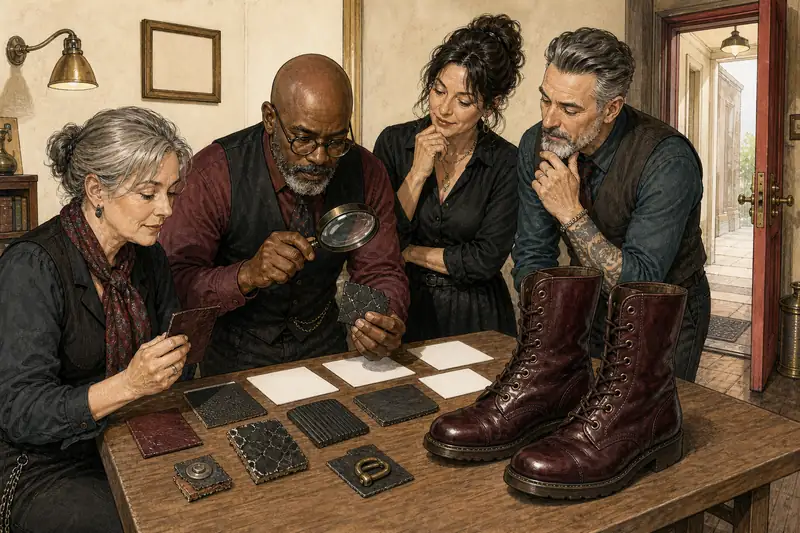
Leather, synthetic coatings, rubber, metal hardware, dyes and adhesives can cause irritation or allergy. Inspect cracked coatings, exposed fasteners and residue.
Vintage or second-hand boots may have unknown treatments. Cosmetic appearance cannot establish chemical composition or hygiene.
Coatings, dyes, adhesives, hardware and previous treatments can differ even when boots look similar. Inspect condition and treat unknown materials cautiously.
Illustration created using generative AI; not documentary evidence.
Clinical and cultural context
A footwear interest is not a disorder solely because it is unconventional. Clinical relevance depends on distress, impairment, serious risk or non-consent.
Leather and boot practices also have craft and community histories. Avoid presenting every bootblack, uniform wearer or leather participant as sexually available.
Non-graphic examples
What the umbrella may include
Admiring polished boots without touching the wearer.
Using a separate clean display pair for close contact.
Wearing gloves when applying polish.
Keeping outdoor soles away from broken skin.
Asking before handling a culturally significant pair.
Prepare for an appointment
Questions you could ask a professional
What information would help you understand my question?
What are the realistic options and uncertainties?
How can disability, communication or privacy needs be accommodated?
When should the situation be reviewed again?
These prompts do not replace assessment and do not imply that every reader needs professional care.
Continue learning
Take the next step from definition to context.
Continue with independent guidance connecting boot worship to evidence, consent, safety, uncertainty and practical decisions.