An adult interest in clinical-looking equipment, examinations, uniforms, care rituals or medical aesthetics, sometimes overlapping with medical role-play.
Sources and evidence type
Manual claim and limitation notes are shown where an individual source audit is complete. Other evidence-type labels are a publisher aid awaiting source-by-source confirmation.
MHRA: medical devices information for patientsLaw or regulator
Source design
Primary legislation, prosecutorial or regulator guidance
What it can support
The legal provision or official regulatory position for the jurisdiction and date stated.
Important limitation
It is not fact-specific legal advice. Commencement, amendments, jurisdiction and case law may affect application.
Illustration created using generative AI; not documentary evidence.
In brief
Clinical aesthetics can be represented without repurposing real healthcare equipment.
Medical-device interest may focus on appearance, precision, vulnerability, authority, care or institutional ritual. It does not make a participant a clinician, turn fantasy into treatment or make real diagnostic, monitoring, mobility, implanted or life-support equipment suitable for play. Medical devices are designed and assessed for stated purposes and users; improvised, off-label or unnecessary use can cause injury, infection, false readings, equipment failure or interruption of essential care.
Fantasy, authority and consent
Agree roles, titles, dress, examination themes, touch, exposure and stop signals. A fictional doctor has no real clinical authority, and a real professional title must not be used to obtain trust or consent deceptively.
Consent to role-play is not consent to diagnosis, treatment, recording or use of a device. Do not claim medical benefit or ask participants to ignore symptoms.
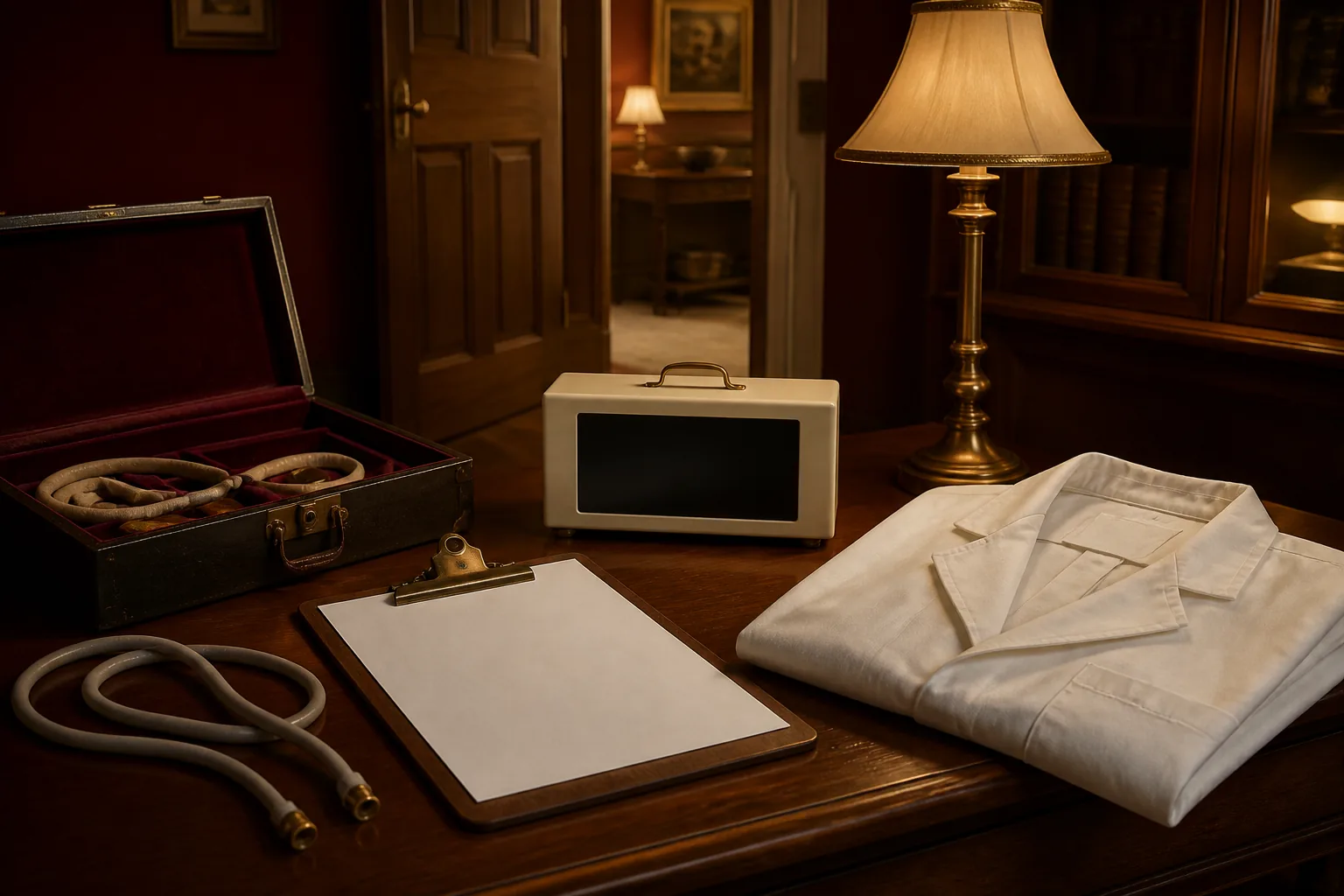
EDITORIAL ILLUSTRATIONA fictional role has no clinical authority
Agree titles, dress, touch and stop signals without presenting role-play as diagnosis or treatment. A costume never grants professional authority.
Illustration created using generative AI; not documentary evidence.
Status
Detailed editorial draft
Publisher
The UK Kink Guide
Reviewed
Structured draft present; individual review date not recorded
Evidence
3 cited sources · types labelled below
Jurisdiction
UK-focused general education
Read the rest: evidence, law, safety and sources
Medical-device interest
Attraction to clinical equipment, appearance or ritual, with or without a role-play narrative.
Medical role-play
Adult fantasy involving clinician-and-patient roles; it may use theatrical props but is not healthcare.
Medical treatment
Evidence-based care delivered for a health purpose by an appropriately qualified person or informed patient.
Medical fetishism in clinical literature
A historical or diagnostic framing that should not be applied solely because an adult interest is unusual.
Devices, props and intended purpose
Prefer unmistakably theatrical, non-functional props that cannot pierce, deliver substances, restrict breathing, apply electricity or produce a result that might be mistaken for diagnosis.
Do not repurpose prescription, implanted, sterile, single-use, monitoring or life-support equipment. Follow manufacturer instructions for equipment genuinely needed for healthcare and keep it available and uncontaminated.
Hygiene, privacy and accessibility
Shared surfaces, costumes and props need material-appropriate cleaning; porous or damaged items may not be reliably decontaminated. Never reuse needles, syringes or single-use clinical products.
Medical imagery can trigger trauma or anxiety. Offer non-touch, verbal, seated and low-sensory options, and treat disability aids as personal equipment rather than communal props.
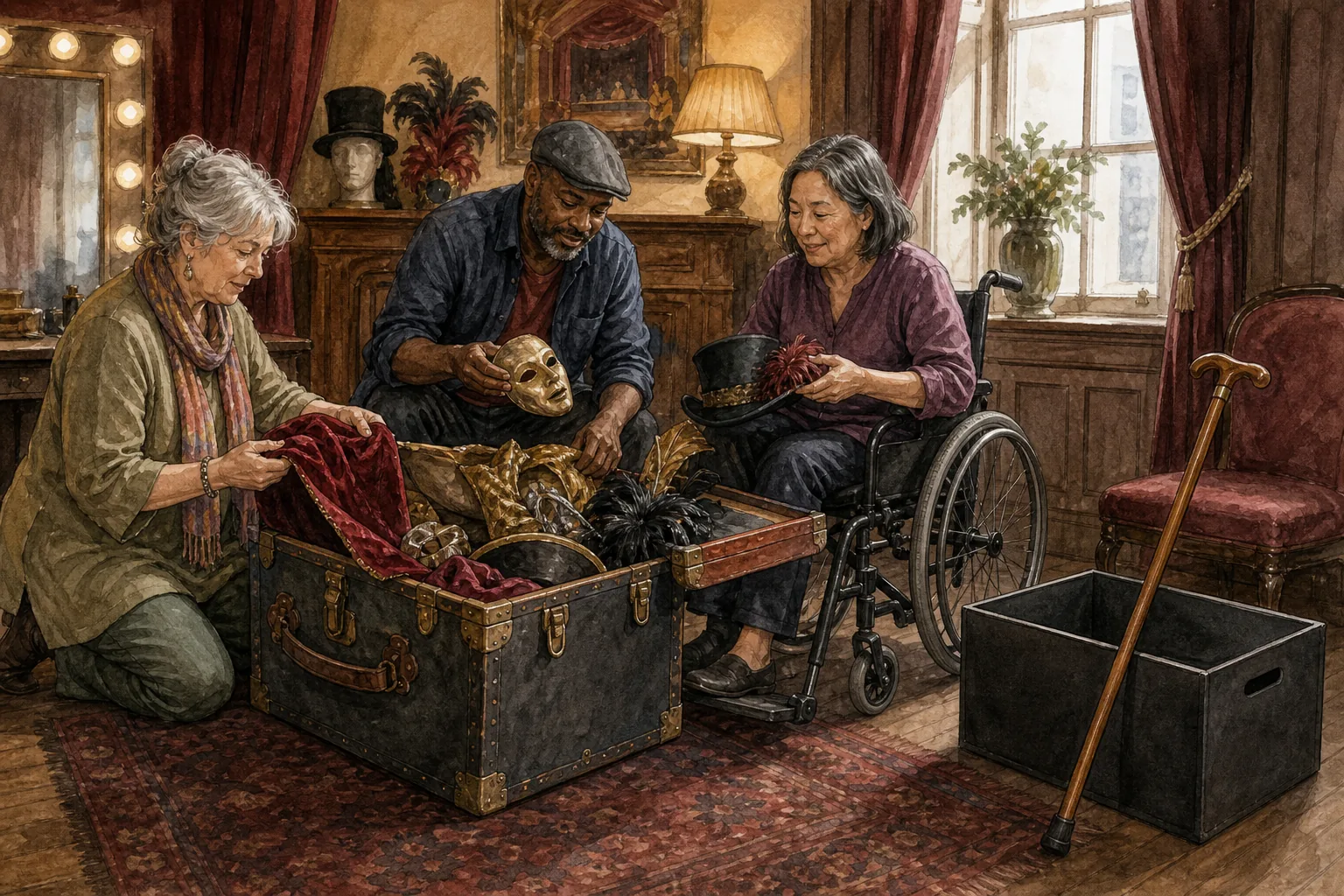
EDITORIAL ILLUSTRATIONHealthcare equipment stays personal
Prefer unmistakably non-functional props. Mobility aids, monitoring equipment, sterile products and other real devices remain available and uncontaminated for their intended use.
Illustration created using generative AI; not documentary evidence.
Regulation and clinical distinction
In the UK the MHRA regulates medical devices, whose safety and performance claims relate to their intended purpose and correct use. A conformity mark is not permission for unrelated use.
An unconventional consenting-adult interest is not a disorder by itself. Clinical concern depends on distress, impairment, serious risk, deception or non-consent.
EDITORIAL ILLUSTRATIONIntended use still governs
Regulatory claims concern a device's stated purpose and correct use. They do not validate theatrical repurposing or explain an individual's interest.
Illustration created using generative AI; not documentary evidence.
Non-graphic examples
What the umbrella may include
Using an empty theatrical clipboard in adult role-play.
Keeping a mobility aid outside the prop collection.
Choosing a costume without claiming professional status.
Stopping when clinical imagery triggers distress.
Leaving real monitoring and treatment equipment to its intended healthcare use.
Prepare for an appointment
Questions you could ask a professional
What information would help you understand my question?
What are the realistic options and uncertainties?
How can disability, communication or privacy needs be accommodated?
When should the situation be reviewed again?
These prompts do not replace assessment and do not imply that every reader needs professional care.
Continue learning
Take the next step from definition to context.
Continue with independent guidance connecting medical-device interest to evidence, consent, safety, uncertainty and practical decisions.