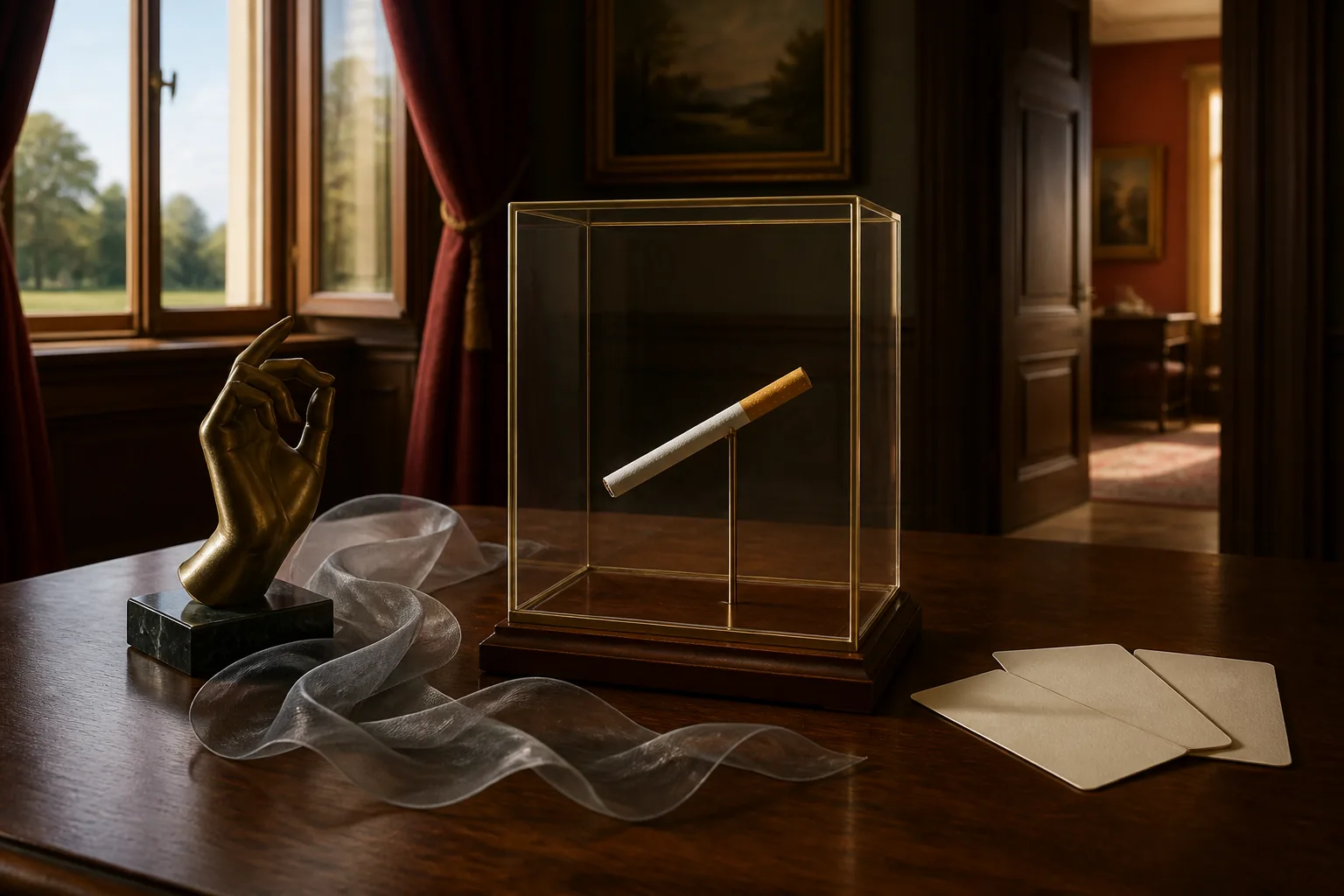
An attraction to smoking-related gestures, objects, visual ritual, exhalation or symbolism; it does not make tobacco, smoke or inhaled substances safe.
Sources and evidence type
Manual claim and limitation notes are shown where an individual source audit is complete. Other evidence-type labels are a publisher aid awaiting source-by-source confirmation.
NHS: passive smokingClinical guideline
Source design
Current public-health or clinical guidance
What it can support
Service pathways, health definitions and recommended public-health or clinical actions within its stated scope.
Important limitation
General guidance cannot assess an individual’s symptoms, exposure, medicine, contraindications or urgency.
Illustration created using generative AI; not documentary evidence.
In brief
The imagery can be separated from tobacco use and involuntary smoke exposure.
Smoking fetish may focus on posture, hand-to-mouth ritual, fashion, authority, transgression, historical imagery or smoke as a visual effect. A person can have the interest without smoking and can explore symbolism without exposing anyone to tobacco. Combustion products, nicotine dependence, fire and second-hand smoke are real hazards that fantasy does not reduce. Educational discussion should neither glamorise starting nor shame people who use nicotine and may want support to stop.
Attraction and consent
Ask before smoking, vaping, directing exhalation, photographing or requesting performance. Consent to watch does not mean consent to inhale or to become a regular smoker.
Do not pressure someone to begin, relapse, delay quitting or consume more for another person's interest. Dependence can constrain choice and deserves support rather than erotic obligation.
EDITORIAL ILLUSTRATIONWatching never requires inhaling
Consent to an image, gesture or performance does not include smoke exposure, nicotine use or pressure to begin, continue or resume smoking.
Illustration created using generative AI; not documentary evidence.
Status
Detailed editorial draft
Publisher
The UK Kink Guide
Reviewed
Structured draft present; individual review date not recorded
Evidence
3 cited sources · types labelled below
Jurisdiction
UK-focused general education
Read the rest: evidence, law, safety and sources
Smoking fetish
Attraction to smoking imagery, ritual, gestures or symbolism.
Nicotine dependence
A health condition involving dependence on nicotine; it is not evidence of a fetish or freely chosen performance.
Vaping
Use of an electronic aerosol device; it is not harmless and is not equivalent to tobacco combustion.
Smoke-effect performance
Theatrical representation using no tobacco, which still requires checking product, venue and respiratory risks.
Tobacco and second-hand smoke
Smoking causes serious disease, and second-hand smoke can harm other people. Windows, another room or fragrance do not make indoor exposure safe.
Keep homes, vehicles and shared indoor spaces smoke-free and follow venue and smoke-free law. Children and non-consenting bystanders must never be included in exposure.
EDITORIAL ILLUSTRATIONShared air needs protection
Second-hand smoke harms other people. Homes, vehicles and shared indoor spaces should remain smoke-free; ventilation does not make exposure safe.
Illustration created using generative AI; not documentary evidence.
Representation and alternatives
Still images, adult fiction, unlit props, hand gestures or digitally created effects can preserve aesthetic elements without tobacco consumption. Confirm that props cannot be mistaken for usable products by children.
Vapes, herbal cigarettes, incense, fog fluids and aerosols are not automatically safe substitutes; each can introduce respiratory, fire, allergy or venue risks.
EDITORIAL ILLUSTRATIONSupport the choice to stop
Unlit props, gestures and digital imagery can preserve an aesthetic without combustion. A partner's decision to quit or avoid nicotine must not become a bargaining point.
Illustration created using generative AI; not documentary evidence.
Evidence and clinical distinction
Direct research on capnolagnia is sparse. Tobacco studies establish health harms but do not explain why an individual finds smoking imagery attractive.
An unusual adult interest is not itself a disorder. Clinical attention should address distress, impairment, dangerous exposure, dependence or non-consent without treating attraction and addiction as synonyms.
Non-graphic examples
What the umbrella may include
Using an unlit prop for an adult photograph.
Watching historical film imagery in a smoke-free room.
Choosing digital smoke effects rather than combustion.
Supporting a partner's decision to quit without bargaining.
Asking before displaying smoking-themed media to someone in recovery.
Prepare for an appointment
Questions you could ask a professional
What information would help you understand my question?
What are the realistic options and uncertainties?
How can disability, communication or privacy needs be accommodated?
When should the situation be reviewed again?
These prompts do not replace assessment and do not imply that every reader needs professional care.
Continue learning
Take the next step from definition to context.
Continue with independent guidance connecting smoking fetish to evidence, consent, safety, uncertainty and practical decisions.