Consensual use of voices, music, instructions, rhythm, repeated sounds, spatial audio or controlled quiet to shape attention, atmosphere, sensation or role.
Sources and evidence type
Manual claim and limitation notes are shown where an individual source audit is complete. Other evidence-type labels are a publisher aid awaiting source-by-source confirmation.
WHO: safe listening guidanceClinical guideline
Source design
Current public-health or clinical guidance
What it can support
Service pathways, health definitions and recommended public-health or clinical actions within its stated scope.
Important limitation
General guidance cannot assess an individual’s symptoms, exposure, medicine, contraindications or urgency.
The specific population, measures and findings reported by the paper.
Important limitation
It cannot automatically establish UK prevalence, causation, diagnosis, consent or an individual outcome. Check recruitment, definitions and study design.
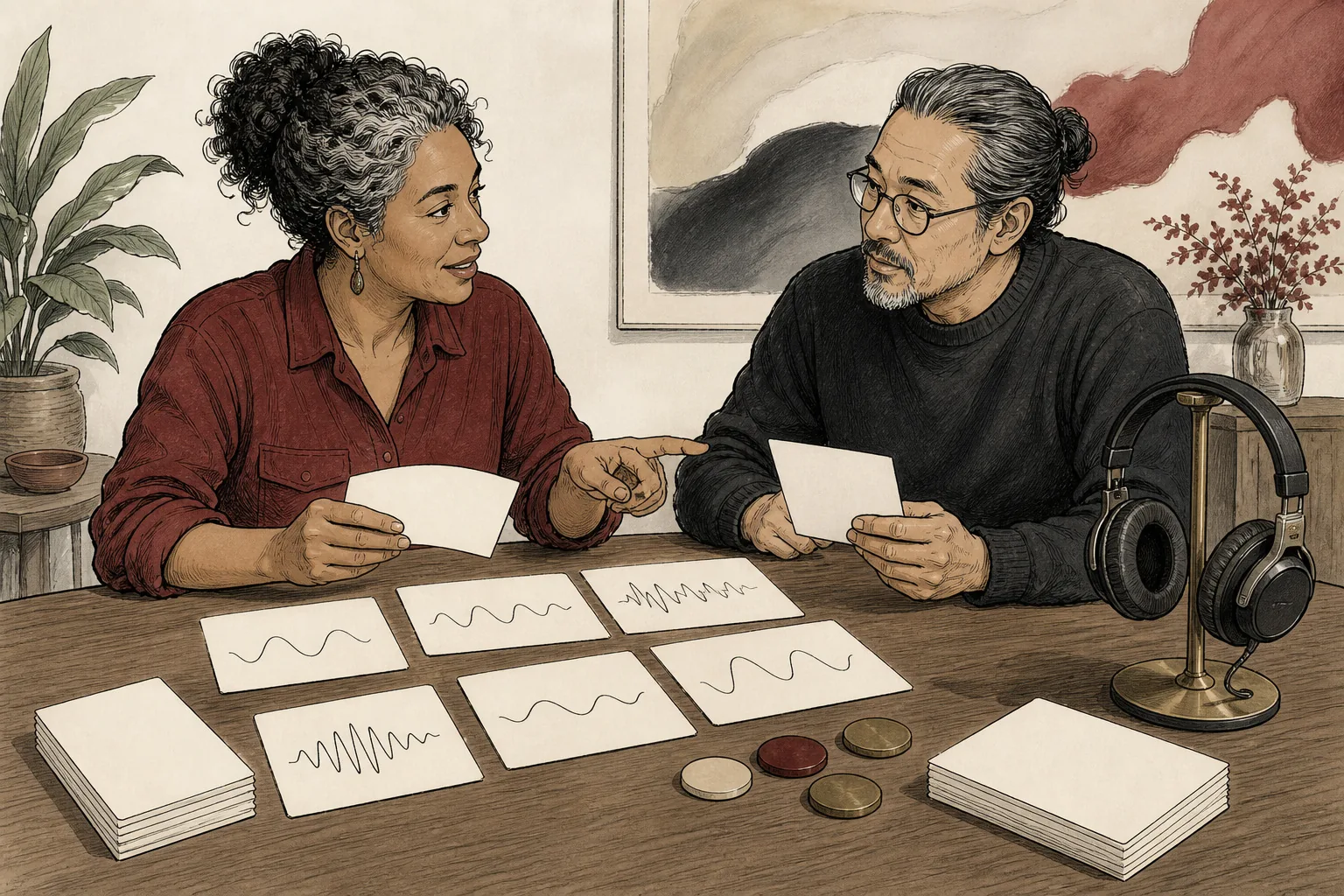
Illustration created using generative AI; not documentary evidence.
In brief
Audio should enrich attention without damaging hearing or blocking consent communication.
Sound play can be as simple as a playlist or spoken narrative, or it can use headphones and audio cues to narrow attention. Its risks depend on loudness, duration, repetition, startle, equipment hygiene and whether sound masks communication or environmental warnings. Hearing protection and an independent stop channel are especially important when headphones, restraint or reduced vision are involved.
Consent and content
Agree voices, words, themes, volume control, recording and whether headphones will be used. A prerecorded instruction has no authority beyond the listener's present choice.
Keep a visual, tactile or device-based stop channel available if sound could mask speech. Never assume silence means consent.
EDITORIAL ILLUSTRATIONAudio never outranks a present choice
Voices, themes, volume, recording and headphone use are separate permissions. If sound can mask speech, preserve an independent visual, tactile or device-based stop channel.
Illustration created using generative AI; not documentary evidence.
Status
Detailed editorial draft
Publisher
The UK Kink Guide
Reviewed
Structured draft present; individual review date not recorded
Evidence
3 cited sources · types labelled below
Jurisdiction
UK-focused general education
Read the rest: evidence, law, safety and sources
Sound play
Use of audio as an agreed sensory or role element.
Audio erotica
Recorded or live narrative content that may be enjoyed alone or with others.
Auditory masking
Sound used to obscure other noises, which can also hide speech, alarms or distress.
Sound punishment
An aversive use of sound carrying hearing, panic and coercion risks; consent does not make damaging volume acceptable.
Hearing protection
Risk rises with sound level, duration and frequency of exposure. WHO safe-listening guidance recommends lower volume, exposure monitoring and breaks rather than relying on discomfort as a warning.
Stop after pain, muffled hearing, ringing or dizziness and seek audiology or clinical advice if symptoms persist. Sudden extremely loud sound can injure immediately.
EDITORIAL ILLUSTRATIONListening risk accumulates
Hearing risk rises with level, duration and repeated exposure. Lower volume, regular quiet breaks and stopping after pain, muffled hearing, ringing or dizziness are safer than waiting for discomfort.
Illustration created using generative AI; not documentary evidence.
Equipment and environment
Use clean, well-fitting headphones without excessive clamp or ear-canal pressure. Do not share in-ear devices without appropriate hygiene.
Audio must not conceal fire alarms, traffic, a door, water hazards or the supervising person's communication. Avoid cables that create entanglement around the neck.
Accessibility and privacy
Offer captions, transcripts, vibration or visual cues for Deaf and hard-of-hearing participants, while respecting that hearing access and sensory preferences vary.
Voice recordings can be identifiable personal data. Agree storage, sharing, deletion and remote-platform access before recording.
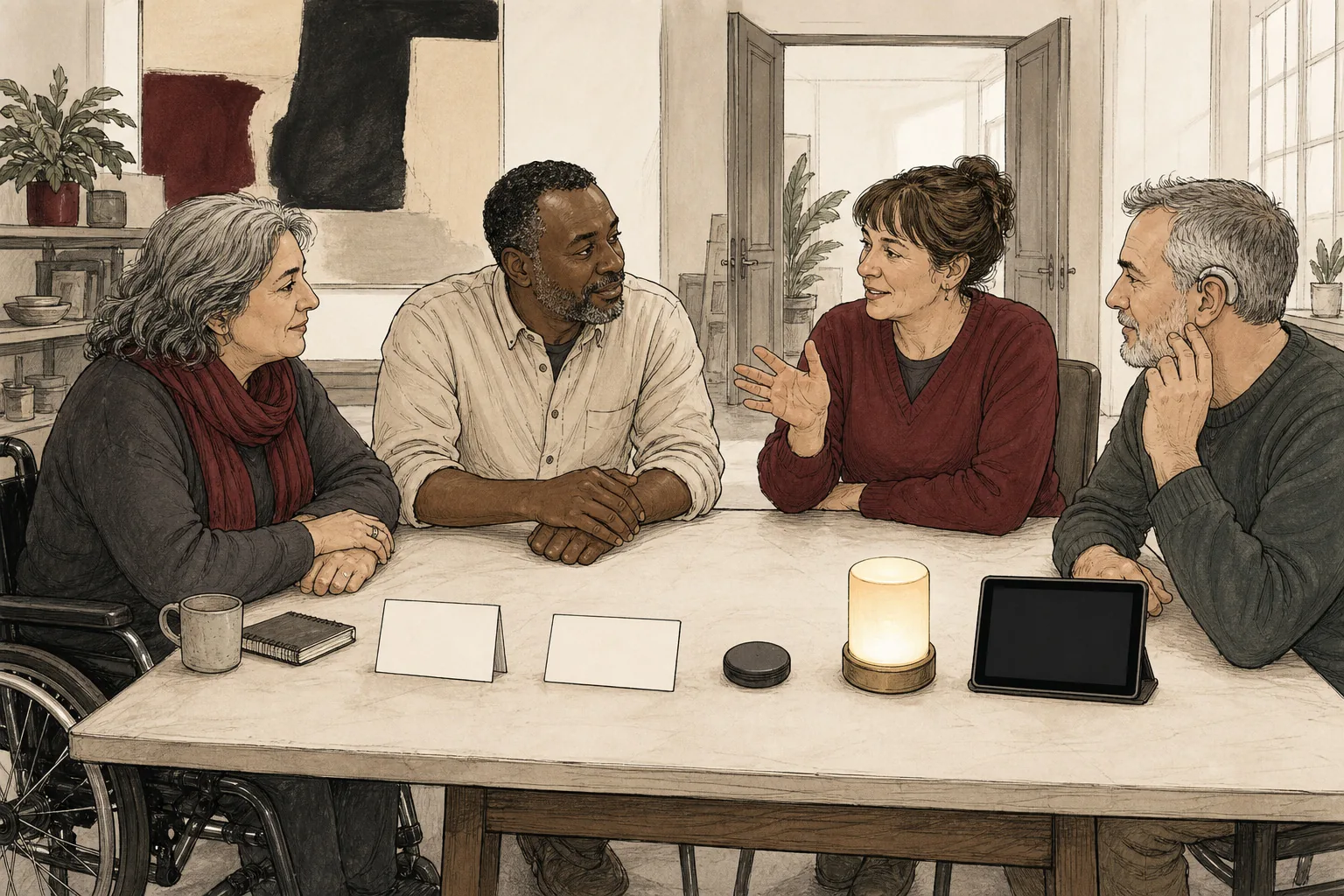
EDITORIAL ILLUSTRATIONAccess and privacy need their own design
Captions, transcripts, vibration and visual cues can widen access without assuming one sensory preference. Identifiable voice recordings also need specific storage, sharing and deletion choices.
Illustration created using generative AI; not documentary evidence.
Non-graphic examples
What the umbrella may include
Listening to low-volume adult audio fiction.
Using a playlist with regular quiet breaks.
Keeping a tactile stop signal while wearing headphones.
Providing a transcript alongside spoken content.
Stopping after new ringing in the ears.
Prepare for an appointment
Questions you could ask a professional
What information would help you understand my question?
What are the realistic options and uncertainties?
How can disability, communication or privacy needs be accommodated?
When should the situation be reviewed again?
These prompts do not replace assessment and do not imply that every reader needs professional care.
Continue learning
Take the next step from definition to context.
Continue with independent guidance connecting sound and audio play to evidence, consent, safety, uncertainty and practical decisions.