Tattoo and piercing interest is adult attraction to body art, jewellery, modified appearance or the meanings associated with modification. It may be aesthetic, identity-related, tactile, relational or erotic.
 The UK Kink GuideEvidence-led glossary
 Back to the glossaryBody & object focusIn plain English Words in context A non-graphic adult example What not to assume
Tattoo and piercing interest
An attraction to the appearance, symbolism or embodied experience of tattoos and piercings. For some people the focus is aesthetic or identity-based; for others it includes the ritual of modification.
Start here
New to this term?
Interest in finished tattoos or piercings is not the same as wanting a procedure, enjoying pain or practising needle play. Tattooing and body piercing are professional skin-breaking services; needle play is a separate specialist kink category.
An adult may admire a consenting partner's linework, jewellery or symbolism without wanting modification personally. Another may value the transformation of an appointment, while an art enthusiast may simply appreciate design.
Body art does not signal availability, role, pain tolerance or consent to touch or photograph it. Research can describe motives and social meanings but cannot assign one cause to every modified person. When real modification is involved, informed consent, practitioner standards, infection control and aftercare are healthcare and consumer-safety matters rather than fetish assumptions.
Sources and evidence type
Manual claim and limitation notes are shown where an individual source audit is complete. Other evidence-type labels are a publisher aid awaiting source-by-source confirmation.
UKHSA, tattooing and body-piercing infection control (2025)Law or regulator
- Source design
- Primary legislation, prosecutorial or regulator guidance
- What it can support
- The legal provision or official regulatory position for the jurisdiction and date stated.
- Important limitation
- It is not fact-specific legal advice. Commencement, amendments, jurisdiction and case law may affect application.
UKHSA, upper-ear piercing infection guidance (2024)Law or regulator
- Source design
- Primary legislation, prosecutorial or regulator guidance
- What it can support
- The legal provision or official regulatory position for the jurisdiction and date stated.
- Important limitation
- It is not fact-specific legal advice. Commencement, amendments, jurisdiction and case law may affect application.
NHS, hepatitis CClinical guideline
- Source design
- Current public-health or clinical guidance
- What it can support
- Service pathways, health definitions and recommended public-health or clinical actions within its stated scope.
- Important limitation
- General guidance cannot assess an individual’s symptoms, exposure, medicine, contraindications or urgency.
Rehor (2015), survey of women from kink communitiesResearch study
- Source design
- Peer-reviewed research or review
- What it can support
- The specific population, measures and findings reported by the paper.
- Important limitation
- It cannot automatically establish UK prevalence, causation, diagnosis, consent or an individual outcome. Check recruitment, definitions and study design.
WHO ICD-11 clinical requirements (2024)Clinical guideline
- Source design
- Current public-health or clinical guidance
- What it can support
- Service pathways, health definitions and recommended public-health or clinical actions within its stated scope.
- Important limitation
- General guidance cannot assess an individual’s symptoms, exposure, medicine, contraindications or urgency.
Body & object focus
Illustration created using generative AI; not documentary evidence.
In brief
Finished art, bodily autonomy and procedure are separate questions.
Tattoo and piercing interest is an adult attraction to body art, jewellery, modified appearance or the symbolism and ritual surrounding modification. The focus may be aesthetic, tactile, identity-based, relational or erotic; liking finished work is not the same as wanting a procedure or being interested in pain. Because tattooing and piercing break the skin, professional infection-control standards matter whenever an interest moves from imagery to real modification.
Evidence and varied meaning
Research on tattoos and piercings more often examines health, identity or social perception than erotic interest. Broad kink and fantasy studies confirm that body features and modification themes can appear within diverse adult interests, but they cannot establish a prevalence or typical motivation for this page's category.
Visible body art may express culture, memorialisation, gender, spirituality, fashion, reclamation or no public message at all. Attraction does not entitle an observer to ask for a personal story, touch jewellery or treat a modified person as a category.

Tattoo and piercing research more often examines health, identity and social perception. It cannot establish the prevalence or motive of an erotic interest.
Illustration created using generative AI; not documentary evidence.- Status
- Detailed editorial draft
- Publisher
- The UK Kink Guide
- Reviewed
- Structured draft present; individual review date not recorded
- Evidence
- 5 cited sources · types labelled below
- Jurisdiction
- UK-focused general education
Read the rest: evidence, law, safety and sources
Attraction to permanent or temporary designs, placement, colour, linework, symbolism or the person wearing them.
Focus on jewellery, placement, metal, movement, symbolism or modified appearance.
Interest in the appointment, transformation or endurance narrative; this does not imply procedural competence.
A separate specialist kink practice involving temporary piercing; it is not ordinary studio tattooing or body piercing.
Ink, jewellery and visual features
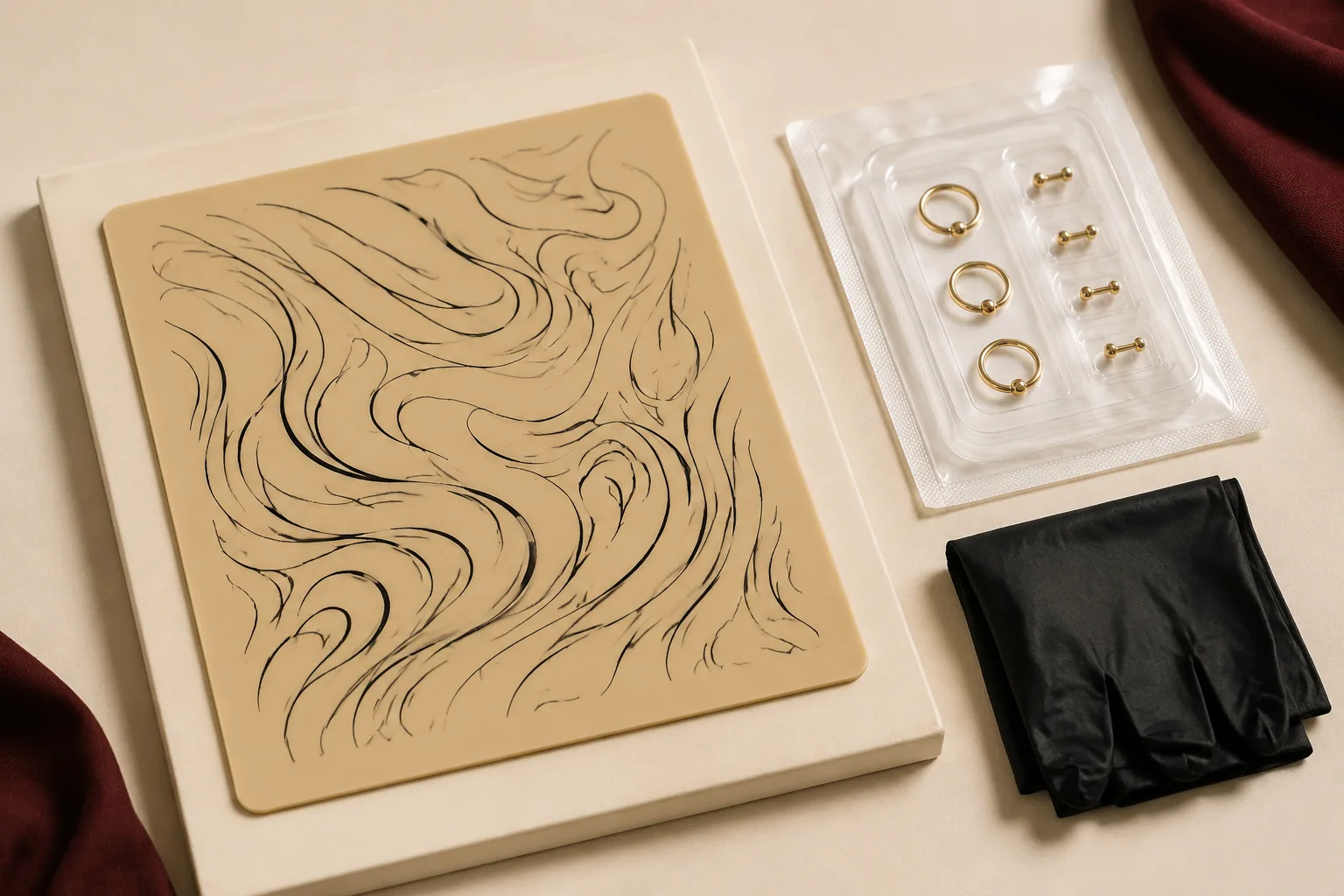
Useful non-graphic objects include tattoo practice material, sealed jewellery displays, colour swatches, sterile-packaging imagery and an unworn artist glove. Line, saturation, negative space, metal finish, placement and movement may be central to attraction.
Temporary transfers, cosmetic adornment and removable jewellery can share an aesthetic without sharing the permanence or health risks of tattooing and piercing. Materials also matter: pigments, nickel and aftercare products can cause sensitivity or allergy.
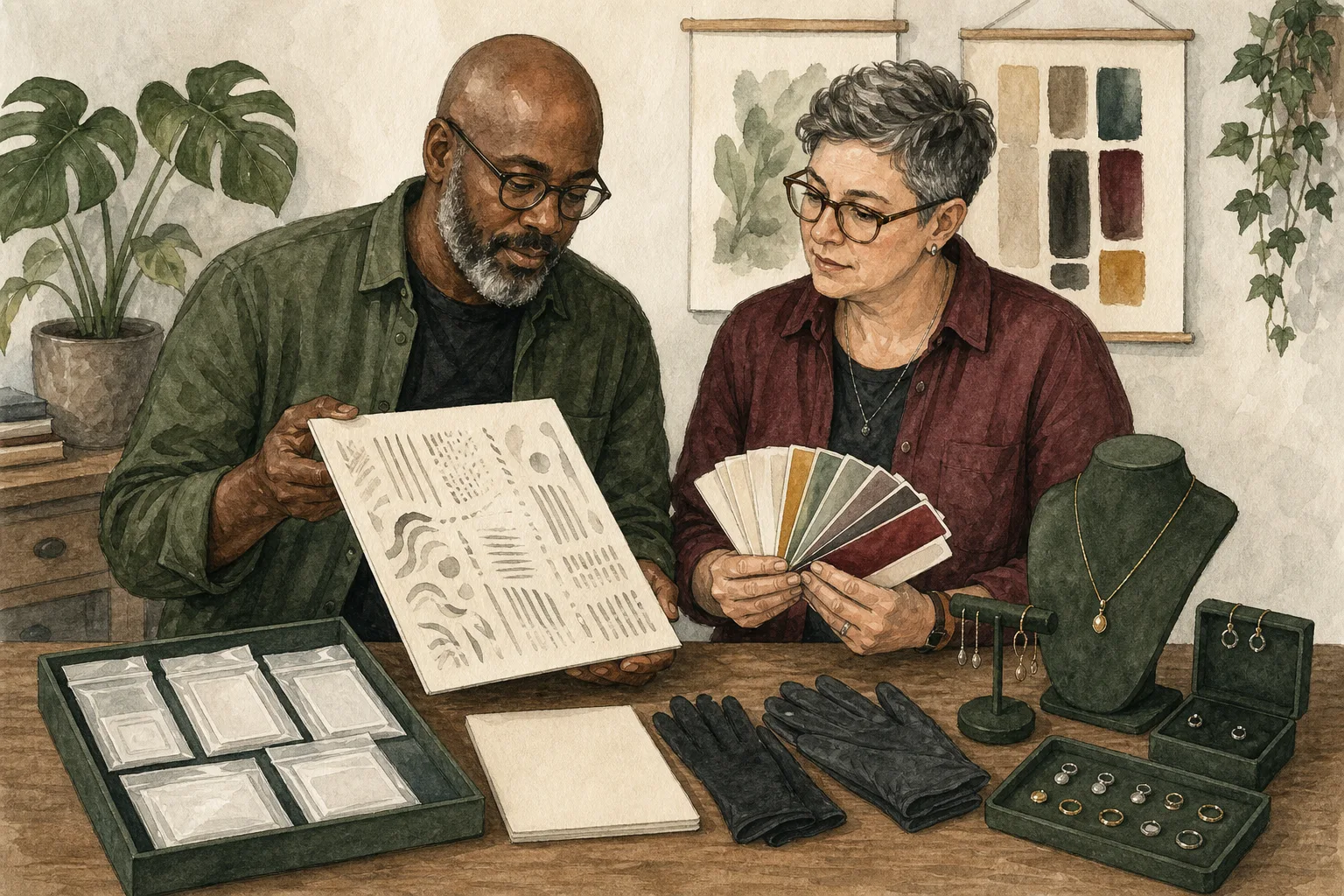
Line, colour, metal, placement and movement can be attractive without implying a wish for a procedure. Pigments, jewellery and aftercare materials have separate health considerations.
Illustration created using generative AI; not documentary evidence.Consent, infection and healing
The wearer controls decisions about touch, photographs, jewellery changes and future modification. Consent to admire existing art is not consent to a new procedure, and pressure to obtain a permanent mark for a relationship or role can undermine free choice.
UKHSA-endorsed guidance emphasises infection prevention and control for tattooing and piercing. Unsterile equipment can transmit infection, and upper-ear cartilage piercing has particular potential for serious Pseudomonas infection. Increasing redness, heat, swelling, pus, fever or severe pain needs timely professional advice.

Touch, photographs, jewellery changes and permanent modification require distinct consent. Real procedures belong in an appropriately registered, hygienic professional setting.
Illustration created using generative AI; not documentary evidence.UK professional and legal context
Regulation and registration arrangements vary across UK nations and local authorities. Government guidance notes no single nationally recognised accredited training route for tattooing and body piercing, making local registration, premises standards, practitioner practice and informed discussion important checks rather than decorative paperwork.
A consensual attraction to body art is not a paraphilic disorder by default. Clinical concern depends on distress, impairment, serious risk or non-consent; criminal damage, forced marking or a procedure without valid consent is not transformed by calling it kink.
Non-graphic examples
What the umbrella may include
- Admiring the linework or symbolism of an adult's tattoo after they choose to share it.
- Being attracted to polished jewellery and movement without wanting a piercing procedure.
- Using temporary body art to explore an aesthetic without permanent modification.
- Treating photographs and touch as separate consent questions.
- Choosing a registered studio and discussing materials, hygiene and aftercare for a real procedure.
Prepare for an appointment
Questions you could ask a professional
- What information would help you understand my question?
- What are the realistic options and uncertainties?
- How can disability, communication or privacy needs be accommodated?
- When should the situation be reviewed again?
These prompts do not replace assessment and do not imply that every reader needs professional care.
Continue learning
Take the next step from definition to context.
Continue with independent guidance connecting tattoo and piercing interest to evidence, consent, safety, uncertainty and practical decisions.
Explore body-part and object-focused interests through meaning, consent, privacy, partner discussion and UK support.
Read the guide