Erotic cosplay is consensual adult fantasy or role-play using costume, styling or performance inspired by an unambiguously adult character, genre or original persona. The erotic element comes from the agreed context, not from cosplay itself.
 The UK Kink GuideEvidence-led glossary
 Back to the glossaryFantasy & performanceIn plain English Words in context A non-graphic adult example What not to assume
Erotic cosplay
Adult fantasy or role-play using costumes inspired by fictional characters, genres or original personas. Cosplay as a wider hobby is not inherently sexual; the term here refers only to its consensual adult erotic use.
Start here
New to this term?
Cosplay is the wider creative fandom practice. Crossplay means portraying a character of another gender and does not establish gender identity or erotic intent. Costume role-play is broader and need not use an established character.
Adults might privately agree to use costumes inspired by adult-coded fictional roles, while another person wears an equally elaborate costume only for craft, competition or convention photography.
Costume, pose or source material does not create consent to touch, sexualise, photograph or publish an image. Fantasy does not prove a wish to become the character or copy every aspect of a story. Research can describe adult cosplay motivations and privacy practices, but cannot assign one meaning to all cosplayers.
Sources and evidence type
Manual claim and limitation notes are shown where an individual source audit is complete. Other evidence-type labels are a publisher aid awaiting source-by-source confirmation.
Rosenberg & Letamendi (2018), survey of 929 adult cosplayersResearch study
- Source design
- Peer-reviewed research or review
- What it can support
- The specific population, measures and findings reported by the paper.
- Important limitation
- It cannot automatically establish UK prevalence, causation, diagnosis, consent or an individual outcome. Check recruitment, definitions and study design.
Zarin (2017), privacy and photography in cosplayResearch study
- Source design
- Peer-reviewed research or review
- What it can support
- The specific population, measures and findings reported by the paper.
- Important limitation
- It cannot automatically establish UK prevalence, causation, diagnosis, consent or an individual outcome. Check recruitment, definitions and study design.
Rehor (2015), survey of women from kink communitiesResearch study
- Source design
- Peer-reviewed research or review
- What it can support
- The specific population, measures and findings reported by the paper.
- Important limitation
- It cannot automatically establish UK prevalence, causation, diagnosis, consent or an individual outcome. Check recruitment, definitions and study design.
Dunkley & Brotto (2020), BDSM consent reviewResearch study
- Source design
- Peer-reviewed research or review
- What it can support
- The specific population, measures and findings reported by the paper.
- Important limitation
- It cannot automatically establish UK prevalence, causation, diagnosis, consent or an individual outcome. Check recruitment, definitions and study design.
NHS, heat exhaustion and heatstrokeClinical guideline
- Source design
- Current public-health or clinical guidance
- What it can support
- Service pathways, health definitions and recommended public-health or clinical actions within its stated scope.
- Important limitation
- General guidance cannot assess an individual’s symptoms, exposure, medicine, contraindications or urgency.
Sexual Offences Act 2003, section 74Law or regulator
- Source design
- Primary legislation, prosecutorial or regulator guidance
- What it can support
- The legal provision or official regulatory position for the jurisdiction and date stated.
- Important limitation
- It is not fact-specific legal advice. Commencement, amendments, jurisdiction and case law may affect application.
WHO ICD-11 clinical requirements (2024)Clinical guideline
- Source design
- Current public-health or clinical guidance
- What it can support
- Service pathways, health definitions and recommended public-health or clinical actions within its stated scope.
- Important limitation
- General guidance cannot assess an individual’s symptoms, exposure, medicine, contraindications or urgency.
Fantasy & performance
Illustration created using generative AI; not documentary evidence.
In brief
Costume can frame an adult fantasy; it never supplies consent.
Erotic cosplay is consensual adult fantasy or role-play using costume, styling or performance inspired by an unambiguously adult fictional character, genre or original persona. Cosplay itself is a broad creative fandom practice and is not inherently sexual: adults may participate for craft, community, performance, photography, identity exploration or simple enjoyment. An erotic context therefore has to be agreed rather than inferred from a costume, pose or source material.
What cosplay research describes
Rosenberg and Letamendi's exploratory survey of 929 self-identified adult cosplayers found a heterogeneous community rather than one personality type. Participants varied in social experience and cosplay behaviour, and the group fell within a normative range of extraversion. This supports treating cosplay as a diverse adult practice rather than evidence of pathology or social withdrawal.
Research on cosplay usually examines fandom, creativity, identity and community rather than erotic use. Broad kink surveys confirm that costume and role themes occur among some adults, but neither research stream can establish the prevalence, cause or meaning of erotic cosplay for the general population. See the separate Role-play and Transformation fantasy field notes for related concepts.
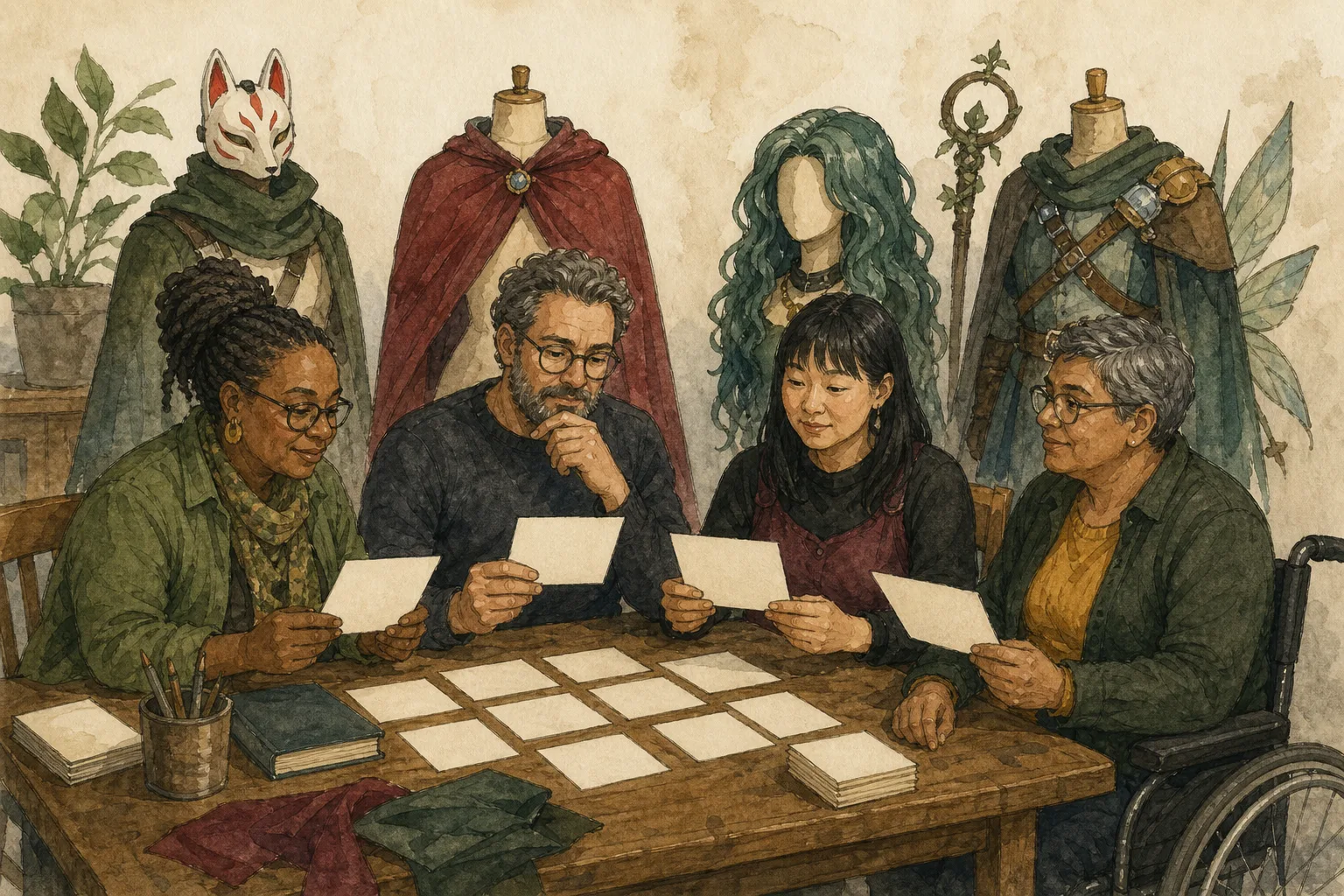
Adult cosplay studies document varied creativity, identity and community experiences. Direct evidence about erotic use remains sparse and cannot establish prevalence or motive.
Illustration created using generative AI; not documentary evidence.- Status
- Detailed editorial draft
- Publisher
- The UK Kink Guide
- Reviewed
- Structured draft present; individual review date not recorded
- Evidence
- 7 cited sources · types labelled below
- Jurisdiction
- UK-focused general education
Read the rest: evidence, law, safety and sources
A wider fandom and creative practice involving costume, character interpretation, making, performance or photography. It has no necessary erotic meaning.
A private or specifically consenting adult context in which costume or character-inspired performance becomes part of erotic fantasy.
Cosplaying a character of another gender. It may be creative, exploratory or playful and does not by itself reveal gender identity, sexuality or erotic intent.
A broader category using uniforms, historical dress or original roles without necessarily referring to an established fandom character.
Costume, character and collaborative craft
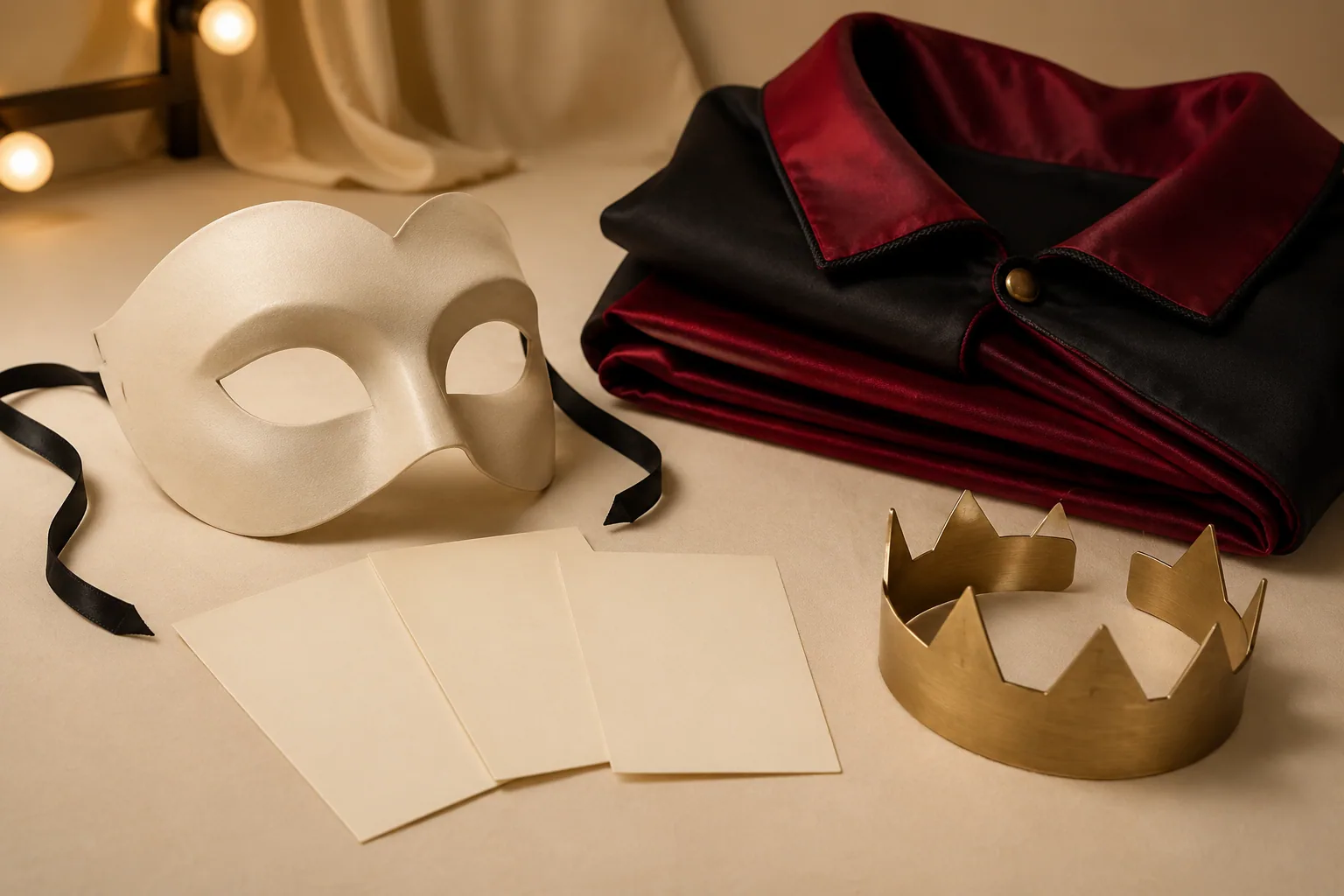
Associated objects can include an unworn mask, cape fabric, wig, gloves, jewellery, blank character cards or a non-functional convention-safe prop. Silhouette, colour, texture, recognisable symbols, transformation and the experience of embodying a persona may each matter more than strict visual accuracy.
A finished cosplay may involve makers, makeup artists, photographers or editors as well as the wearer. Their creative contribution does not make them participants in a private role-play, and permission to make, style or photograph a costume does not imply permission for an erotic use of their work or image.
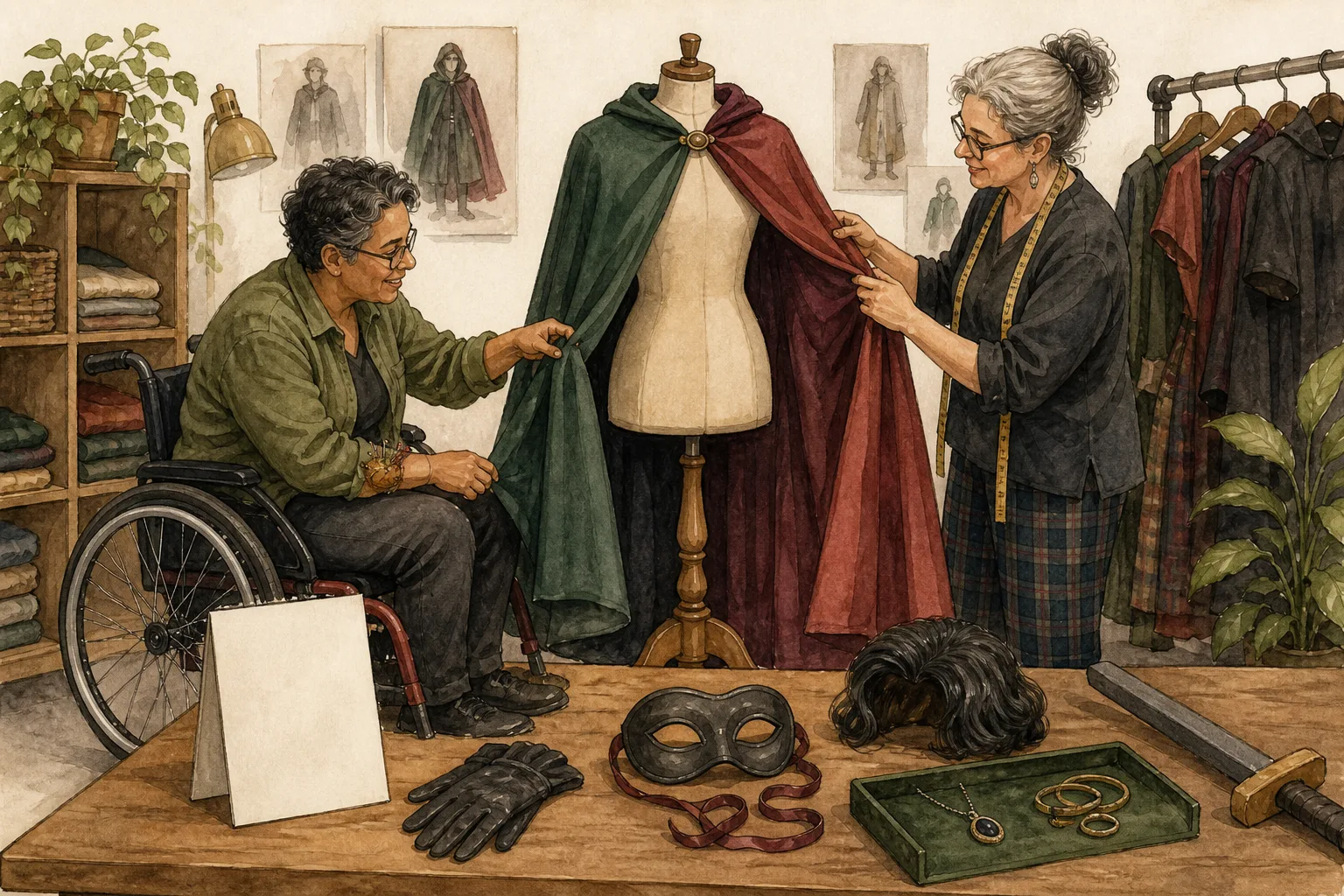
Costume work can involve makers, stylists and photographers. Their contribution does not include them in private role-play, and accessible design remains part of good craft.
Illustration created using generative AI; not documentary evidence.Consent, photography and public space
Costume is not consent. Agreement is needed for touch, posing, photography, publication, character interaction and any private adult role-play separately. A convention ticket, revealing garment, in-character response or previous photograph does not make a person available for contact or further images.
Erotic role-play belongs in a private or specifically consenting adult setting, not around unaware convention attendees or bystanders. All participants and represented personas in this entry must be unambiguously adult; anything outside that boundary is excluded from this guide.
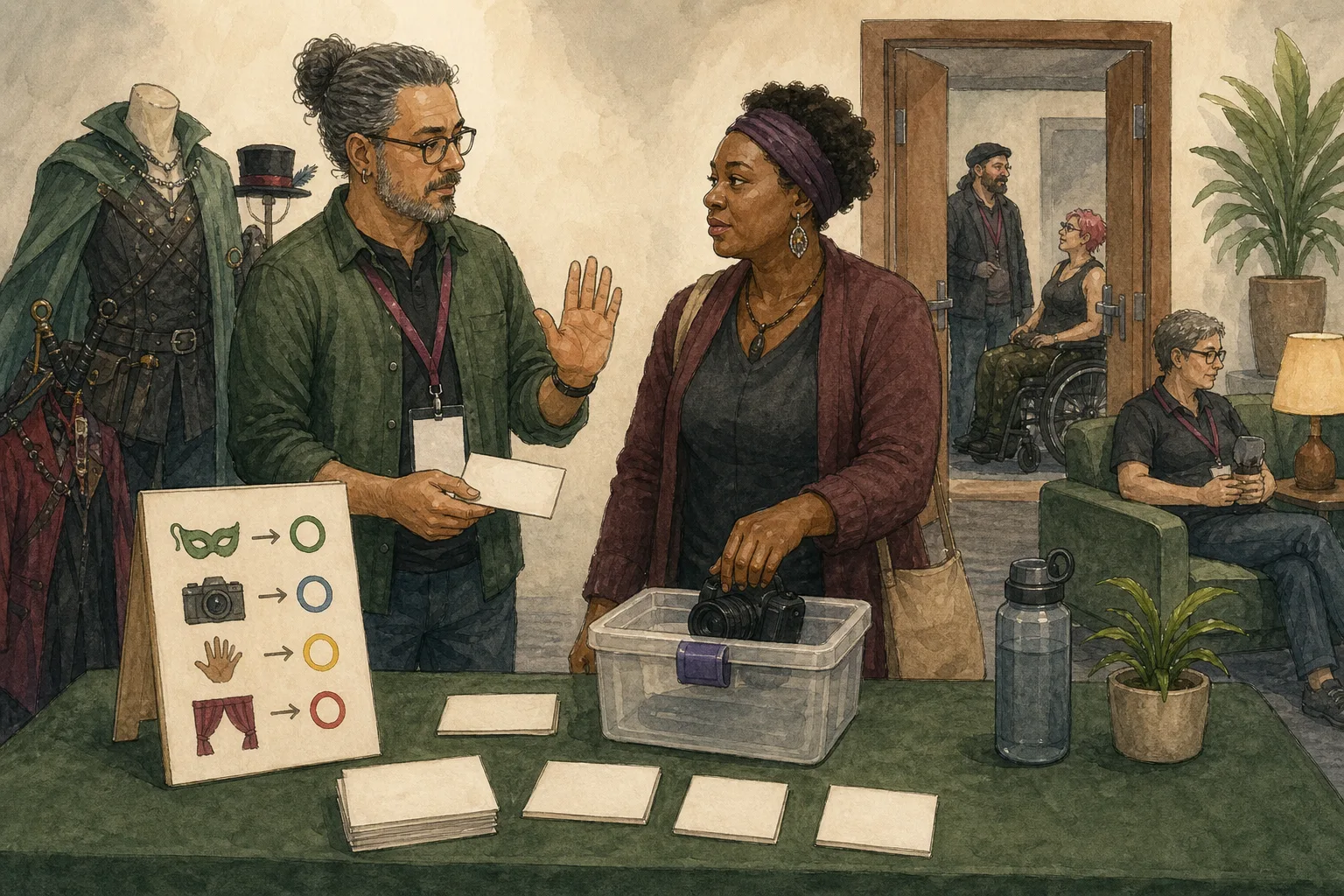
Touch, posing, photography, publication and private adult role-play are separate choices. Conventions and public spaces include people who are outside the performance.
Illustration created using generative AI; not documentary evidence.Materials, access and wellbeing
Masks, rigid accessories, layered garments, wigs, adhesives, cosmetics and contact materials can affect vision, hearing, balance, movement, temperature and skin. Venue rules, mobility aids, sensory needs and a clear route out of costume remain relevant even when a design is visually convincing.
NHS guidance identifies confusion, faintness, persistent dizziness and hot skin among warning signs around heat illness. Breathing difficulty, collapse, serious allergic reaction or severe distress needs appropriate help rather than being treated as commitment to character. See Masks and hoods, Gloves and Aftercare for useful overlaps.
Clinical and UK legal distinction
A consensual adult interest in costume or character role-play is not a paraphilic disorder by default. WHO guidance separates atypical interests from disorder through factors such as marked distress, significant impairment, serious risk and non-consent; enthusiasm, collecting or dressing as a character is not diagnostic evidence.
In England and Wales, sexual consent requires agreement by choice with freedom and capacity. A fictional role does not override withdrawal, excuse harassment or transform non-consensual touching into play; other UK jurisdictions have their own law, and venue safeguarding rules may impose additional boundaries.
Non-graphic examples
What the umbrella may include
- Two adults agreeing a private role-play based on original, clearly adult personas.
- Enjoying the transformation created by a cape, mask or wig without wanting erotic interaction.
- Crossplaying a character for craft or self-expression with no implication about gender identity or sexuality.
- Asking before taking a photograph and treating permission to store or publish it as a separate question.
- Choosing a lighter or more accessible costume when heat, mobility or sensory needs make the original design unsuitable.
Prepare for an appointment
Questions you could ask a professional
- What information would help you understand my question?
- What are the realistic options and uncertainties?
- How can disability, communication or privacy needs be accommodated?
- When should the situation be reviewed again?
These prompts do not replace assessment and do not imply that every reader needs professional care.
Continue learning
Take the next step from definition to context.
Continue with independent guidance connecting erotic cosplay to evidence, consent, safety, uncertainty and practical decisions.
Separate adult fantasy from roleplay, agree a scene's limits, protect privacy and know when to seek support.
Read the guide