Participation in a fandom built around anthropomorphic animal characters, art and personas. The furry community is not inherently sexual; some adults incorporate its imagery or identities into erotic fantasy, while many do not.
Sources and evidence type
Manual claim and limitation notes are shown where an individual source audit is complete. Other evidence-type labels are a publisher aid awaiting source-by-source confirmation.
Roberts et al. (2015), anthrozoomorphic identityResearch study
Source design
Peer-reviewed research or review
What it can support
The specific population, measures and findings reported by the paper.
Important limitation
It cannot automatically establish UK prevalence, causation, diagnosis, consent or an individual outcome. Check recruitment, definitions and study design.
The specific population, measures and findings reported by the paper.
Important limitation
It cannot automatically establish UK prevalence, causation, diagnosis, consent or an individual outcome. Check recruitment, definitions and study design.
The specific population, measures and findings reported by the paper.
Important limitation
It cannot automatically establish UK prevalence, causation, diagnosis, consent or an individual outcome. Check recruitment, definitions and study design.
The specific population, measures and findings reported by the paper.
Important limitation
It cannot automatically establish UK prevalence, causation, diagnosis, consent or an individual outcome. Check recruitment, definitions and study design.
Illustration created using generative AI; not documentary evidence.
In brief
A creative fandom is broader than its adult erotic overlaps.
Furry interest is participation in a fandom organised around anthropomorphic animal characters—fictional figures combining human and non-human traits. Adults may engage through art, writing, costume, performance, gaming, conventions, friendship or a personal character often called a fursona. The fandom is not inherently sexual; some adults include furry imagery in erotic fantasy, while many do not, and neither a fursona nor a fursuit supplies consent.
Identity, fandom and research samples
Roberts and colleagues describe furry identity as varied connection with anthropomorphic characters and non-human animals, while their clinical paper advises professionals not to pathologise unfamiliar identities. Fandom studies also document belonging, creativity and stigma. These largely self-selected samples cannot represent every furry or provide a general-population prevalence.
Hsu and colleagues examined sexual motivation and erotic target-identity themes in a specific sample of male furries. The study is useful for understanding one adult subgroup, but its sex-restricted, self-selected design cannot justify treating the fandom as primarily sexual or applying its findings to all members.
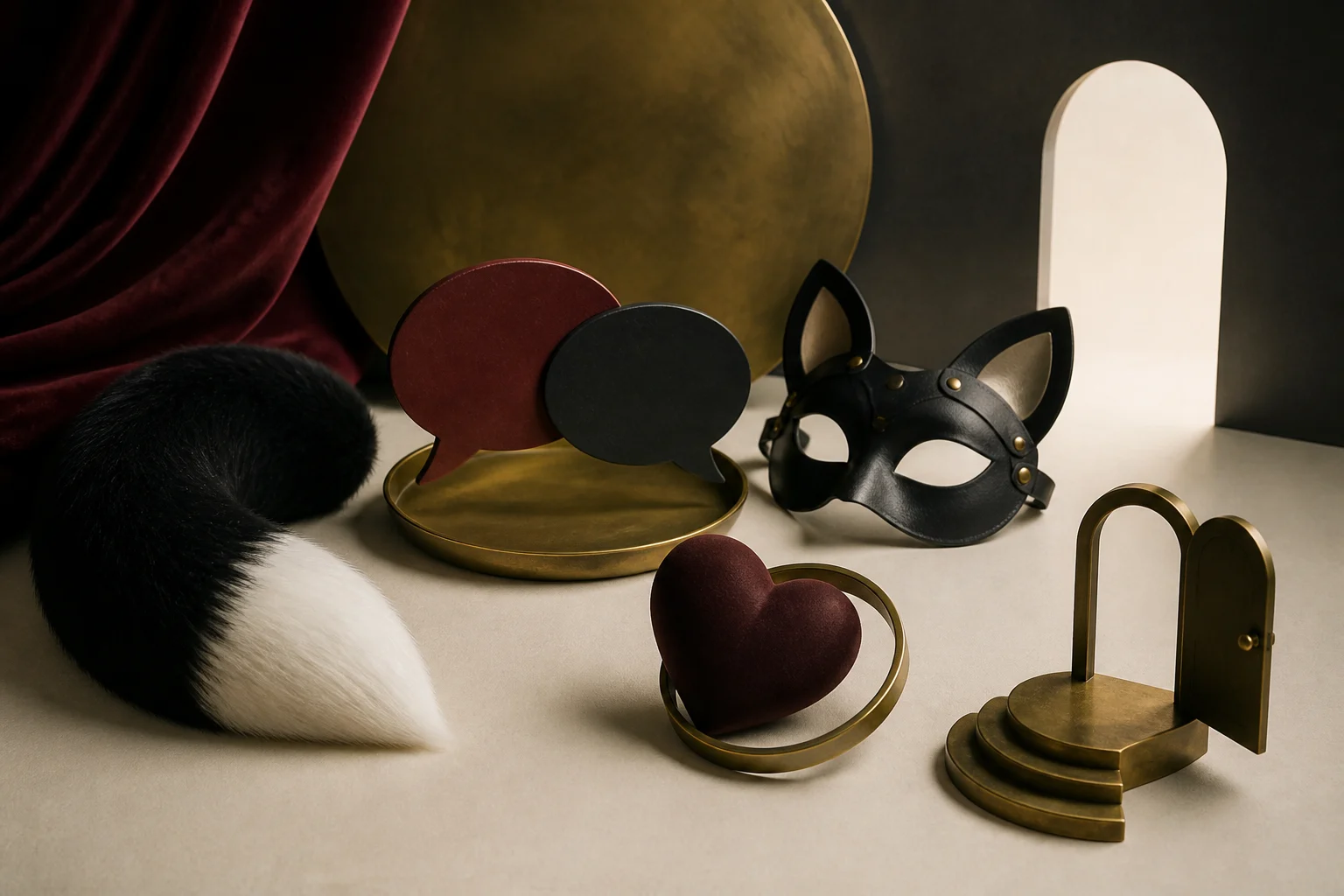
EDITORIAL ILLUSTRATIONA fandom is broader than one subgroup
Self-selected furry studies describe identity, creativity, belonging, stigma and some adult sexual subgroups. They do not show that the fandom is inherently sexual or define every participant.
Illustration created using generative AI; not documentary evidence.
Status
Detailed editorial draft
Publisher
The UK Kink Guide
Reviewed
Structured draft present; individual review date not recorded
Evidence
5 cited sources · types labelled below
Jurisdiction
UK-focused general education
Read the rest: evidence, law, safety and sources
Furry fandom
A creative and social interest in anthropomorphic characters, art, stories and community.
Fursona
A designed character or persona that may support creativity, play or identity exploration; it is not automatically an erotic identity.
Fursuiting
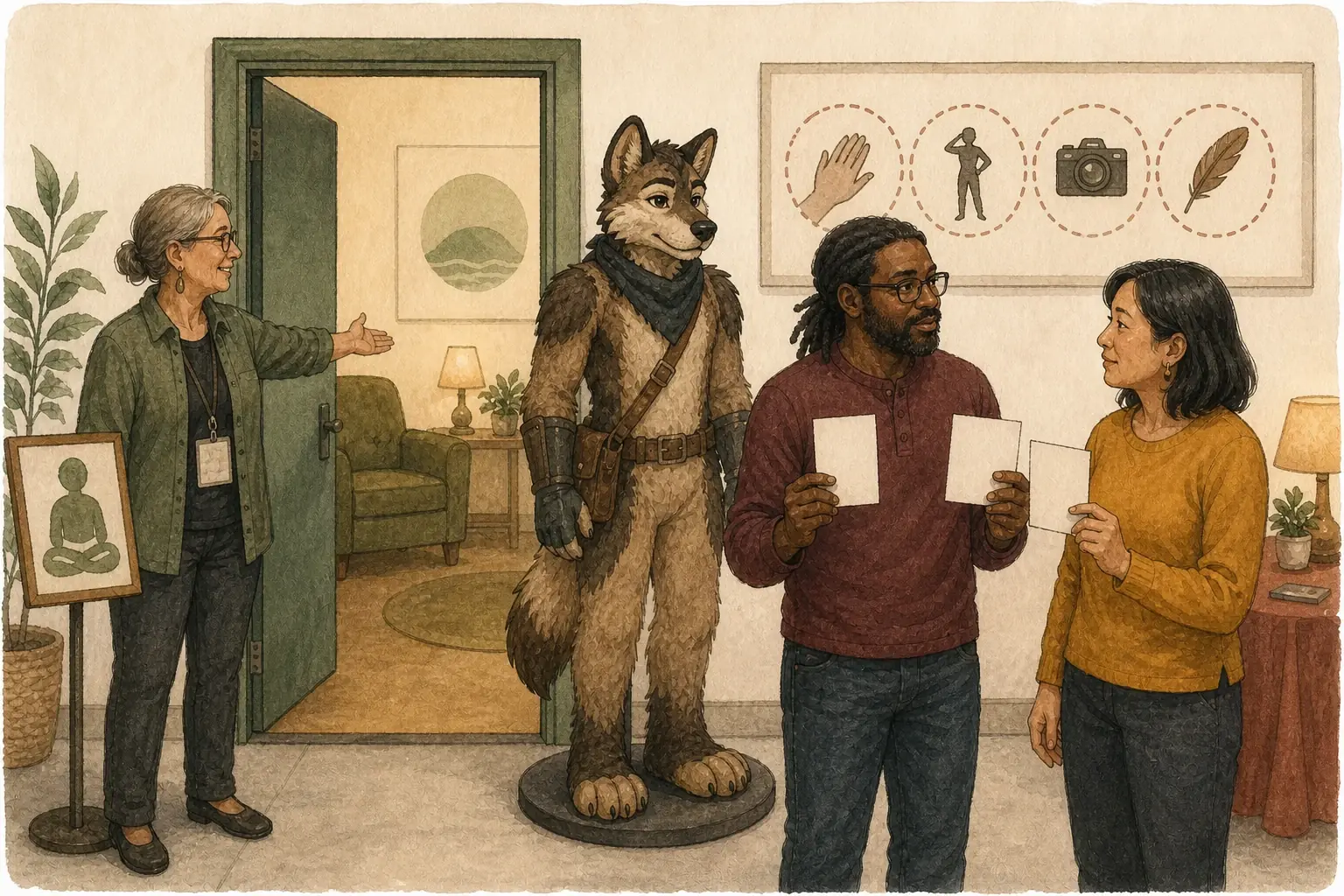
Wearing a partial or full character costume. Many furries do not own one, and wearing one is not consent to touch or photograph.
Adult erotic furry content
One optional part of some adults' engagement; it should not be projected onto the whole fandom.
Characters, art and material culture
A character reference sheet, badge, tail, pair of paws, adult-sized costume head, fabric swatch or abstract species emblem can carry creative or personal meaning. Colour, silhouette, softness, exaggeration, voice and movement may help make a character recognisable.
Commissioned art and costumes involve artists' and makers' rights as well as the buyer's preferences. Ownership of an object does not automatically transfer copyright, permission to alter the work publicly or permission to use another person's character or image in an adult context.
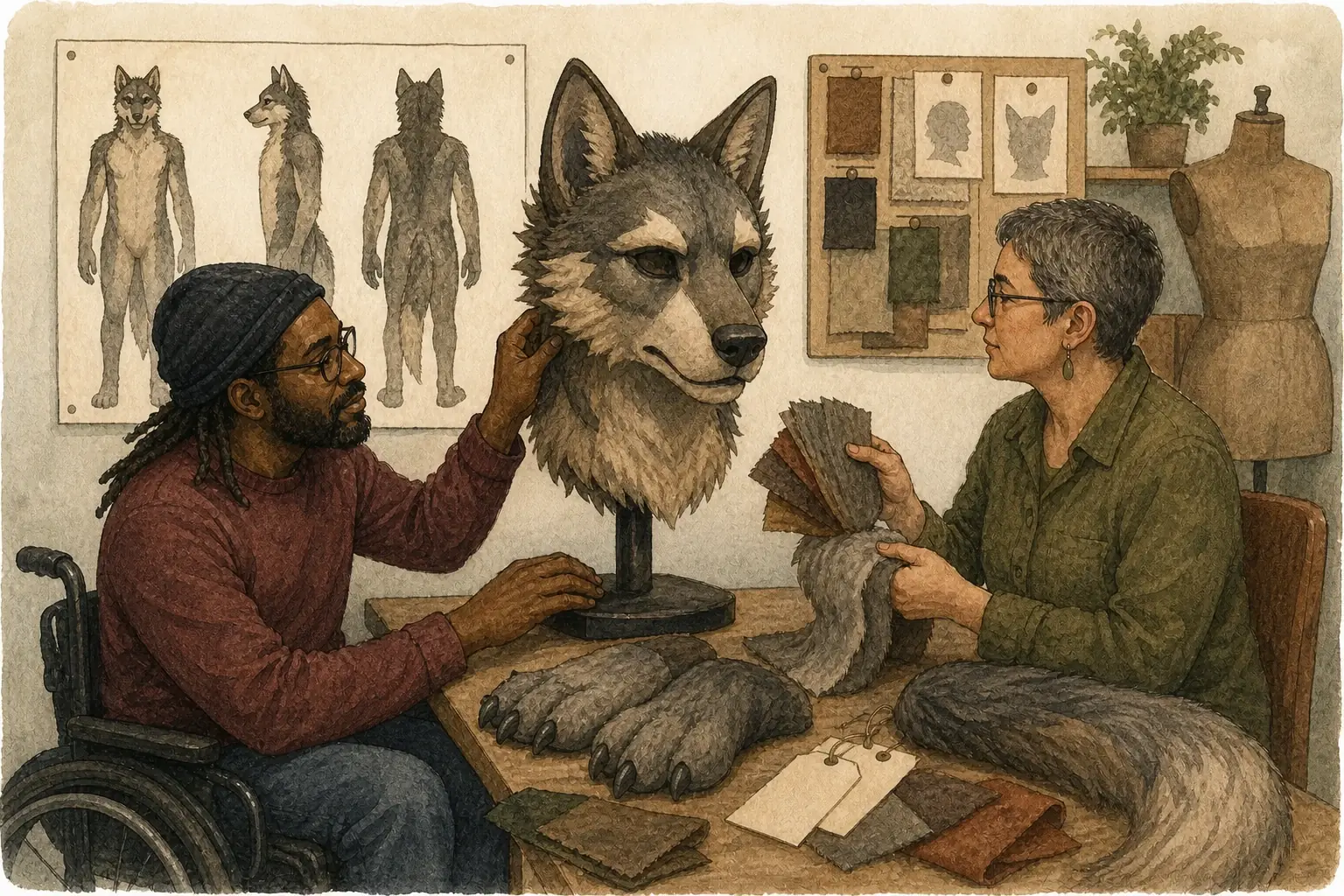
EDITORIAL ILLUSTRATIONCreative work carries separate rights
Characters, commissioned art and costumes involve creators' terms as well as buyers' preferences. Owning an object does not transfer every copyright or adult-use permission.
Illustration created using generative AI; not documentary evidence.
Consent, events and accessibility
Touching a costume, hugging, posing, photographing and publishing an image are separate consent questions. Character performance can limit hearing, sight, speech, balance and heat tolerance, so clear gestures, helpers, quiet space and the freedom to remove costume components may be important access needs rather than failures of performance.
Conventions and online spaces may include mixed audiences and their own codes of conduct. Adult material belongs only in clearly age-restricted, consenting contexts. This guide discusses unambiguously adult participants and personas and excludes age-ambiguous sexual content.
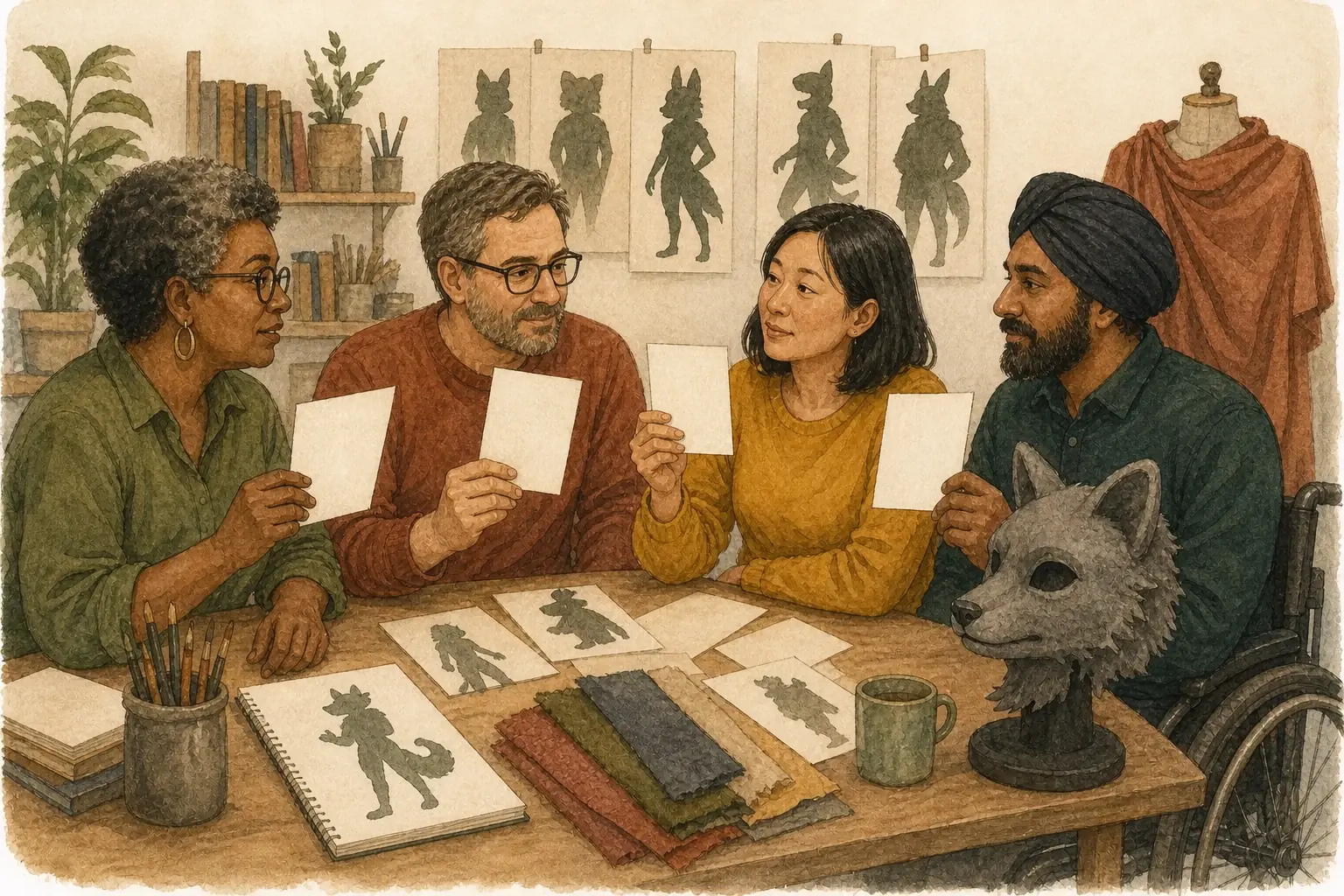
EDITORIAL ILLUSTRATIONCostume is not consent
Touch, hugs, posing, photography and publication are distinct choices. Heat, reduced vision or speech, helpers and quiet space are access matters, not failures of character performance.
Illustration created using generative AI; not documentary evidence.
Clinical distinction and overlap
Furry interest is not a paraphilic disorder or a mental disorder by default. WHO guidance requires factors such as marked distress, significant impairment, serious risk or non-consent before an atypical sexual interest is considered a disorder; social stigma alone should not be mistaken for pathology.
Some adults also participate in Pup play, Erotic cosplay, Transformation fantasy or Mask and hood interests, but the categories are not interchangeable. A clinician, partner or researcher should ask what the person's own participation means rather than infer sexuality, gender, diagnosis or behaviour from a badge or fursona.
Non-graphic examples
What the umbrella may include
Creating an anthropomorphic character for art, writing or online community with no erotic meaning.
Wearing an adult-sized partial fursuit at a convention and setting clear photography boundaries.
Commissioning adult-themed art of an unambiguously adult original character under agreed artist terms.
Using a character voice or badge as a social cue while keeping ordinary communication available.
Participating in both furry fandom and pup play while treating them as separate interests with different boundaries.
Prepare for an appointment
Questions you could ask a professional
What information would help you understand my question?
What are the realistic options and uncertainties?
How can disability, communication or privacy needs be accommodated?
When should the situation be reviewed again?
These prompts do not replace assessment and do not imply that every reader needs professional care.
Continue learning
Take the next step from definition to context.
Continue with independent guidance connecting furry interest to evidence, consent, safety, uncertainty and practical decisions.