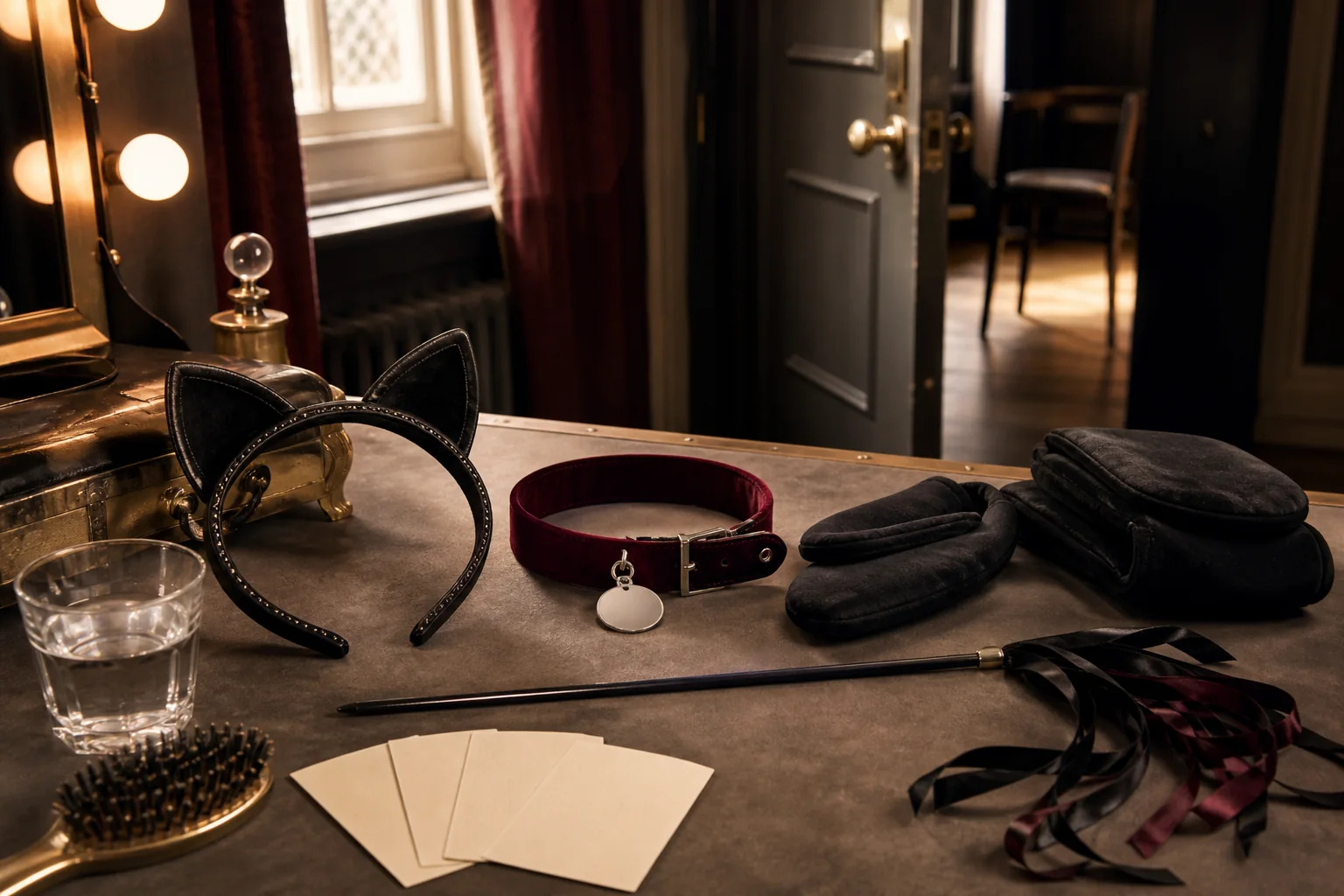
Adult pet play using a cat-like persona, often involving affection, independence, playfulness, grooming symbolism, movement or an owner-and-pet power dynamic.
Sources and evidence type
Manual claim and limitation notes are shown where an individual source audit is complete. Other evidence-type labels are a publisher aid awaiting source-by-source confirmation.
Wignall et al. (2024), narratives from the pup subcultureResearch study
Source design
Peer-reviewed research or review
What it can support
The specific population, measures and findings reported by the paper.
Important limitation
It cannot automatically establish UK prevalence, causation, diagnosis, consent or an individual outcome. Check recruitment, definitions and study design.
The specific population, measures and findings reported by the paper.
Important limitation
It cannot automatically establish UK prevalence, causation, diagnosis, consent or an individual outcome. Check recruitment, definitions and study design.
Illustration created using generative AI; not documentary evidence.
In brief
A kitten persona is an adult role—not an invitation, age claim or loss of autonomy.
Kitten play is human adult role-play and does not involve real animals. It may be light-hearted, non-sexual, identity-relevant, sensory or part of D/s. The label does not imply submission, femininity or constant availability for touch. Ears, tails, collars and movement can support a persona but add fit, hygiene, balance and privacy considerations.
Persona and consent
Agree names, sounds, touch, commands, grooming, movement, public visibility and how to speak out of role. Animal-like behaviour never makes ordinary refusal ambiguous.
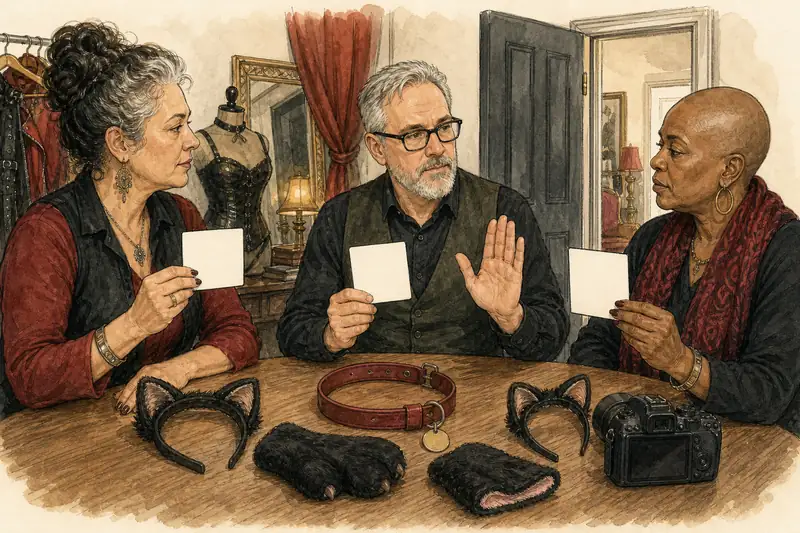
Ask before petting, handling ears or tail, photographing or joining the play. A collar or costume is not general permission.
EDITORIAL ILLUSTRATIONCostume never supplies permission
Ears, collars and persona do not authorise touch, commands, photography or participation. Ask separately and keep an ordinary out-of-role channel available.
Illustration created using generative AI; not documentary evidence.
Status
Detailed editorial draft
Publisher
The UK Kink Guide
Reviewed
Structured draft present; individual review date not recorded
Evidence
3 cited sources · types labelled below
Jurisdiction
UK-focused general education
Read the rest: evidence, law, safety and sources
Kitten play
Adult cat-inspired persona or role-play.
Pet play
The broader family of adult animal-role fantasies, including pups, ponies and other personas.
Furry identity
Engagement with anthropomorphic characters or fandom, which may overlap but is not synonymous.
Movement and costume
Crawling, jumping and floor movement can strain wrists, knees and back or expose skin to contamination. Use clean surfaces, short periods and accessible alternatives.
Check headbands, masks, bells, collars, adhesives and tails for pressure, allergies, snagging and quick release. Never insert or attach improvised objects to the body.
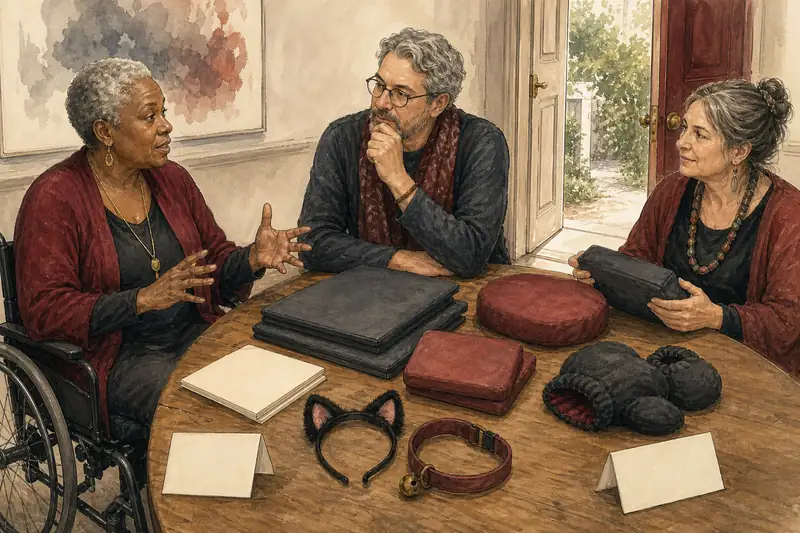
EDITORIAL ILLUSTRATIONAdapt the role to the body
Floor movement and costume can affect joints, skin, pressure and balance. Clean surfaces, short periods and seated or gesture-based alternatives support access.
Illustration created using generative AI; not documentary evidence.
Communication and sensory needs
Provide a clear human voice or signal for stop, pain and practical needs. Reduced speech should be optional and reversible.
Some people value repetitive sound, texture or contained roles; others find bells, fur or touch overwhelming. Describe sensory features rather than calling them universally soothing.
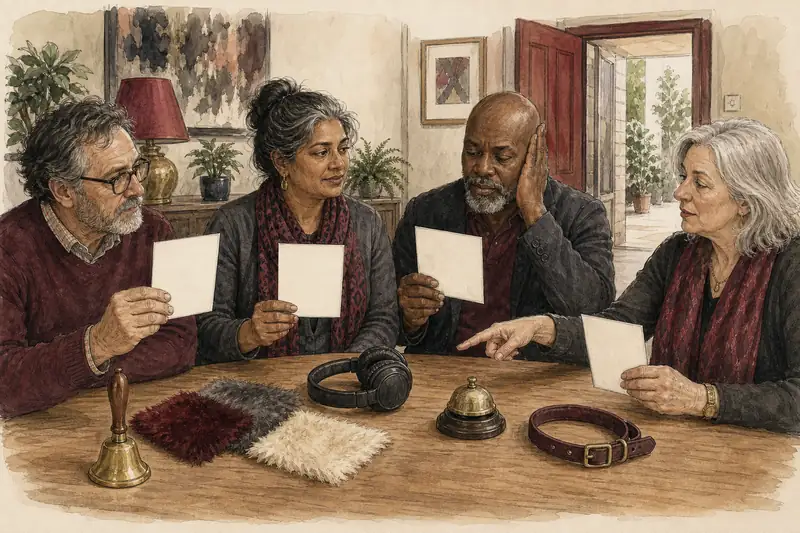
EDITORIAL ILLUSTRATIONSensory meanings are individual
Sound, fur, repetitive movement and touch may feel containing to one person and overwhelming to another. Reduced speech must remain optional and reversible.
Illustration created using generative AI; not documentary evidence.
Evidence and boundaries
Direct kitten-play research is minimal. Related pup-play studies document community, play and identity themes but cannot be generalised to every pet-play role.
Keep all site examples adult-coded, exclude real animals and respect non-participants and venue rules. Fantasy does not confer rights over public space.
Non-graphic examples
What the umbrella may include
Using cat-like gestures in private adult role-play.
Choosing a quiet collar without a bell.
Using knee cushions for floor movement.
Switching to ordinary speech for a check-in.
Declining touch despite wearing kitten ears.
Prepare for an appointment
Questions you could ask a professional
What information would help you understand my question?
What are the realistic options and uncertainties?
How can disability, communication or privacy needs be accommodated?
When should the situation be reviewed again?
These prompts do not replace assessment and do not imply that every reader needs professional care.
Continue learning
Take the next step from definition to context.
Continue with independent guidance connecting kitten play to evidence, consent, safety, uncertainty and practical decisions.