A consensual adult dynamic using a leash or lead for symbolism, guidance, pet play, ritual or controlled movement without treating the neck as a safe load-bearing point.
Sources and evidence type
Manual claim and limitation notes are shown where an individual source audit is complete. Other evidence-type labels are a publisher aid awaiting source-by-source confirmation.
Dunkley & Brotto (2020), BDSM consent reviewResearch study
Source design
Peer-reviewed research or review
What it can support
The specific population, measures and findings reported by the paper.
Important limitation
It cannot automatically establish UK prevalence, causation, diagnosis, consent or an individual outcome. Check recruitment, definitions and study design.
Illustration created using generative AI; not documentary evidence.
In brief
A symbolic lead should never become an uncontrolled load on the neck or airway.
Leash play may be primarily psychological and use little or no tension. It can overlap with pet play, service, public-role symbolism or movement cues, but a lead does not create ownership or general authority. Falls, sudden pulling, entanglement and neck compression can turn a simple object into a serious hazard. Attachment point, release, environment and communication therefore matter more than visual style.
Negotiating the meaning
Agree whether the lead represents pet play, service, display or simple guidance and where the role begins and ends. Wearing or holding it does not imply consent to commands or public interaction.
Plan how ordinary refusal and emergency communication override the performance, including when speech, hearing or vision is limited.
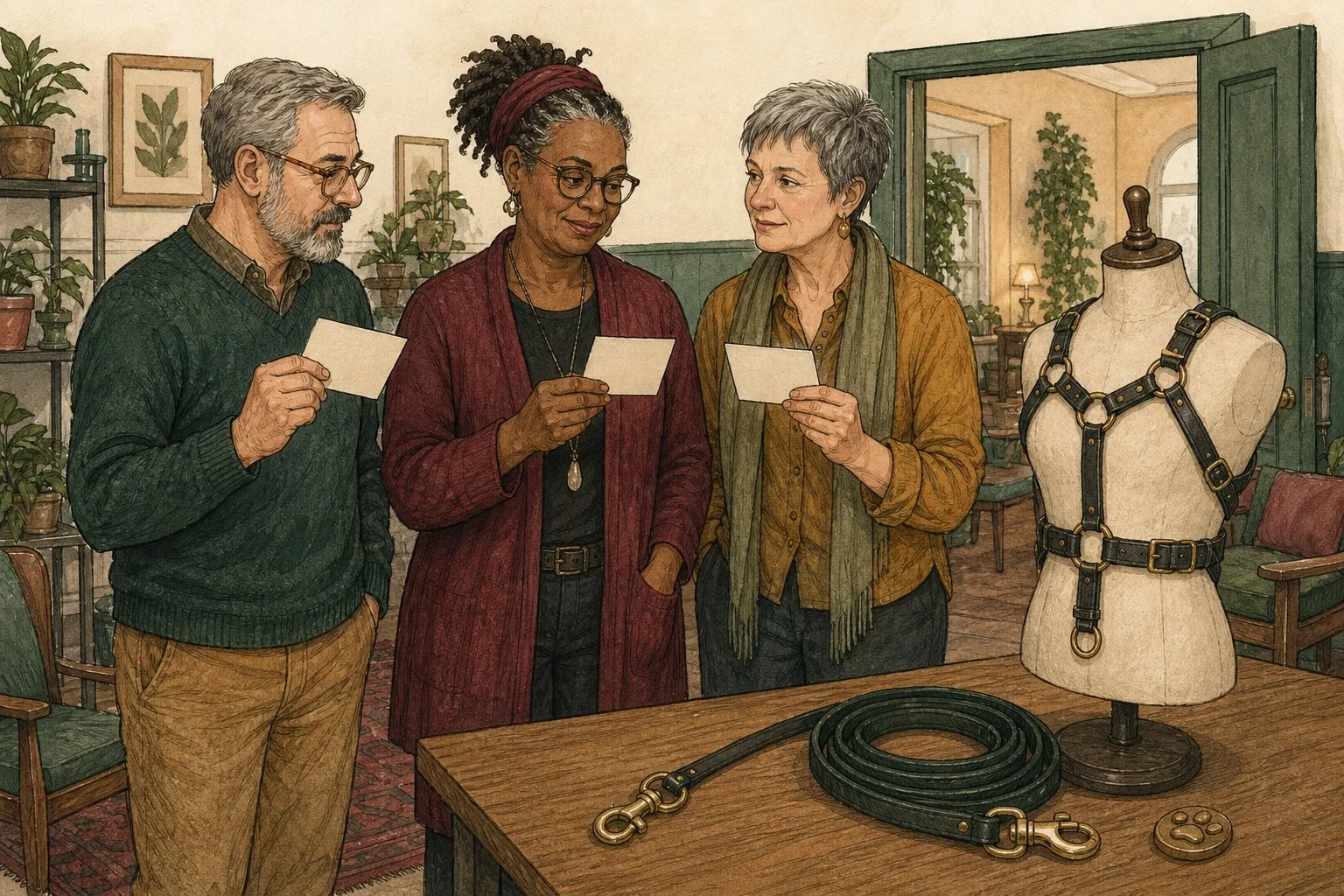
EDITORIAL ILLUSTRATIONA lead does not create authority
Leash play can be symbolic, ritual or movement-based, but the object does not establish ownership or general consent. Attachment, tension and context must be discussed separately.
Illustration created using generative AI; not documentary evidence.
Status
Detailed editorial draft
Publisher
The UK Kink Guide
Reviewed
Structured draft present; individual review date not recorded
Evidence
3 cited sources · types labelled below
Jurisdiction
UK-focused general education
Read the rest: evidence, law, safety and sources
Symbolic leash
A loose or non-load-bearing prop used mainly for role, ritual or visual meaning.
Guidance lead
An agreed movement cue applied through a safer purpose-designed attachment, not a licence to pull unpredictably.
Restraint tether
Equipment limiting movement and adding entrapment, anchor and release risks.
Mobility or assistance equipment
A real access aid whose function and user control must not be confused with kink equipment.
Attachment and movement
Avoid the throat and any setup that tightens around the neck. A body harness may distribute gentle guidance better, but it still requires correct fit and cannot make jerking or fall arrest safe.
Keep slack away from feet, furniture, doors, wheels and other people. Move at the slower person's pace and avoid stairs, traffic, crowds and slippery surfaces.
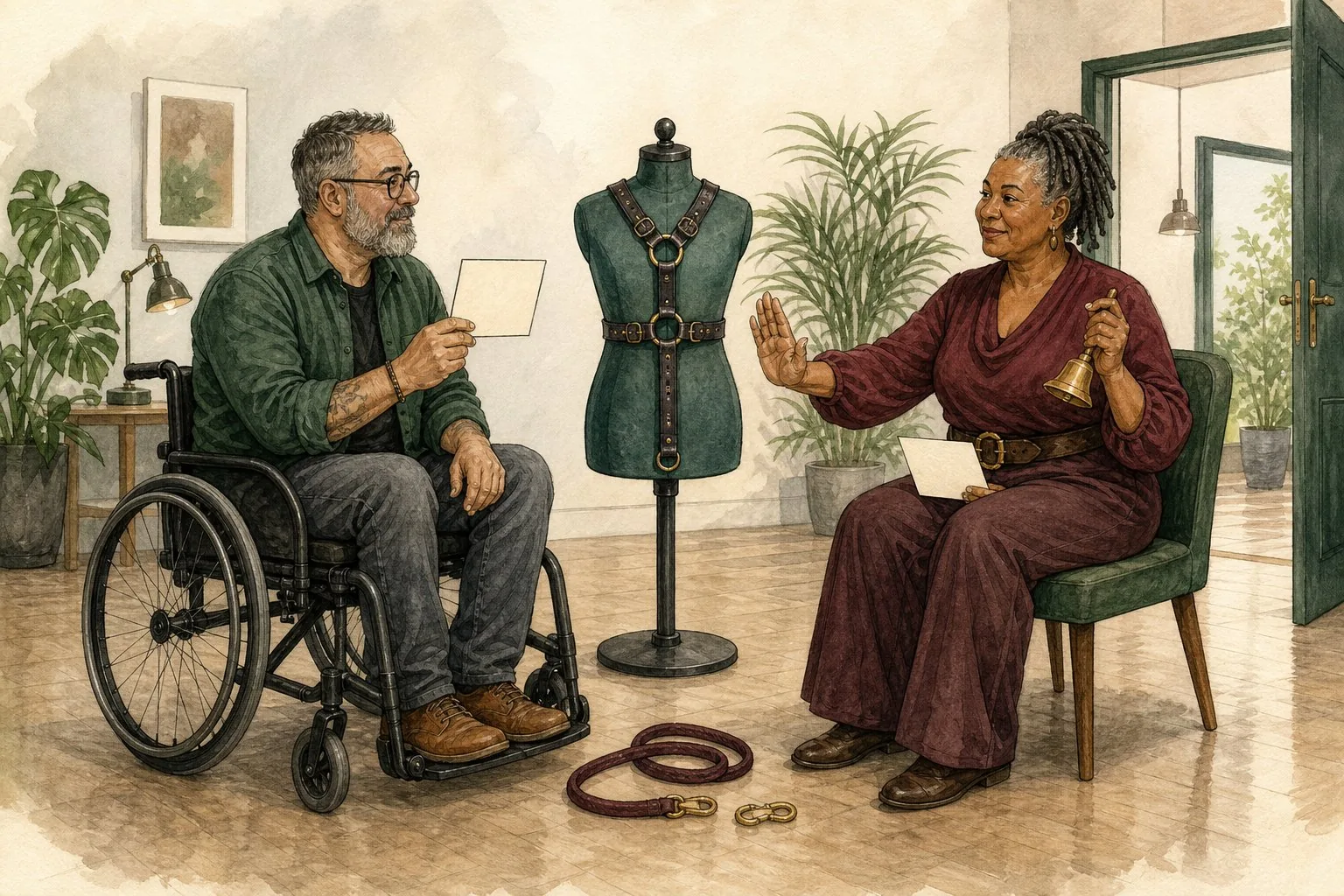
EDITORIAL ILLUSTRATIONPlan accessible communication
Movement cues can reduce balance and change how a signal is used. Participants need a perceivable pause, immediate release and adaptations that do not create neck load or exclude disability.
Illustration created using generative AI; not documentary evidence.
Release and supervision
Use an immediately accessible release at the person or attachment point and carry an appropriate backup where entanglement is possible. Never tether someone unattended.
Stop after coughing, voice change, breathing difficulty, neck pain, dizziness, numbness, a fall or panic and seek urgent help for concerning symptoms.
Public and accessibility context
Non-participants have not consented to a scene. Keep public expression lawful, discreet and compatible with venue rules, and never interfere with genuine assistance animals or equipment.
Account for balance, joint stability, fatigue, sensory processing and mobility aids. Adaptation should increase the wearer's control rather than remove it.
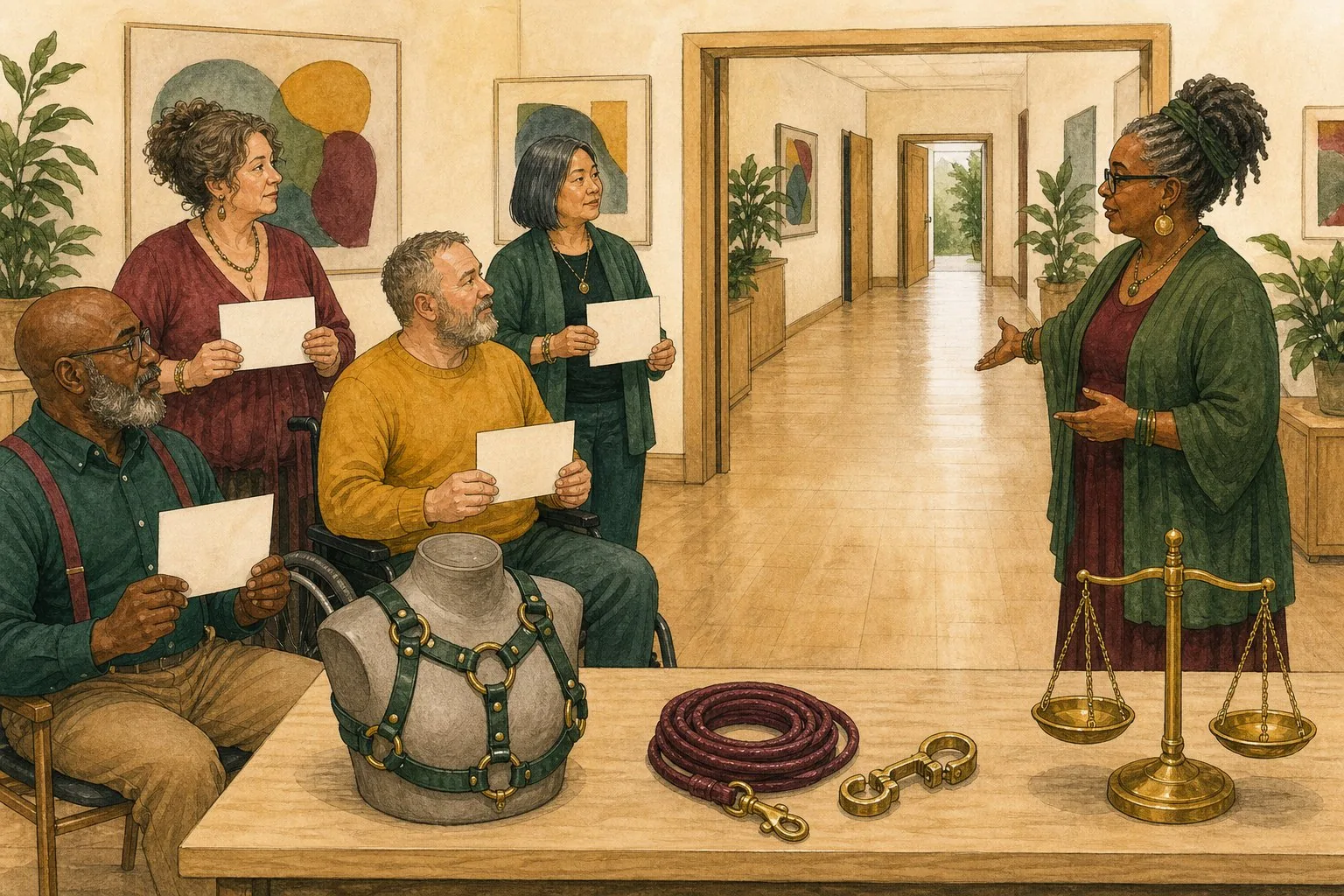
EDITORIAL ILLUSTRATIONConsider the whole environment
Trips, sudden movement, entanglement, crowds and bystanders change risk. A lead should stay away from the neck, remain readily releasable and never turn a person into an unattended tether point.
Illustration created using generative AI; not documentary evidence.
Non-graphic examples
What the umbrella may include
Using a loose lead as a private pet-play symbol.
Attaching gentle guidance to a fitted body harness.
Removing the lead before using stairs.
Keeping a quick release within the wearer's reach.
Choosing a visual ribbon instead of physical guidance.
Prepare for an appointment
Questions you could ask a professional
What information would help you understand my question?
What are the realistic options and uncertainties?
How can disability, communication or privacy needs be accommodated?
When should the situation be reviewed again?
These prompts do not replace assessment and do not imply that every reader needs professional care.
Continue learning
Take the next step from definition to context.
Continue with independent guidance connecting leash play to evidence, consent, safety, uncertainty and practical decisions.