A fetish is a strong, recurring intimate or erotic focus on something specific, such as a material, object, adult body feature or setting. For one person it may be an optional preference; for another it may be central to fantasy or arousal.
 The UK Kink GuideEvidence-led glossary
 Back to the glossaryFoundationsIn plain English Words in context A non-graphic adult example What not to assume
Fetish
A sustained erotic or intimate focus on a particular object, material, body feature or highly specific context. In everyday speech the word is often used broadly; having a fetish does not, by itself, establish distress, impairment or a clinical disorder.
Start here
New to this term?
‘Preference’ means liking something without necessarily needing it. ‘Partialism’ is a technical term for a pronounced focus on a non-genital adult body feature. ‘Paraphilia’ is a research or clinical interest category. ‘Paraphilic disorder’ is a diagnosis with additional requirements; the words are not interchangeable.
An adult may find the texture and appearance of leather especially meaningful, while another simply likes leather fashion. A third may collect boots for craft or style with no erotic interest. The object alone cannot tell an observer which description fits.
A fetish does not prove behaviour, identity, exclusivity, a single cause or a disorder. It creates no entitlement to another person’s body, clothing, image or belongings. Online group activity and selected surveys cannot establish how common a fetish is in the whole population.
Sources and evidence type
Manual claim and limitation notes are shown where an individual source audit is complete. Other evidence-type labels are a publisher aid awaiting source-by-source confirmation.
Scorolli et al. (2007), relative prevalence of different fetishesResearch study
- Source design
- Peer-reviewed research or review
- What it can support
- The specific population, measures and findings reported by the paper.
- Important limitation
- It cannot automatically establish UK prevalence, causation, diagnosis, consent or an individual outcome. Check recruitment, definitions and study design.
Joyal and Carpentier (2017), population study of paraphilic interests and behavioursResearch study
- Source design
- Peer-reviewed research or review
- What it can support
- The specific population, measures and findings reported by the paper.
- Important limitation
- It cannot automatically establish UK prevalence, causation, diagnosis, consent or an individual outcome. Check recruitment, definitions and study design.
Joyal and Carpentier (2022), concordance between interests and behavioursResearch study
- Source design
- Peer-reviewed research or review
- What it can support
- The specific population, measures and findings reported by the paper.
- Important limitation
- It cannot automatically establish UK prevalence, causation, diagnosis, consent or an individual outcome. Check recruitment, definitions and study design.
Ventriglio et al. (2019), fetishism overviewResearch study
- Source design
- Peer-reviewed research or review
- What it can support
- The specific population, measures and findings reported by the paper.
- Important limitation
- It cannot automatically establish UK prevalence, causation, diagnosis, consent or an individual outcome. Check recruitment, definitions and study design.
WHO ICD-11 clinical descriptions (2024)Clinical guideline
- Source design
- Current public-health or clinical guidance
- What it can support
- Service pathways, health definitions and recommended public-health or clinical actions within its stated scope.
- Important limitation
- General guidance cannot assess an individual’s symptoms, exposure, medicine, contraindications or urgency.
Krueger et al. (2017), ICD-11 proposals for paraphilic disordersCommunity context
- Source design
- Contextual or community source
- What it can support
- Terminology, reported practice or community context within the source’s own setting.
- Important limitation
- Community usage is not universal and does not establish safety, prevalence, clinical benefit or legal permission.

Foundations
Illustration created using generative AI; not documentary evidence.
In brief
A focus of meaning, not a diagnosis.
A fetish is a focused interest in which an object, material, body feature or particular context carries erotic or intimate importance. For one adult it may be a preference among many; for another it may be closely tied to fantasy, identity, ritual or sensory pleasure. The label alone does not reveal what a person does, whether an object is essential, or whether the interest causes difficulty.
Objects, materials and sensory qualities
Commonly described focuses include footwear, boots, gloves, hosiery, lingerie, uniform-style garments and materials such as leather, latex, rubber, PVC, silk, satin or metal. Interest may centre on texture, sheen, scent, sound, weight, fit, craftsmanship, symbolism, transformation or an association with a wearer or role. These possibilities overlap, and no object has one fixed meaning.
The same item can be practical clothing, fashion, a collectable, a memory object or a fetish object depending on the person and context. A garment's category or a retailer's description does not determine the response. Material allergies, skin sensitivity, fit, cleaning requirements and manufacturer guidance remain ordinary practical considerations even when an item also has intimate significance.

A fetish may centre on an object, material, sensory quality, image or association. The same object can be ordinary, aesthetic or personally significant in different contexts.
Illustration created using generative AI; not documentary evidence.- Status
- Detailed editorial draft
- Publisher
- The UK Kink Guide
- Reviewed
- Structured draft present; individual review date not recorded
- Evidence
- 6 cited sources · types labelled below
- Jurisdiction
- UK-focused general education
Read the rest: evidence, law, safety and sources
An informal, often very broad way to describe a strong fascination or attraction. This usage may be playful and does not carry a clinical meaning.
A sexual or intimate focus on an object, material, body feature or specific context. Definitions and sampling methods vary between studies, so findings are not always directly comparable.
A focused interest in a particular non-genital body part or feature. It can overlap with what people call a fetish, but the terms are not identical.
A clinical diagnosis with requirements involving distress, impairment, non-consent or serious risk of harm. An unconventional consensual adult interest is not a disorder merely because it is unusual.
What research can—and cannot—show
Scorolli and colleagues examined messages and memberships across 381 internet discussion groups involving about 5,000 people. Within that particular online dataset, body features and objects associated with the body were the most visible categories, with feet and foot-associated objects especially prominent. This is evidence about the relative visibility of interests in selected online groups, not a population prevalence estimate.
Population research by Joyal and Carpentier distinguishes reported interests from reported behaviours. Their later work likewise found that an interest and acting on it are not interchangeable. Surveys and online-group studies can describe patterns and associations, but they cannot establish a single cause, predict an individual's behaviour or determine whether that person has a diagnosis.

Studies may ask about attraction, fantasy, ownership, behaviour or identity. Different questions and self-selected samples cannot produce one universal fetish profile.
Illustration created using generative AI; not documentary evidence.Consent, ownership and privacy
A fetish focus never creates entitlement to another person's body, clothing, image or belongings. Touching, wearing, borrowing, photographing or sharing an item involving someone else requires the relevant person's freely given permission, and that permission can be limited or withdrawn. Interest is not the same as consent, and fantasy is not the same as action.
Consensual examples might involve an adult choosing a particular garment for a partner, mutually viewing a collection, or agreeing that an object's texture or symbolism will form part of an encounter. Someone may also enjoy an object privately without involving another person. Where a partner participates, consent remains specific to the people, acts and circumstances agreed; a relationship or previous participation does not supply blanket consent.
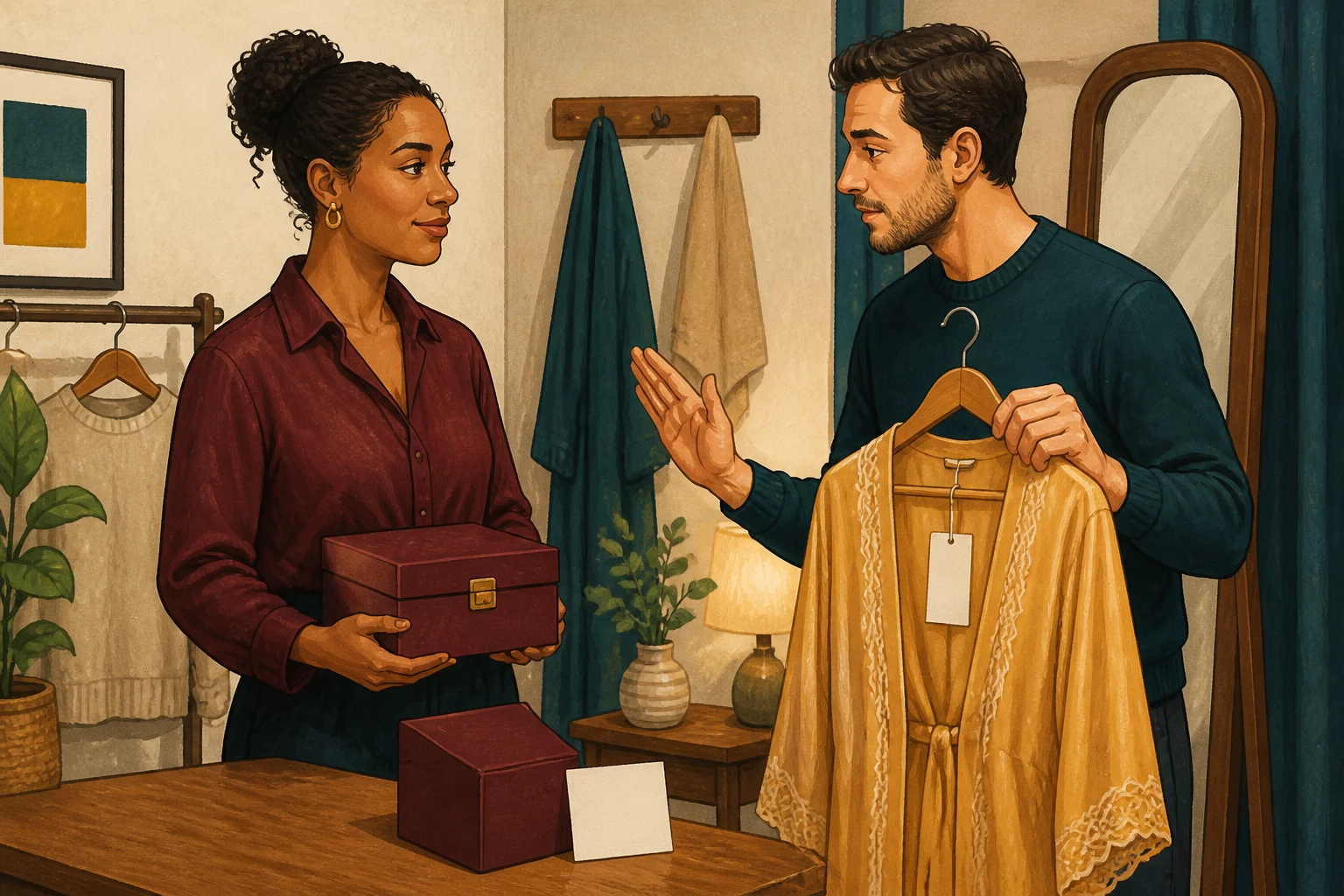
Touching, borrowing, wearing, photographing or sharing another person's body, belongings or image requires the relevant permission each time.
Illustration created using generative AI; not documentary evidence.Clinical distinction and wellbeing
The World Health Organization's ICD-11 framework distinguishes atypical sexual interests from paraphilic disorders. For patterns involving consenting adults or solitary behaviour, diagnostic requirements concern marked distress that is not explained solely by rejection or fear of rejection, or substantial risk of injury or death. A consensual adult fetish is therefore not a disorder simply because it departs from social convention.
Only a suitably qualified clinician can assess an individual diagnosis, and this page should not be used to label someone. Support may be useful when a person experiences persistent distress, impaired daily life, unwanted compulsive behaviour, risk of harm or concerns about consent. Good support can take the interest seriously without treating consensual difference itself as pathology.
Non-graphic examples
What the umbrella may include
- An adult may be drawn to the texture, sheen, scent or sound of leather, latex, rubber or another material.
- Footwear, boots, hosiery or gloves may be a visual, tactile, symbolic or collecting focus.
- Dressing, polishing, arranging or collecting adult garments may form part of a private ritual or a mutually agreed experience.
- A particular adult body feature may be the focus; researchers often discuss this overlap using the term partialism.
- An object or uniform-style garment may matter because it represents a role, craft, memory or transformation rather than because of its material alone.
Prepare for an appointment
Questions you could ask a professional
- What information would help you understand my question?
- What are the realistic options and uncertainties?
- How can disability, communication or privacy needs be accommodated?
- When should the situation be reviewed again?
These prompts do not replace assessment and do not imply that every reader needs professional care.
Continue learning
Take the next step from definition to context.
Continue with independent guidance connecting fetish to evidence, consent, safety, uncertainty and practical decisions.
How three overlapping adult terms differ, where clinical language has a separate purpose, and how to ask what someone means.
Read the full guideRelated in-depth reading
Read the full guide.
Explore a connected question with context and UK support routes.
A non-graphic adult guide to latex and leather interests, materials, allergy, heat, care, storage and community etiquette.
Read the full guide Community & cultureIs my kink normal?A grounded way to think about an adult kink without a popularity test, and to recognise when consent, distress or harm needs attention.
Read the full guide