Community shorthand for consensual adult kink, role-based or sensory activity. It can describe serious, emotionally meaningful or physically demanding experiences as well as light-hearted ones.
Sources and evidence type
Manual claim and limitation notes are shown where an individual source audit is complete. Other evidence-type labels are a publisher aid awaiting source-by-source confirmation.
Society for Psychotherapy: scenes, play and boundariesCommunity context
Source design
Contextual or community source
What it can support
Terminology, reported practice or community context within the source’s own setting.
Important limitation
Community usage is not universal and does not establish safety, prevalence, clinical benefit or legal permission.
The specific population, measures and findings reported by the paper.
Important limitation
It cannot automatically establish UK prevalence, causation, diagnosis, consent or an individual outcome. Check recruitment, definitions and study design.
Illustration created using generative AI; not documentary evidence.
In brief
Playfulness and seriousness can coexist; the word is not a safety certificate.
Play describes an agreed frame, not a claim that an activity is trivial, harmless or pretend. Adults may use it for role-play, sensation, power exchange, ritual or experimentation, including experiences requiring substantial preparation and emotional care. Calling something play cannot create capacity, waive responsibility or turn injury and coercion into acceptable outcomes.
Frame and meaning
Ask what play includes instead of assuming sex, pain, nudity or humour. The same term can cover very different experiences.
Serious emotional meaning does not make play less authentic, and laughter does not make risk disappear.
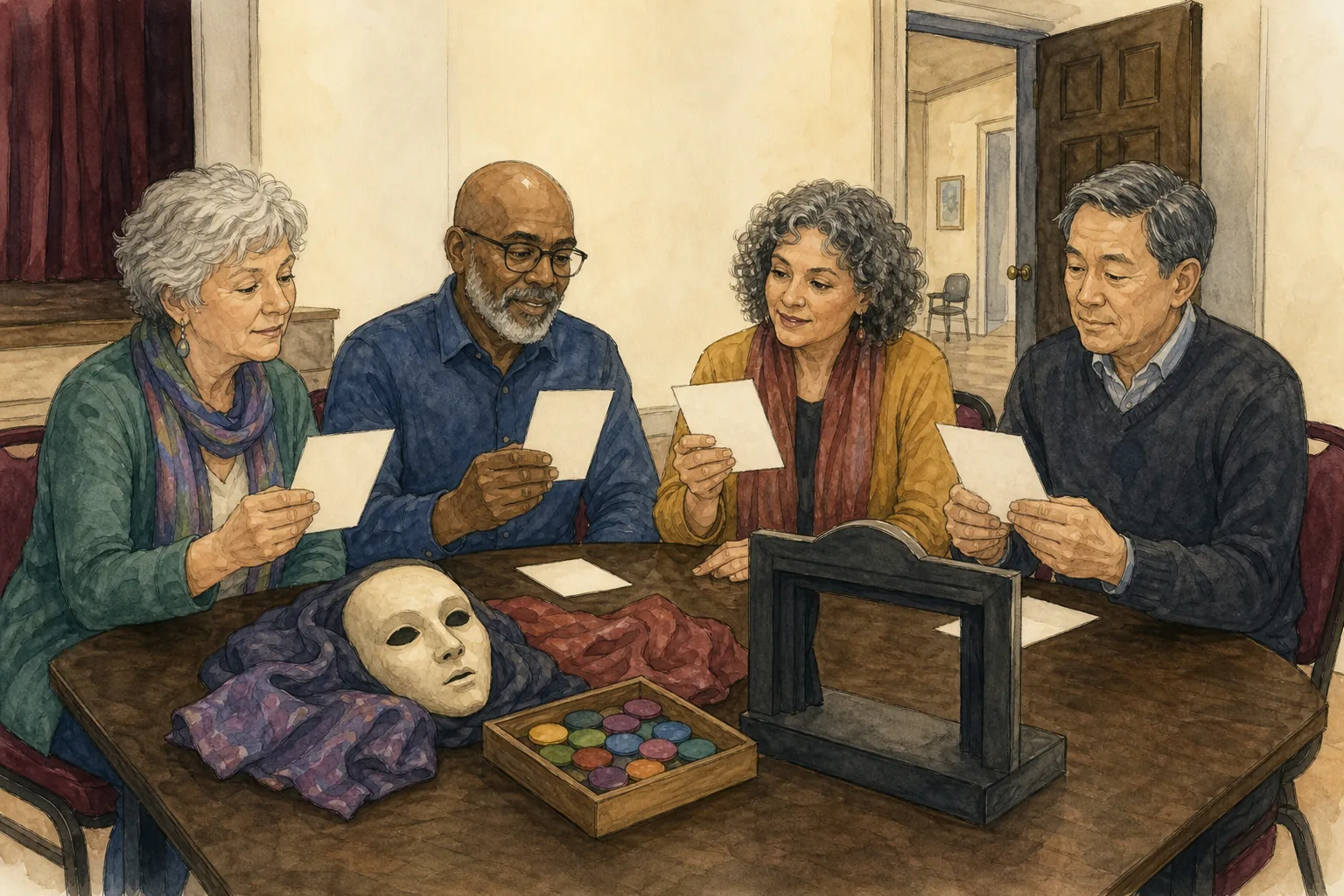
EDITORIAL ILLUSTRATIONPlay can carry many meanings
Ask what the word includes instead of assuming sex, pain, nudity or humour. Emotional seriousness and playfulness can coexist without changing the need for care.
Illustration created using generative AI; not documentary evidence.
Status
Detailed editorial draft
Publisher
The UK Kink Guide
Reviewed
Structured draft present; individual review date not recorded
Evidence
3 cited sources · types labelled below
Jurisdiction
UK-focused general education
Read the rest: evidence, law, safety and sources
Kink play
Consensual adult activity framed as exploration, role or sensation.
Role-play
Performance of agreed characters or scenarios, one possible form of play.
A scene
A bounded period that may contain play and explicit start and end points.
Abuse
Coercive or harmful conduct without meaningful consent; calling it play does not change that.
Consent and responsibility
Define scope, capacity, signals and stopping before activity and monitor throughout. A person can withdraw without leaving the relationship or community.
Fictional roles do not excuse deception, ignored refusal or reckless conduct.
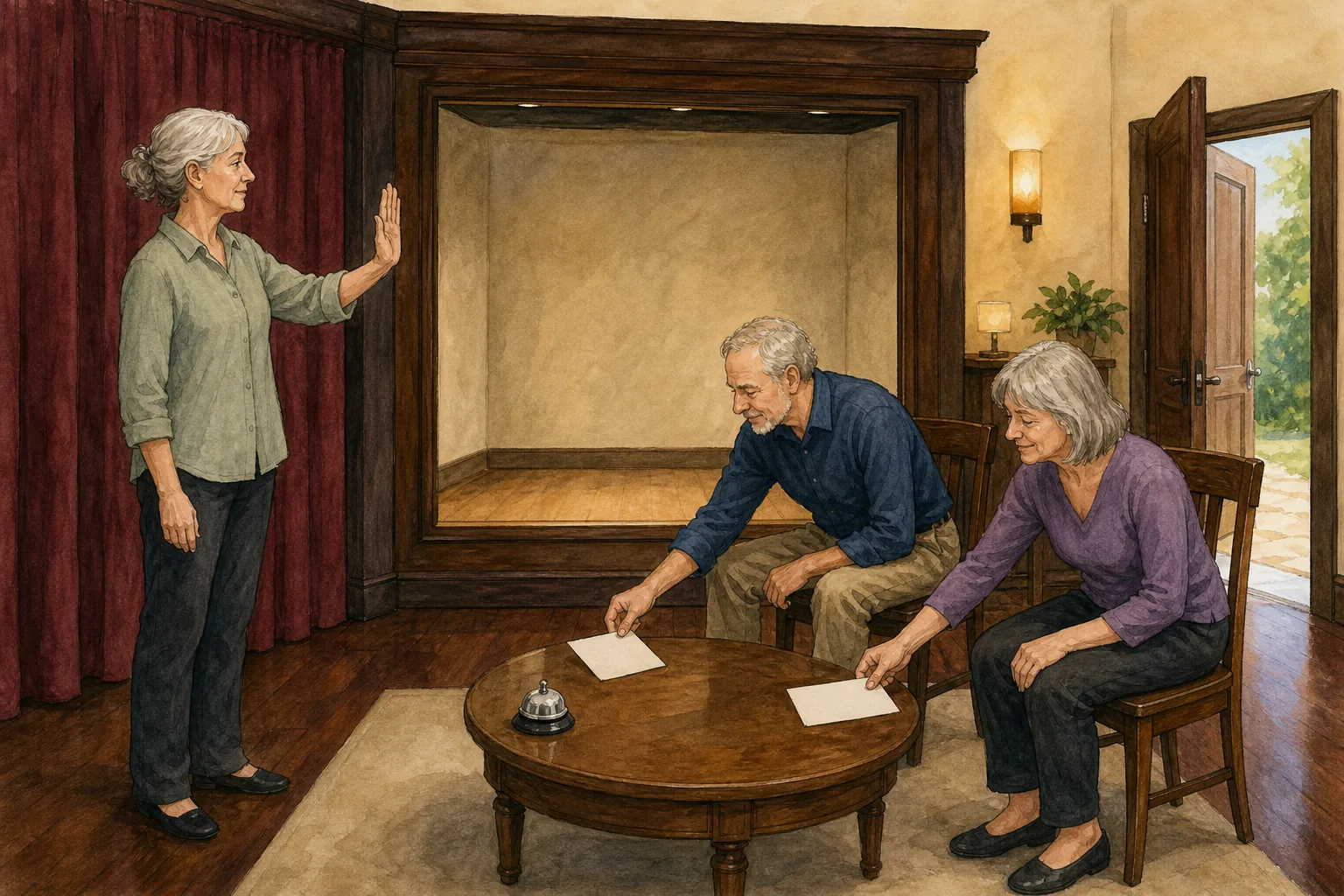
EDITORIAL ILLUSTRATIONThe frame never removes responsibility
Define scope, capacity, signals and stopping, then monitor throughout. Fictional roles do not excuse deception, ignored refusal or reckless conduct.
Illustration created using generative AI; not documentary evidence.
Risk and accessibility
Assess actual materials, bodies, environment and skills rather than relying on the reassuring word play.
Adapt movement, communication, sensory load and duration without treating accommodation as lesser participation.
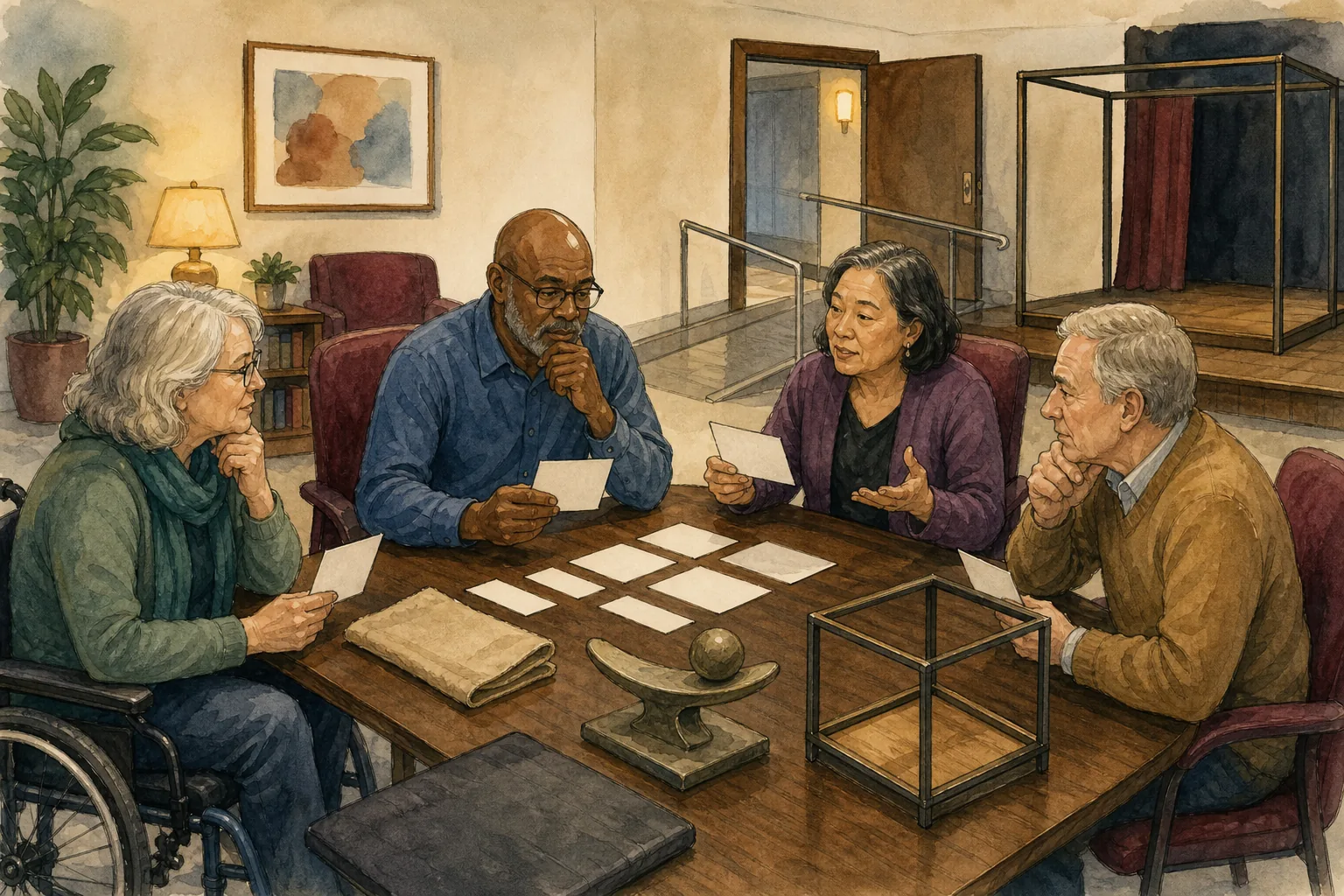
EDITORIAL ILLUSTRATIONAssess the activity, not the reassuring word
Actual materials, bodies, environment and skills determine risk. Accessible communication and movement adaptations are valid participation, while research uses play too broadly to certify safety.
Illustration created using generative AI; not documentary evidence.
Evidence and clinical distinction
Researchers use play as a broad interpretive concept rather than a standard measurable activity.
It is not a diagnosis or legal defence; healthcare should ask what happened in plain language.
Non-graphic examples
What the umbrella may include
Defining what play means before a date.
Using role-play without physical contact.
Stopping a playful scene after pain.
Adapting activity for limited mobility.
Describing an injury plainly to a clinician.
Prepare for an appointment
Questions you could ask a professional
What information would help you understand my question?
What are the realistic options and uncertainties?
How can disability, communication or privacy needs be accommodated?
When should the situation be reviewed again?
These prompts do not replace assessment and do not imply that every reader needs professional care.
Continue learning
Take the next step from definition to context.
Continue with independent guidance connecting play to evidence, consent, safety, uncertainty and practical decisions.
 The UK Kink GuideEvidence-led glossary