A community word with two common uses: a bounded period of negotiated kink activity, or the wider social world of events, groups and people associated with kink. Context determines which meaning is intended.
Sources and evidence type
Manual claim and limitation notes are shown where an individual source audit is complete. Other evidence-type labels are a publisher aid awaiting source-by-source confirmation.
Society for Psychotherapy: scenes, play and boundariesCommunity context
Source design
Contextual or community source
What it can support
Terminology, reported practice or community context within the source’s own setting.
Important limitation
Community usage is not universal and does not establish safety, prevalence, clinical benefit or legal permission.
The specific population, measures and findings reported by the paper.
Important limitation
It cannot automatically establish UK prevalence, causation, diagnosis, consent or an individual outcome. Check recruitment, definitions and study design.
Illustration created using generative AI; not documentary evidence.
In brief
Being in the scene is not consent to be in a scene.
Scene can mean either a negotiated episode of activity or the wider kink community. The two uses create avoidable ambiguity: attending the scene does not mean joining a scene, and being present at an event does not grant consent to touch, watch closely, photograph or approach sexually. A bounded scene can be private, non-sexual, light or intense; the label supplies no standard script, role, risk level or agreement.
Two meanings and clear language
Clarify whether someone means an activity, an event or a community. Specific words reduce misunderstandings about participation.
A scene begins only through agreement; relationship status, venue entry or prior activity is not a substitute.
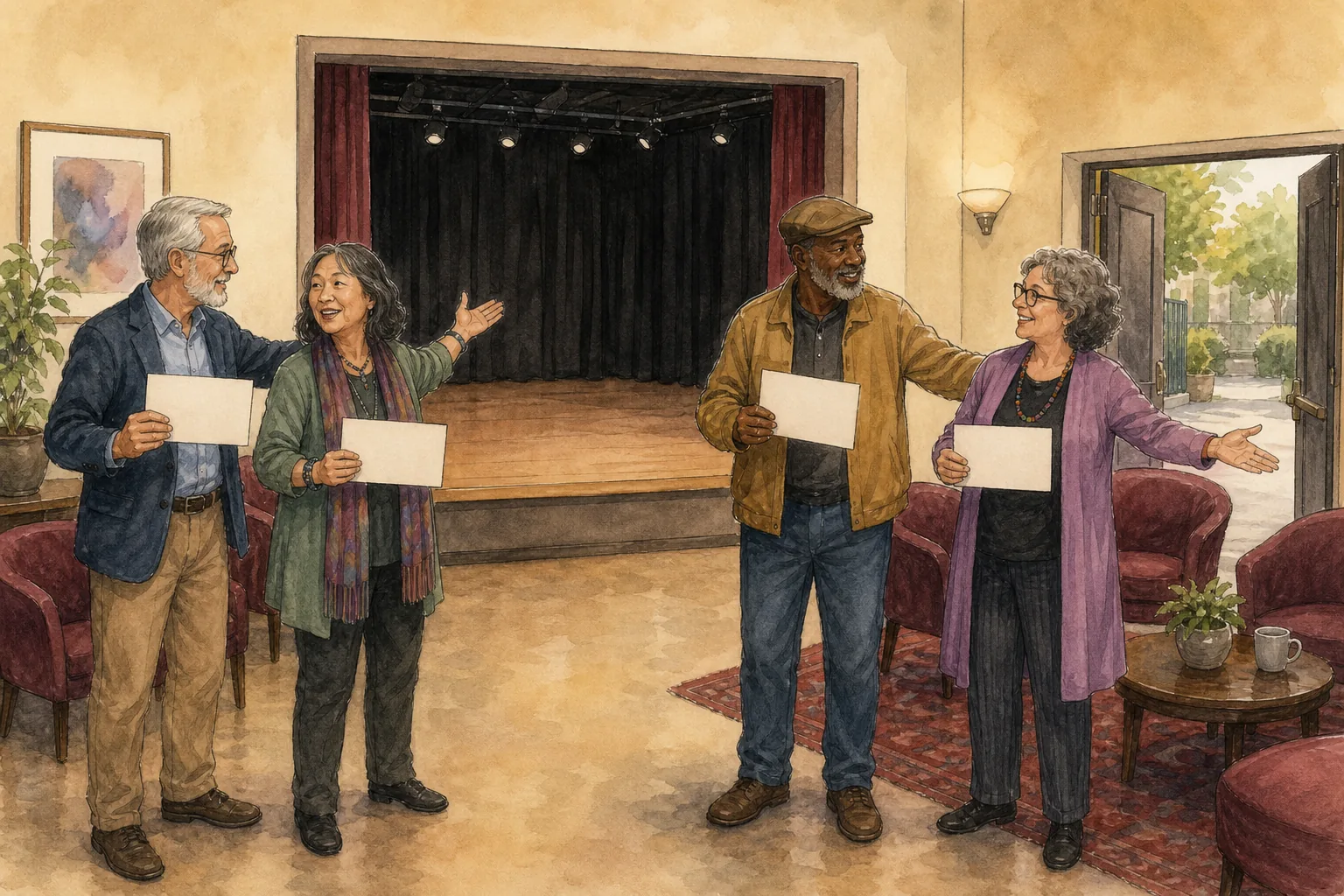
EDITORIAL ILLUSTRATIONA scene and the scene are different
Clarify whether the word means an agreed activity, an event or a wider community. Venue entry, relationship status and previous activity do not start a new scene.
Illustration created using generative AI; not documentary evidence.
Status
Detailed editorial draft
Publisher
The UK Kink Guide
Reviewed
Structured draft present; individual review date not recorded
Evidence
3 cited sources · types labelled below
Jurisdiction
UK-focused general education
Read the rest: evidence, law, safety and sources
A scene
A bounded period of negotiated adult activity with its own scope and ending.
The scene
The broader social world of groups, venues, events and communities.
Play session
Another term for an agreed period of activity, not necessarily public or sexual.
Public performance
Activity intended for an audience; most scenes are not automatically performances.
Boundaries and endings
Agree scope, roles, signals, observers, recording and how the scene ends. Consent remains revisable throughout.
A planned ending helps restore ordinary roles, but it cannot postpone medical care or force aftercare contact.
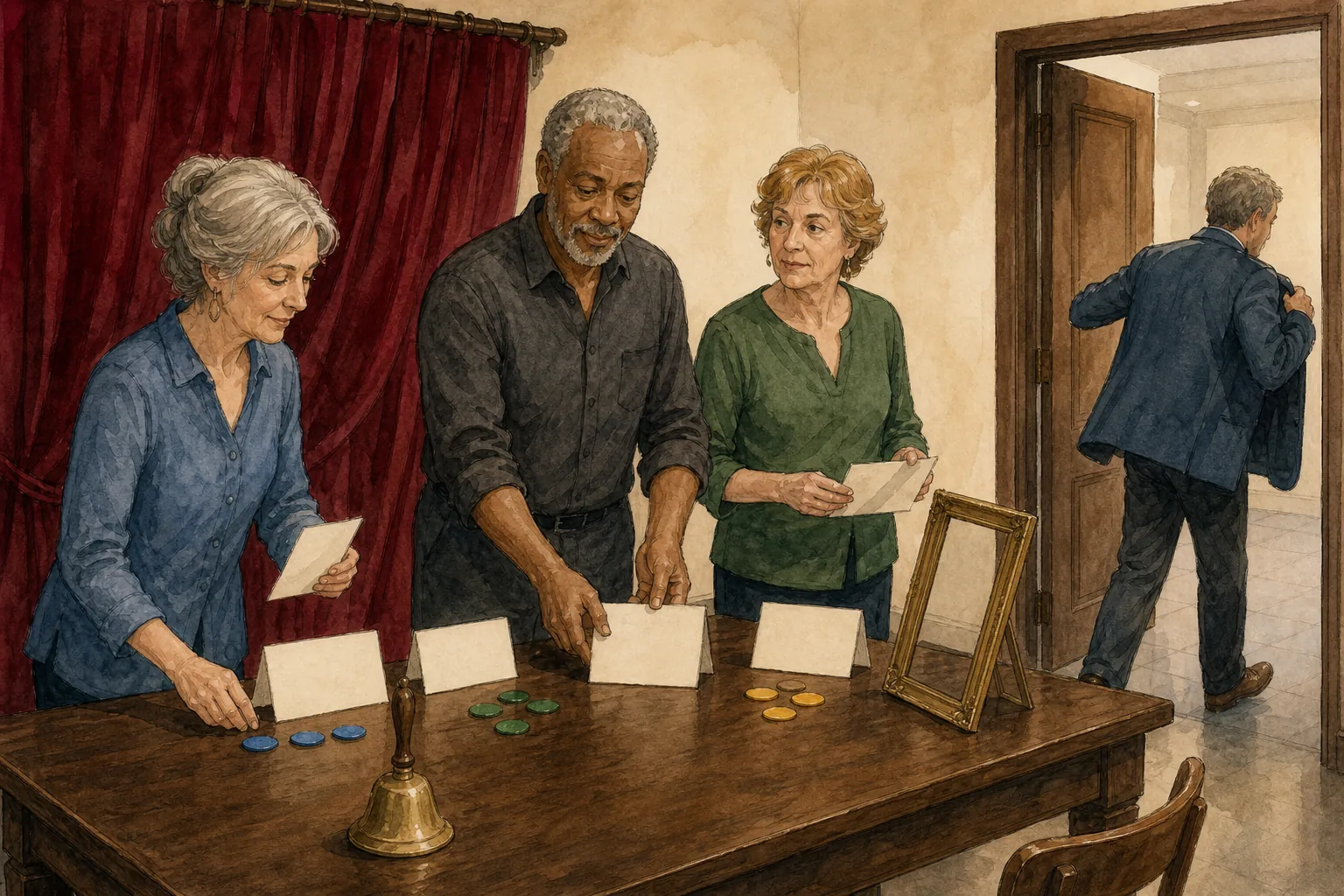
EDITORIAL ILLUSTRATIONEvery scene needs an ending
Agree scope, roles, signals, observers, recording and how the scene ends. Consent remains revisable, and a planned ending cannot postpone healthcare or compel aftercare.
Illustration created using generative AI; not documentary evidence.
Venues, spectators and privacy
Follow venue rules while recognising that rules are a floor, not personal consent. Spectators do not consent to interaction by watching.
Ask before photography, identifying someone online or discussing their activity outside the setting.
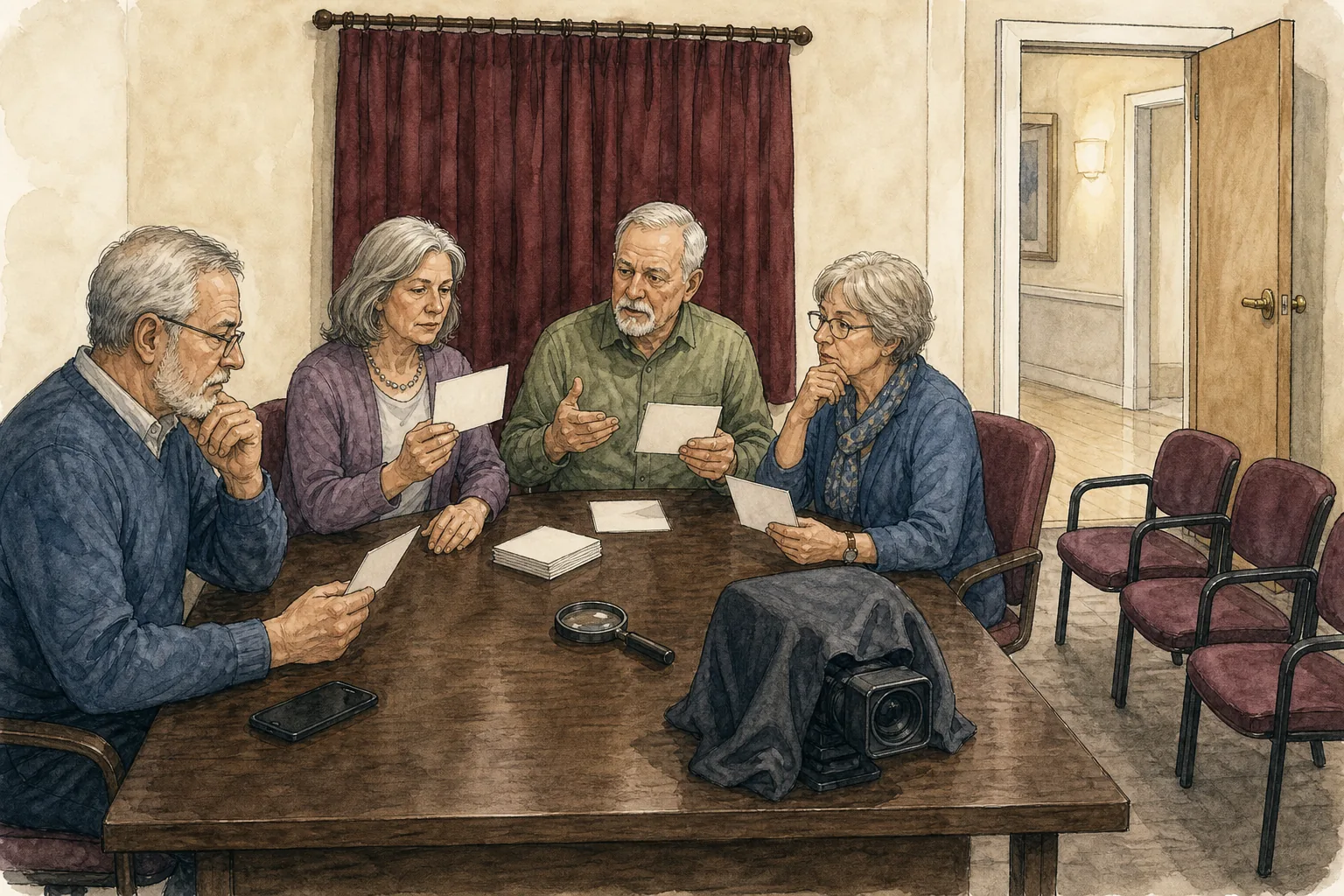
EDITORIAL ILLUSTRATIONSpectators retain privacy and choice
Venue rules are a floor, not personal consent. Watching does not authorise interaction, photography, identification or disclosure outside the setting.
Illustration created using generative AI; not documentary evidence.
Evidence and limitations
BDSM research uses scene inconsistently for activities, communities and study settings, limiting comparisons.
The term is not a clinical or legal category and does not determine safety, capacity or consent.
Non-graphic examples
What the umbrella may include
Clarifying whether the scene means a community event.
Negotiating a private non-sexual scene.
Watching without joining or photographing.
Ending roles at the agreed stopping point.
Keeping another attendee's identity private.
Prepare for an appointment
Questions you could ask a professional
What information would help you understand my question?
What are the realistic options and uncertainties?
How can disability, communication or privacy needs be accommodated?
When should the situation be reviewed again?
These prompts do not replace assessment and do not imply that every reader needs professional care.
Continue learning
Take the next step from definition to context.
Continue with independent guidance connecting scene to evidence, consent, safety, uncertainty and practical decisions.