Adult fantasy or role-play involving programmed behaviour, mechanical movement, remote commands, artificial identity or imagined transformation into a robot or machine.
Sources and evidence type
Manual claim and limitation notes are shown where an individual source audit is complete. Other evidence-type labels are a publisher aid awaiting source-by-source confirmation.
Szczuka & Krämer (2019), appeal of sex robotsResearch study
Source design
Peer-reviewed research or review
What it can support
The specific population, measures and findings reported by the paper.
Important limitation
It cannot automatically establish UK prevalence, causation, diagnosis, consent or an individual outcome. Check recruitment, definitions and study design.
The specific population, measures and findings reported by the paper.
Important limitation
It cannot automatically establish UK prevalence, causation, diagnosis, consent or an individual outcome. Check recruitment, definitions and study design.
Illustration created using generative AI; not documentary evidence.
In brief
Programmed behaviour can be performed; human autonomy cannot be coded away.
Robot play may centre precision, automation, objectification, transformation, loss of spontaneity or fascination with technology. It can be performed entirely by people, explored through fiction, or overlap with connected devices and technosexual interests. Programmed language is theatrical: a real participant never becomes incapable of consent, and a software command or remote connection must not outrank their immediate stop.
Fantasy and meaning
The appeal may be repetition, control, artificiality, transformation or freedom from ordinary social roles. It does not establish social isolation, technology dependence or a wish to lose real autonomy.
Research on sex robots and technology attitudes examines different questions and cannot diagnose or define human robot role-play.
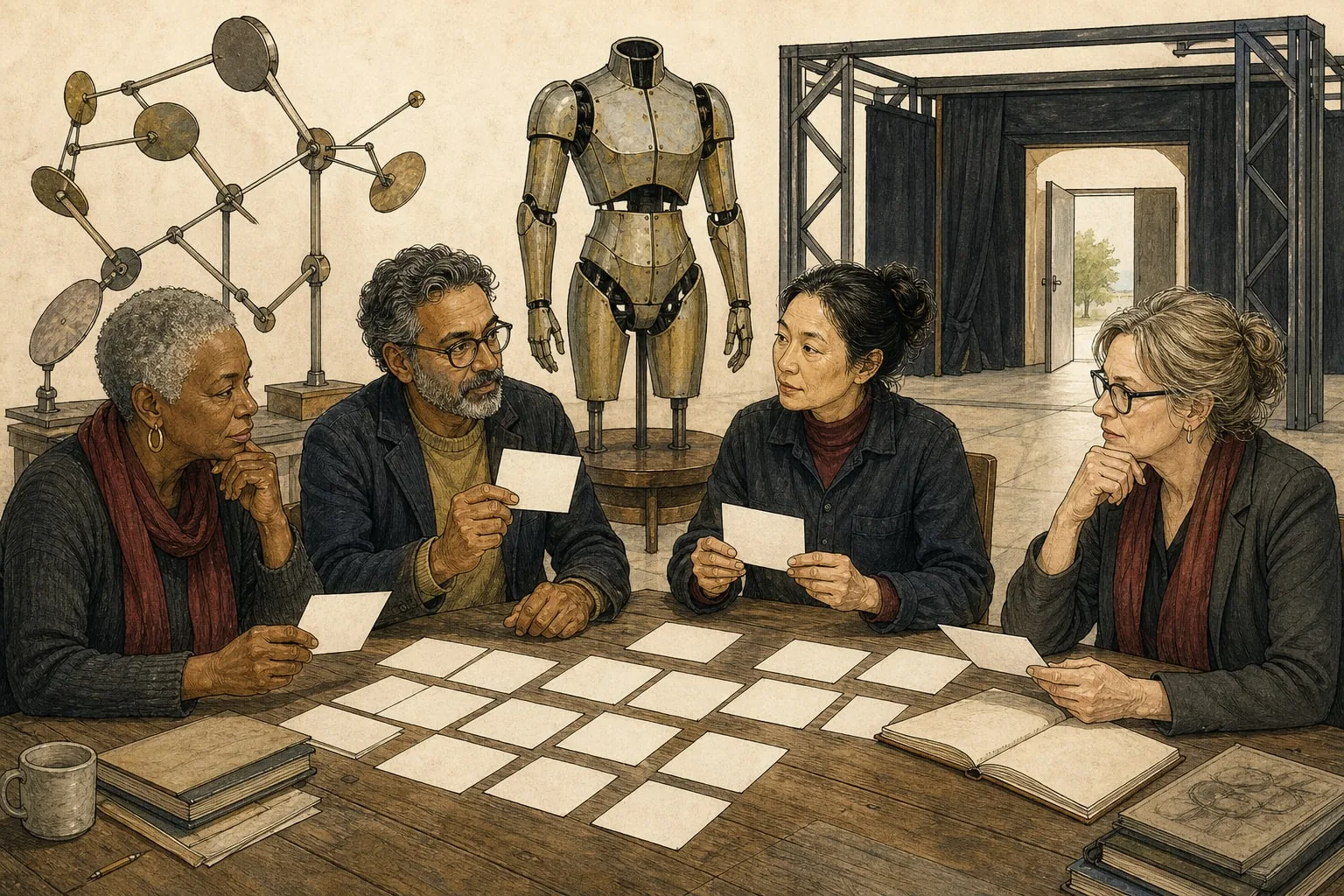
EDITORIAL ILLUSTRATIONA machine role does not define the person
Precision, repetition, transformation or imagined programming may appeal for different reasons. Technology-attitude studies cannot diagnose human role-players or establish social isolation or dependency.
Illustration created using generative AI; not documentary evidence.
Status
Detailed editorial draft
Publisher
The UK Kink Guide
Reviewed
Structured draft present; individual review date not recorded
Evidence
3 cited sources · types labelled below
Jurisdiction
UK-focused general education
Read the rest: evidence, law, safety and sources
Robot role-play
An adult performs mechanical or programmed behaviour within a negotiated scene.
Robotification fantasy
Imagined transformation into a machine, often kept in fiction, art or internal fantasy.
Technosexuality or digisexuality
A broader attraction to or reliance on technology in intimacy and sexuality.
Remote-control play
Use of connected equipment, adding privacy, cybersecurity, battery and emergency-stop considerations.
Consent and commands
Agree permitted commands, duration, speech, movement, touch and an unmistakable out-of-program stop signal. Scripted inability to refuse is not real inability.
A controller must stop on uncertainty, distress or technical failure. Do not require exact robotic performance as a condition of safety or aftercare.
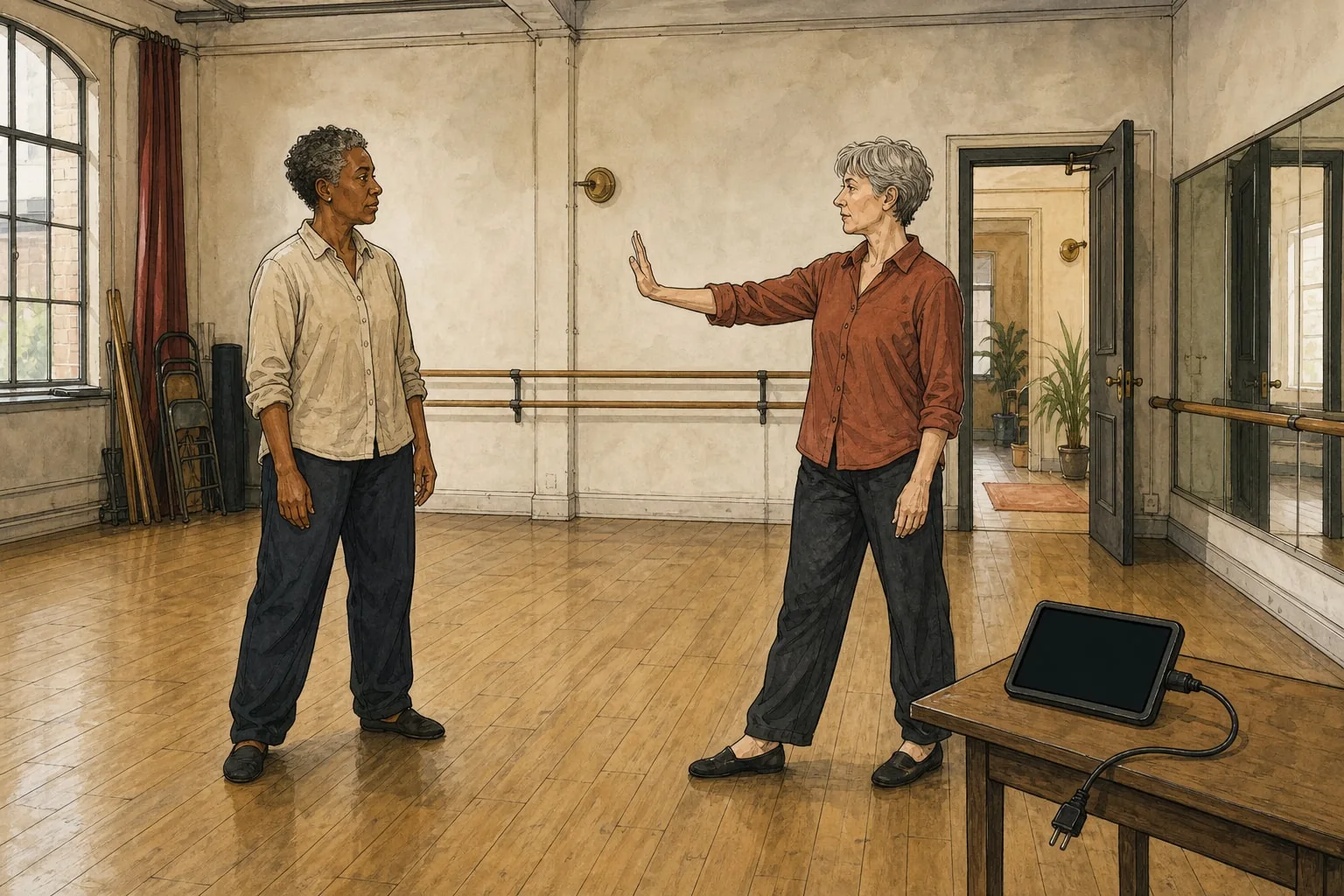
EDITORIAL ILLUSTRATIONHuman autonomy cannot be programmed away
Commands and scripted inability to refuse are theatrical. An immediate stop, uncertainty, distress or technical failure must outrank the role and any remote instruction.
Illustration created using generative AI; not documentary evidence.
Movement, costume and access
Mechanical gait, fixed posture, masks and restrictive costumes can impair balance, vision, joints, breathing or heat regulation. Keep movement slow, surfaces clear and releases accessible.
Offer seated, verbal, switch-accessible or text-based forms for varied mobility, speech and sensory needs. Authenticity is not measured by physical endurance.
Connected technology and privacy
Use unique passwords, updates, local stop controls and restricted remote access. A device should fail toward a safer state when connectivity is lost.
Treat audio, video, telemetry and command logs as sensitive data. Agree storage and deletion and remove access after the scene or relationship ends.
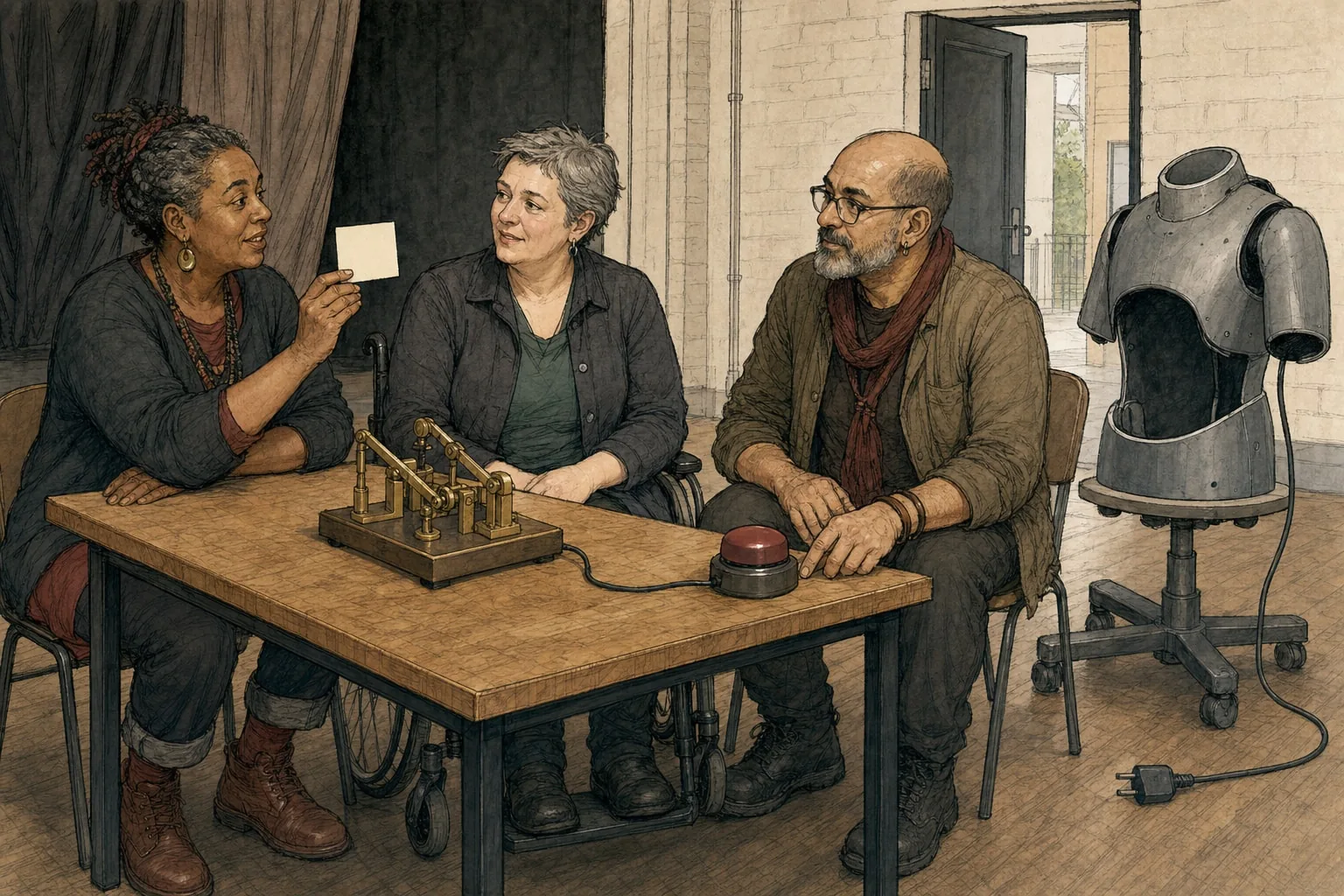
EDITORIAL ILLUSTRATIONKeep access and local control available
Seated, verbal, text and switch-accessible forms can preserve the theme without endurance tests. Connected tools also need local stopping, restricted remote access and agreed deletion of sensitive logs.
Illustration created using generative AI; not documentary evidence.
Non-graphic examples
What the umbrella may include
Using clipped mechanical speech in adult role-play.
Writing a robot-transformation story.
Keeping a physical stop control during remote commands.
Choosing seated arm movements instead of a rigid walk.
Deleting command logs after the agreed period.
Prepare for an appointment
Questions you could ask a professional
What information would help you understand my question?
What are the realistic options and uncertainties?
How can disability, communication or privacy needs be accommodated?
When should the situation be reviewed again?
These prompts do not replace assessment and do not imply that every reader needs professional care.
Continue learning
Take the next step from definition to context.
Continue with independent guidance connecting robot and machine role-play to evidence, consent, safety, uncertainty and practical decisions.