Also known as giant or tiny fantasy · macrophilia · microphilia
A fantasy focused on exaggerated differences in body size, scale or power. It is commonly explored through imagination, art, camera perspective or role-play rather than literal physical change.
Sources and evidence type
Manual claim and limitation notes are shown where an individual source audit is complete. Other evidence-type labels are a publisher aid awaiting source-by-source confirmation.
Joyal, Cossette & Lapierre (2015), adult fantasy surveyResearch study
Source design
Peer-reviewed research or review
What it can support
The specific population, measures and findings reported by the paper.
Important limitation
It cannot automatically establish UK prevalence, causation, diagnosis, consent or an individual outcome. Check recruitment, definitions and study design.
The specific population, measures and findings reported by the paper.
Important limitation
It cannot automatically establish UK prevalence, causation, diagnosis, consent or an individual outcome. Check recruitment, definitions and study design.
Open the original source van der Hoort, Guterstam & Ehrsson (2011), experimental body-scale illusion studyResearch study
Source design
Peer-reviewed research or review
What it can support
The specific population, measures and findings reported by the paper.
Important limitation
It cannot automatically establish UK prevalence, causation, diagnosis, consent or an individual outcome. Check recruitment, definitions and study design.
The specific population, measures and findings reported by the paper.
Important limitation
It cannot automatically establish UK prevalence, causation, diagnosis, consent or an individual outcome. Check recruitment, definitions and study design.
Illustration created using generative AI; not documentary evidence.
In brief
A change of scale can change the story without changing consent.
Size fantasy uses impossible or exaggerated scale—being giant, tiny or differently proportioned—to frame adult imagination, art or role-play. The appeal may involve awe, protection, vulnerability, authority, transformation, visual contrast or simply the unreality of the premise. Macrophilia and microphilia are community labels for different directions of scale-focused interest, but neither label reveals a person's preferred role, motivation or wish to act. This page concerns only consensual adults and non-graphic fictional representation.
What research can—and cannot—show
Direct peer-reviewed research on size fantasy as a distinct adult interest is extremely limited. Joyal, Cossette and Lapierre surveyed 1,516 adults about 55 fantasy themes and found wide variation across adult fantasy generally, but their fixed list did not isolate giant or tiny fantasy. Their study therefore supports caution about labelling fantasy content as inherently deviant; it cannot supply a prevalence estimate, demographic profile or explanation for size fantasy.
Lehmiller and colleagues' contemporary review likewise describes sexual fantasy as diverse and methodologically difficult to measure. Neither general fantasy research nor online popularity can show why a particular adult has this interest, whether it is central to them or whether they want to enact any part of it. Search counts, community membership and commissioned artwork are especially poor substitutes for representative prevalence data.
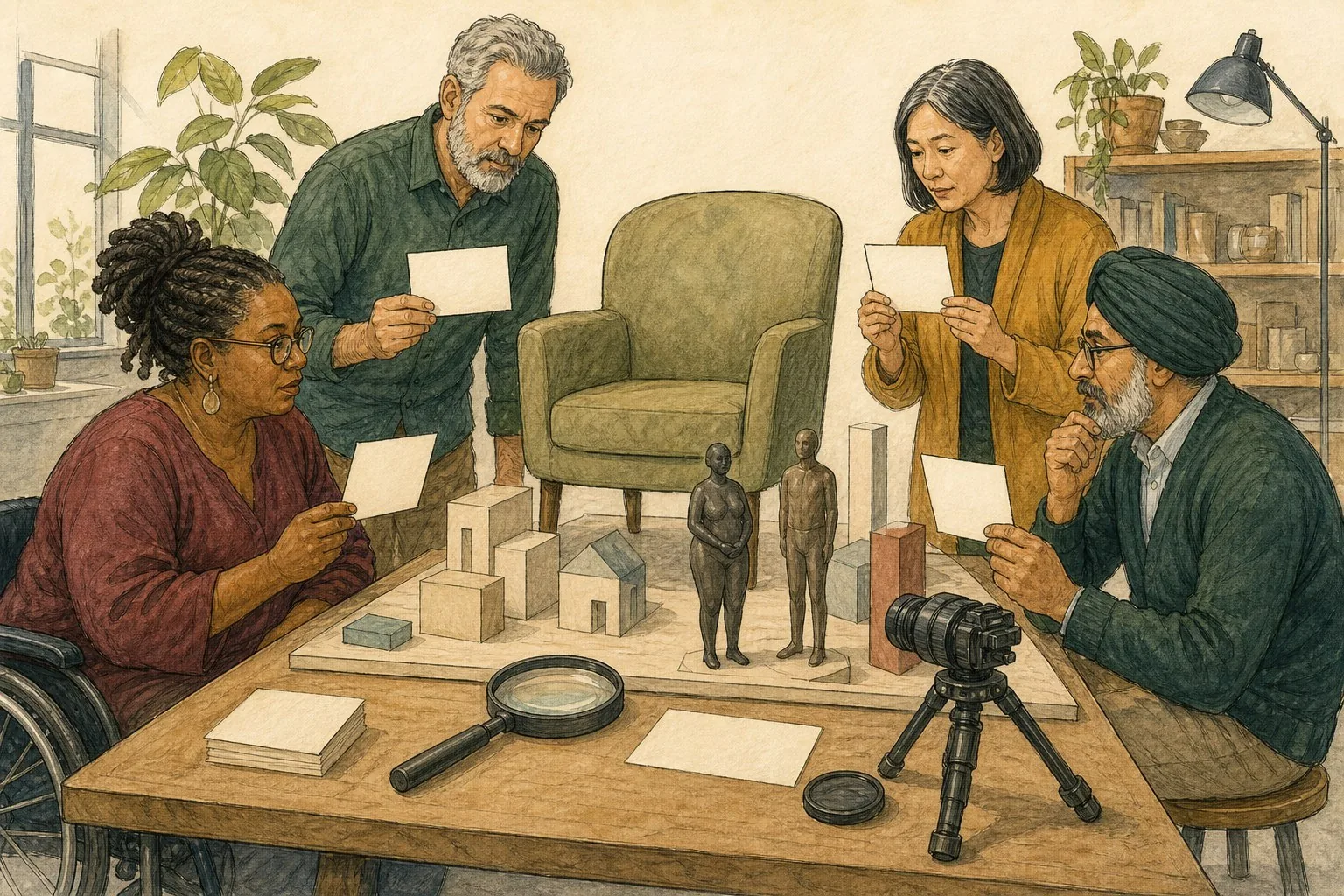
EDITORIAL ILLUSTRATIONGeneral fantasy research cannot give a profile
Size fantasy is rarely isolated in representative research. Broader fantasy studies support caution about pathologising unusual content but cannot supply its prevalence, cause or typical participant.
Illustration created using generative AI; not documentary evidence.
Status
Detailed editorial draft
Publisher
The UK Kink Guide
Reviewed
Structured draft present; individual review date not recorded
Evidence
6 cited sources · types labelled below
Jurisdiction
UK-focused general education
Read the rest: evidence, law, safety and sources
Size fantasy
The broad umbrella for imagined differences in scale, including giant, tiny, growing, shrinking and environment-based perspectives.
Macrophilia
A community term usually centred on giant or greatly enlarged figures. It does not specify gender, role or a single power dynamic.
Microphilia
A community term usually centred on tiny or greatly reduced figures. It may describe interest in being, observing or imagining the smaller figure.
Height or body preference
Attraction to a real adult's ordinary stature or build. It may overlap aesthetically, but it is distinct from impossible changes of scale.
Scale, perspective and meaning
A size contrast can suggest protection, surrender, control, admiration, fear, humour, tenderness or transformation, and the same image may carry several meanings at once. Giant does not automatically mean dominant, and tiny does not automatically mean submissive. Some adults identify with one scale; others alternate viewpoints or focus on buildings, landscapes and other fictional environments rather than a role.
In a non-sexual laboratory experiment, van der Hoort, Guterstam and Ehrsson used first-person visual perspective and matched sensory cues to create temporary ownership illusions involving miniature and giant artificial bodies. Participants' judgements of object size and distance changed with the apparent body scale. This helps explain why perspective and embodiment can make fictional scale feel perceptually vivid, but it does not investigate sexual motivation, identity or clinical outcomes.
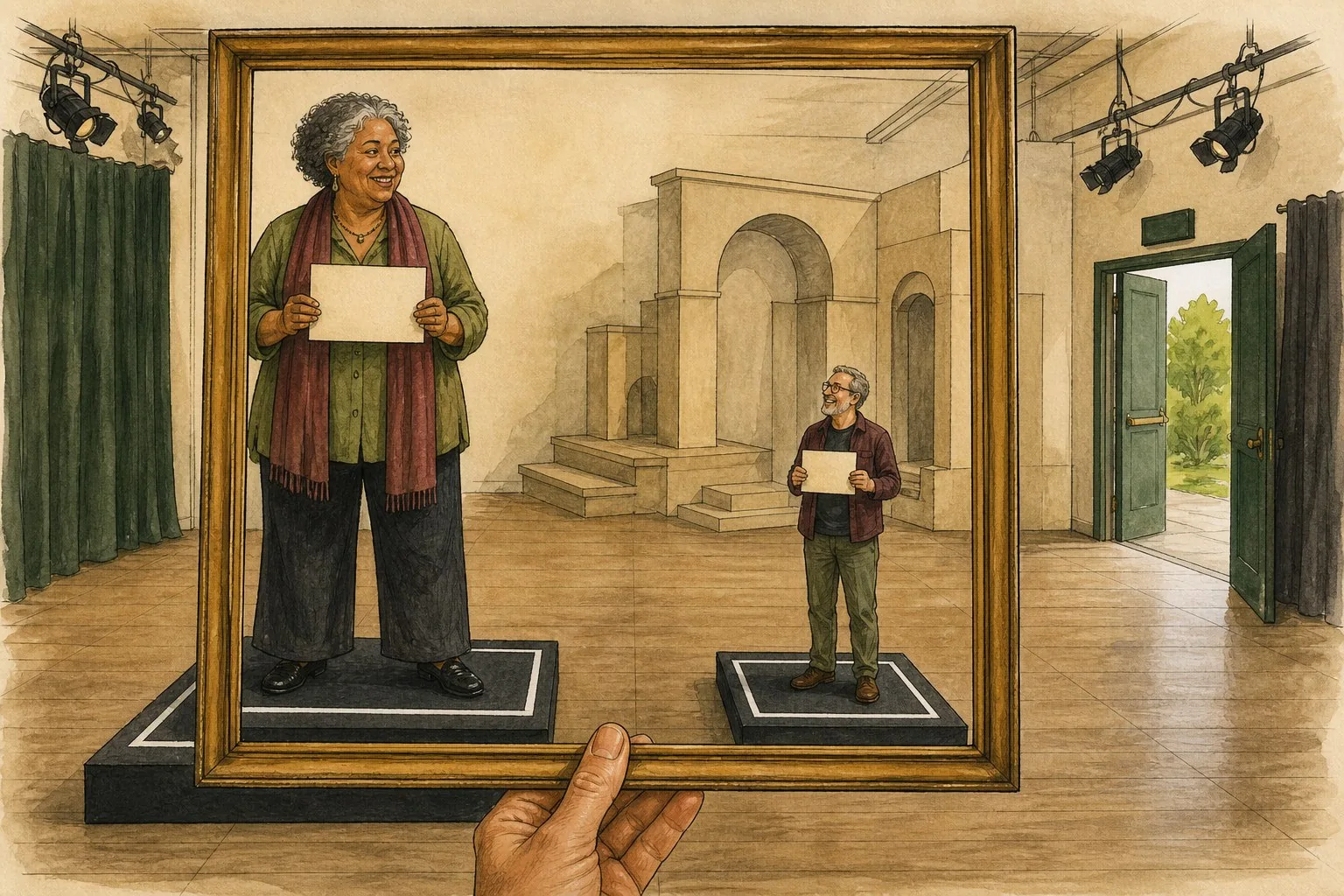
EDITORIAL ILLUSTRATIONPerspective creates scale, not power
A giant or tiny viewpoint may suggest many different meanings. It does not automatically assign dominance, submission or a real-world physical possibility.
Illustration created using generative AI; not documentary evidence.
Objects, media and accessible cues
Miniature architecture, oversized neutral household props, model furniture, scale marks, framed illustrations, written fiction, camera composition and adult-coded avatars can establish relative size without depicting explicit activity. Repetition, texture, lighting, viewpoint and the contrast between an object and its surroundings may matter as much as literal realism. A prop or image has no universal meaning and does not identify its owner.
Text, audio description, tactile models and clearly labelled scale comparisons can provide alternatives when forced-perspective images or virtual reality are inaccessible. Any camera or avatar work should preserve privacy and avoid age ambiguity. Virtual or photographic representation changes appearance only: it does not make a real body able to withstand impossible weight, force or environmental conditions.
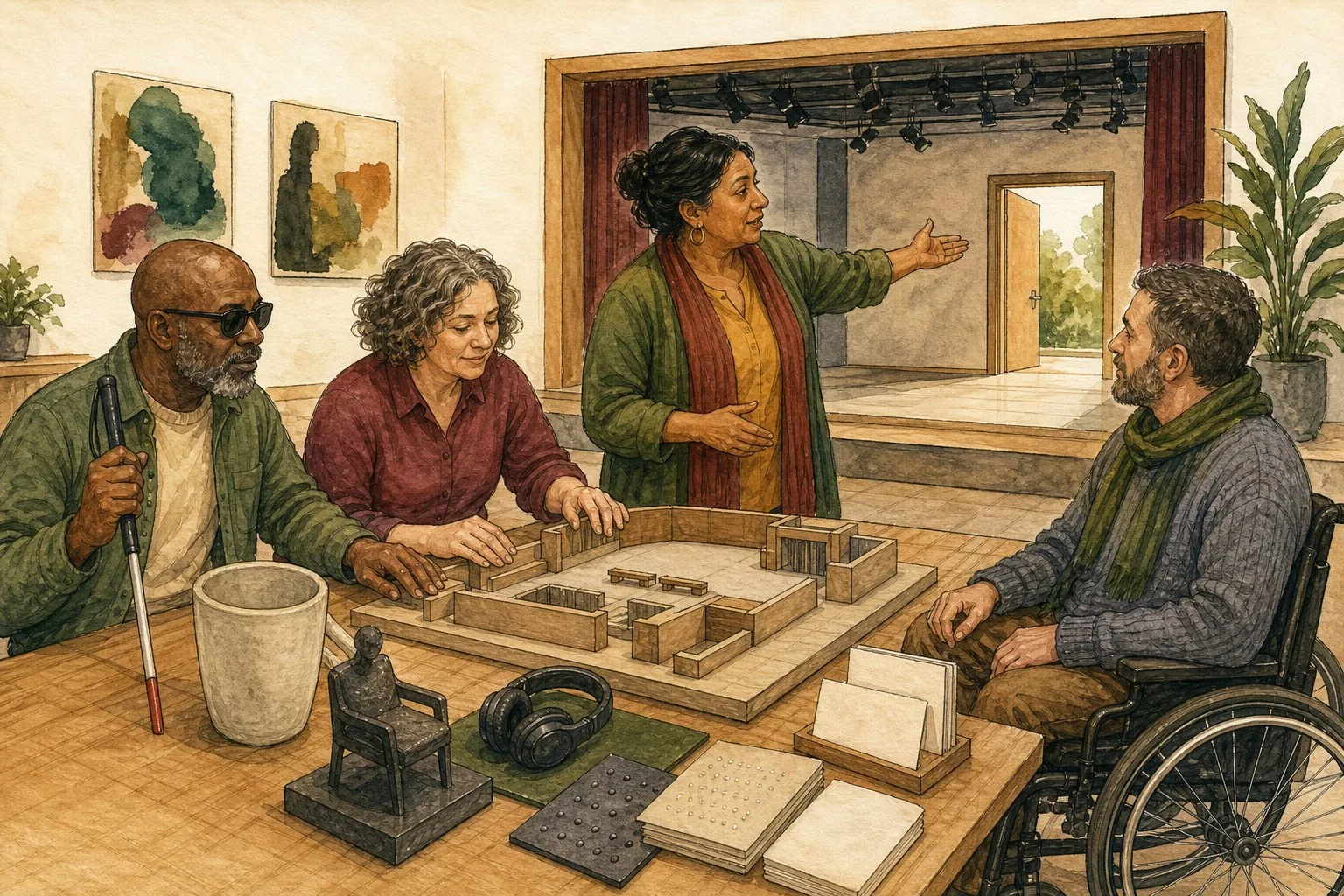
EDITORIAL ILLUSTRATIONAccess can change the medium
Text, audio, tactile models and adult-coded visual cues can offer different routes into the fiction. Any image-making still needs privacy and clear adult representation.
Illustration created using generative AI; not documentary evidence.
Consent, wellbeing and clinical distinction
For partnered adult role-play, agreement should cover the fictional roles, language, touch, emotional tone, images, audience and how to return to ordinary interaction. Dunkley and Brotto's review identifies negotiation and continuing communication as recurring BDSM consent practices, while also showing that consent is contextual rather than guaranteed by a label. In England and Wales, section 74 of the Sexual Offences Act 2003 defines consent through choice, freedom and capacity; other UK jurisdictions have their own law.
An unconventional adult fantasy is not a paraphilic disorder merely because its scale is impossible or its imagery is unusual. WHO guidance distinguishes disorder through features such as marked distress, significant impairment, serious risk or non-consent. This entry does not diagnose individuals, treat shame caused solely by social stigma as proof of disorder or claim that fantasy predicts behaviour.
Non-graphic examples
What the umbrella may include
An adult enjoying a story in which an ordinary room becomes an immense imagined landscape.
Two adults agreeing to use giant and tiny character titles in a private, non-graphic role-play.
An artist using adult-coded silhouettes beside model buildings to suggest impossible scale.
An adult preferring written or audio fiction because literal visual representation is not important to the fantasy.
Partners pausing a scale-themed scene when its power language stops feeling comfortable and returning to ordinary conversation.
Prepare for an appointment
Questions you could ask a professional
What information would help you understand my question?
What are the realistic options and uncertainties?
How can disability, communication or privacy needs be accommodated?
When should the situation be reviewed again?
These prompts do not replace assessment and do not imply that every reader needs professional care.
Continue learning
Take the next step from definition to context.
Continue with independent guidance connecting size fantasy to evidence, consent, safety, uncertainty and practical decisions.