Transformation fantasy is an adult interest in imagined change—of body, scale, material, persona, role or state of being. It is often explored through stories, art, games, costume, avatars or private role-play.
 The UK Kink GuideEvidence-led glossary
 Back to the glossaryFantasy & performanceIn plain English Words in context A non-graphic adult example What not to assume
Transformation fantasy
Fantasy centred on changing body, identity, species, material, scale or social role. It is often explored through fiction, art, costume or role-play and does not necessarily express a wish for literal physical change.
Start here
New to this term?
Body transformation changes imagined physical features; persona transformation changes character or social identity; costume transformation marks a temporary change through appearance. A fantasy, identity label and literal health belief are different things.
An adult may enjoy fiction about becoming metallic, unusually large or a creature-like persona, while another uses makeup or an avatar to mark a temporary role. Neither example necessarily expresses a real-world body goal.
Fantasy is not evidence of intent, diagnosis or a fixed belief about the body. Research on sexual fantasy can document recurring themes but cannot determine one cause, literal wish or prevalence for every transformation subtype. Persistent distress or physical concerns deserve their own appropriate support rather than automatic interpretation through a fantasy label.
Sources and evidence type
Manual claim and limitation notes are shown where an individual source audit is complete. Other evidence-type labels are a publisher aid awaiting source-by-source confirmation.
Joyal, Cossette & Lapierre (2015), adult fantasy studyResearch study
- Source design
- Peer-reviewed research or review
- What it can support
- The specific population, measures and findings reported by the paper.
- Important limitation
- It cannot automatically establish UK prevalence, causation, diagnosis, consent or an individual outcome. Check recruitment, definitions and study design.
Rosenberg & Letamendi (2018), adult cosplay surveyResearch study
- Source design
- Peer-reviewed research or review
- What it can support
- The specific population, measures and findings reported by the paper.
- Important limitation
- It cannot automatically establish UK prevalence, causation, diagnosis, consent or an individual outcome. Check recruitment, definitions and study design.
Rehor (2015), survey of women from kink communitiesResearch study
- Source design
- Peer-reviewed research or review
- What it can support
- The specific population, measures and findings reported by the paper.
- Important limitation
- It cannot automatically establish UK prevalence, causation, diagnosis, consent or an individual outcome. Check recruitment, definitions and study design.
WHO ICD-11 clinical requirements (2024)Clinical guideline
- Source design
- Current public-health or clinical guidance
- What it can support
- Service pathways, health definitions and recommended public-health or clinical actions within its stated scope.
- Important limitation
- General guidance cannot assess an individual’s symptoms, exposure, medicine, contraindications or urgency.
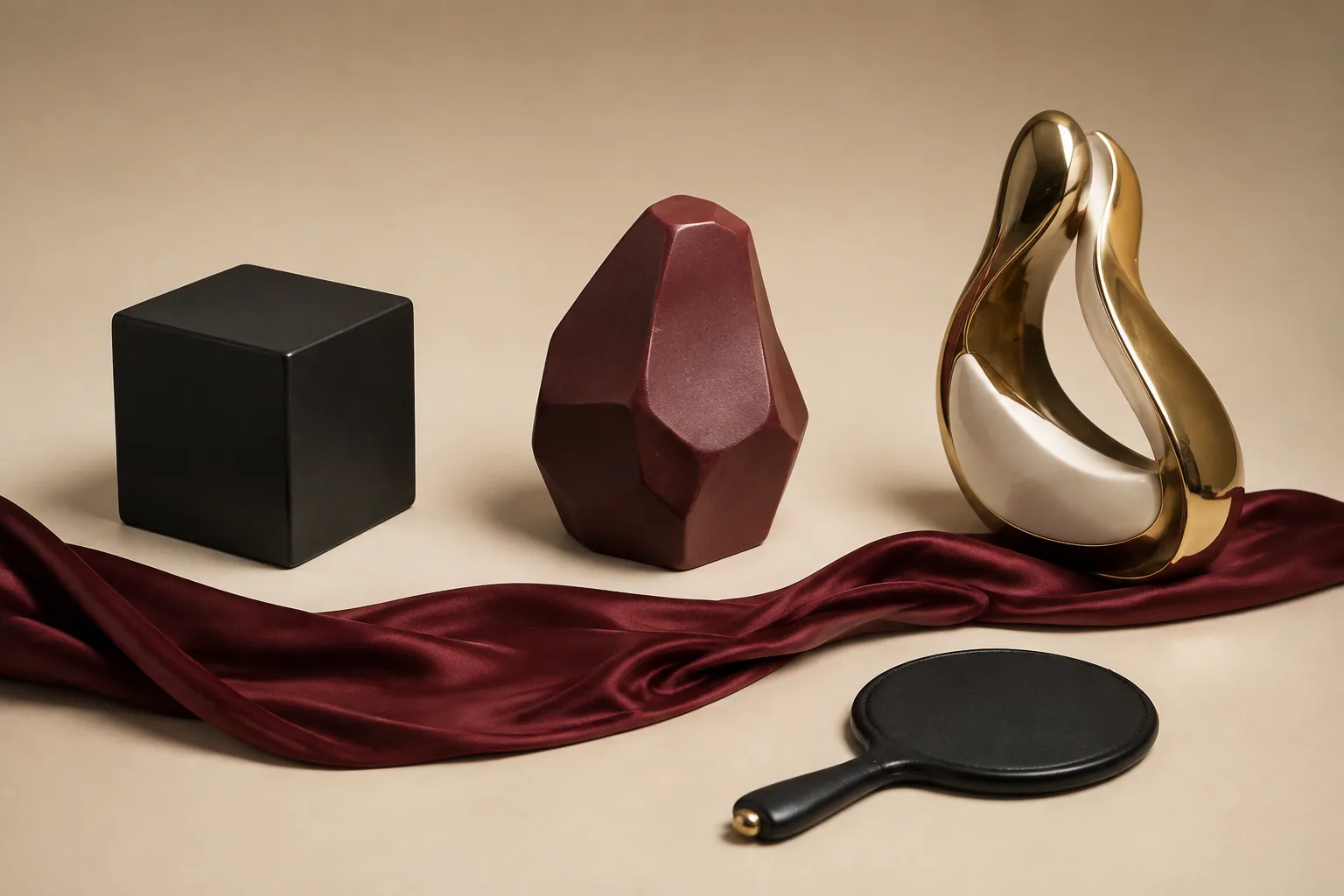
Fantasy & performance
Illustration created using generative AI; not documentary evidence.
In brief
Imagined change can carry many adult meanings.
Transformation fantasy uses imagined change as its organising idea: an adult may picture a different body, scale, material, species-like persona, social role or state of being. It is commonly encountered in fiction, art, costume, games and private role-play. The fantasy may be erotic, creative, identity-exploring or all three, and it does not by itself show that someone wants a literal change or holds a fixed belief about their body.
Fantasy, desire and identity are not interchangeable
Joyal, Cossette and Lapierre's community study found wide diversity in adults' reported sexual fantasies and cautioned against equating statistical rarity with pathology. It did not isolate transformation fantasy, so it cannot establish how common this theme is or why a particular person finds it meaningful.
An imagined change may organise a story about power, freedom, embodiment, anonymity, novelty or belonging. Enjoying it does not necessarily mean wanting the event to happen, adopting the persona outside the fantasy or rejecting one's everyday identity. See Size fantasy, Erotic cosplay and Role-play for neighbouring but distinct themes.
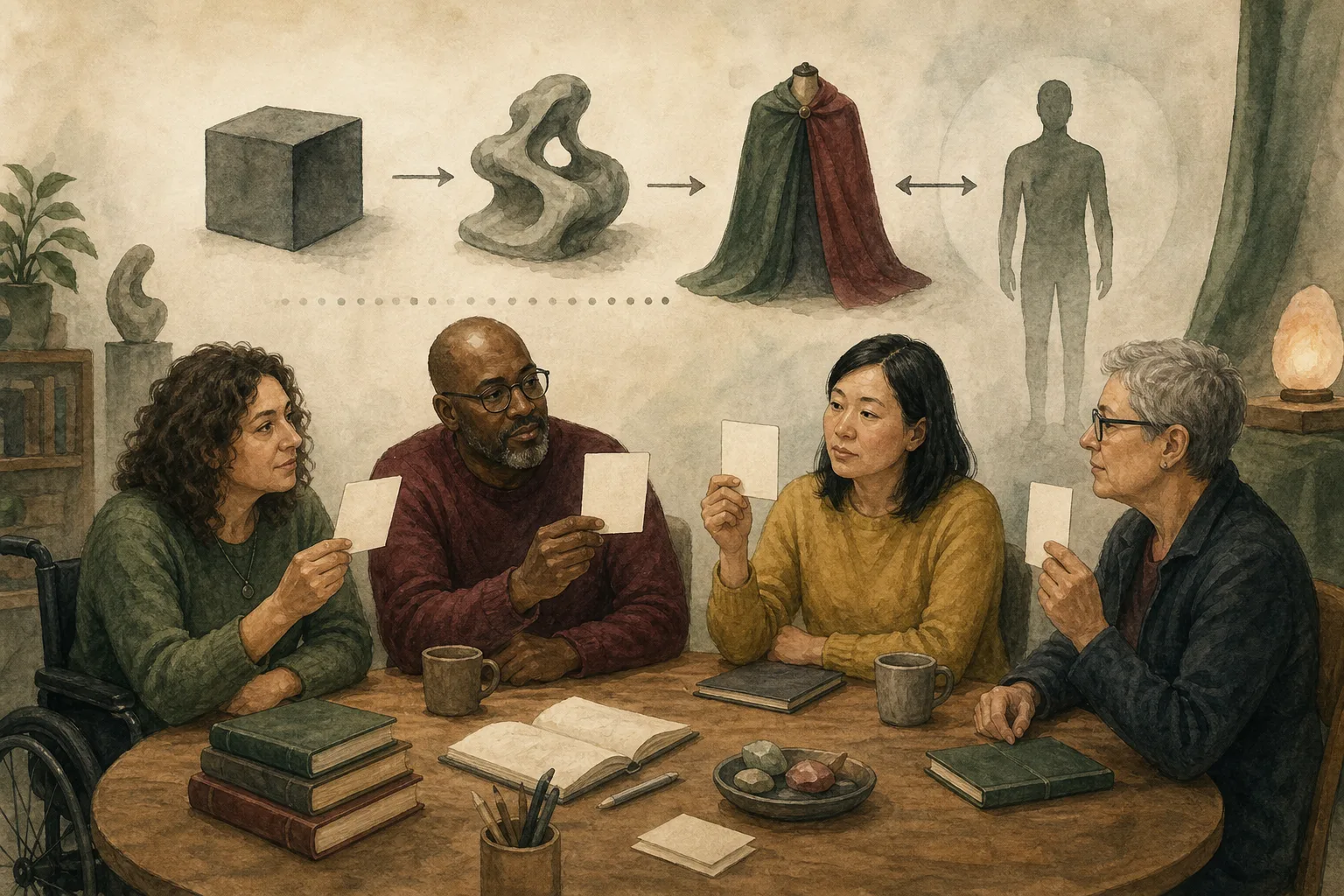
Broader fantasy research shows diversity but rarely isolates transformation themes. Imaginative content cannot by itself establish prevalence, identity or a real-world intention.
Illustration created using generative AI; not documentary evidence.- Status
- Detailed editorial draft
- Publisher
- The UK Kink Guide
- Reviewed
- Structured draft present; individual review date not recorded
- Evidence
- 4 cited sources · types labelled below
- Jurisdiction
- UK-focused general education
Read the rest: evidence, law, safety and sources
Imagery of altered shape, texture, size or capability; it may be metaphorical rather than a real-world body goal.
Taking on an adult fictional role, creature-like persona or changed social identity through narrative or performance.
Using clothing, masks, makeup or digital avatars to mark a temporary change without claiming literal transformation.
A persistent belief or physical concern belongs to an appropriate clinical conversation, not automatic interpretation through a fantasy label.
Images, garments and sensory cues
An empty mask, reversible cloak, fabric swatch, mirror, silhouette card, makeup palette or adult-sized costume can symbolise transition. Colour shifts, texture, concealment, a changed outline or an avatar's movement may matter more than realistic detail.
Props carry no fixed meaning. A mask can suggest anonymity, a creature persona or simple costume craft; a mirror can signify recognition or contrast. Any wearable still needs to respect vision, hearing, mobility, temperature, skin sensitivity and an easy return to ordinary communication.
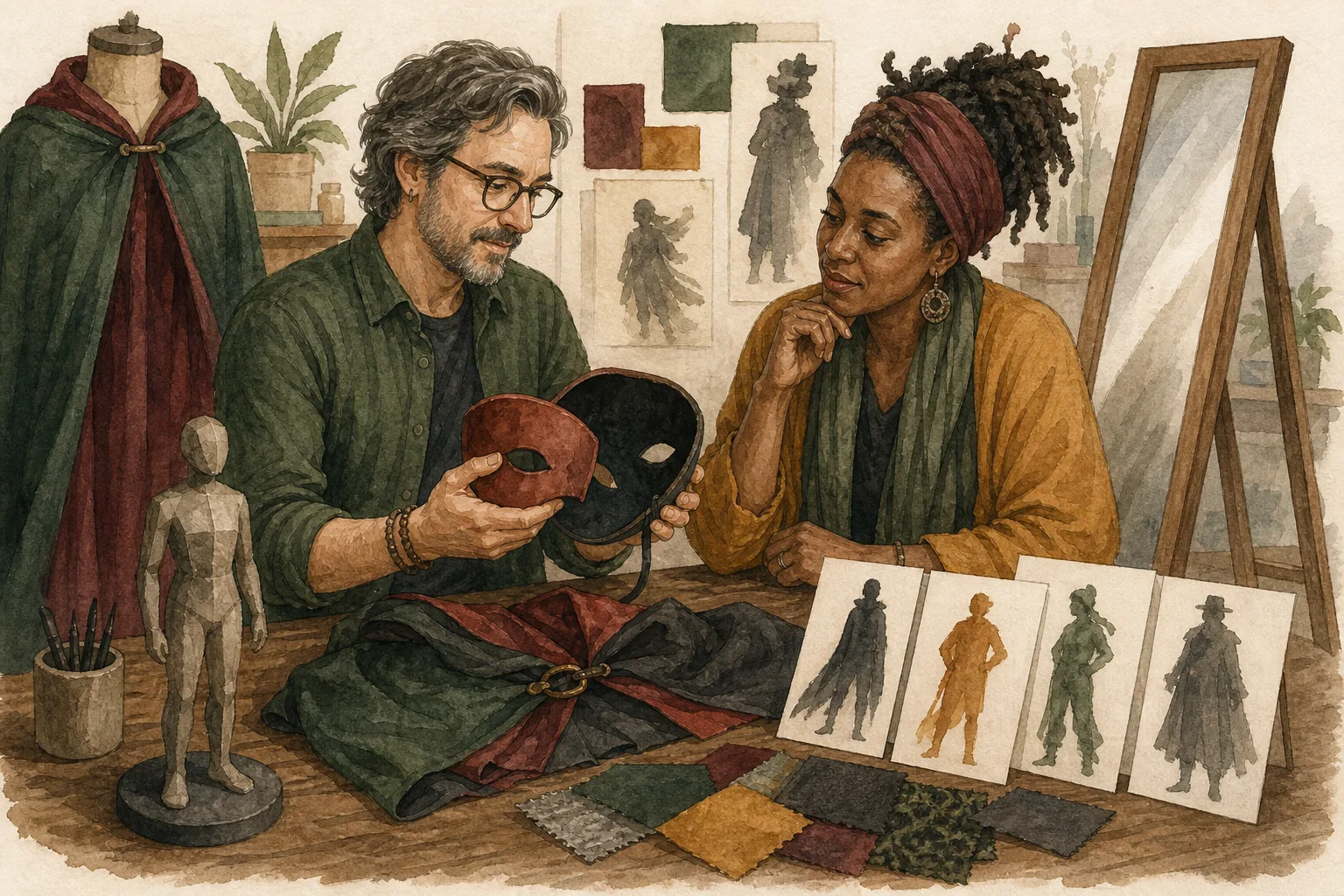
Masks, garments, mirrors and avatars may symbolise temporary transformation without claiming literal body change. Wearables still need to preserve communication and access.
Illustration created using generative AI; not documentary evidence.Adult examples and shared boundaries
A consensual adult role-play might use a reversible garment to mark movement between an everyday self and an original fictional persona. Another adult may prefer written fiction, abstract art or a digital avatar with no partnered performance at all.
When other people are involved, agreement should cover the persona, language, costume, touch, photography and whether the fiction can be mentioned later. A story premise never overrides a participant's ability to pause, change direction or stop, and public audiences must not be recruited into private play without consent.
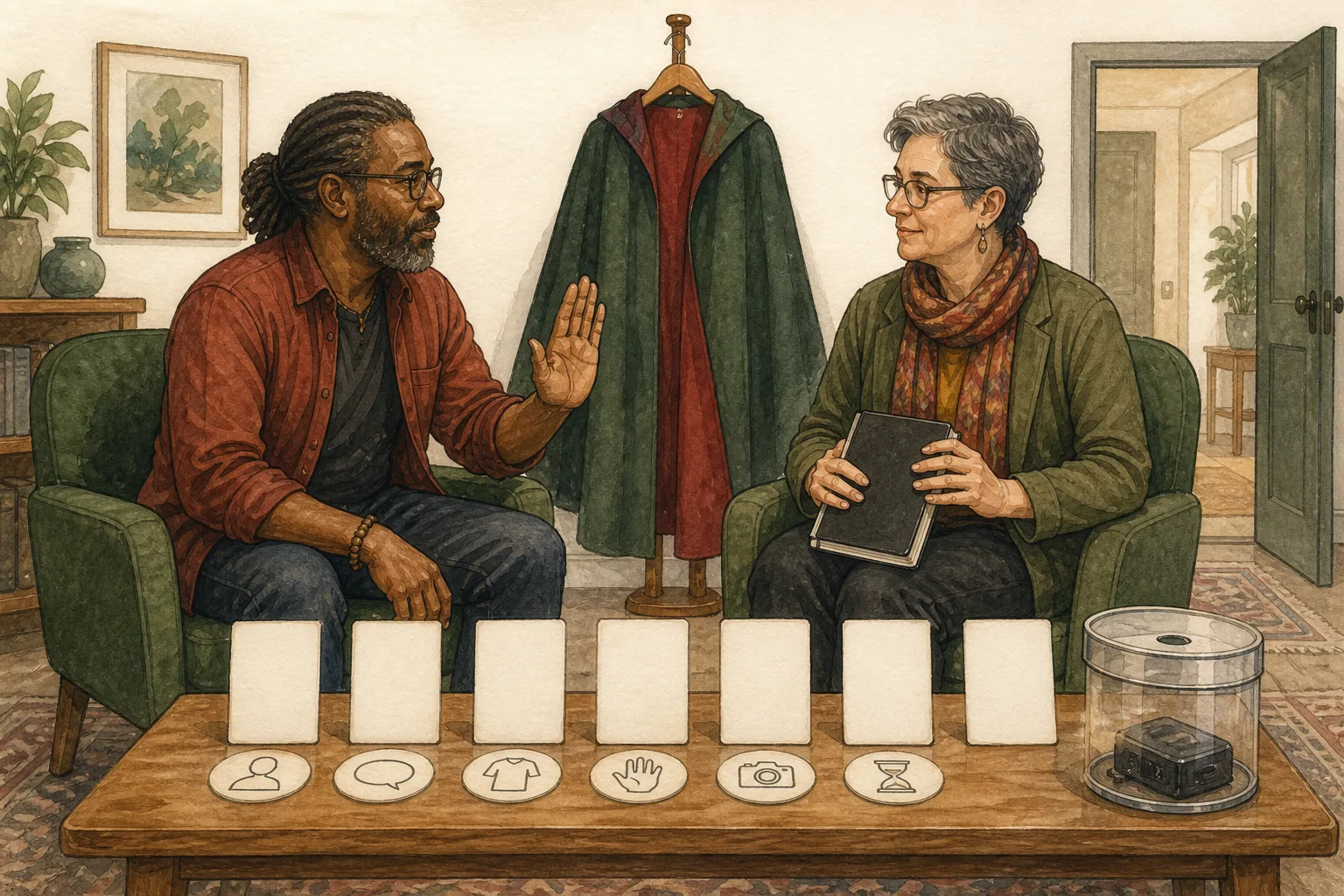
Persona, language, costume, touch, photography and later disclosure need agreement. Any adult can pause, revise or end the fiction without staying in character.
Illustration created using generative AI; not documentary evidence.Clinical distinction and evidence limits
WHO's ICD-11 guidance distinguishes an atypical sexual interest from a paraphilic disorder through requirements such as marked distress, significant impairment, serious risk or non-consent. Imaginative content alone is not a diagnosis, and distress arising only from social stigma should not be confused with disorder.
Research on transformation fantasy as a distinct category is sparse and is often drawn from particular media communities. It cannot provide a single cause, prevalence estimate or clinical profile. Persistent distress, impairment or confusion about physical symptoms deserves individual professional support rather than interpretation from a glossary entry.
Non-graphic examples
What the umbrella may include
- Reading adult fiction in which an original character changes scale or form.
- Using a reversible cloak to mark a temporary, clearly adult persona in private role-play.
- Designing a digital avatar whose movement and silhouette feel unlike one's everyday body.
- Enjoying an abstract material-change image without wanting a literal physical change.
- Agreeing that photographs of a costume transformation remain private and can be deleted on request.
Prepare for an appointment
Questions you could ask a professional
- What information would help you understand my question?
- What are the realistic options and uncertainties?
- How can disability, communication or privacy needs be accommodated?
- When should the situation be reviewed again?
These prompts do not replace assessment and do not imply that every reader needs professional care.
Continue learning
Take the next step from definition to context.
Continue with independent guidance connecting transformation fantasy to evidence, consent, safety, uncertainty and practical decisions.
Separate adult fantasy from roleplay, agree a scene's limits, protect privacy and know when to seek support.
Read the guideRelated in-depth reading
Read the full guide.
Explore a connected question with context and UK support routes.
How adults use doll-like styling and performance as fantasy, with clear boundaries around identity, movement, privacy and stopping.
Read the full guide identity diversityFeminisation play: a beginner's guideFeminisation play: understand adult clothing and role preferences, agree respectful language, protect privacy and keep consent reversible.
Read the full guide products materialsWigs and makeup for transformation playWigs and makeup for transformation: compare fit, skin sensitivity, hygiene, care and privacy for an adult look chosen without pressure.
Read the full guide