An adult interest involving urine as a bodily-fluid, sensory, ritual, humiliation or power-exchange element; the community term is unrelated to aquatic sport.
Sources and evidence type
Manual claim and limitation notes are shown where an individual source audit is complete. Other evidence-type labels are a publisher aid awaiting source-by-source confirmation.
NHS: urinary tract infectionsClinical guideline
Source design
Current public-health or clinical guidance
What it can support
Service pathways, health definitions and recommended public-health or clinical actions within its stated scope.
Important limitation
General guidance cannot assess an individual’s symptoms, exposure, medicine, contraindications or urgency.
Illustration created using generative AI; not documentary evidence.
In brief
Bodily-fluid consent needs specific boundaries, hygiene and an ingestion-free approach.
Urine play varies from symbolic language or simulated liquid to direct bodily-fluid contact. Urine is not reliably sterile after leaving the body, and contact can expose skin and surfaces to microorganisms, medication residues or blood. Risk changes with route of exposure, health, hydration, infection, skin integrity and shared equipment. Consent must cover the fluid itself, where it may contact, cleanup, privacy and whether simulation is preferred; no one should be pressured to produce, hold or ingest urine.
Specific consent and dignity
Agree whether the scene uses real or simulated fluid, body areas, clothing, setting, language, recording and cleanup. Consent to humiliation does not remove hygiene boundaries or dignity afterward.
Never surprise another person, contaminate shared space or involve bystanders. A person with incontinence does not thereby consent to sexualisation.
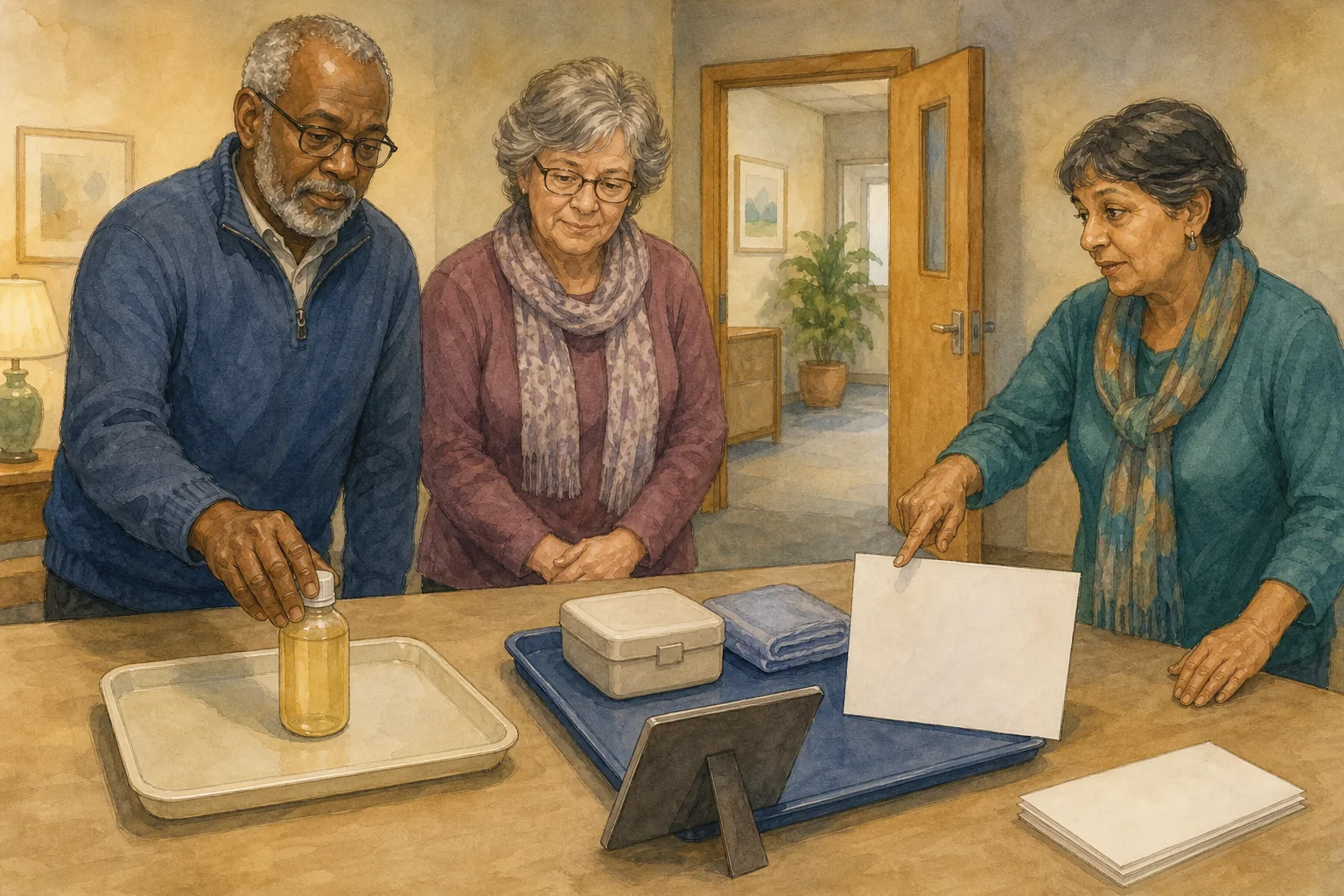
EDITORIAL ILLUSTRATIONName the fluid and the boundaries
Consent should distinguish real from simulated fluid, permitted contact, language, privacy, cleanup and the right to stop without humiliation.
Illustration created using generative AI; not documentary evidence.
Status
Detailed editorial draft
Publisher
The UK Kink Guide
Reviewed
Structured draft present; individual review date not recorded
Evidence
3 cited sources · types labelled below
Jurisdiction
UK-focused general education
Read the rest: evidence, law, safety and sources
Watersports or urine play
Consensual adult use of urine or its symbolism in a scene.
Urophilia
A descriptive term for sexual interest in urine; it does not specify behaviour or risk.
Aquatic watersports
Swimming, sailing and other water activities, unrelated despite sharing the word.
Incontinence
A health or disability experience that is not inherently sexual and must not be fetishised without consent.
Exposure and health boundaries
Avoid ingestion and contact with eyes, mouth, broken or inflamed skin, healing piercings, catheters, stomas and other medical devices. Stop if exposure causes pain or irritation.
Postpone direct contact when there is visible blood, urinary symptoms, known infection or uncertainty. Urine appearance and smell cannot reliably rule out infection.
EDITORIAL ILLUSTRATIONRoute of exposure changes risk
Avoid ingestion and contact with eyes, mouth, broken skin, healing tissue and medical devices; visible appearance cannot rule out infection.
Illustration created using generative AI; not documentary evidence.
Hygiene, surfaces and access
Use easily cleaned private spaces, protect porous materials, wash hands and skin gently, and clean according to surface instructions. Do not mix urine with household cleaning chemicals.
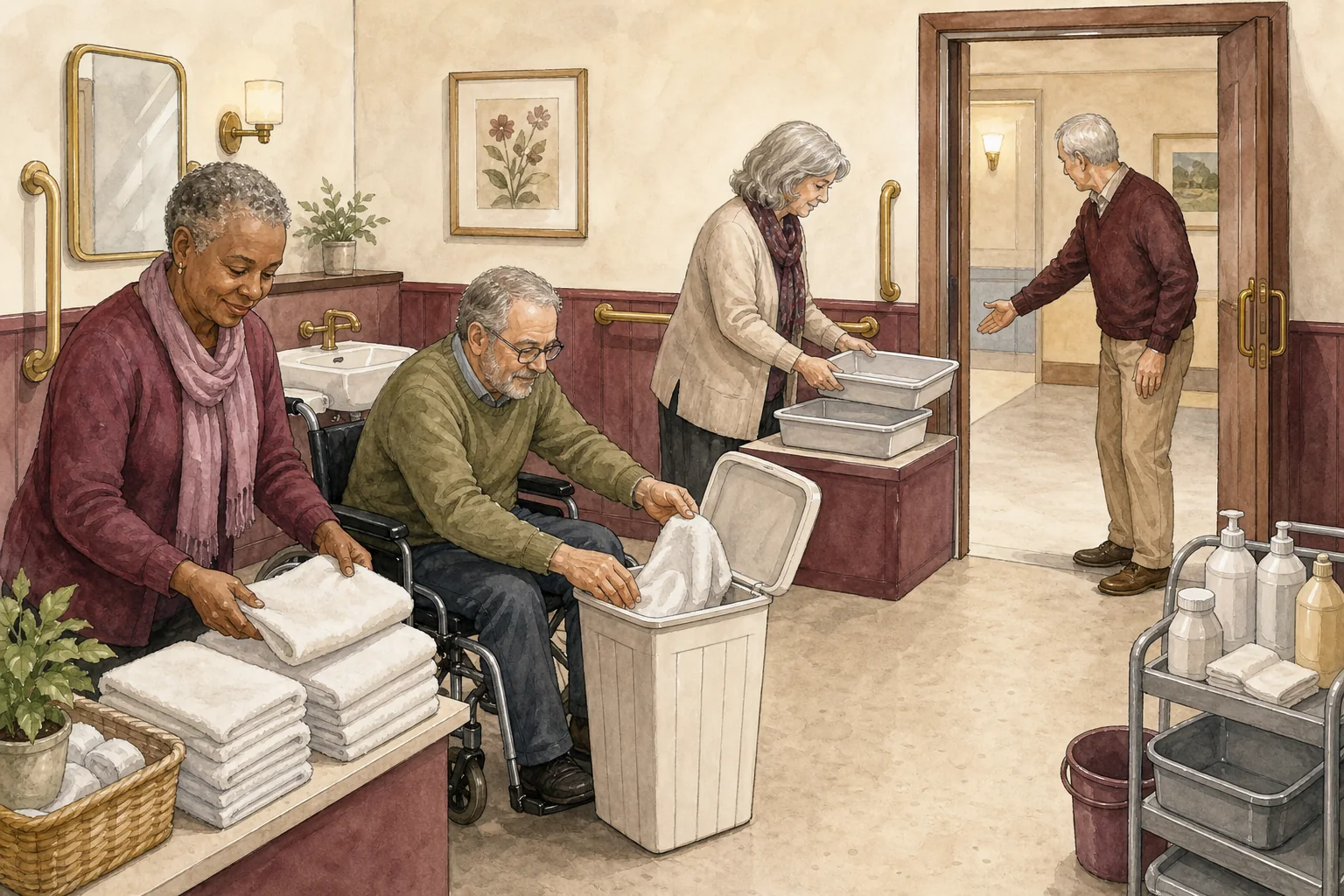
Provide an immediate toilet break and accessible washing; never require painful holding, dehydration or excessive drinking to meet a scene expectation.
Use washable private space, provide immediate toilet and washing access, and never require painful holding, dehydration or excessive drinking.
Illustration created using generative AI; not documentary evidence.
Evidence and clinical distinction
Direct research on consensual urine play is limited, so precise transmission probabilities are unavailable. General infection-control guidance supports route-specific caution but cannot declare every exposure equivalent.
An unusual adult interest is not a disorder alone. Clinical support may be relevant for distress, impairment, compulsive risk or non-consent, while urinary symptoms need ordinary healthcare rather than kink interpretation.
Non-graphic examples
What the umbrella may include
Using coloured water as a simulation.
Agreeing that fluid stays below intact skin on the torso.