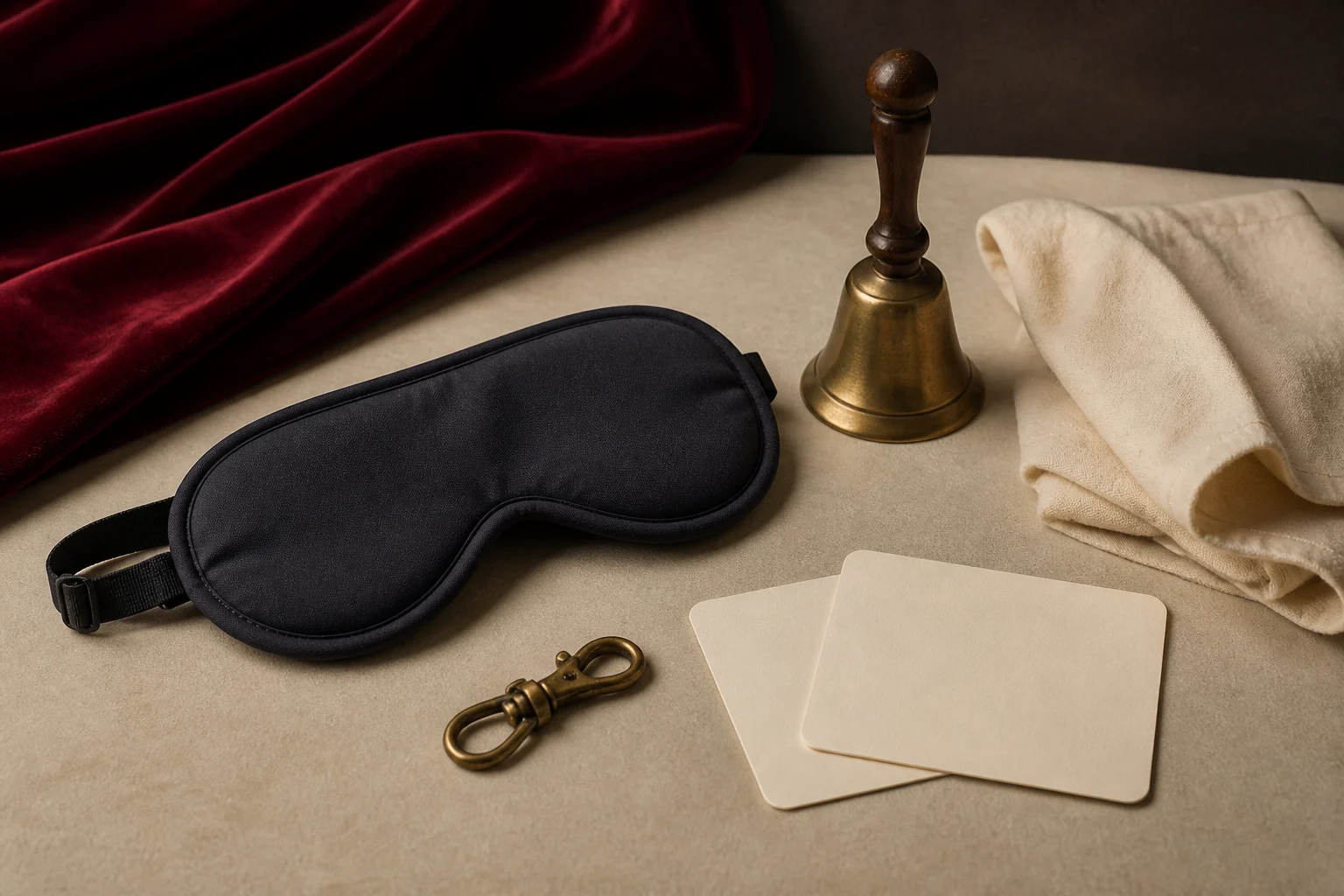
The consensual reduction or removal of sight using a blindfold to alter anticipation, attention, sensory balance or role experience.
Sources and evidence type
Manual claim and limitation notes are shown where an individual source audit is complete. Other evidence-type labels are a publisher aid awaiting source-by-source confirmation.
Rogge et al. (2019), vision and balance performanceResearch study
Source design
Peer-reviewed research or review
What it can support
The specific population, measures and findings reported by the paper.
Important limitation
It cannot automatically establish UK prevalence, causation, diagnosis, consent or an individual outcome. Check recruitment, definitions and study design.
The specific population, measures and findings reported by the paper.
Important limitation
It cannot automatically establish UK prevalence, causation, diagnosis, consent or an individual outcome. Check recruitment, definitions and study design.
Illustration created using generative AI; not documentary evidence.
In brief
Removing sight changes movement and communication—not consent or personhood.
Blindfold play is often described as simple sensory deprivation, but removing sight changes balance, orientation, threat perception and access to non-verbal information. A blindfold can also press the eyes, trap heat, interact with makeup or skin products and make an otherwise familiar room hazardous. The wearer remains an active participant who needs reliable communication and immediate removal.
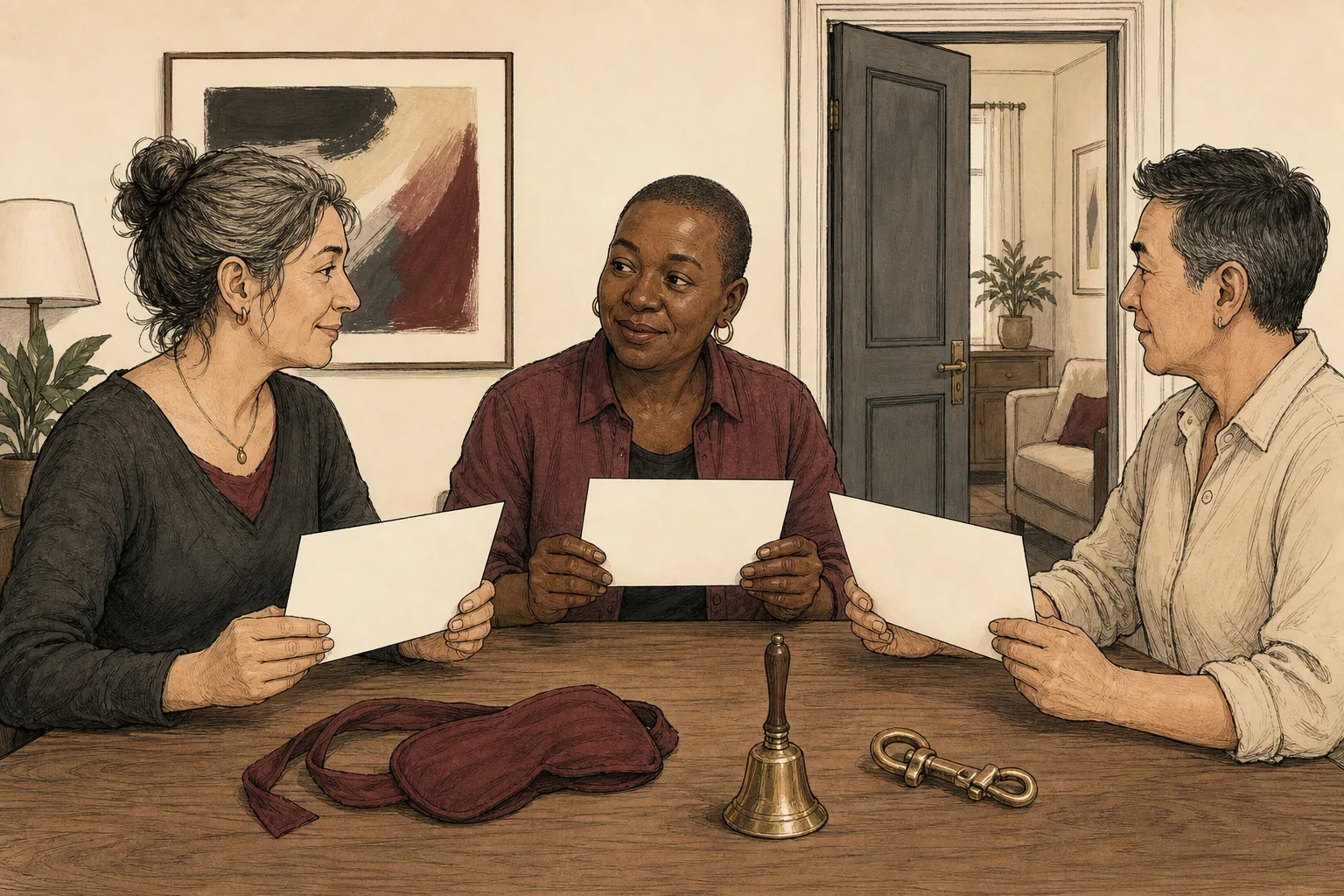
Consent and predictability
Agree who may enter, what touch or sound is expected, whether movement occurs and how the blindfold is removed. Do not introduce surprise people or recording.
Use clear verbal check-ins and an accessible stop signal. Freezing, silence or startle is a reason to pause, not proof of enjoyment.
EDITORIAL ILLUSTRATIONPredictability is part of consent
Who may enter, expected touch and sound, movement, recording and removal all need separate agreement. Silence, freezing or startle should prompt a pause rather than an assumption.
Illustration created using generative AI; not documentary evidence.
Status
Detailed editorial draft
Publisher
The UK Kink Guide
Reviewed
Structured draft present; individual review date not recorded
Evidence
3 cited sources · types labelled below
Jurisdiction
UK-focused general education
Read the rest: evidence, law, safety and sources
Opaque blindfold
Designed to block sight; fit and pressure determine comfort and safety.
Partial visual restriction
Reduced light or peripheral vision that may offer a lower-intensity alternative.
Eyes-closed instruction
Voluntary closure allowing immediate self-restoration of sight and potentially greater control.
Sensory deprivation
A broader category that may combine sight reduction with sound or movement restriction, increasing communication risk.
Balance and environment
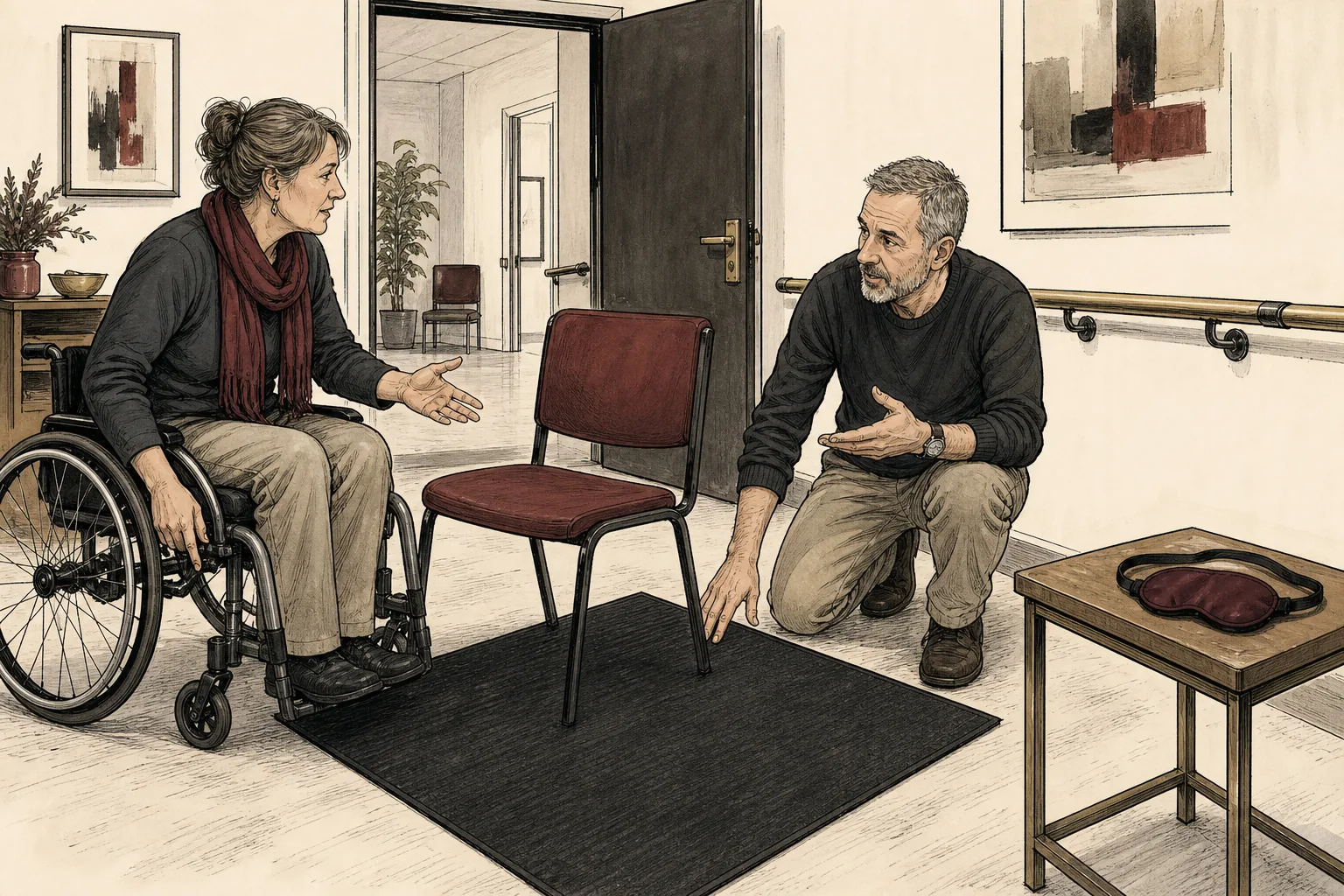
Vision contributes to postural control, and blindfolding typically reduces balance performance in sighted people. Keep the wearer seated or supported when appropriate and remove trip, stair and sharp-object hazards.
Do not combine restricted sight with driving, water, heights, unstable surfaces or unsupervised movement. Allow orientation before walking after removal.
EDITORIAL ILLUSTRATIONSight affects balance and orientation
Removing vision can reduce postural control and make a familiar room hazardous. Seated or supported options, a clear floor and gentle reorientation after removal reduce avoidable risk.
Illustration created using generative AI; not documentary evidence.
Fit, eyes and hygiene
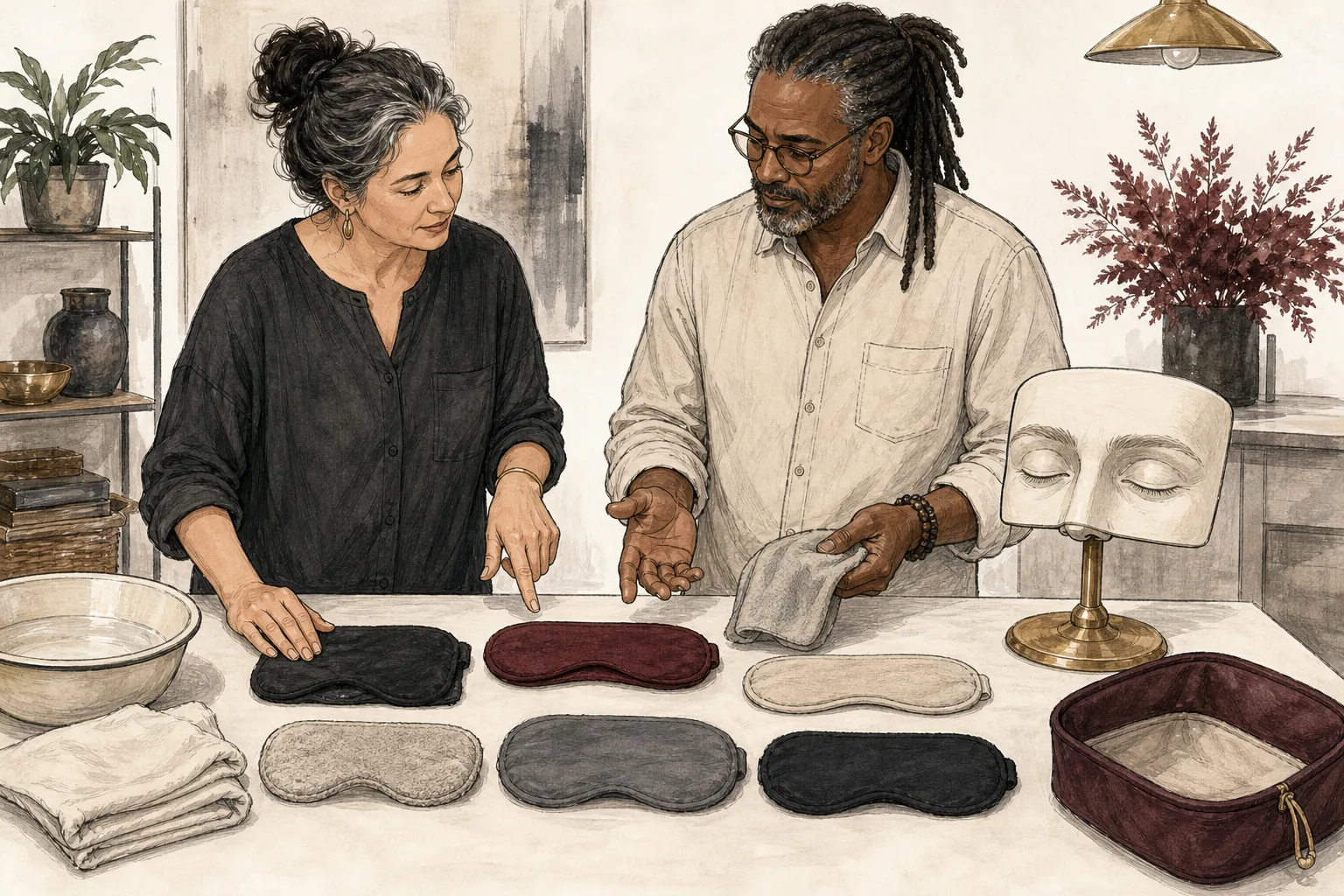
Avoid pressure on the eyeballs, overly tight straps and materials that irritate skin. Stop for eye pain, headache, dizziness, panic or visual disturbance.
Use a clean personal or washable blindfold and avoid shared eye-area products. People with eye conditions, migraines or vestibular problems may need individual clinical advice.
EDITORIAL ILLUSTRATIONFit and hygiene reach the eye area
A blindfold should not press the eyes, trap excessive heat or irritate skin. Eye pain, headache, dizziness, panic or visual disturbance are reasons to remove it and reassess.
Illustration created using generative AI; not documentary evidence.
Accessibility and alternatives
Do not assume a blind or low-vision person experiences blindfold play in the same way as a sighted person. Ask about preferred orientation, touch and communication without treating disability as a kink prop.
Alternatives include dim light, voluntary eyes closed or a narrow field of view. Accessibility means offering control and choice, not imposing deprivation.
Non-graphic examples
What the umbrella may include
Using eyes closed instead of a tied blindfold.
Remaining seated on a clear floor.
Removing the mask immediately after dizziness.
Agreeing that no additional person will enter.
Using verbal descriptions for orientation after removal.
Prepare for an appointment
Questions you could ask a professional
What information would help you understand my question?
What are the realistic options and uncertainties?
How can disability, communication or privacy needs be accommodated?
When should the situation be reviewed again?
These prompts do not replace assessment and do not imply that every reader needs professional care.
Continue learning
Take the next step from definition to context.
Continue with independent guidance connecting blindfold play to evidence, consent, safety, uncertainty and practical decisions.