Release first
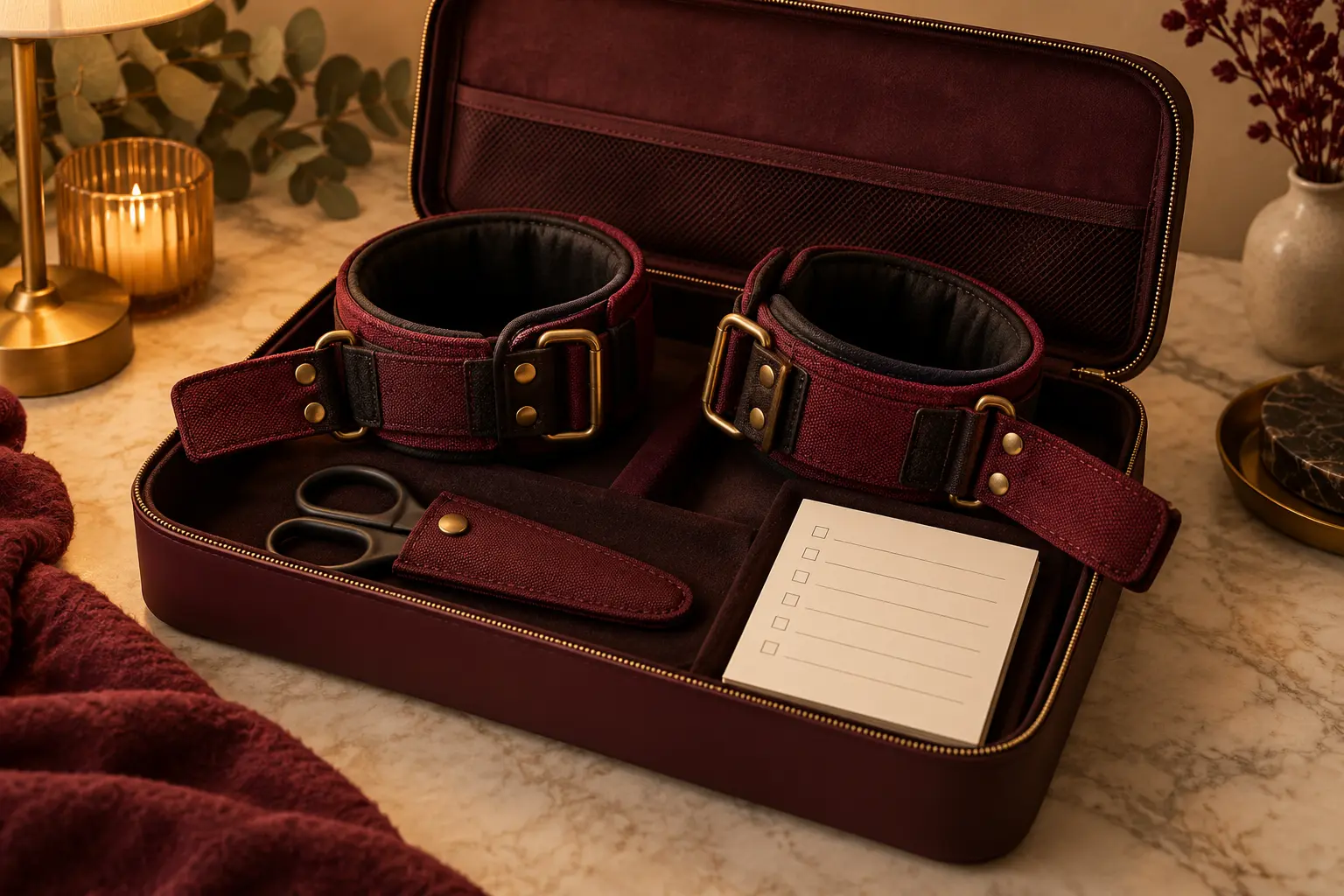
Choose cuffs or soft restraints that can be released immediately by the person wearing them, with an accessible cutting or opening plan where appropriate.
 The UK Kink GuideIndependent product discovery
Product discovery / Bondage and restraint planning
A starter kit is only useful when every item has a clear purpose, an immediate release route and enough information to inspect, clean and decline it. This guide names no preferred company or individual product.
Independent education · optional affiliate linksAn optional Uberkinky category box below is clearly disclosed and separate from the guidance. It is not a product recommendation. No on-site affiliate tracking is added. This is publisher-reviewed category education; no external approval or individual-product certification is claimed.
Start here
Build a small, low-complexity set around communication, access and release. A crowded novelty bundle is not safer because it contains more pieces.
Buying checklist
Choose cuffs or soft restraints that can be released immediately by the person wearing them, with an accessible cutting or opening plan where appropriate.
Look for material, adjustment range, care instructions, warnings, responsible-business details and a fault route before buying.
Consider dexterity, mobility, circulation, sensory needs, panic history and whether someone can reach their own release.
A first kit works best when it introduces one simple item rather than a collection of unfamiliar restrictions at once.
Agree a stop word or signal, check-in method, location of keys or cutters and what happens if anyone changes their mind.
Do not use items with sharp edges, damaged seams, cracked coatings, loose hardware, fraying or unclear cleaning history.
Compare approaches
A relatively simple starting category when the material, closure and removal route are clear.
Check: Adjustment range, stitch quality, skin-contact material and whether either person can release them promptly.
Can be easier to recognise and remove than complex hardware, but still require a calm release plan and careful material checks.
Check: Width, fraying, knots or fasteners, washability and whether the material becomes tighter or difficult to undo.
Useful only if every included item is understood and suitable; quantity does not create value or safety.
Check: Whether the bundle lists each item’s material, limitations and independent release information rather than a generic promise.
A beginner bondage kit is worth considering only when it supports a clear, reversible plan. Start with a conversation about what each person is curious about, what is off limits, how a pause will be communicated and how the item will be opened or removed. The most useful first purchase may be one adjustable, easy-to-inspect item rather than a bundle that encourages people to work through unfamiliar pieces simply because they arrived together.
Retail descriptions can help compare materials, dimensions and what is in the box, but they cannot decide whether an item suits a particular body, health context or relationship. A seller should provide a material description, care information, a responsible-business contact and a way to report a fault. Missing basics are a reason to leave the product, not a challenge to solve with guesswork.
A kit may bundle cuffs, a blindfold and simple accessories, but contents vary. Read the itemised list, materials, dimensions and release information rather than assuming that “beginner” means suitable for everyone. You do not need to use every item. A decorative accessory is not a load-bearing restraint, and a bundle cannot replace separate checks of fit, comfort and immediate removal.
Before comparing colours, themes or packaging, decide how an item comes off. A person who is restrained should be able to call for a stop and be heard; where possible, they should also be able to release themselves. Keep any agreed release tool accessible and make sure it is used only for its intended purpose. Avoid placing a release route behind a locked door, in a bag across the room or with someone who might be asleep, impaired or distracted.
Release is not only about equipment. A plan should cover panic, a sudden cramp, numbness, a fire alarm, an unexpected visitor and a change of mind. If a product’s mechanism cannot be understood without trying it on, do that reading and checking while nobody is restricted. Do not introduce more than one new form of restriction at a time, and do not use the first trial as a test of endurance.
Look for broad, smooth contact surfaces, adjustable closures that can be checked visually, intact stitching and a clear statement of what the product is made from. These are buying criteria, not guarantees. A material name alone does not tell someone whether it will be comfortable, washable or appropriate for their skin, so check the manufacturer’s care advice and stop using any item that changes condition.
A modest kit can include a communication card or written boundaries list as well as the physical item. That is not theatrical paperwork: it gives people a calm place to record a stop signal, known sensitivities, medical information they want shared in an emergency and aftercare preferences. If writing feels too formal, agree the same points out loud and revisit them before each use.
A large bundle can look good value while concealing vague materials, tiny product photographs and no information about which item is intended for which purpose. Treat every piece as a separate product. If a listing does not identify the material, closure, dimensions and care for an item, do not assume that a generic ‘beginner friendly’ label fills the gap. The same applies to claims that a kit is ‘safe’ without limits or instructions.
Avoid making a purchase a commitment to use everything. Put items aside until there is a specific, agreed reason to try them, and return to the product information first. If an unopened hygiene-sealed item may need to be returned, read the terms before opening it. Consumer rights can be different for a fault, a misdescription and a simple change of mind.
Comfort is an ongoing question. Pain, numbness, tingling, coldness, colour change, swelling, difficulty breathing, panic or an inability to communicate are reasons to stop and release promptly. Do not reframe warning signs as a challenge to overcome. If a person cannot be released quickly, has severe symptoms or there is an urgent medical concern, seek urgent help and explain plainly what happened.
Afterwards, inspect closures, stitching and surfaces before putting an item away. Follow the maker’s washing and drying instructions, keep items dry and separate where that helps hygiene, and retire anything damaged. Keep the order record and product details so that a fault can be reported and a safety recall can be checked. Product-safety notices are more useful than social-media reassurance if an item seems defective.
Do beginners need a complete kit? No. A single, understood item with a release plan can be a better starting point than a themed set. Are metal locks or novelty handcuffs a good first choice? Not usually: a mechanism that cannot be released immediately adds risk without adding a necessary safety feature. Can a partner hold the key? That should never be the only route to release.
Is a soft item automatically safe? No. Softness does not answer questions about circulation, panic, allergies, access or the ability to stop. Can consent be agreed once for every future use? No. Check in each time, because comfort, health, privacy and interest can change. A kit is equipment, not a standing agreement.
For an urgent health concern, use NHS 111 for advice, or call 999 in an emergency. Seek emergency help after breathing difficulty, loss of consciousness, severe pain, a product that cannot be removed, major swelling or a worrying colour or sensation change. A GP or sexual-health service can help with ongoing pain, anxiety or a skin reaction; this guide cannot assess an individual symptom.
For a faulty or unsafe product, stop using it, keep the order details, contact the seller and check GOV.UK product-safety alerts and recalls. Citizens Advice can explain consumer routes when a business will not deal with a fault or misleading description. If someone feels pressured, frightened or unable to say no, prioritise their immediate safety and contact a trusted support service rather than trying to repair the scene.
Ask before buying
Evidence and limits
These sources support the category-level checks and signposting. They do not certify an individual product or turn general guidance into a safety guarantee.
Keep learning