Nominal width
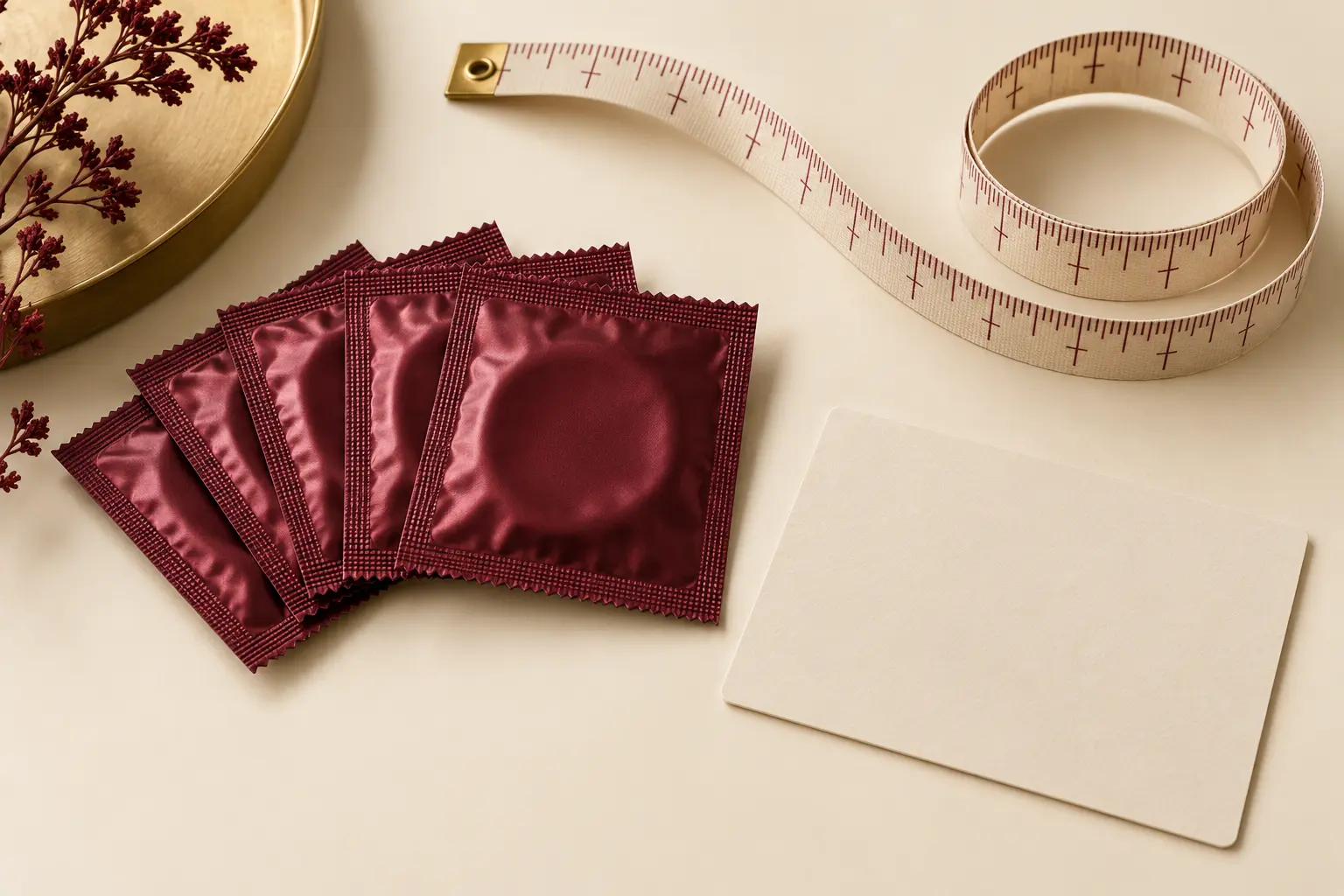
Compare the published nominal width and shape rather than assuming one ‘regular’ label fits everyone. A barrier that slips, feels painfully tight or cannot be rolled on correctly needs reassessment.
 The UK Kink GuideIndependent product discovery
Product discovery / Barriers
Compare condom size, shape, material and barrier type with the packet instructions, expiry and lubricant compatibility in view. This guide names no preferred company or individual product.
Independent education · optional affiliate linksAn optional Uberkinky category box below is clearly disclosed and separate from the guidance. It is not a product recommendation. No on-site affiliate tracking is added. This is publisher-reviewed category education; no external approval or individual-product certification is claimed.
Start here
Choose a barrier that can be used correctly, consistently and comfortably. Fit, material, instructions, expiry and lubricant compatibility matter more than colour, texture or a retailer’s category label.
Buying checklist
Compare the published nominal width and shape rather than assuming one ‘regular’ label fits everyone. A barrier that slips, feels painfully tight or cannot be rolled on correctly needs reassessment.
The packet should say whether it is latex or latex-free. NHS guidance says people with a latex allergy should not use latex condoms.
External and internal condoms have different designs and instructions. Dental dams and other barriers have their own intended uses and coverage limits.
The NHS says oil-based lubricant should not be used with latex condoms. Check instructions where the material or product is different.
Look for undamaged packaging, the use-by date, instructions and UKCA or CE marking as the NHS recommends.
Opening, orientation and application need to be manageable with the time, dexterity, vision and privacy available. A dry run with instructions can reduce pressure later.
Compare approaches
Available in varied materials, nominal widths and shapes. The right option is one that can be used as directed and stays comfortable throughout use.
Check: Material, nominal width, shape, instructions, expiry and compatible lubricant.
Offer a different placement and control option. The NHS advises not using an internal condom at the same time as an external condom because this can make one or both split.
Check: The supplied insertion and removal instructions, product material and the plan for one barrier only.
May support protection for particular kinds of contact when chosen with the relevant sexual-health guidance in mind.
Check: Coverage, material, lubricant compatibility, handling and the actual activity—not a generic protection promise.
A condom cannot do its job well if it is too tight, slips, is put on late, is used with an incompatible lubricant or is taken from a damaged packet. The NHS says condoms help prevent pregnancy and reduce the risk of STIs when used correctly, and it tells readers to use a new condom every time, follow the packet instructions and check the date and marking. Those practical checks are more useful than choosing by colour, novelty or a seller’s popularity label.
When comparing options online, use the retailer’s published specification for material, nominal width, shape, quantity, expiry information and the manufacturer’s instructions. Do not treat a product photograph, customer review or ‘ultra-safe’ phrase as verification. The packet and official instructions remain the decision-making documents when the product arrives.
Condom fit is often described through nominal width: the flat width stated by the maker rather than a universal body-size category. Shapes, thickness and materials also differ, so two products with a similar width can still feel different. The goal is not a particular number; it is a condom that rolls on in the intended direction, stays in place and does not cause painful constriction.
If an external condom is too tight, uncomfortable, loose, bunches or repeatedly comes off, pause and try a different nominal width or shape rather than forcing the same choice. A sexual-health clinic, GP practice, pharmacy or contraception service may be able to give practical information. Never alter a condom to make it fit, and do not reuse one.
Latex is common, while latex-free alternatives are also available. The NHS says the packet should state what a condom is made from and advises people with a latex allergy not to use latex condoms. That is a material decision, not an identity or preference label, so read the individual packet each time a product changes.
Lubricant compatibility is equally specific. The NHS says not to use oil-based lubricant with latex condoms and directs readers to water- or silicone-based lubricant instead. Check any additional claims on the condom or lubricant package, especially for warming, flavoured or medicated products, and stop if there is irritation or discomfort.
External condoms are worn on a penis before vaginal, anal or oral sex, according to the NHS. Internal condoms are placed inside the vagina and have their own instructions. Neither form is a one-size replacement for the other: compare the method that a person can use comfortably and correctly, then read its particular instructions rather than transferring steps between products.
The NHS advises against using an internal and external condom together because friction can make one or both split. Other barriers may be used for different kinds of contact, but coverage and instructions still matter. A barrier reduces particular risks; it does not erase every possibility of STI transmission, pregnancy or a need for testing after an exposure.
Heat, friction, damaged packaging and out-of-date stock can undermine a barrier before it is opened. The NHS advises checking that the use-by date has not passed and looking for a UKCA or European CE mark on the packet. Store condoms according to their instructions, not loose where packaging can be crushed, rubbed or exposed to heat.
A responsible retailer should show the product material, quantity, manufacturer instructions, use-by or stock-control information and a way to report a safety concern. Retain a receipt and batch details where possible. GOV.UK’s recalls database is a useful place to check a published product-safety notice; it does not replace immediate clinical advice after a condom problem.
Lower and higher price bands can reflect packet size, material, shape, added lubricant, packaging or branding. They do not rank pregnancy or STI protection by themselves. Compare the per-unit cost only after eliminating options that are the wrong material, width or type for the intended use.
Common mistakes include using two condoms, opening a packet with teeth or sharp objects, ignoring a use-by date, using oil with latex, relying on a condom that has already been rolled the wrong way, and treating an awkward fit as something to endure. The NHS advises discarding an external condom that has been put on the wrong way and using a new one.
Do larger packets offer better protection? No. The relevant factors are an in-date, intact product used correctly every time. Can people with a latex allergy use any condom? No: check for a latex-free material and follow its instructions. Do internal and external condoms add extra protection together? No. The NHS says not to use them together because they can make one or both split.
Are condoms available free in the UK? NHS contraception services are free and confidential. The NHS says condoms may be available from sexual-health clinics, some GP surgeries, pharmacies and some young people’s services in England; local routes vary across the nations, so check the relevant national or local service.
If a condom splits or comes off, the NHS advises urgent help from a pharmacist, sexual-health clinic, GP or NHS 111 because emergency contraception or an STI test may be needed. Tell the service when the contact happened and what type of protection problem occurred so it can advise on the actual situation.
Seek prompt medical advice for a suspected severe latex reaction, significant swelling, breathing difficulty or another emergency; call 999 for an emergency. For an unsafe or recalled consumer product, stop using it, contact the seller and follow GOV.UK recall information. This guide is not a substitute for a clinic’s individual advice.
Ask before buying
Evidence and limits
These sources support the category-level checks and signposting. They do not certify an individual product or turn general guidance into a safety guarantee.
Keep learning