Purpose and access need
Name the practical need first: reducing pressure, supporting a joint, improving reach, creating a stable seat, allowing rest or making controls easier to reach.
 The UK Kink GuideIndependent product discovery
Product discovery / Positioning and access
Compare wedges, bolsters, supports and sex furniture by comfort, dimensions, stability, cleaning and access needs—not by a promised position. This guide names no preferred company or individual product.
Independent education · optional affiliate linksAn optional Uberkinky category box below is clearly disclosed and separate from the guidance. It is not a product recommendation. No on-site affiliate tracking is added. This is general product-comparison information, not individual positioning or medical advice.
Start here
A support is useful when it reduces strain and preserves choice, communication and the ability to stop. It should never force a body into a shape, position or duration it cannot comfortably manage.
Buying checklist
Name the practical need first: reducing pressure, supporting a joint, improving reach, creating a stable seat, allowing rest or making controls easier to reach.
Measure available space, body contact area, height, angle, weight limit where supplied and whether the support works with a bed, chair, wheelchair or floor.
Check base grip, seams, fill, frame, covers and movement on the actual surface. A support that slides, tips or sinks unpredictably is not an access aid.
Look for cover material, removable or washable parts, care instructions, drying time and any relevant allergy information.
Weight, handles, foldability, charging if relevant and storage space affect whether an item is realistically usable without strain or unwanted disclosure.
A consumer cushion or bench is not a medical device unless its status is clearly stated. Persistent pain, numbness or postural symptoms need clinical advice, not more force or a more expensive support.
Compare approaches
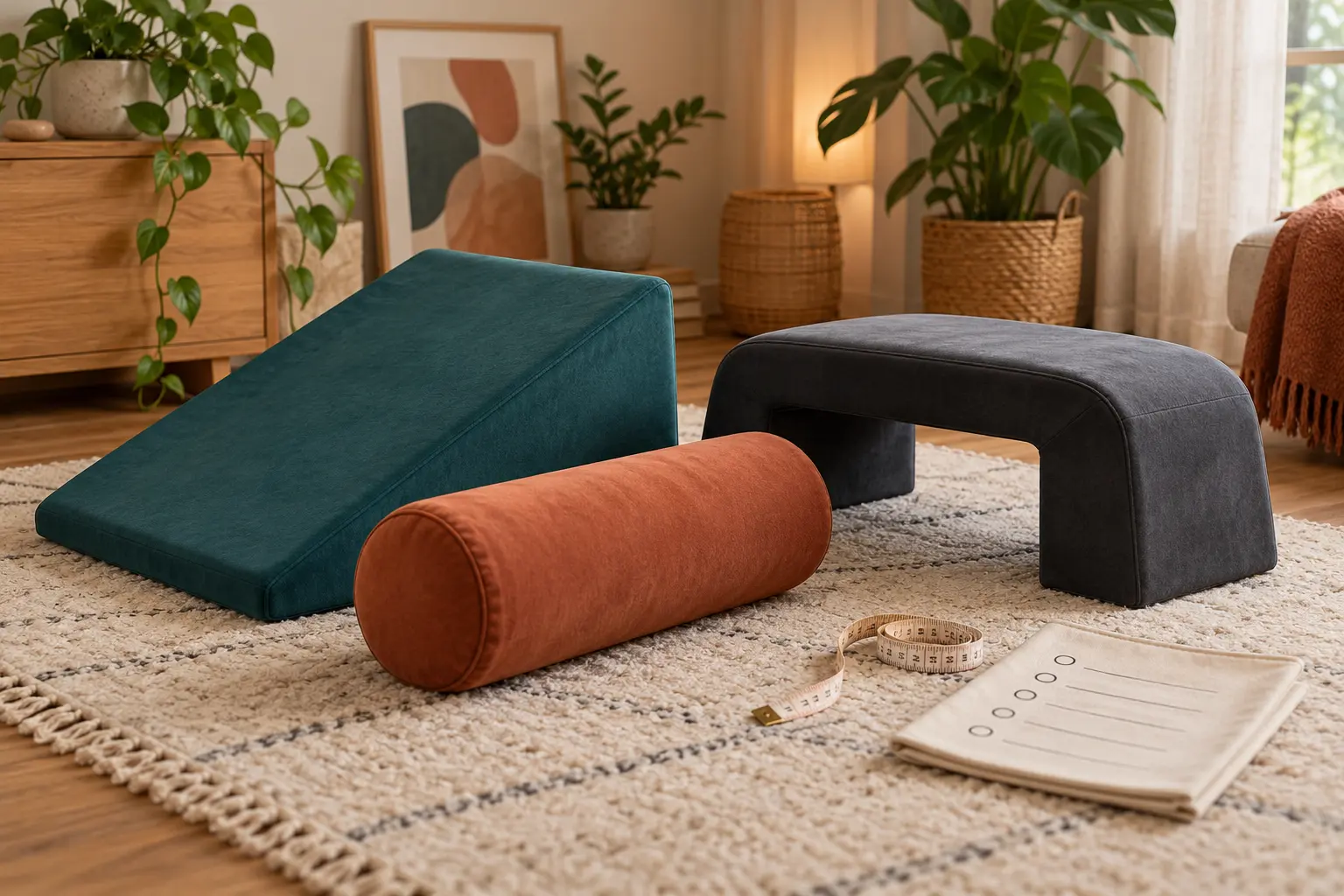
Can alter angle or provide local support with relatively simple setup, but firmness, seam placement and cover care vary.
Check: Angle, dimensions, non-slip base, cover instructions and whether it remains stable on the intended surface.
May help distribute pressure or support knees, hips, back or arms depending on the individual and the way they are arranged.
Check: Diameter, firmness, rolling risk, washable cover and whether it can be placed without strain.
Can offer a more structured surface, but frame strength, clearance, assembly, weight, transfers and cleaning need as much scrutiny as the advertised use.
Check: Responsible business, load information, frame, padding, feet, cleanability, room clearance and return arrangements.
Positioning aids can be ordinary cushions, bolsters, wedges or more structured furniture. The useful question is not which position a product advertises, but whether it makes a real need easier: taking pressure off an area, supporting a joint, improving reach, allowing a rest, changing an angle or helping someone transfer safely. A support is optional and should leave everyone able to pause, change their mind and communicate.
Scope notes that chairs, pillows, supports and props can help disabled people find what is comfortable. That does not mean every marketed ‘sex furniture’ product is accessible or suitable. Retailers’ published dimensions, weight, cover material and assembly details are helpful comparison data; they do not replace a person’s own knowledge, an occupational therapist’s advice or a clinician’s assessment of pain.
A wedge changes height and angle. A bolster can support a limb or reduce pressure at a particular point. Simple supports can be easier to move, store and wash than a larger product, but their real firmness may differ from photographs and a smooth cover can slide on bedding or flooring. Check dimensions, cover grip, seam placement and the actual set-up surface.
Trial an aid without pressure to continue. Notice whether it leads to pinching, tingling, numbness, breathlessness, cramping or a need to hold a stressful position. These are reasons to stop and reassess, not problems to solve by adding another cushion. A different angle, a shorter period, a non-sexual form of closeness or no support at all can be the right choice.
Padded benches, frames and larger supports may offer a fixed height or surface, but they also bring more variables: assembly, frame and feet, clearance around the item, whether the cover can be cleaned, transfer routes, stability on a particular floor and how the item will be stored. Never assume that an adult-retailer category confirms structural safety or a medically meaningful load limit.
Ask for the responsible business, exact dimensions, material specification, published support or load information if any, assembly instructions, warranty, return conditions and a fault-reporting route. Make space for a person to get on and off without someone pulling, lifting or pressuring them into a movement they have not agreed to. Stop using furniture with a wobble, split seam, cracked frame or exposed fastener.
Access is individual. Someone may need a firmer surface, lower transfer height, visual contrast, less noise, more time, a place for medication or mobility equipment, or a way to communicate without holding a difficult posture. Ask rather than assuming from a diagnosis. A partner or carer should not decide what intimacy is acceptable for the disabled adult involved.
Plan practical privacy as well as physical comfort. That might include where the item lives, who can move it, how it is cleaned, whether it looks like ordinary home furniture, and what help can be requested without unwanted disclosure. Scope emphasises that disabled people have a right to privacy in their sex lives even if they receive support in other parts of life.
Price bands often reflect size, foam density, upholstery, frame, removable covers and branding. They do not tell you whether the item is better for a painful joint, fatigue or an individual transfer. Compare only products with enough material and care information to judge whether cleaning and drying are realistic in the household.
Check whether covers are removable, whether a cleaner is permitted, whether liquid can enter seams or foam, and how long everything must dry before storage. If a support will be shared, agree cleaning and storage before purchase. A waterproof claim needs a specific explanation; it does not automatically cover every seam, zip, frame joint or removable part.
Can ordinary pillows be useful? Yes, if they are stable, clean and comfortable, but they may not provide the same firmness or washability as a purpose-designed support. Does a higher price mean better accessibility? No. Measured dimensions, stability, care and whether the person can use it independently matter more. Is a support a replacement for medical advice? No.
What if a partner has different needs? Treat that as a conversation, not a problem for one person to solve alone. Agree a pause word or signal, a time limit where needed and what discomfort will mean. The right product can still be the wrong choice for a particular day, symptom flare or room.
Ask a GP, physiotherapist, occupational therapist or other relevant clinician about persistent pain, new numbness, balance problems, a pressure area, postural symptoms or a change after illness, injury, pregnancy or surgery. NHS physiotherapy can help with problems including pelvic pain and leaking urine, and local referral routes differ.
For a broken, unstable or unsafe consumer product, stop use, contact the seller and check GOV.UK safety alerts and recalls. Call NHS 111 for urgent advice and 999 for an emergency. This page supports product comparison; it cannot assess a body, prescribe a position or guarantee a support will be safe for a particular person.
Ask before buying
Evidence and limits
These sources support the category-level checks and signposting. They do not certify an individual product or turn general guidance into a safety guarantee.
Keep learning