Design and adaptation that reduce barriers across varied mobility, dexterity, strength, sensation, cognition, communication and assistance needs.
Sources and evidence type
Manual claim and limitation notes are shown where an individual source audit is complete. Other evidence-type labels are a publisher aid awaiting source-by-source confirmation.
GOV.UK: make things accessible and inclusiveLaw or regulator
Source design
Primary legislation, prosecutorial or regulator guidance
What it can support
The legal provision or official regulatory position for the jurisdiction and date stated.
Important limitation
It is not fact-specific legal advice. Commencement, amendments, jurisdiction and case law may affect application.
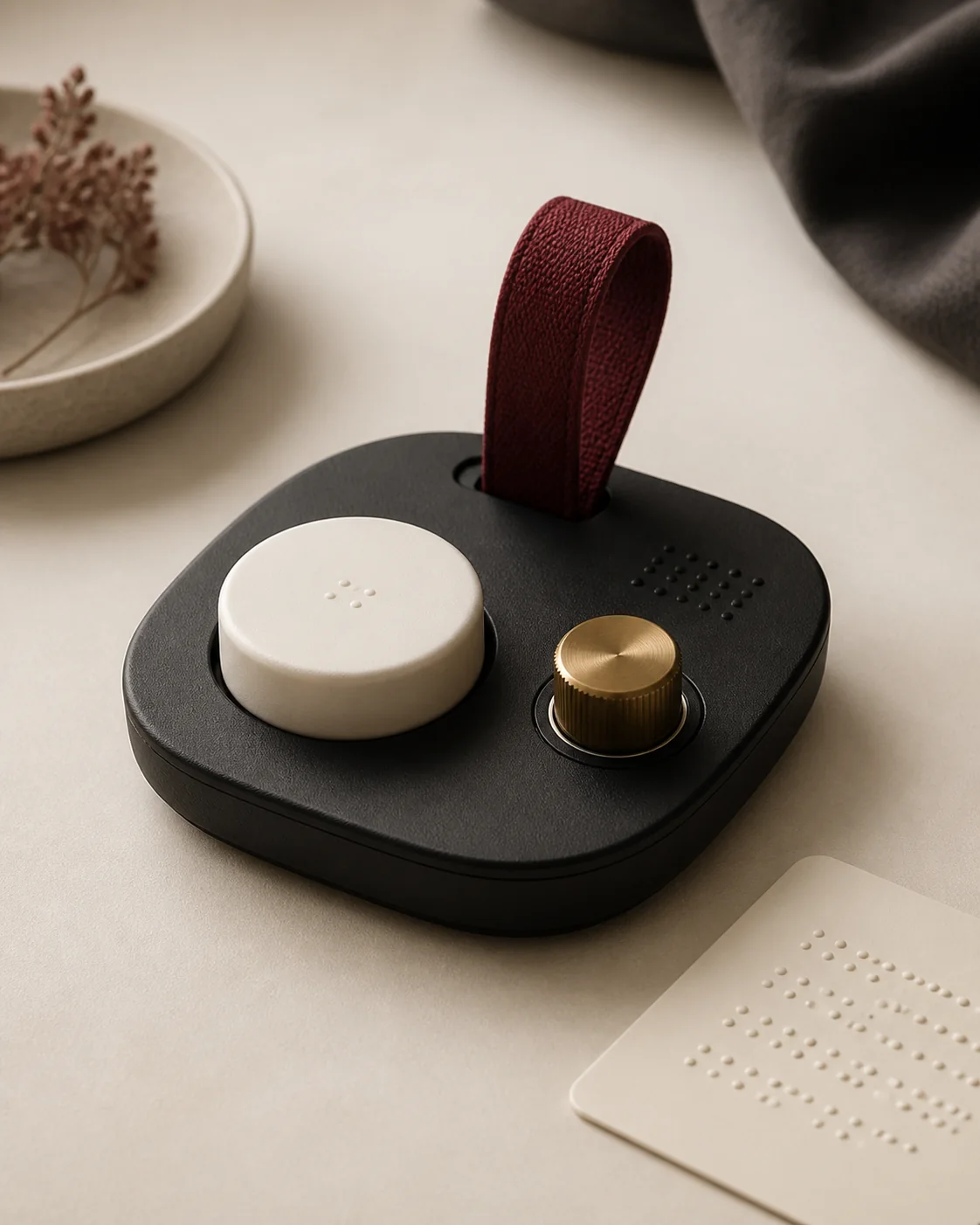
EDITORIAL ILLUSTRATIONAccessible and adaptive design
Products & materials
Illustration created using generative AI; not documentary evidence.
In brief
Accessibility is a user-and-context relationship, supported by options, evidence and dignified control.
Accessibility is not one feature or one disability category. A large button may help some users while high activation force excludes others; an app may add remote control while creating visual, cognitive or privacy barriers. Good design involves disabled people, offers more than one way to perceive and operate key functions, and explains residual limitations honestly.
Controls and feedback
Consider button size and force, grip, reach, tremor, one-handed use, voice or switch access, accidental activation and a clearly findable stop control. Provide tactile, visual and audible feedback options where practical.
Remote control should not remove local control or consent. Users need clear connection status, adjustable intensity and a reliable way to stop without navigating complex menus.
Status
Detailed editorial draft
Publisher
The UK Kink Guide
Reviewed
Structured draft present; individual review date not recorded
Evidence
3 cited sources · types labelled below
Jurisdiction
UK-focused general education
Read the rest: evidence, law, safety and sources
Accessible design
Design intended to let people with varied impairments use a product or service effectively.
Inclusive design
Process that considers human diversity and exclusion throughout research, design and evaluation.
Adaptive product
Item modified or configured for a person's requirements, ideally without creating new hazards.
Assistive technology
Technology whose primary purpose is maintaining or improving an individual's functioning and participation.
Information and sensory access
Use plain instructions, meaningful diagrams, readable contrast and text, captions or transcripts, and warnings that do not depend on colour alone. Digital controls should work with relevant assistive technology.
Sensory preferences vary: noise, vibration, light, texture and fragrance can enable or exclude. Describe these properties specifically rather than calling a product universally sensory-friendly.
Physical adaptation and support
Stabilising bases, handles, mounts, extension loops and positioning supports can reduce fatigue, but changes may alter leverage, loads, quick release or skin pressure. Assess the whole setup.
A personal assistant or partner can support use only within explicit consent, privacy and communication arrangements. Independence should be offered, not assumed or imposed.
Testing, claims and rights
Test with people who have relevant lived experience and report which functions, devices and contexts were evaluated. Accessibility conformance for a website does not certify a physical product.
UK service providers have anticipatory reasonable-adjustment duties under the Equality Act in relevant circumstances. Legal compliance is a floor; co-design and individual choice remain important.
Non-graphic examples
What the umbrella may include
Adding a large loop to a zip pull.
Offering tactile and visual control feedback.
Keeping a physical stop control when an app is used.
Providing instructions compatible with screen readers.
Testing a mount for changed leverage and release.
Prepare for an appointment
Questions you could ask a professional
What information would help you understand my question?
What are the realistic options and uncertainties?
How can disability, communication or privacy needs be accommodated?
When should the situation be reviewed again?
These prompts do not replace assessment and do not imply that every reader needs professional care.
Continue learning
Take the next step from definition to context.
Continue with independent guidance connecting accessible and adaptive design to evidence, consent, safety, uncertainty and practical decisions.