Purpose
Require an explicit adult intended-use statement; a medical-looking shape or craft item does not establish suitable contact.
 The UK Kink GuideIndependent product discovery
Product discovery / Sensation products
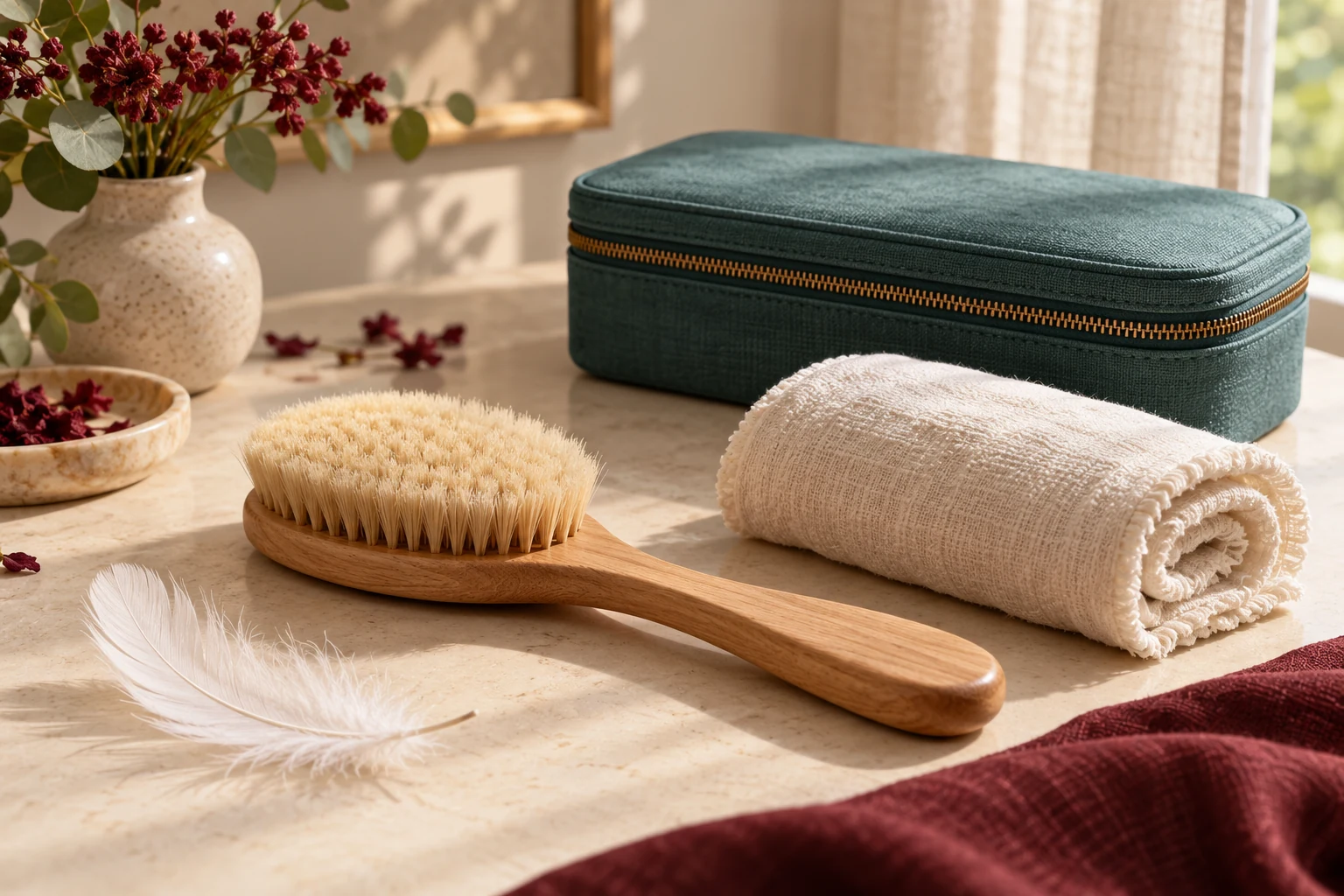
Compare ticklers, feathers and pinwheels by intended contact, materials, condition and cleaning, with clear adult consent and no skin-breaking technique. This guide names no preferred company or individual product.
Independent education · optional affiliate linksAn optional Uberkinky category box below is clearly disclosed and separate from the guidance. It is not a product recommendation. No on-site affiliate tracking is added. This is publisher-reviewed category education; no external approval or individual-product certification is claimed.
Start here
Start with the sensation an adult actually wants, then ask whether a specified accessory adds anything useful. Texture, novelty and appearance are not safety ratings.
Buying checklist
Require an explicit adult intended-use statement; a medical-looking shape or craft item does not establish suitable contact.
Inspect bristles, fibres, edges and moving components, and ask whether loose or sharp parts can be exposed.
Check the whole composition, including dyes, coatings, adhesives, handles and any known sensitivities.
Compare handle dimensions, grip, weight and inspection needs with the person’s vision, reach and dexterity.
Choose a care method that can actually clean and dry the intended contact surfaces without damaging them.
Read warnings and exclusions, and keep stopping independent of any role or expectation to tolerate a sensation.
Compare approaches
May suit adults interested in gentle textures, though shedding, allergy and care still matter.
Check: Full fibre description, handle finish and permitted cleaning.
Can have fragile fibres, glued joins or dyes that change inspection and cleaning requirements.
Check: Complete construction rather than a natural-material reassurance.
Are a distinct pointed-tool category needing particular attention to edges, condition and stated limits.
Check: Do not infer medical approval or suitability for breaking skin.
Choose a sensation tool by its exact intended contact, complete materials, condition and a cleaning routine you can manage. Soft ticklers, feathers and pointed pinwheels are different categories, not a progression that an adult should complete; no accessory removes the need for specific consent and immediate stopping.
A tool may suit an adult who wants an agreed texture or sensory experience, but many people dislike tickling, surprise contact or reduced control. Ask about sensory sensitivities, anxiety, hearing, vision and preferred communication. A laugh or involuntary reaction does not establish enjoyment or permission. Access questions include gripping the handle, recognising loose parts and inspecting a surface before considering contact.
Ask a GP or relevant clinician about persistent skin symptoms, altered sensation, a circulation concern or uncertainty following treatment. NHS dermatitis information describes irritation and allergy, while neuropathy guidance explains reduced sensation. Do not assume that absent discomfort proves a surface is appropriate. The tickling entry distinguishes a named interest from another person’s agreement, and the sensation-play guide focuses on risk and boundaries.
Compare handle length, thickness, weight and the dimensions of the actual contact part. Photographs often emphasise colour or theatrical appearance while hiding joins and scale. A longer handle can change reach without necessarily improving control. For fibres, ask about composition, dyes and how shedding is assessed. Natural, soft or decorative are descriptions to investigate, not proof that an item suits sensitive skin.
Pinwheels need separate consideration because pointed moving parts differ from a feather or brush. This guide gives no technique for pointed tools or breaking skin. Do not buy an item with unclear intended contact, damaged points or a medical implication unsupported by its maker. Compare full construction and limitations rather than treating a stainless-steel label as clinical approval. Household brushes and craft accessories should not be reclassified as specialist equipment on resemblance alone.
Describe the appealing feature in plain words and ask whether the other adult wants to discuss it. An object-focused interest can involve appearance or symbolism without a request for contact. The body-part and object-focused interests guide helps separate those meanings. Buying a set does not pre-agree every component, and a person can prefer one texture while declining another at any time.
Read the complete care method before buying. Fragile feathers, glued parts and bristles may not tolerate the same washing as a plain hard handle. A moving wheel can contain joins or gaps that are difficult to inspect and dry. Do not assume alcohol, boiling or a household disinfectant is permitted. A tool whose contact surfaces cannot be cared for appropriately may be unsuitable for the purpose being considered.
Withdraw tools with loose fibres, damaged edges, exposed adhesive, corrosion, failing handles or uncertain moving parts. A stronger cleaner does not fix structural damage, and covering a rough area can conceal rather than resolve it. Store clean, dry items away from grit and accidental crushing, with pointed parts protected from unintended handling. Keep model details and instructions; replacement should follow condition and maker advice rather than a fixed lifetime inferred from price.
UK purchases are protected by the Consumer Rights Act 2015 standards of satisfactory quality, description and fitness for a purpose made known where reliance is reasonable. These provisions are in force in England, Wales, Scotland and Northern Ireland, checked on legislation.gov.uk on 8 October 2026. Save contact limitations and material claims that informed the decision rather than relying only on a promotional photograph.
Ordinary online cancellation generally gives 14 days to notify the trader and another 14 to return, subject to exceptions. Qualifying sealed hygiene goods may be excluded after unsealing; faulty-goods rights remain distinct. Regulation 28 is in force across all four UK nations, checked 8 October 2026. Read sex-toy returns and consumer rights and check OPSS alerts for precise product details. An official recall search cannot certify an unlisted item.
What sensation tool is best for beginners? Start with an adult’s actual preferences and a plainly specified item, rather than an intensity scale. Some people prefer conversation or familiar non-product choices, and nobody needs to progress to pointed tools.
Are feathers automatically safe for sensitive skin? No. Fibres, dyes, glue, shedding and the person’s own sensitivities all matter. A natural-material description does not answer those questions.
Does laughing during tickling mean consent? No. A bodily reaction is not permission to continue. Ask, check and stop whenever requested, without turning a refusal into part of a role.
Are pinwheels medical devices? A familiar shape or clinical-looking material does not establish medical-device status. This is adult product literacy, not medical testing or skin-breaking instruction.
Can I share sensory accessories? Sharing needs its own consent and care decision. Ask whether the exact construction can be cleaned appropriately between people and avoid assuming that soft surfaces are hygienic because they look clean.
Ask before buying
Evidence and limits
These sources support the category-level checks and signposting. They do not certify an individual product or turn general guidance into a safety guarantee.
Keep learning