Clean separation
Check whether items can be kept apart from used accessories, cleaning supplies, sharp hardware and unrelated belongings.
 The UK Kink GuideIndependent product discovery
Product discovery / Product care
Compare clean separation, ventilation, protection, charging safety, discretion and practical travel needs. This guide names no preferred company or individual product.
Education only · no retailer linksNo company link, commission-earning link, paid placement or affiliate tracking appears on this page. Shopping, where available, is a separate next step with its own disclosure. This is publisher-reviewed category education; no external approval or individual-product certification is claimed.
Start here
Storage should protect clean, fully dry items without creating moisture, material-contact, battery or privacy problems.
Buying checklist
Check whether items can be kept apart from used accessories, cleaning supplies, sharp hardware and unrelated belongings.
Do not use a sealed case as a substitute for complete drying. Check whether the material retains moisture or odour.
Follow each maker’s storage advice and use separate pouches where direct contact between different materials is discouraged.
Protect powered items from accidental activation, damaged cables, extreme temperatures and unsuitable charging arrangements.
Consider weight, size, locks, local rules, airline or carrier restrictions and whether batteries must travel separately.
Choose the level of discretion, labelling and lock access that works for the household without compromising emergency access.
Compare approaches
Simple separation for fully dry items, depending on fabric and closure.
Check: Washability, lint, colour transfer, ventilation and labelling.
Offer crush protection and organisation but may retain moisture and occupy more space.
Check: Interior material, cleanability, ventilation, hinges and accidental activation.
Can support household privacy but are not a guarantee against theft or inspection.
Check: Lock quality, lawful transport, battery rules and backup access.
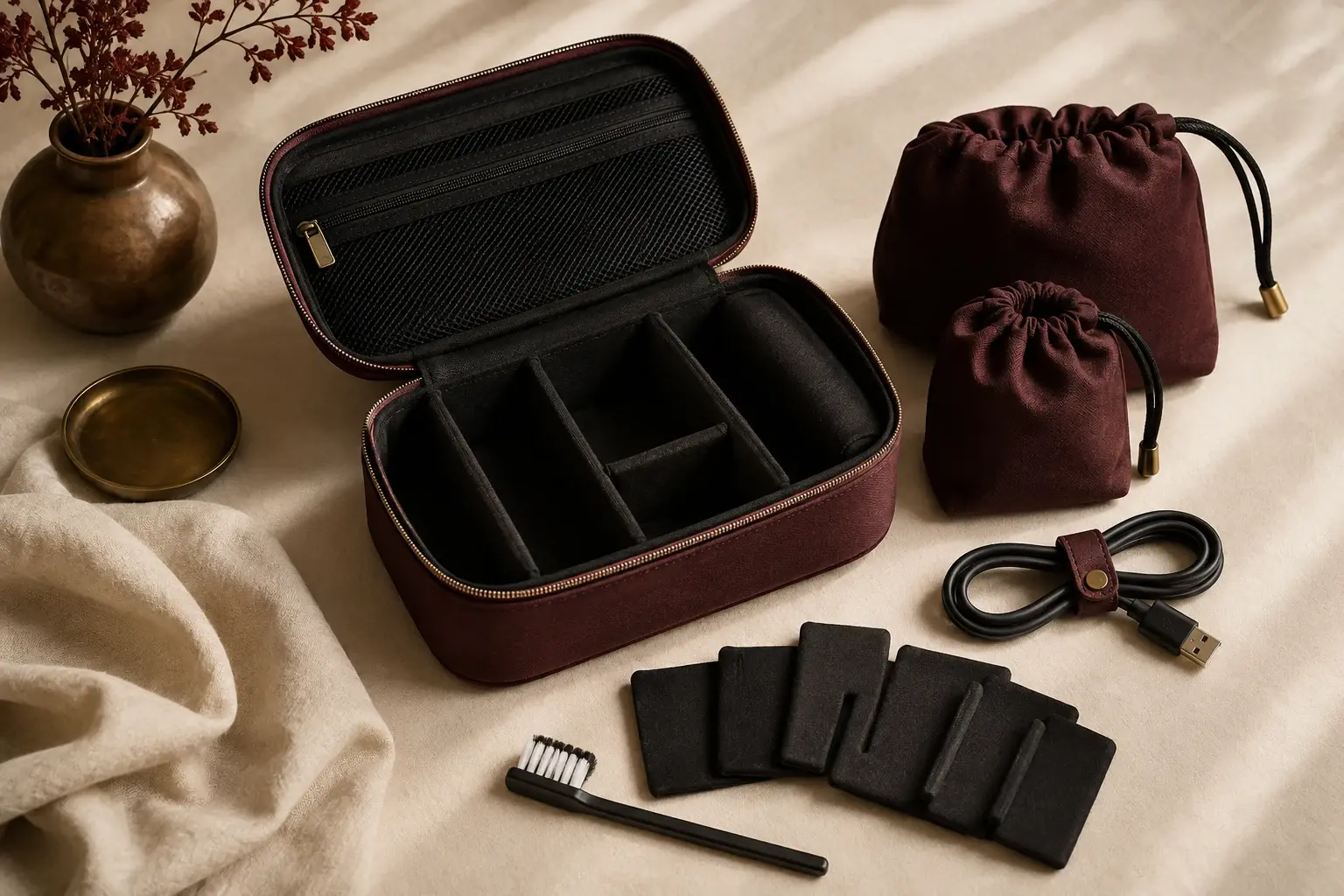
Choose a storage or travel case by the clean, dry items it needs to hold, the usable internal dimensions and a closure you can operate comfortably. Privacy, protection and ease of cleaning are separate requirements: a discreet exterior or a small lock does not solve every household or journey concern.
Cases suit adults who want to organise personal items, reduce accidental damage or maintain an agreed private space. Think about reach, weight when packed, grip, vision and whether small catches or combination dials are manageable. A rigid case may protect against crushing but be heavy; a flexible pouch may be lighter but offer less separation. Neither is a universally accessible or more discreet solution.
Where cleaning products or contact materials cause irritation, check ingredients and lining composition and ask a GP about recurring symptoms. NHS dermatitis guidance supports taking persistent reactions seriously. This page does not prescribe a case for a health condition. If assistance is needed for packing or cleaning, agree who may handle the items and what privacy means. Ownership of a shared cupboard does not imply permission to open another adult's case.
Compare usable internal length, width and depth with the complete item, including detachable parts and charging leads. Exterior dimensions can overstate the actual space once padding, pockets or hinges are included. Avoid forcing a product into a bent or compressed position that contradicts its maker's storage advice. Separate compartments should be large enough to retrieve items without dragging rough hardware across contact surfaces.
Fabric pouches, rigid shells and padded organisers differ in weight, cleanability and inspection. A lining may contain dyes, foam or a coating with its own care limits. A water-resistant outer layer does not mean the whole case can be immersed or that it is suitable for enclosing damp products. Locks provide limited access control; they do not establish secrecy, anonymity or permission to take a particular item across a border.
Keep instructions and product identifiers somewhere accessible without exposing personal details unnecessarily. A plain label can help distinguish clean items from those awaiting care without naming their contents. Travel may involve inspection even when an exterior is discreet, so consider whether you are comfortable with that possibility. This guide does not promise anonymous carriage. Choose a smaller, clearer packing plan if carrying multiple items would create avoidable access, cleaning or privacy difficulties.
Put products away only after their prescribed cleaning and drying routine. Clean the case by its own instructions, separately from the items inside, and check corners, pockets and liners for residue. NHS toy-cleaning advice does not mean a storage bag can disinfect its contents. Keep liquids and cleaning chemicals separately contained so a leak cannot soak contact items or charging equipment. Separation also helps avoid cross-contamination between contents.
Replace or withdraw a case with a broken closure, torn lining, rough exposed seam, persistent dampness or a damaged handle. A usable zip does not establish that the interior is still suitable. Avoid hiding uncertain equipment condition in a neat compartment; inspect items when packing and unpacking. If the case is damaged in normal expected handling soon after purchase, keep photographs and contact the trader before making alterations that could obscure a fault.
For UK purchases, save the internal-dimension and material description rather than relying on lifestyle photographs. The Consumer Rights Act 2015 requires satisfactory quality, accurate description and fitness for a purpose made known where reliance is reasonable. These provisions are in force in England, Wales, Scotland and Northern Ireland, checked on legislation.gov.uk on 8 October 2026. An advertised fit claim can be important evidence if a named item does not fit as stated.
Ordinary online cancellation generally gives 14 days to notify and another 14 to return, subject to exceptions. Do not assume every bag is a hygiene-excluded item: regulation 28 concerns qualifying sealed goods unsealed after delivery. It is in force in all four UK nations, checked 8 October 2026, and does not remove faulty-goods rights. Read Sex-toy returns and consumer rights and consult OPSS alerts where the case or supplied accessories have a safety notice.
What is the best way to store sex toys? Follow each product's material and drying instructions, then choose suitable separation and protection. One shared container is not automatically appropriate for every surface or household.
Does a lock make a case discreet? It may limit casual access but does not conceal deliveries, account records or the case itself. Agree privacy boundaries and avoid relying on a lock as a guarantee.
Can I pack toys while they are still damp? Follow the maker's drying instructions first. A closed case can hide moisture and residue; a waterproof shell does not turn damp storage into appropriate care.
Will a travel case make items legal abroad? No. Border rules, destination law and airline conditions are separate. Read the travelling-with-sex-toys guide and check the actual journey rather than assuming a bag changes restrictions.
Should batteries and liquids be packed together? Check the exact product and carrier instructions. Keep leaks away from electrical parts, and do not assume a case supplied as a set answers every transport requirement.
Ask before buying
Evidence and limits
These sources support the category-level checks and signposting. They do not certify an individual product or turn general guidance into a safety guarantee.
Keep learning