Destination law
Check official travel advice and local law before taking an adult product across a border; rules can differ from the UK.
 The UK Kink GuideIndependent product discovery
Product discovery / Travel and product privacy
Pack lawfully and practically: check airline, airport, battery and destination rules, keep devices protected and avoid assuming UK norms apply abroad. This guide names no preferred company or individual product.
Education only · no retailer linksNo company link, commission-earning link, paid placement or affiliate tracking appears on this page. Shopping, where available, is a separate next step with its own disclosure. This is publisher-reviewed category education; no external approval or individual-product certification is claimed.
Start here
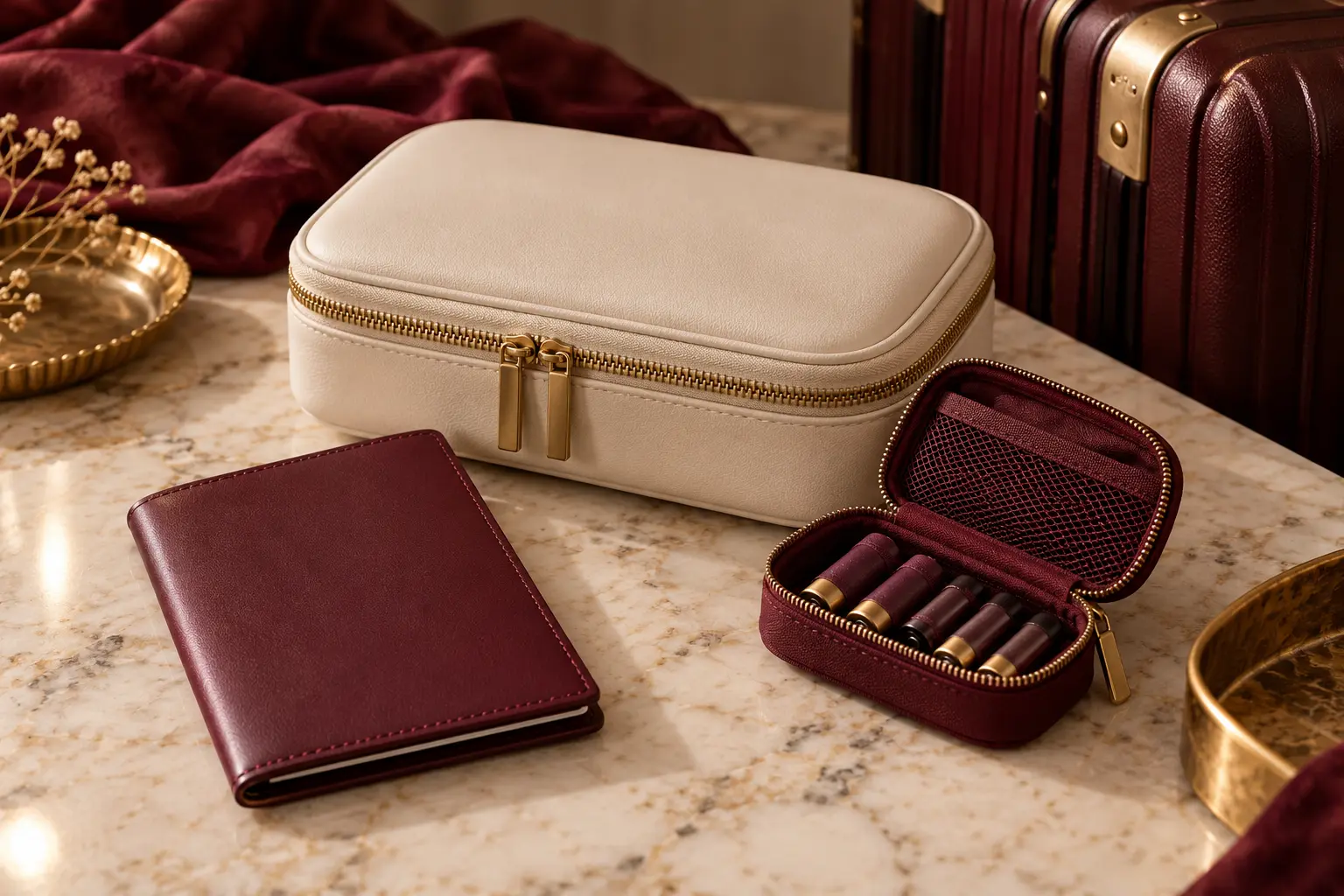
A travel case protects an item; it does not override security screening, airline battery rules or the law where you are travelling.
Buying checklist
Check official travel advice and local law before taking an adult product across a border; rules can differ from the UK.
Confirm the airline’s current policy for batteries and electronic devices, including any transit airport requirements.
Pack expecting that luggage may be screened or inspected; security staff make the final decision about what can travel.
Follow airport rules for lubricants, oils and other liquids; container limits and security processes can vary by airport.
Switch off devices, protect them from accidental activation and check how spare batteries must be carried.
Clean and dry items before packing, separate them from food or medication and take care directions if storage is long.
Compare approaches
Needs a current airline and battery check, plus protection against accidental activation and damage.
Check: Battery type, airline policy, charge status, case and whether a removable battery has its own rules.
Avoids battery questions but can still be subject to screening, customs and destination law.
Check: Material, dimensions, packaging, local restrictions and whether it can be carried discreetly without concealment.
Need the airport’s current liquid rules as well as container and leak protection.
Check: Container size, airport guidance, transit rules, cap security and compatibility with other packed items.
An adult product does not have a universal travel rule. The departure airport, airline, transit points, destination law and customs rules can all matter. GOV.UK provides general UK hand-luggage information, but airlines can have their own restrictions and security staff make the final decision at screening. Check current official guidance before you leave rather than relying on a past trip or a retailer’s travel tip.
Do not attempt to defeat screening or make a false declaration. Pack on the assumption that a bag may be opened or an item may need explanation. A simple, lawful and tidy packing plan is safer than hiding something among items that could make inspection difficult. If you are not comfortable with that possibility, consider leaving the item at home.
For a powered device, start with the battery type and the airline’s current policy. GOV.UK advises travellers to check restrictions on certain batteries or contact the airline if unsure. Switch a device off, protect it from accidental activation and use a case that prevents crushing or a switch being pressed in transit. Do not pack a damaged, swollen or leaking battery.
Spare batteries can have different carriage rules from a device with a battery fitted, and airlines may set stricter conditions. Carry any information needed to identify the item honestly if asked. Remember that a security check is not an accusation: staff screen many ordinary electrical items. Stay calm, follow directions and do not create extra risk by improvising with loose batteries or altered packaging.
Lubricants, oils, gels and similar items are subject to airport liquid rules. GOV.UK says the rules can depend on the airport and advises checking the departure and transit airports. Container size, even when the container is only partly full, can matter at many security points. Put liquids in secure, leak-resistant packaging and do not assume a travel-sized label is enough without checking the actual amount.
Separate liquids from electronics and fabrics so that a leak does not damage other items. Keep an ingredient label or original container where useful; anonymous decanted bottles can be harder to identify and may be unsuitable for sensitive skin later. Once at the destination, check that any product is still compatible with the barriers and materials you intend to use.
Something lawful to own in the UK may be restricted, treated differently at customs or culturally sensitive elsewhere. Check GOV.UK foreign travel advice and reliable destination-specific official information before packing. If the law is unclear, the cautious choice is not to take the item. Do not rely on a forum, an old blog post or a retailer’s shipping policy as proof that an item may cross a particular border.
When returning to Great Britain from outside the UK, customs rules can apply to goods and allowances. GOV.UK’s guidance explains that travellers may need to declare certain goods and that rules differ for Northern Ireland. Keep purchase records where relevant, answer questions truthfully and allow time for the realities of international travel rather than trying to manage a private item in a rush.
Clean and dry body-contact products according to their instructions before packing. Store them separately from food, medication and anything likely to damage their surface. A protective case can reduce contamination and accidental activation, but it does not make an item invisible to screening. Do not put someone else’s name, ticket or account at risk to avoid an awkward conversation.
Privacy also includes digital records. Decide who can see booking emails, delivery notifications, device charging or a shared travel bag. If you are travelling with a partner, agree in advance who is carrying an item and how either person can opt out of taking it. If a relationship includes coercion or fear, do not rely on a travel plan as a substitute for safety support.
Can I take a sex toy in hand luggage? There is no single answer for every product: check the airline, airport rules, battery details and destination law. Are lubricants allowed? They are liquids, so follow current airport liquid rules. Should I hide the item? No. Pack lawfully and expect screening. Can a security officer inspect a bag? Yes, screening decisions rest with security staff.
Do I need to declare a personal item at customs? Customs rules depend on the journey and destination; check official guidance. Is a rechargeable device simpler than a battery one? Both can have airline requirements. The practical question is whether you can identify the battery type, prevent activation and comply with the current carrier policy.
For a travel rule, use the airline, airport, Foreign, Commonwealth & Development Office travel advice and HMRC/GOV.UK guidance rather than social-media advice. If an item is damaged in transit, do not use it until it can be inspected; seek product-safety information from the seller and official recall notices. For an urgent health concern while travelling, use local emergency routes or travel-insurance assistance.
If a border, police or customs issue arises, cooperate and seek appropriate legal or consular advice rather than trying to resolve it through concealment. In the UK, Citizens Advice can help with a consumer dispute about a damaged purchase, but it cannot override another country’s law. This guide is travel information, not legal advice for any destination.
Ask before buying
Evidence and limits
These sources support the category-level checks and signposting. They do not certify an individual product or turn general guidance into a safety guarantee.
Keep learning