A consensual dynamic in which access to sexual touch or release is symbolically or practically restricted for an agreed period. It may centre on anticipation, ritual, control or commitment rather than continuous device wear.
Sources and evidence type
Manual claim and limitation notes are shown where an individual source audit is complete. Other evidence-type labels are a publisher aid awaiting source-by-source confirmation.
Rehor (2015), survey of women from kink communitiesResearch study
Source design
Peer-reviewed research or review
What it can support
The specific population, measures and findings reported by the paper.
Important limitation
It cannot automatically establish UK prevalence, causation, diagnosis, consent or an individual outcome. Check recruitment, definitions and study design.
The specific population, measures and findings reported by the paper.
Important limitation
It cannot automatically establish UK prevalence, causation, diagnosis, consent or an individual outcome. Check recruitment, definitions and study design.
Illustration created using generative AI; not documentary evidence.
In brief
The dynamic is negotiated; the body remains the wearer's.
Chastity play makes restriction, permission or anticipation meaningful within a consensual adult dynamic. Some people use words, tokens or time-limited rituals; others use a wearable device. The theme can be solo or shared and may express power exchange, commitment, teasing or focus. A device is optional, never proof of submission, and cannot transfer control of a person's body or access to healthcare.
Meaning, ritual and limited evidence
Direct peer-reviewed research on chastity play is very limited. Broader kink surveys record restriction, denial and device interests among some participants, while consent research describes negotiation in BDSM more generally. These sources cannot establish prevalence, a standard duration, a typical motivation or health benefit.
A key, lock symbol, sealed envelope, calendar card, soft adult garment or empty device case can represent anticipation, commitment or delegated permission. The symbolism may matter more than physical restriction, and partners should not infer an interest in long wear, pain or permanent control from the word chastity.
EDITORIAL ILLUSTRATIONSymbolism is not clinical evidence
Chastity-specific research is sparse. Broader surveys cannot establish a standard duration, typical motive, health benefit or safe device practice.
Illustration created using generative AI; not documentary evidence.
Status
Detailed editorial draft
Publisher
The UK Kink Guide
Reviewed
Structured draft present; individual review date not recorded
Evidence
5 cited sources · types labelled below
Jurisdiction
UK-focused general education
Read the rest: evidence, law, safety and sources
Symbolic chastity
A rule, token, key or written promise represents restriction without a wearable device.
Wearable device
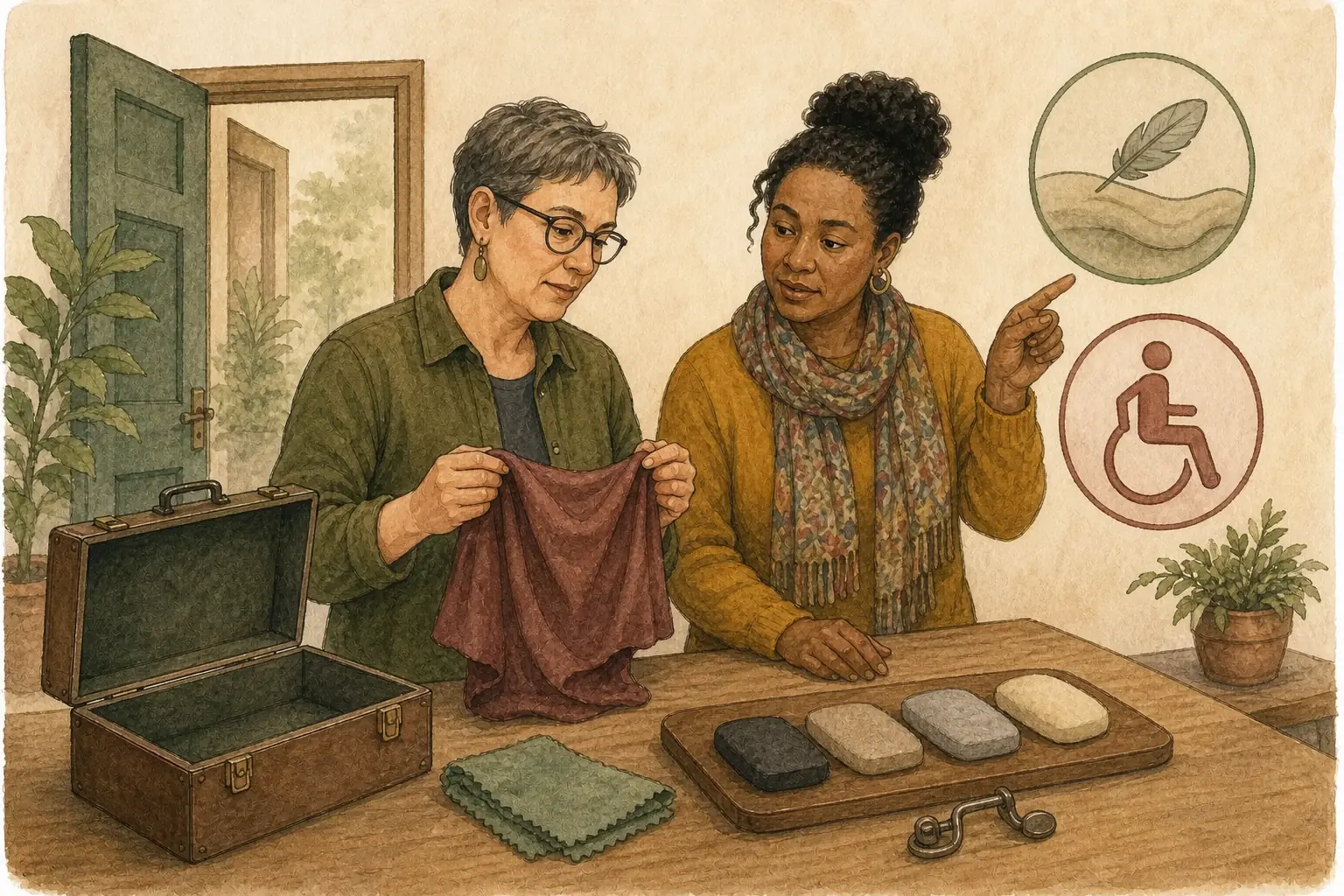
A garment-like or rigid object creates a physical reminder and introduces material, fit, hygiene and access concerns.
Orgasm control
Focuses on timing or permission around climax and can occur without chastity symbolism or equipment.
Coercive restriction
Pressure, inability to stop or obstruction of health needs is not consensual chastity play.
Materials and bodily access
Wearable objects can create pressure, friction, trapped moisture, skin reactions and difficulty with washing, toileting or ordinary movement. Bodies change with temperature, posture and arousal, so previous comfort is not a guarantee. Manufacturer claims are not clinical evidence and one person's fit cannot be generalised to another.
Pain, numbness, swelling, colour change, broken skin, difficulty urinating or an inability to remove the object are reasons to stop and seek appropriate help. NHS guidance treats inability to urinate as requiring urgent assessment. This page deliberately gives no fitting or wear-time instructions.
EDITORIAL ILLUSTRATIONMaterials must not obstruct bodily access
Wearables may create pressure, friction, trapped moisture or difficulty with washing and toileting. Pain, numbness, swelling, colour change, broken skin or urinary difficulty need prompt attention.
Illustration created using generative AI; not documentary evidence.
Consent, keys and emergencies
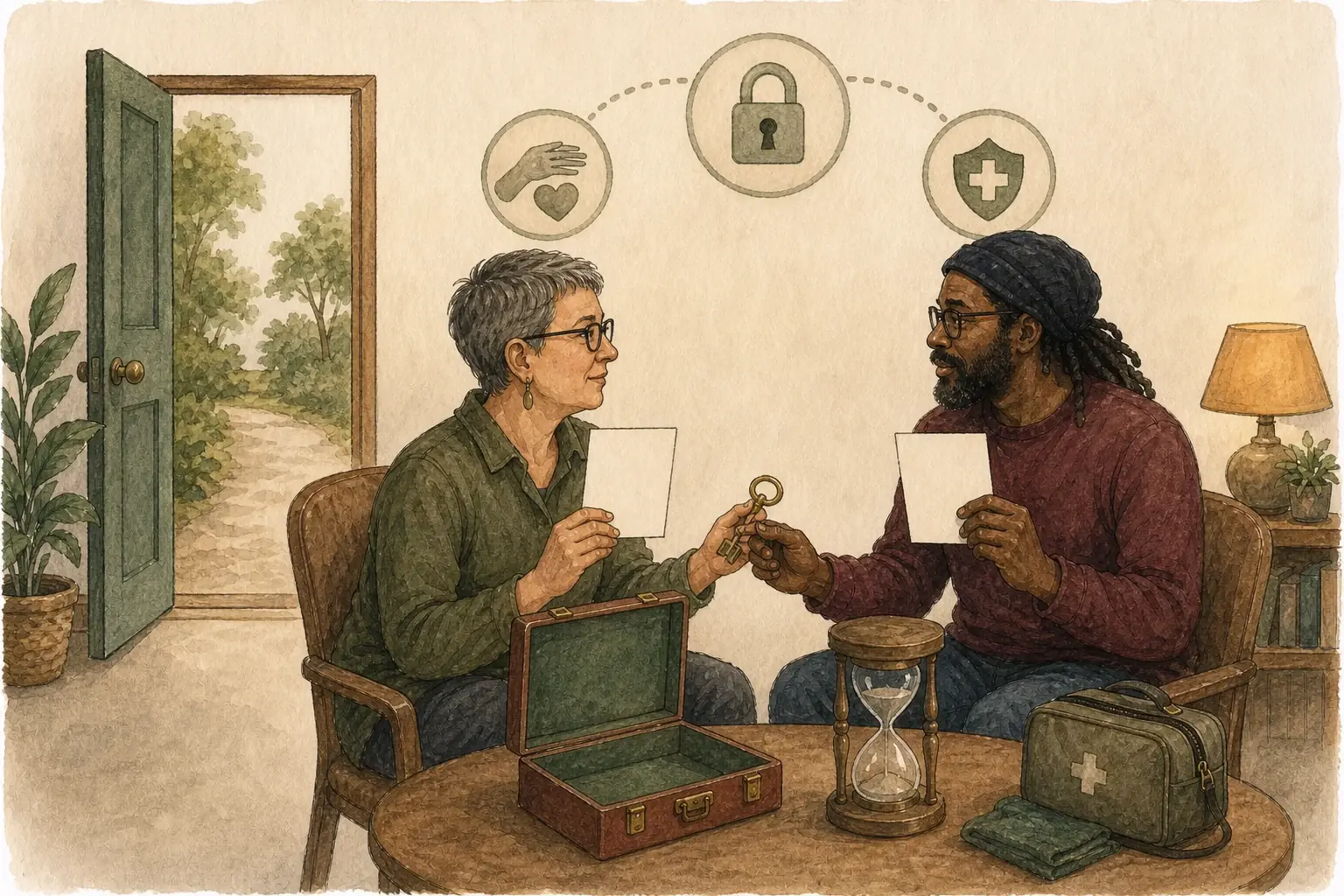
Agreement should cover whether restriction is symbolic or physical, who can change it, privacy, check-ins and prompt access out of the role. Giving someone a key is a scene symbol, not surrender of bodily autonomy. The wearer can withdraw consent and must be able to prioritise hygiene, work, travel, sleep and healthcare.
A remote partner, app or timed mechanism can fail or become unavailable. No ritual should prevent removal for discomfort, emergency care or a change of mind. Shaming someone for stopping, hiding access or demanding continued wear despite symptoms converts the dynamic into coercion.
EDITORIAL ILLUSTRATIONThe body remains the wearer's
A key or timer is a scene symbol, not transferred bodily authority. Removal, hygiene, urination, work, travel and healthcare must remain available when needed.
Illustration created using generative AI; not documentary evidence.
Clinical distinction and wellbeing
Consensual chastity interest is not a paraphilic disorder merely because it is unconventional. WHO guidance considers marked distress, significant impairment, serious risk and non-consent rather than diagnosing from an object, fantasy or role title.
Frustration and anticipation may be part of an agreed fiction, but persistent pain, anxiety, compulsive spending or conflict about control should be addressed as real concerns. A relationship agreement does not replace medical advice, and a partner is not qualified to override symptoms.
Non-graphic examples
What the umbrella may include
Using a decorative key as a private symbol without any wearable restriction.
Agreeing a brief adult role-play in which permission language, rather than equipment, creates the theme.
Treating a device case or calendar card as a ritual cue while keeping bodily access independent.
Ending the role immediately when discomfort or a practical need arises.
Keeping health appointments and hygiene outside any partner's authority.
Prepare for an appointment
Questions you could ask a professional
What information would help you understand my question?
What are the realistic options and uncertainties?
How can disability, communication or privacy needs be accommodated?
When should the situation be reviewed again?
These prompts do not replace assessment and do not imply that every reader needs professional care.
Continue learning
Take the next step from definition to context.
Continue with independent guidance connecting chastity play to evidence, consent, safety, uncertainty and practical decisions.