A consensual practice in which timing, permission or anticipation around climax becomes part of play. It can be solo or shared and may involve repeated pauses or an agreed power-exchange role.
Sources and evidence type
Manual claim and limitation notes are shown where an individual source audit is complete. Other evidence-type labels are a publisher aid awaiting source-by-source confirmation.
Exton et al. (1999), small laboratory orgasm studyResearch study
Source design
Peer-reviewed research or review
What it can support
The specific population, measures and findings reported by the paper.
Important limitation
It cannot automatically establish UK prevalence, causation, diagnosis, consent or an individual outcome. Check recruitment, definitions and study design.
The specific population, measures and findings reported by the paper.
Important limitation
It cannot automatically establish UK prevalence, causation, diagnosis, consent or an individual outcome. Check recruitment, definitions and study design.
The specific population, measures and findings reported by the paper.
Important limitation
It cannot automatically establish UK prevalence, causation, diagnosis, consent or an individual outcome. Check recruitment, definitions and study design.
The specific population, measures and findings reported by the paper.
Important limitation
It cannot automatically establish UK prevalence, causation, diagnosis, consent or an individual outcome. Check recruitment, definitions and study design.
Illustration created using generative AI; not documentary evidence.
In brief
Timing can be shared; consent and bodily autonomy cannot be delegated away.
Orgasm control is an adult interest in making timing, permission, delay or anticipation part of a sexual experience. It may be solo, partnered or embedded in power exchange. Edging usually describes approaching and reducing arousal, while tease and denial emphasises anticipation or withheld permission; people use the terms inconsistently, so the intended meaning should be asked rather than assumed.
Evidence and the limits of physiology claims
Laboratory studies have measured short-lived cardiovascular, endocrine and immune changes around sexual arousal and orgasm in small samples. They do not study orgasm control as a kink, establish an ideal pattern or support claims that denial reliably changes hormones, health, attachment or behaviour.
Broad kink surveys show that control and denial themes occur among some adults, but terminology and samples vary. There is no sound population estimate for this entry and no evidence for one personality type or cause. A personal experience can be meaningful without being a clinical fact.
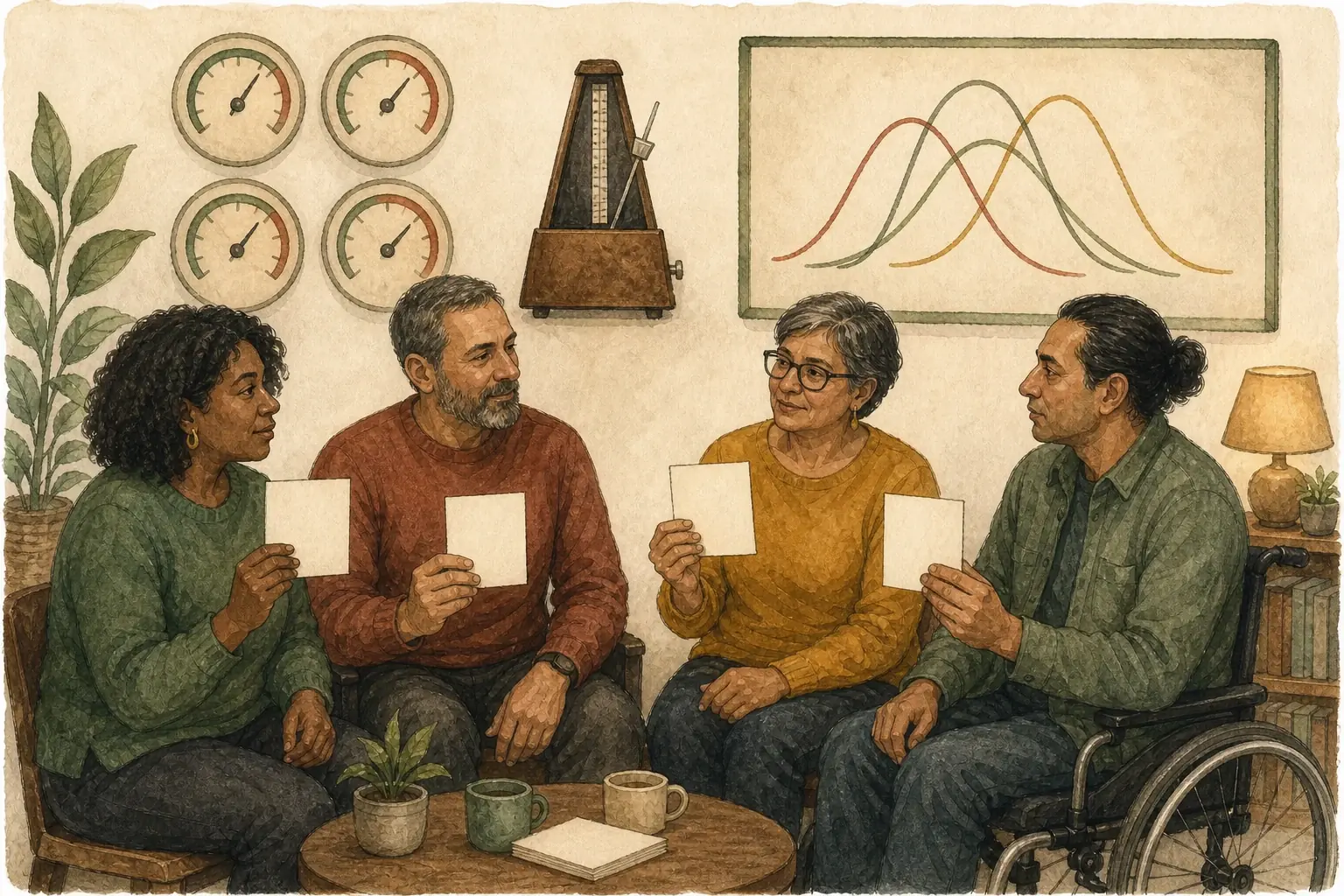
EDITORIAL ILLUSTRATIONLaboratory changes do not set a rule
Small physiological studies do not test orgasm control as a kink or establish ideal timing, long-term benefits, hormone effects or a universal response to delay.
Illustration created using generative AI; not documentary evidence.
Status
Detailed editorial draft
Publisher
The UK Kink Guide
Reviewed
Structured draft present; individual review date not recorded
Evidence
5 cited sources · types labelled below
Jurisdiction
UK-focused general education
Read the rest: evidence, law, safety and sources
Edging
Arousal is deliberately varied or paused; the term does not specify a partner or power role.
Tease and denial
Anticipation or an agreed absence of climax is central, sometimes within a dominant/submissive frame.
Permission ritual
Words, a signal or a symbolic token gives timing social meaning without requiring a device.
Chastity play
May overlap, but centres more broadly on restriction, access or commitment and may not involve active arousal.
Language, signals and objects
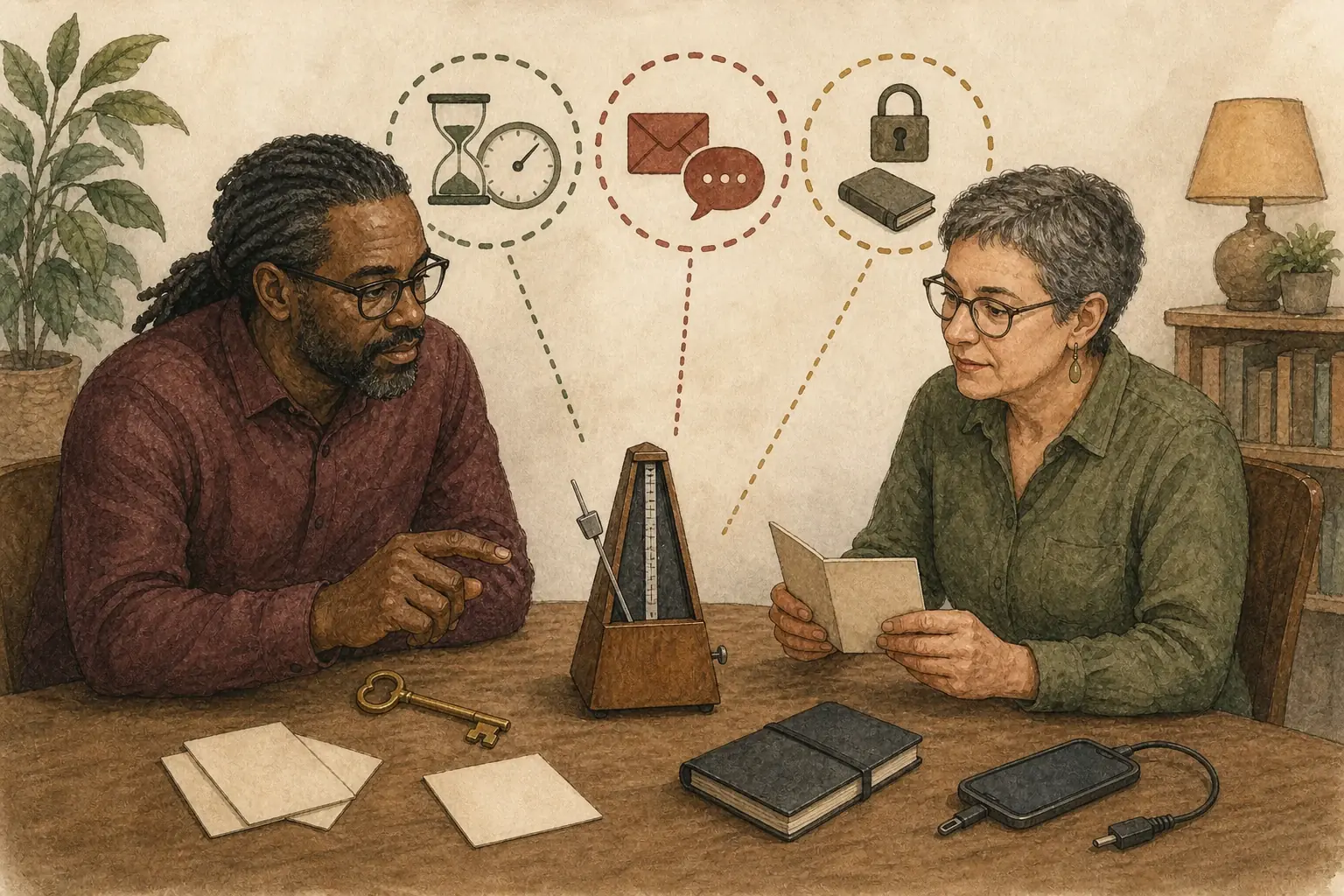
A timer, written permission card, light cue, calendar, sealed note or symbolic key may make anticipation visible. None has inherent authority, and a device or timer ending does not obligate anyone to continue. The appeal may lie in suspense, attention, self-observation, power exchange or ritual.
Connected devices can add privacy, security and reliability concerns. Remote access should not be treated as permanent permission, and screenshots, activity logs or intimate messages should not be shared outside the agreed audience.
EDITORIAL ILLUSTRATIONA prop has no authority of its own
Timers, cards, keys and cues can make anticipation visible, but none obliges continuation. Connected-device logs and intimate messages remain separate privacy choices.
Illustration created using generative AI; not documentary evidence.
Consent and bodily feedback
Agreement can cover the intended frame, who makes timing decisions, how to pause and what happens if interest changes. Consent to a dominant role is not a promise to reach climax, continue stimulation or tolerate discomfort. A person may stop because of pain, numbness, fatigue, medication effects, distraction or simply a change of mind.
Pressure to perform or to produce a particular bodily response can create distress. Orgasm is not a reliable measure of consent, satisfaction or relationship success; an involuntary response is not agreement, and the absence of one is not failure.
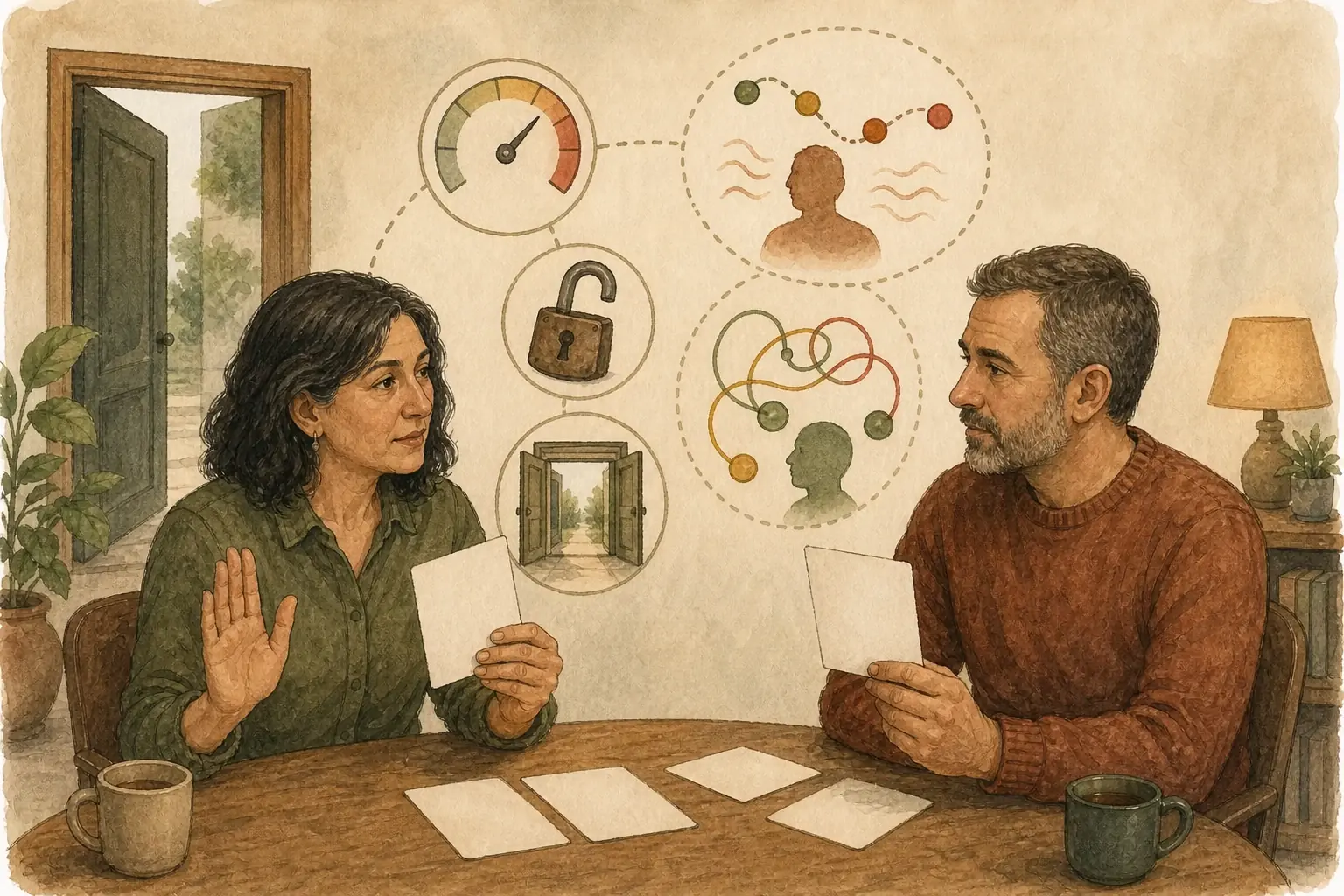
EDITORIAL ILLUSTRATIONResponse is not consent
Arousal, orgasm or their absence cannot prove agreement or satisfaction. Either adult may pause or stop because of discomfort, distraction or a simple change of mind.
Illustration created using generative AI; not documentary evidence.
Clinical distinction and wellbeing
Consensual adult timing play is not a paraphilic disorder by default. WHO guidance focuses on marked distress, impairment, serious risk and non-consent. Persistent pain, loss of sensation, bleeding, urinary difficulty or distress warrants appropriate clinical advice rather than more role-play.
Compulsive patterns are assessed by their loss of control and real-life consequences, not by frequency alone. No glossary can diagnose an individual. If timing rituals interfere with sleep, work, relationships or wellbeing, the useful focus is the impact and the person's goals rather than shame about the interest.
Non-graphic examples
What the umbrella may include
A solo adult using a timer as an anticipation cue without treating it as a medical intervention.
Partners agreeing that permission language is part of a scene and can be withdrawn at any point.
Choosing symbolic cards instead of a wearable restriction device.
Stopping when concentration, comfort or interest changes, regardless of the planned endpoint.
Keeping app logs and intimate messages private to the adults who agreed to them.
Prepare for an appointment
Questions you could ask a professional
What information would help you understand my question?
What are the realistic options and uncertainties?
How can disability, communication or privacy needs be accommodated?
When should the situation be reviewed again?
These prompts do not replace assessment and do not imply that every reader needs professional care.
Continue learning
Take the next step from definition to context.
Continue with independent guidance connecting orgasm control to evidence, consent, safety, uncertainty and practical decisions.