Consensual voyeuristic play is an adult scenario in which watching is deliberately included in everyone's agreement. The observed person knows the audience and setting, even if the scene theatrically pretends otherwise.
 The UK Kink GuideEvidence-led glossary
 Back to the glossaryFantasy & performanceIn plain English Words in context A non-graphic adult example What not to assume
Consensual voyeuristic play
A staged adult scenario in which being watched, or watching, is agreed by everyone involved. It is categorically different from observing an unaware person, invading privacy or recording without permission.
Start here
New to this term?
Agreed live watching, staged discovery, recording and later sharing are four separate permissions. Voyeurism without consent means observing or recording an unaware person and is excluded from this entry.
Adults might agree that one named person watches a staged private performance without recording it. A fictional surprise can be part of the acting while the real audience and boundaries were settled beforehand.
Consent to be watched does not include photography, storage, redistribution, another audience or physical contact. Clothing, location or prior participation cannot substitute for agreement. Research on fantasy or consensual play does not excuse covert observation, which invades privacy and may be criminal under UK law.
Sources and evidence type
Manual claim and limitation notes are shown where an individual source audit is complete. Other evidence-type labels are a publisher aid awaiting source-by-source confirmation.
Dunkley & Brotto (2020), BDSM consent reviewResearch study
- Source design
- Peer-reviewed research or review
- What it can support
- The specific population, measures and findings reported by the paper.
- Important limitation
- It cannot automatically establish UK prevalence, causation, diagnosis, consent or an individual outcome. Check recruitment, definitions and study design.
Sexual Offences Act 2003, section 67Law or regulator
- Source design
- Primary legislation, prosecutorial or regulator guidance
- What it can support
- The legal provision or official regulatory position for the jurisdiction and date stated.
- Important limitation
- It is not fact-specific legal advice. Commencement, amendments, jurisdiction and case law may affect application.
ICO, special-category dataLaw or regulator
- Source design
- Primary legislation, prosecutorial or regulator guidance
- What it can support
- The legal provision or official regulatory position for the jurisdiction and date stated.
- Important limitation
- It is not fact-specific legal advice. Commencement, amendments, jurisdiction and case law may affect application.
ICO, recording and publication guidanceLaw or regulator
- Source design
- Primary legislation, prosecutorial or regulator guidance
- What it can support
- The legal provision or official regulatory position for the jurisdiction and date stated.
- Important limitation
- It is not fact-specific legal advice. Commencement, amendments, jurisdiction and case law may affect application.
WHO ICD-11 clinical requirements (2024)Clinical guideline
- Source design
- Current public-health or clinical guidance
- What it can support
- Service pathways, health definitions and recommended public-health or clinical actions within its stated scope.
- Important limitation
- General guidance cannot assess an individual’s symptoms, exposure, medicine, contraindications or urgency.

Fantasy & performance
Illustration created using generative AI; not documentary evidence.
In brief
Agreed observation is defined by knowledge, audience and privacy.
Consensual voyeuristic play is a staged adult scenario in which watching is part of the agreement. The person being observed knows the relevant audience and setting, and every participant retains control over what happens. That makes it categorically different from spying, observing a private act without consent, covert recording or sharing an intimate image beyond the permission given.
The audience is part of the agreement
Consent should identify who may observe and whether anyone else could enter, appear in view or hear what is happening. A private partner, a specifically consenting group and an indefinite online audience are materially different contexts; permission for one does not extend to the others.
A staged scenario may use an open curtain, a viewing frame, lighting or a visible camera prop as a symbol. These objects do not prove that recording is active or authorised. A camera, smart device or platform can also create copies and metadata that outlast the live encounter.
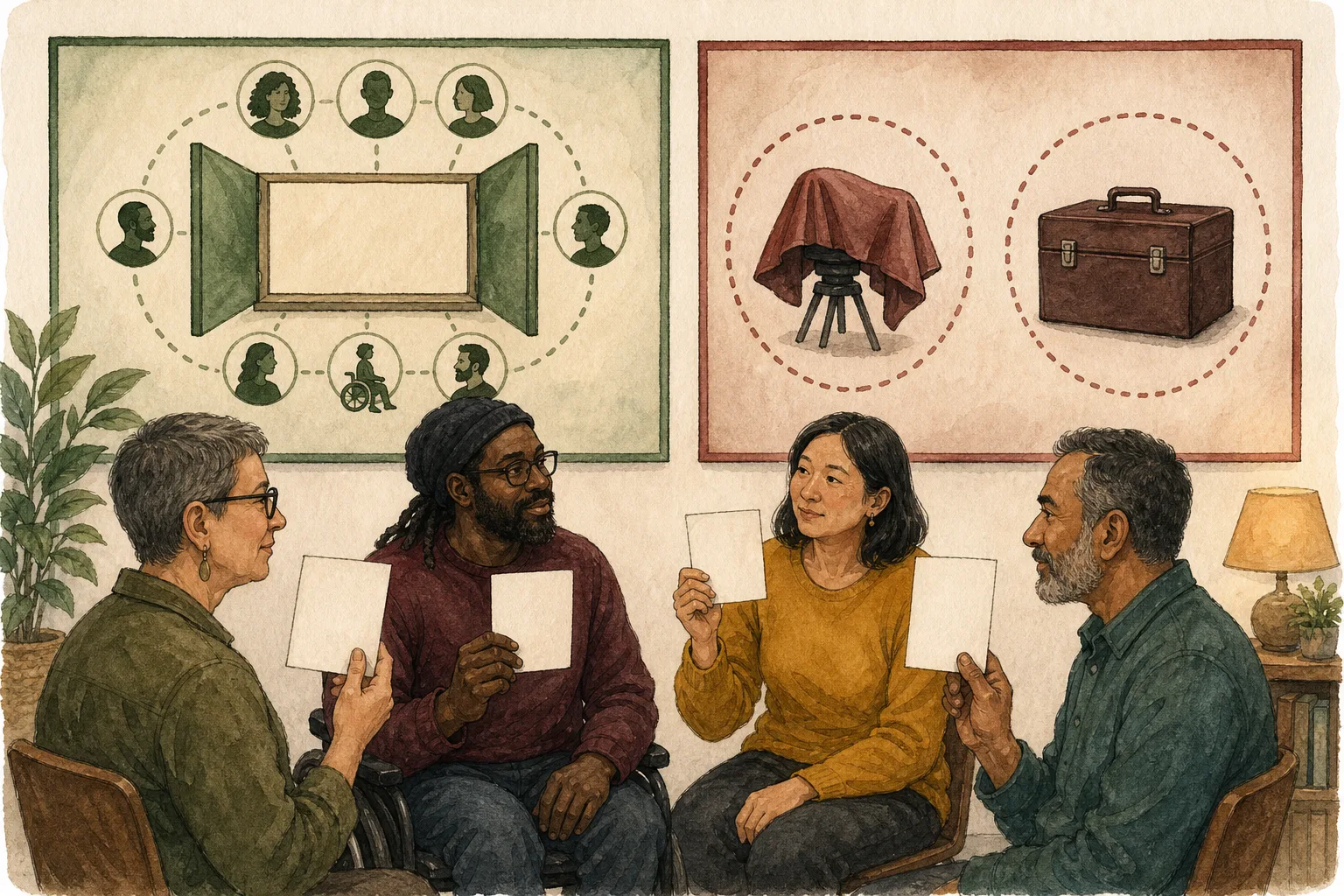
A named partner, a specifically consenting group and an indefinite online audience are different contexts. Permission for one does not extend to another.
Illustration created using generative AI; not documentary evidence.- Status
- Detailed editorial draft
- Publisher
- The UK Kink Guide
- Reviewed
- Structured draft present; individual review date not recorded
- Evidence
- 5 cited sources · types labelled below
- Jurisdiction
- UK-focused general education
Read the rest: evidence, law, safety and sources
An adult knows who will watch, what the setting is and where the agreed boundary lies.
Adults may perform surprise inside a prior agreement; the fictional surprise does not replace real consent.
Making, storing or sharing an image is a separate decision from allowing someone to watch live.
Observing or recording an unaware person's private act is excluded and may be criminal.
Research and clinical terminology
Clinical literature usually studies voyeuristic disorder or non-consensual behaviour rather than negotiated adult observation. WHO guidance distinguishes consensual adult interests from disorders involving non-consenting people, marked distress, impairment or serious risk. The shared word voyeuristic must not blur that boundary.
Broader BDSM consent studies document practices such as explicit negotiation and continuing communication, while also recording real consent violations. They support careful consent design but cannot prove that a particular setting, safeword or community label makes observation consensual.
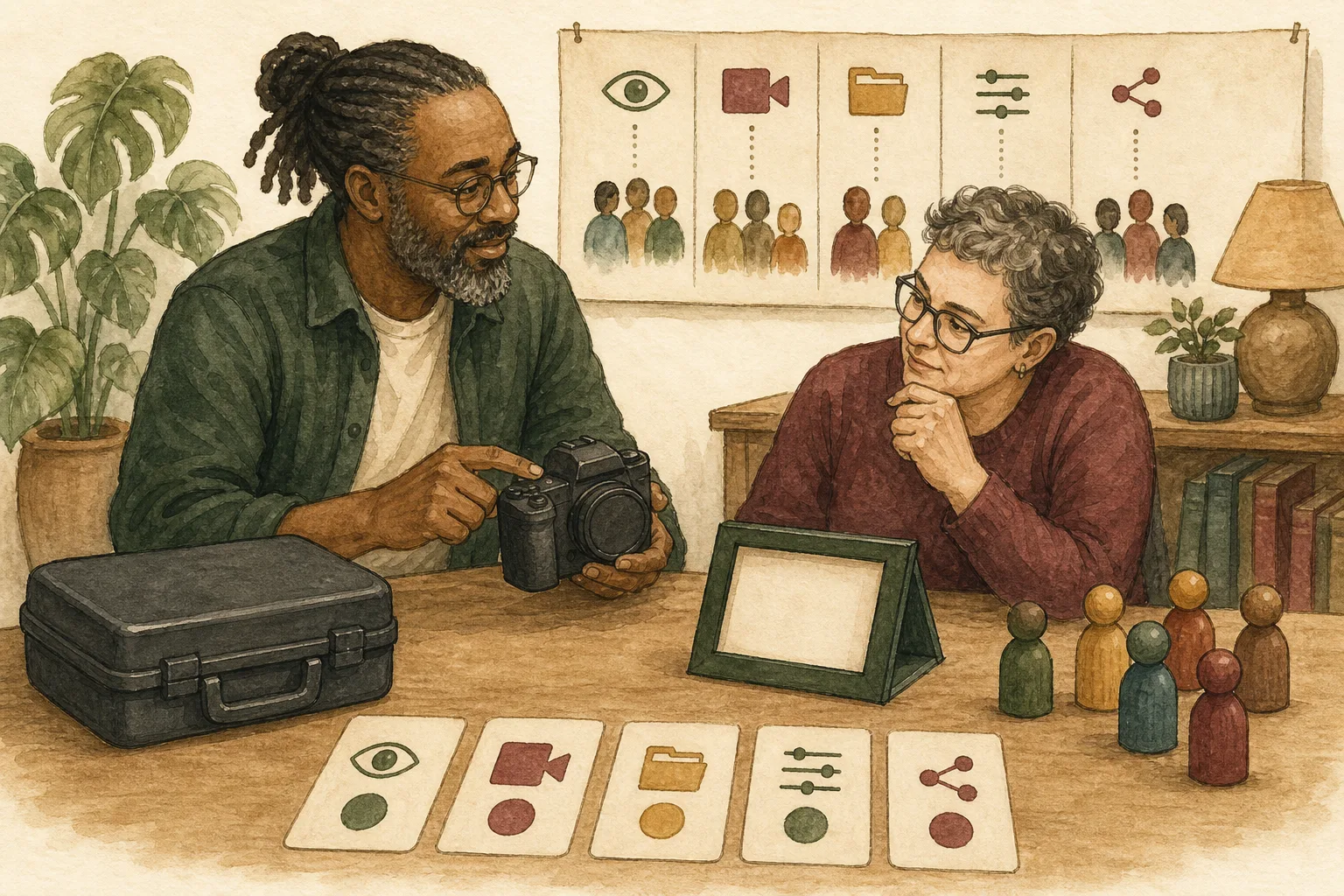
Watching, recording, retaining, editing and sharing are separate decisions. Covers, cases and indicators can clarify status but cannot replace an explicit conversation.
Illustration created using generative AI; not documentary evidence.Privacy, images and digital permanence
Watching live, taking a photograph, retaining it, editing it, showing it to a named person and publishing it are separate permissions. The ICO treats data about a person's sex life or sexual orientation as special-category data and advises that recordings should not be posted to an indefinite audience without express permission.
Useful privacy-led objects include a blank consent card, covered lens, closed storage case or indicator light. Their purpose is to make audience and recording status legible, not to substitute for a conversation or imply a technical guarantee.
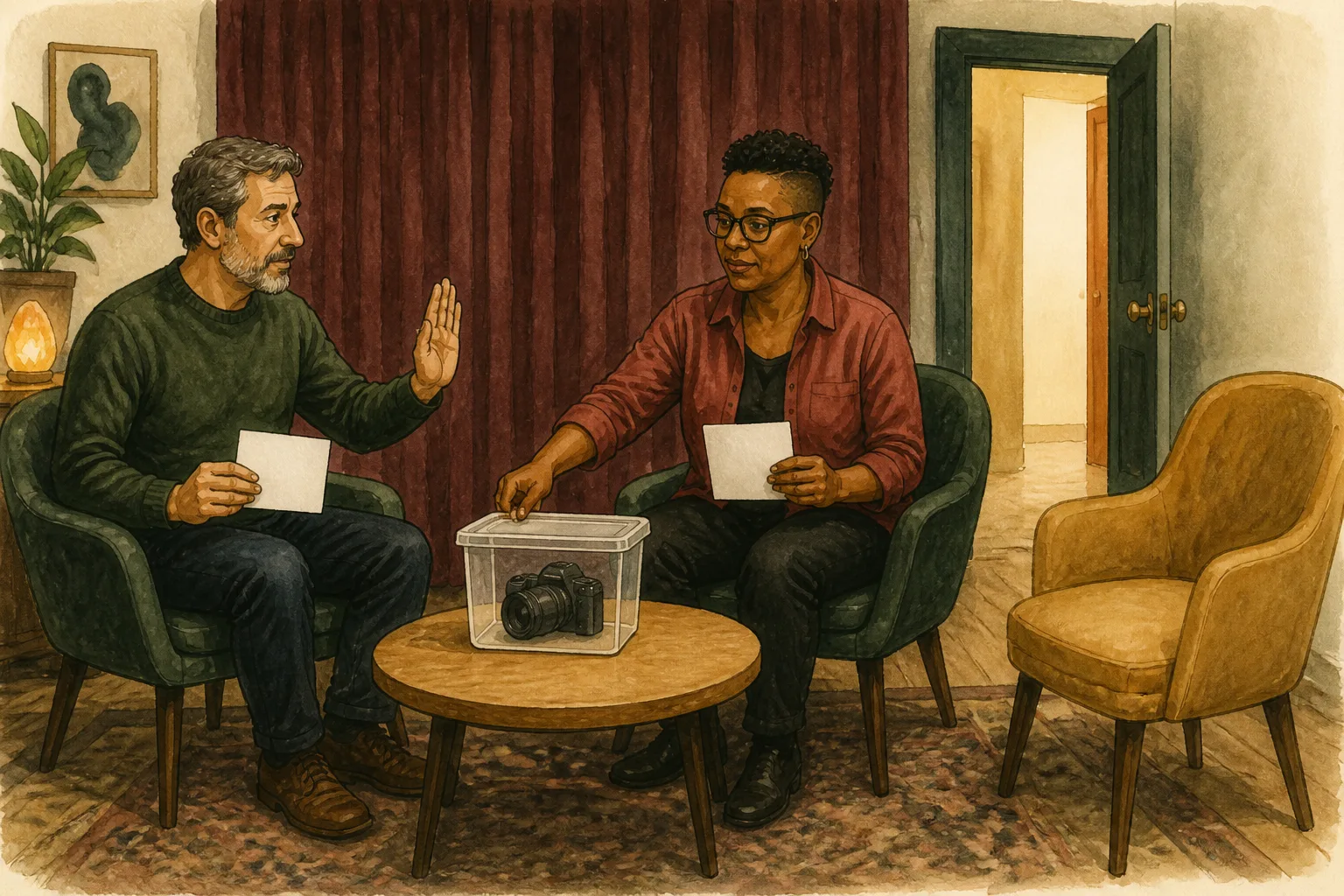
Every person who could enter, be heard, appear in view or be recorded must knowingly consent. Unaware observation and covert recording fall outside consensual play.
Illustration created using generative AI; not documentary evidence.UK legal boundary
In England and Wales, section 67 of the Sexual Offences Act 2003 creates voyeurism offences concerning observing or recording a person doing a private act without consent and without a reasonable belief in consent, for specified purposes. Related intimate-image offences and data-protection duties may also apply to making or sharing material. Scotland and Northern Ireland have their own legal frameworks.
A kink label, relationship history or access to a room or account is not a legal conclusion about consent. If anyone is unaware, privacy is reasonably expected, or the agreed audience changes, the situation falls outside this entry and may require legal or safeguarding advice.
Non-graphic examples
What the umbrella may include
- Two adults agreeing that one will watch from a specified place during a private scene.
- A staged discovery in which the apparent surprise is part of an earlier adult agreement.
- Allowing live observation while expressly declining photographs or streaming.
- Confirming that a consenting guest has left before the audience or scene changes.
- Covering and putting away recording devices when only live watching has been agreed.
Prepare for an appointment
Questions you could ask a professional
- What information would help you understand my question?
- What are the realistic options and uncertainties?
- How can disability, communication or privacy needs be accommodated?
- When should the situation be reviewed again?
These prompts do not replace assessment and do not imply that every reader needs professional care.
Continue learning
Take the next step from definition to context.
Continue with independent guidance connecting consensual voyeuristic play to evidence, consent, safety, uncertainty and practical decisions.
Separate adult fantasy from roleplay, agree a scene's limits, protect privacy and know when to seek support.
Read the guideRelated in-depth reading
Read the full guide.
Explore a connected question with context and UK support routes.
Consensual adult exhibitionism and voyeurism versus exposure, covert observation and cyberflashing offences across UK jurisdictions.
Read the full guide