Negotiated psychological play using lowered status, language or ritual to create intensity. It overlaps with humiliation but may focus more on role and identity language than embarrassment.
Sources and evidence type
Manual claim and limitation notes are shown where an individual source audit is complete. Other evidence-type labels are a publisher aid awaiting source-by-source confirmation.
Dunkley & Brotto (2020), BDSM consent reviewResearch study
Source design
Peer-reviewed research or review
What it can support
The specific population, measures and findings reported by the paper.
Important limitation
It cannot automatically establish UK prevalence, causation, diagnosis, consent or an individual outcome. Check recruitment, definitions and study design.
The specific population, measures and findings reported by the paper.
Important limitation
It cannot automatically establish UK prevalence, causation, diagnosis, consent or an individual outcome. Check recruitment, definitions and study design.
The specific population, measures and findings reported by the paper.
Important limitation
It cannot automatically establish UK prevalence, causation, diagnosis, consent or an individual outcome. Check recruitment, definitions and study design.
Illustration created using generative AI; not documentary evidence.
In brief
A negative role is negotiated; a person's dignity is not surrendered.
Consensual degradation is bounded adult psychological play in which lowered status, object-like language or an agreed negative role creates intensity. It overlaps with humiliation, but some people use degradation to emphasise fictional rank or identity while humiliation emphasises embarrassment or exposure. The terms are not standardised, and neither permits real contempt, discriminatory harassment, coercion or carrying private language beyond its agreed frame.
Sparse evidence and personal meaning
Direct research isolating consensual degradation is sparse. Broader BDSM consent studies report strong norms of explicit agreement alongside variation and documented consent violations. These findings support careful negotiation but do not show that a safeword, relationship or community label prevents emotional harm.
Words gain intensity from personal and cultural meaning. A term may feel theatrical to one adult and deeply harmful to another because of body image, disability, race, gender, sexuality, class, work or trauma. No catalogue can define a universally mild insult or infer preference from someone's other roles.
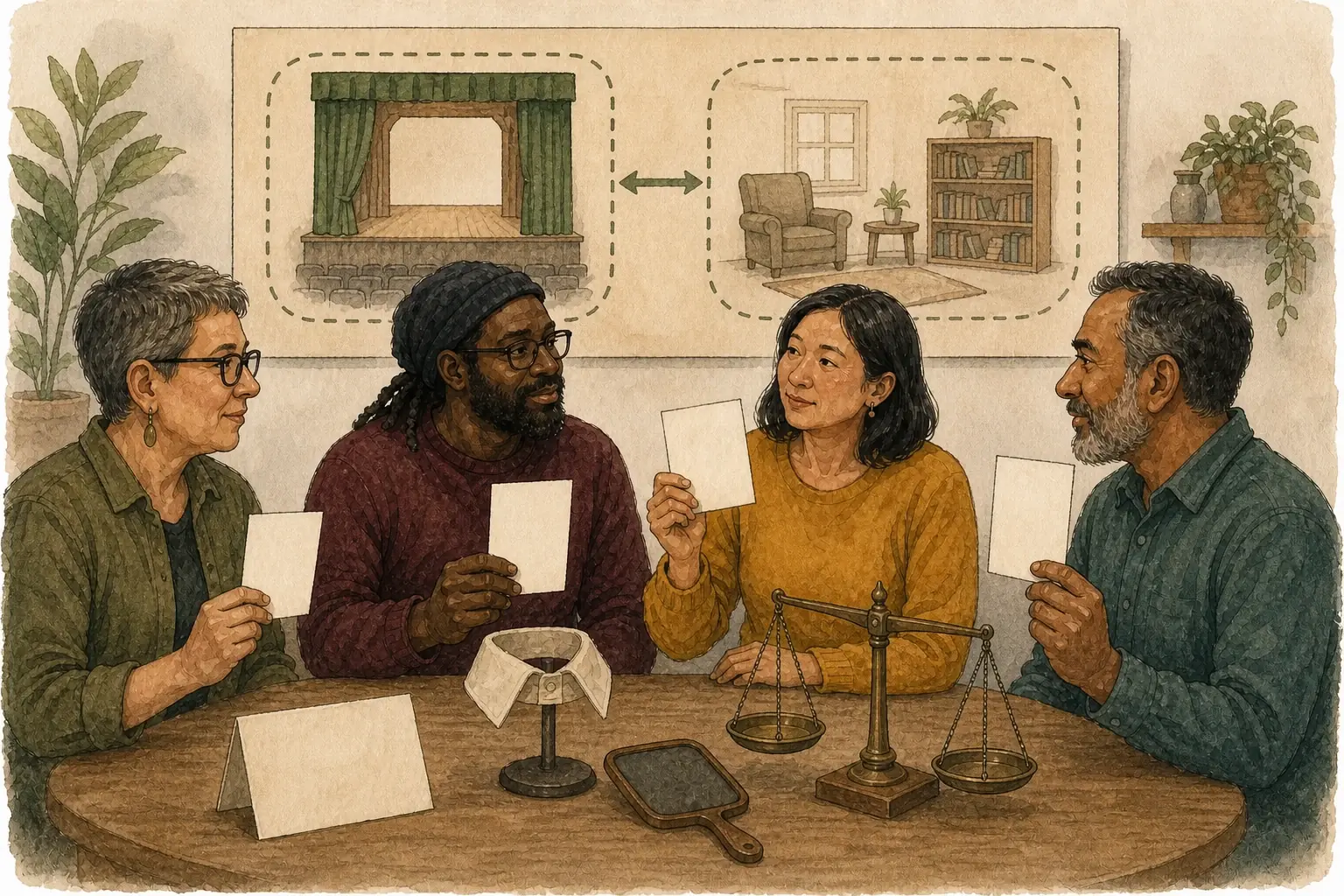
EDITORIAL ILLUSTRATIONNo word is universally mild
Degradation-specific evidence is sparse, while language carries personal and cultural history. A term can feel theatrical to one adult and deeply harmful to another.
Illustration created using generative AI; not documentary evidence.
Status
Detailed editorial draft
Publisher
The UK Kink Guide
Reviewed
Structured draft present; individual review date not recorded
Evidence
5 cited sources · types labelled below
Jurisdiction
UK-focused general education
Read the rest: evidence, law, safety and sources
Role degradation
Agreed language or ritual temporarily marks lower fictional status within a defined adult scene.
Consensual humiliation
Often centres more on embarrassment, awkwardness or being seen; overlap is common and meanings vary.
Objectification play
A person performs as a symbolic object or function; degrading language is not implied unless separately agreed.
Abuse or harassment
Unwanted insults, threats, exposure or attacks on identity remain harmful regardless of a claimed kink context.
Language, status and scene objects
A reversible title card, plain collar, blank score sheet, mirror, floor marker or costume cue may indicate temporary status. These objects are not inherently degrading and do not authorise language, posture, touch or public display; their meaning must be shared and limited.
Written messages, voice notes and photographs can outlive the scene and be forwarded or rediscovered. Consent should distinguish spoken, written, recorded and public language. A phrase accepted privately is not permission to use it in a profile, group chat or ordinary disagreement.
EDITORIAL ILLUSTRATIONMedium and audience are separate boundaries
Spoken, written, recorded and public language are different permissions. A phrase accepted privately is not permission for a message, recording, profile or group chat.
Illustration created using generative AI; not documentary evidence.
Boundaries, stopping and repair
Adults may agree exact words, prohibited subjects, intensity, duration, audience and how to return to ordinary interaction. A safeword or signal supplements attention to distress; freezing, silence or staying in role is not proof that a person wants more. Any participant can stop without having to defend the boundary inside the fiction.
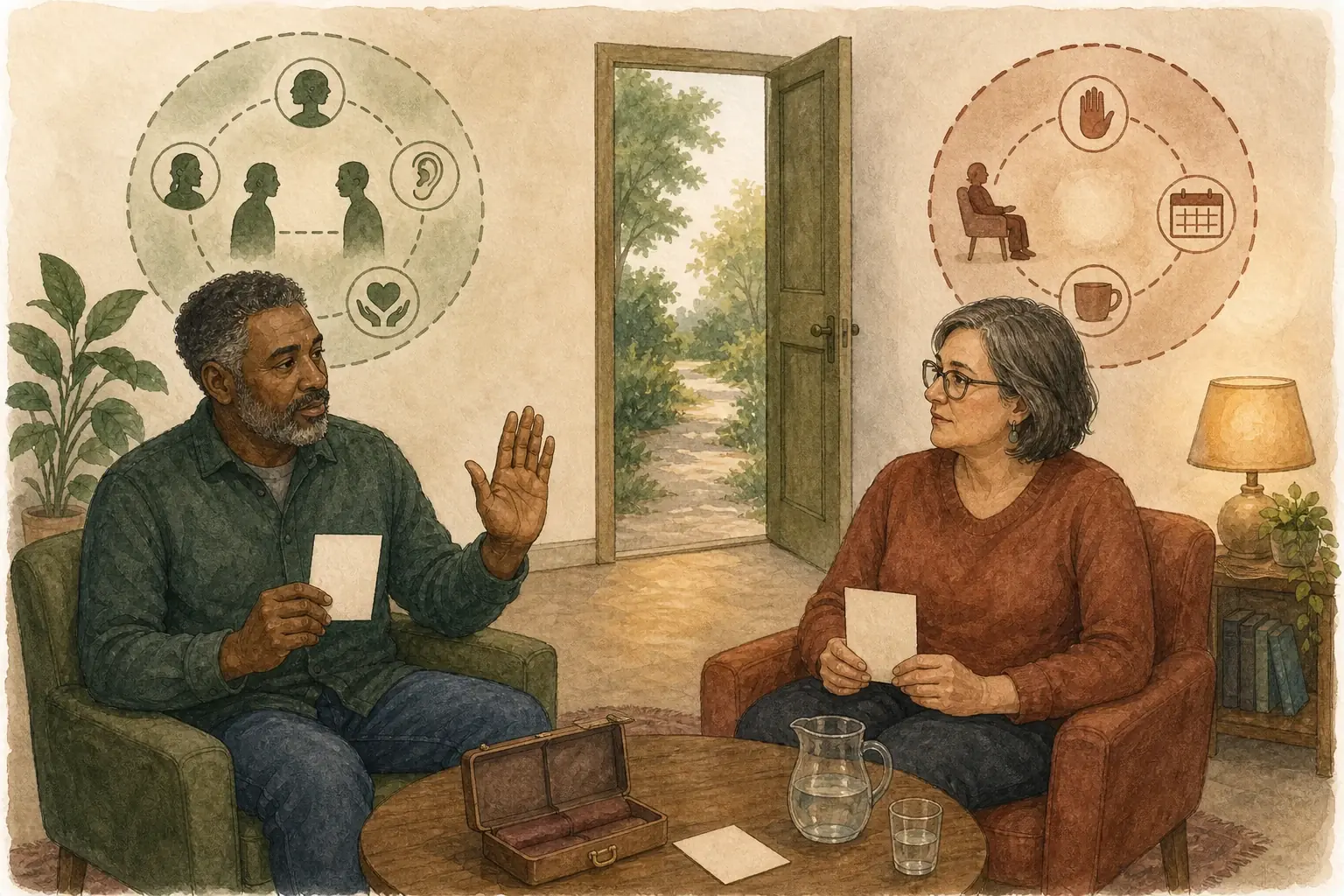
Afterwards, someone may want neutral language, reassurance, space or a later check-in. If an unexpected word causes distress, stopping and listening matter more than defending intent. Aftercare can support transition but cannot erase an ignored limit or replace accountability.
EDITORIAL ILLUSTRATIONStop first, then listen
Neutral language, reassurance, space or a later check-in may help transition. Aftercare cannot erase an ignored limit or replace accountability for harm.
Illustration created using generative AI; not documentary evidence.
Clinical, abuse and UK context
Consensual adult psychological play is not a paraphilic disorder by default. WHO guidance distinguishes disorder through marked distress, impairment, serious risk or non-consent. Distress caused only by stigma should not be treated as evidence that the interest itself is disordered.
Repeated degradation, threats, monitoring or isolation in an intimate or family relationship may form part of controlling or coercive behaviour. Home Office guidance for England and Wales recognises emotional and sexual behaviours within such patterns. Other UK jurisdictions have their own law; a role title or previous consent never excuses abuse.
Non-graphic examples
What the umbrella may include
Using one pre-agreed fictional status title only while a private scene is active.
Marking a temporary role with a reversible card rather than insulting the person's real identity.
Keeping body image, disability, race, gender and family history explicitly outside the scene.
Treating text messages and recordings as separate permissions from spoken words.
Stopping and returning to neutral language when a phrase has an unexpected emotional effect.
Prepare for an appointment
Questions you could ask a professional
What information would help you understand my question?
What are the realistic options and uncertainties?
How can disability, communication or privacy needs be accommodated?
When should the situation be reviewed again?
These prompts do not replace assessment and do not imply that every reader needs professional care.
Continue learning
Take the next step from definition to context.
Continue with independent guidance connecting consensual degradation to evidence, consent, safety, uncertainty and practical decisions.