Consensual objectification is an adult role-play in which a person temporarily performs as a display, symbolic object or simple function. The appeal may involve stillness, attention, anonymity, service or altered status. The role is fictional and bounded; the participant remains fully a person.
 The UK Kink GuideEvidence-led glossary
 Back to the glossaryPower & roleIn plain English Words in context A non-graphic adult example What not to assume
Consensual objectification
Also known as objectification play
Role-play in which a person is temporarily treated as a symbolic object, display or function under agreed conditions. The person’s real autonomy and right to stop remain intact throughout.
Start here
New to this term?
A display role may resemble a statue, mannequin or artwork; a function role symbolically represents a purpose; and costume may support the transformation. Everyday objectification is different: it means ignoring someone’s agency or reducing them to appearance or usefulness outside an agreement.
An adult agrees to pose as a living statue for a short private performance, chooses the clothing and setting, and remains free to move or stop. The other participant treats the agreed stillness as theatre, not as loss of personhood or ownership.
A costume, pose, label or submissive role does not prove consent, silence needs or a wish to be ignored outside the scene. The object role never removes health, access, privacy or communication needs. Broader social-objectification research cannot be treated as evidence about consensual role-play outcomes.
Sources and evidence type
Manual claim and limitation notes are shown where an individual source audit is complete. Other evidence-type labels are a publisher aid awaiting source-by-source confirmation.
Dunkley & Brotto (2020), BDSM consent reviewResearch study
- Source design
- Peer-reviewed research or review
- What it can support
- The specific population, measures and findings reported by the paper.
- Important limitation
- It cannot automatically establish UK prevalence, causation, diagnosis, consent or an individual outcome. Check recruitment, definitions and study design.
Tarleton, Mackenzie & Sagarin (2025), consent normsResearch study
- Source design
- Peer-reviewed research or review
- What it can support
- The specific population, measures and findings reported by the paper.
- Important limitation
- It cannot automatically establish UK prevalence, causation, diagnosis, consent or an individual outcome. Check recruitment, definitions and study design.
Bowling et al. (2024), kink consent violationsResearch study
- Source design
- Peer-reviewed research or review
- What it can support
- The specific population, measures and findings reported by the paper.
- Important limitation
- It cannot automatically establish UK prevalence, causation, diagnosis, consent or an individual outcome. Check recruitment, definitions and study design.
Kahalon et al. (2018), self-objectification research reviewResearch study
- Source design
- Peer-reviewed research or review
- What it can support
- The specific population, measures and findings reported by the paper.
- Important limitation
- It cannot automatically establish UK prevalence, causation, diagnosis, consent or an individual outcome. Check recruitment, definitions and study design.
WHO ICD-11 clinical requirements (2024)Clinical guideline
- Source design
- Current public-health or clinical guidance
- What it can support
- Service pathways, health definitions and recommended public-health or clinical actions within its stated scope.
- Important limitation
- General guidance cannot assess an individual’s symptoms, exposure, medicine, contraindications or urgency.
Power & role
Illustration created using generative AI; not documentary evidence.
In brief
A performed object role never erases personhood.
Consensual objectification is a bounded adult role-play in which a person temporarily performs as a display, symbol or function. The role may explore stillness, attention, service, anonymity or altered status. It must not be confused with treating people as less human in ordinary life: the participant remains a person with needs, agency, privacy and an immediate right to stop.
Terminology and evidence limits
Direct peer-reviewed research on consensual objectification as a distinct kink is scarce. It is usually discussed within broader work on role-play, dominance and submission, bondage or psychological play. Research on societal or self-objectification examines different processes and should not be presented as evidence about a negotiated scene.
This shortage of direct evidence means the glossary can describe reported forms and consent principles, but cannot claim a typical motive, prevalence, benefit or participant profile. A person may value aesthetic transformation, focused service, stillness, attention or humour; the label alone reveals none of those things.

Display, service or object-like language can be a negotiated adult role. The metaphor does not remove bodily autonomy, ordinary communication, legal rights or the need for specific consent.
Illustration created using generative AI; not documentary evidence.- Status
- Detailed editorial draft
- Publisher
- The UK Kink Guide
- Reviewed
- Structured draft present; individual review date not recorded
- Evidence
- 5 cited sources · types labelled below
- Jurisdiction
- UK-focused general education
Read the rest: evidence, law, safety and sources
Posing as a statue, mannequin or artwork within an agreed time and setting.
Symbolically representing a simple object or purpose without transferring ownership of the person.
Using clothing, labels or a plinth-like setting to create a visual transformation.
Ignoring someone's agency or reducing them to appearance or use outside an agreement; this is a different social and psychological concept.
Displays, symbols and material cues
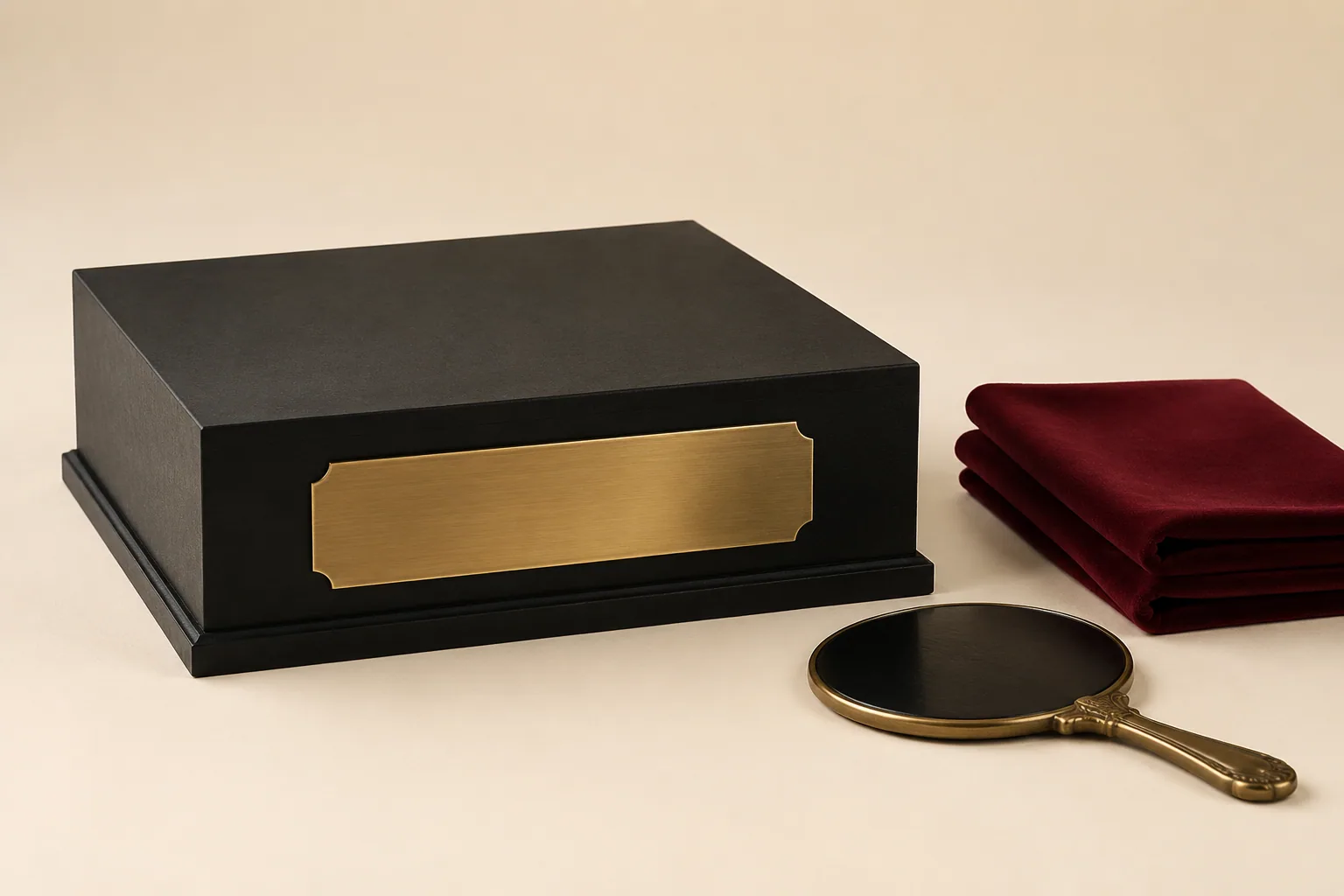
An empty plinth, folded cloth, blank nameplate, face-down mirror, costume frame, display lighting or simple role card can signal the fictional transition. Clothing may imitate a mannequin, sculpture or abstract object. The appeal may involve colour, symmetry, stillness, visibility, concealment or contrast with everyday movement.
No prop turns a person into property. Furniture and display structures are designed for objects, not bodies, so their presence should not be taken as evidence that weight-bearing, restricted movement or prolonged stillness is appropriate. The person's comfort, circulation, mobility, temperature and communication remain more important than maintaining the image.
Consent, accessibility and privacy
Agreement should cover the role, duration, posture or movement, touch, audience, photography and accessible ways to pause. Someone who is still, masked or silent may be harder to read; silence and immobility therefore cannot stand in for consent. Ordinary communication remains valid even if it breaks character.
Public display and online images create separate privacy questions. Consent to a private role is not permission for guests, venue visitors or followers to watch, touch, comment or save a photograph. A label or costume also does not authorise humiliating language unless that has been separately agreed.

Agreement to one posture, task, audience or form of language does not authorise another. Access needs, recording, touch, duration and withdrawal remain separate questions.
Illustration created using generative AI; not documentary evidence.Whole-person and clinical distinction
Objectification outside a negotiated frame can be dehumanising and harmful; psychological research on self-objectification documents concerns such as body shame in particular populations. A consensual scene should not be assumed to cause those outcomes, but the difference reinforces why context, agency and after-effects matter.
WHO guidance does not classify unconventional consensual-adult role-play as a disorder solely because of its imagery. Clinical concern depends on distress, impairment, serious risk or non-consent. Ignoring a withdrawal, using a person as equipment or carrying the role into ordinary life against their wishes is not protected by the word consensual.

Limited evidence on consensual objectification cannot determine an individual's motives or outcomes. Conduct, freedom, privacy, repair and continued recognition as a whole person remain the relevant checks.
Illustration created using generative AI; not documentary evidence.Non-graphic examples
What the umbrella may include
- An adult posing briefly as a statue within an agreed photographic concept.
- Using a blank display card and costume to create a mannequin-like role.
- Representing a symbolic function with lightweight props that carry no person's weight.
- Agreeing that ordinary speech immediately ends the stillness or display role.
- Keeping photographs private unless separate, specific permission is given to share them.
Prepare for an appointment
Questions you could ask a professional
- What information would help you understand my question?
- What are the realistic options and uncertainties?
- How can disability, communication or privacy needs be accommodated?
- When should the situation be reviewed again?
These prompts do not replace assessment and do not imply that every reader needs professional care.
Continue learning
Take the next step from definition to context.
Continue with independent guidance connecting consensual objectification to evidence, consent, safety, uncertainty and practical decisions.
Set the scope of adult power-exchange roles, keep a working stop route, recognise pressure and find UK support.
Read the guideRelated in-depth reading
Read the full guide.
Explore a connected question with context and UK support routes.
How adults use doll-like styling and performance as fantasy, with clear boundaries around identity, movement, privacy and stopping.
Read the full guide