Consensual adult role-play using socially charged identity, status, stereotype or taboo language for psychological intensity, with potential for real personal and social harm.
Sources and evidence type
Manual claim and limitation notes are shown where an individual source audit is complete. Other evidence-type labels are a publisher aid awaiting source-by-source confirmation.
EHRC: Equality Act FAQsCommunity context
Source design
Contextual or community source
What it can support
Terminology, reported practice or community context within the source’s own setting.
Important limitation
Community usage is not universal and does not establish safety, prevalence, clinical benefit or legal permission.
The specific population, measures and findings reported by the paper.
Important limitation
It cannot automatically establish UK prevalence, causation, diagnosis, consent or an individual outcome. Check recruitment, definitions and study design.
Illustration created using generative AI; not documentary evidence.
In brief
Negotiated fiction does not neutralise prejudice or create consent from those outside it.
Identity-based taboo play can invoke racism, misogyny, homophobia, transphobia, ableism, religious prejudice, class stigma or other histories of oppression. Consent between participants does not make prejudice harmless, erase unequal power or bind anyone else to witness it. People targeted by a stereotype are not responsible for educating others or participating, and a private fantasy never licenses discriminatory conduct in ordinary life, employment, services or community spaces.
Consent with narrow specificity
Negotiate exact words, identities, speaker roles, audience, context, duration and prohibited themes rather than asking for blanket consent to be offensive. Either person may stop without defending why a term became harmful.
Past consent, belonging to the referenced group or initiating the fantasy does not create permanent permission. Do not spring identity language on someone as a test.
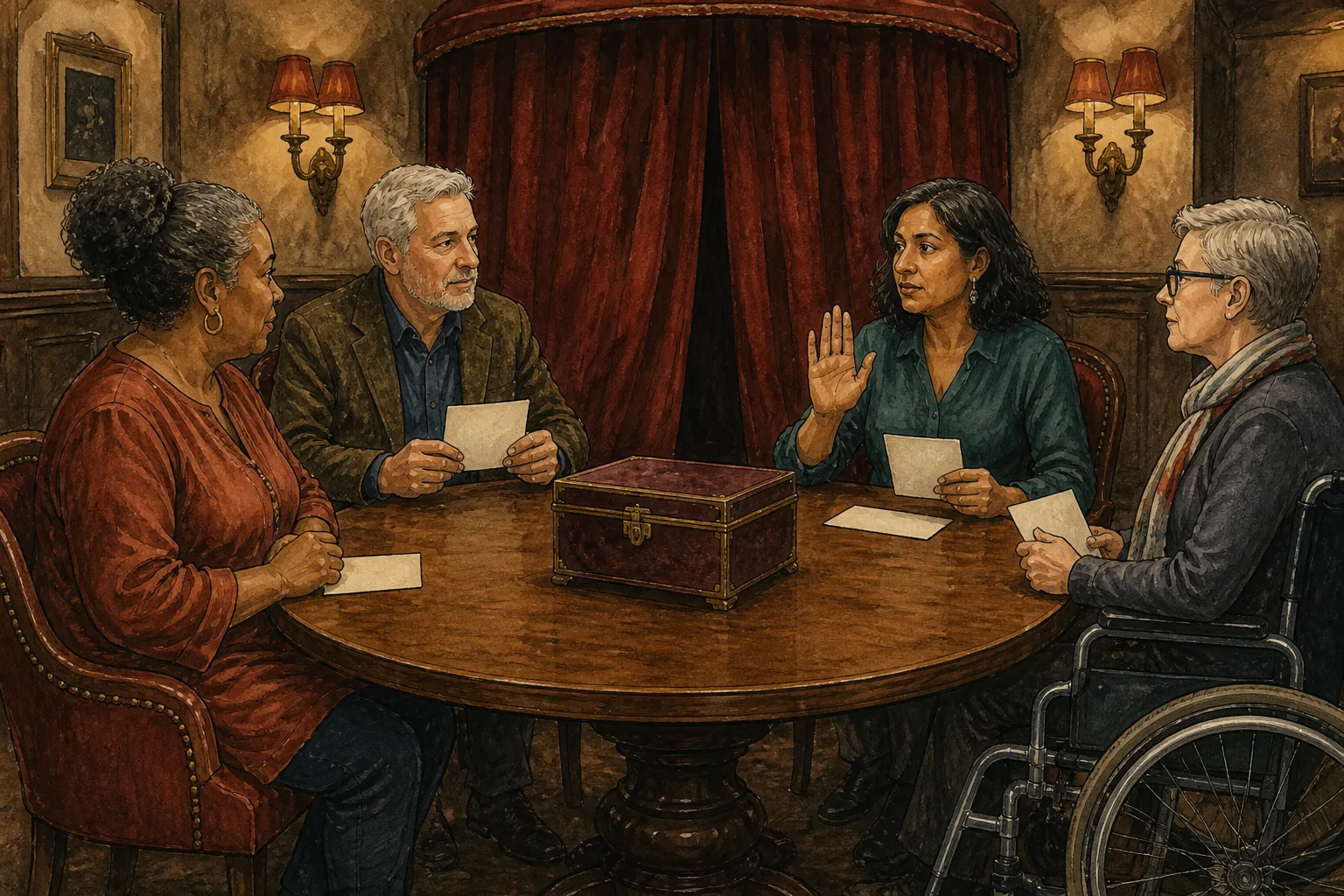
EDITORIAL ILLUSTRATIONConsent must be narrowly specific
Agree exact roles, audience, context and prohibited themes. Belonging to a group or past participation never creates blanket permission.
Illustration created using generative AI; not documentary evidence.
Status
Detailed editorial draft
Publisher
The UK Kink Guide
Reviewed
Structured draft present; individual review date not recorded
Evidence
3 cited sources · types labelled below
Jurisdiction
UK-focused general education
Read the rest: evidence, law, safety and sources
Identity-based taboo role-play
Narrowly negotiated adult fiction using identity-linked language or scenarios.
Humiliation play
A broader negotiated use of embarrassment or degradation that need not invoke protected or marginalised identities.
Discrimination or harassment
Real unwanted conduct or unequal treatment; private scene consent is not a defence for harming others.
Identity affirmation
Respectful recognition of a person's identity and dignity, which must remain available outside any role-play.
Power, impact and aftercare
Intent and consent matter but do not guarantee a benign impact. Trauma, internalised stigma, minority stress and relationship power can surface during or after a scene.
Plan a return to ordinary names, pronouns, dignity and relationship roles. Aftercare cannot be used to demand reassurance from the person who was hurt.
EDITORIAL ILLUSTRATIONRestore dignity without demanding reassurance
Intent does not guarantee a benign impact. Return to ordinary names, pronouns and relationship roles while allowing the person affected to set the pace.
Illustration created using generative AI; not documentary evidence.
Privacy, bystanders and public life
Keep charged language and imagery from non-consenting bystanders, coworkers, online audiences and service staff. Recordings, messages and screenshots can escape their original context and create durable harm.
The Equality Act applies in relevant public, employment and service settings; negotiated private play does not authorise harassment or discrimination there.
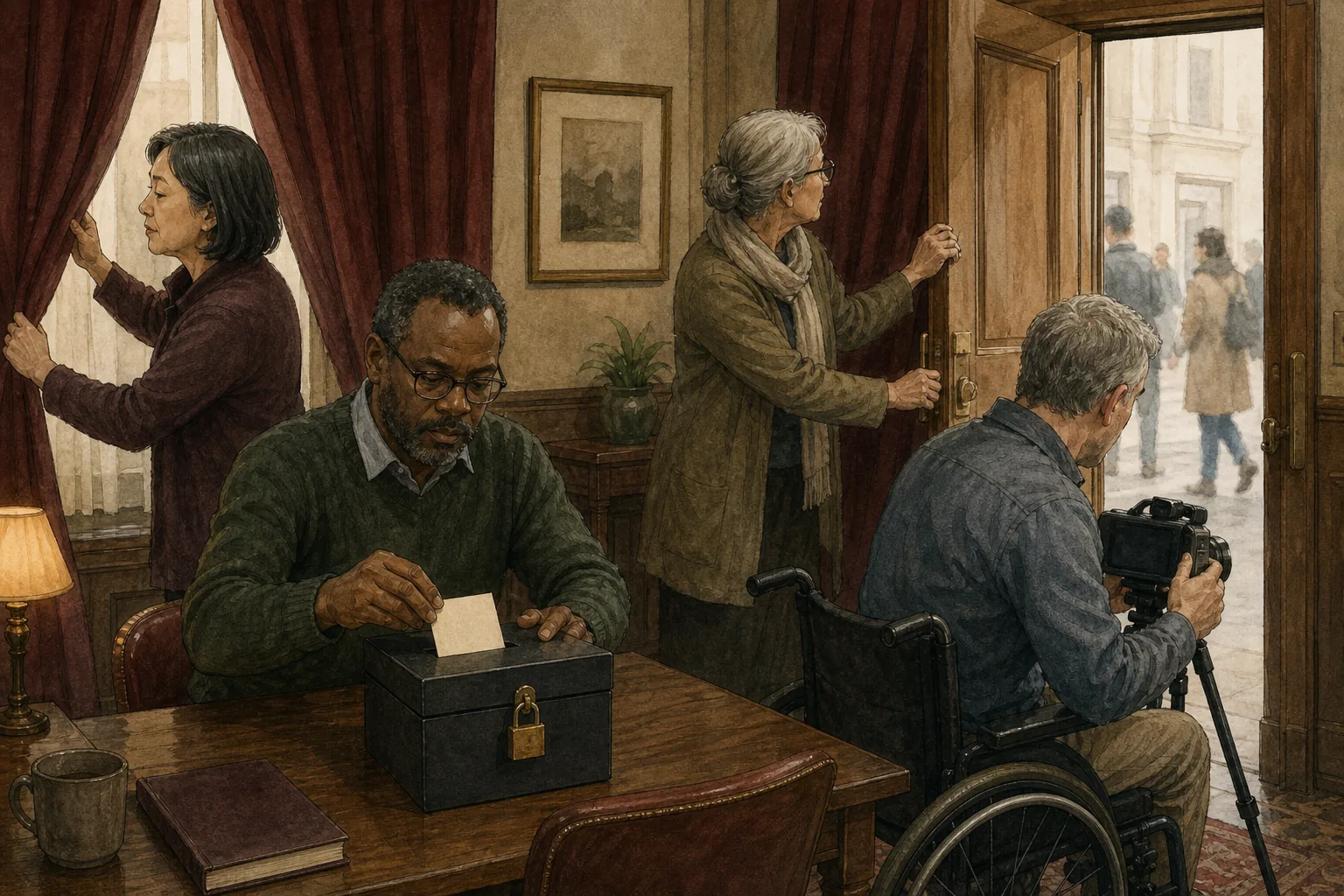
EDITORIAL ILLUSTRATIONBystanders never joined the scene
Keep charged material from coworkers, public audiences and online circulation. Private agreement does not authorise harassment or discrimination elsewhere.
Illustration created using generative AI; not documentary evidence.
Editorial and clinical distinction
Educational coverage should name the social history and risk rather than presenting slurs as a shopping list or script. This card therefore gives no examples of abusive wording.
Fantasy content alone does not diagnose prejudice or disorder, but repeated boundary violations and real discriminatory conduct should be judged by their impact and behaviour, not excused as kink.
Non-graphic examples
What the umbrella may include
Declining the entire theme without explanation.
Negotiating a prohibited identity topic before a private scene.
Using a neutral stop phrase that immediately ends the role.
Deleting a recording rather than risking contextual collapse.
Restoring ordinary names and pronouns during aftercare.
Prepare for an appointment
Questions you could ask a professional
What information would help you understand my question?
What are the realistic options and uncertainties?
How can disability, communication or privacy needs be accommodated?
When should the situation be reviewed again?
These prompts do not replace assessment and do not imply that every reader needs professional care.
Continue learning
Take the next step from definition to context.
Continue with independent guidance connecting identity-based taboo role-play to evidence, consent, safety, uncertainty and practical decisions.