Erotic electrostimulation, or e-stim, is an adult interest in electrical sensation produced by purpose-designed equipment. It is a specialist device category rather than a general term for using any electrical object.
 The UK Kink GuideEvidence-led glossary
 Back to the glossarySensation & activityIn plain English Words in context A non-graphic adult example What not to assume
Erotic electrostimulation
Also known as e-stim
The use of purpose-designed electrical devices to create controlled bodily sensation. It is a specialist activity with important device, placement and health contraindications.
Start here
New to this term?
Erotic e-stim devices, TENS pain-relief devices and EMS or NMES muscle stimulators have different intended purposes. Mains electricity, modified appliances and improvised equipment are not forms of responsible e-stim and sit outside this guide.
An adult may be interested in the idea, sound or visual design of e-stim equipment without using it. A person using TENS for pain relief is engaged in healthcare, not automatically in erotic activity.
A product label does not remove contraindications, guarantee safe current paths or replace its instructions and medical advice. Cardiac devices, pregnancy, epilepsy, reduced sensation and other health factors may be relevant. Research and NHS guidance can describe medical-device cautions, but do not certify erotic settings, placements or techniques; none are provided here.
Sources and evidence type
Manual claim and limitation notes are shown where an individual source audit is complete. Other evidence-type labels are a publisher aid awaiting source-by-source confirmation.
Gibson et al. (2022), TENS systematic reviewResearch study
- Source design
- Peer-reviewed research or review
- What it can support
- The specific population, measures and findings reported by the paper.
- Important limitation
- It cannot automatically establish UK prevalence, causation, diagnosis, consent or an individual outcome. Check recruitment, definitions and study design.
NHS, TENS guidanceClinical guideline
- Source design
- Current public-health or clinical guidance
- What it can support
- Service pathways, health definitions and recommended public-health or clinical actions within its stated scope.
- Important limitation
- General guidance cannot assess an individual’s symptoms, exposure, medicine, contraindications or urgency.
Rehor (2015), survey of women from kink communitiesResearch study
- Source design
- Peer-reviewed research or review
- What it can support
- The specific population, measures and findings reported by the paper.
- Important limitation
- It cannot automatically establish UK prevalence, causation, diagnosis, consent or an individual outcome. Check recruitment, definitions and study design.
Dunkley & Brotto (2020), BDSM consent reviewResearch study
- Source design
- Peer-reviewed research or review
- What it can support
- The specific population, measures and findings reported by the paper.
- Important limitation
- It cannot automatically establish UK prevalence, causation, diagnosis, consent or an individual outcome. Check recruitment, definitions and study design.
WHO ICD-11 clinical requirements (2024)Clinical guideline
- Source design
- Current public-health or clinical guidance
- What it can support
- Service pathways, health definitions and recommended public-health or clinical actions within its stated scope.
- Important limitation
- General guidance cannot assess an individual’s symptoms, exposure, medicine, contraindications or urgency.
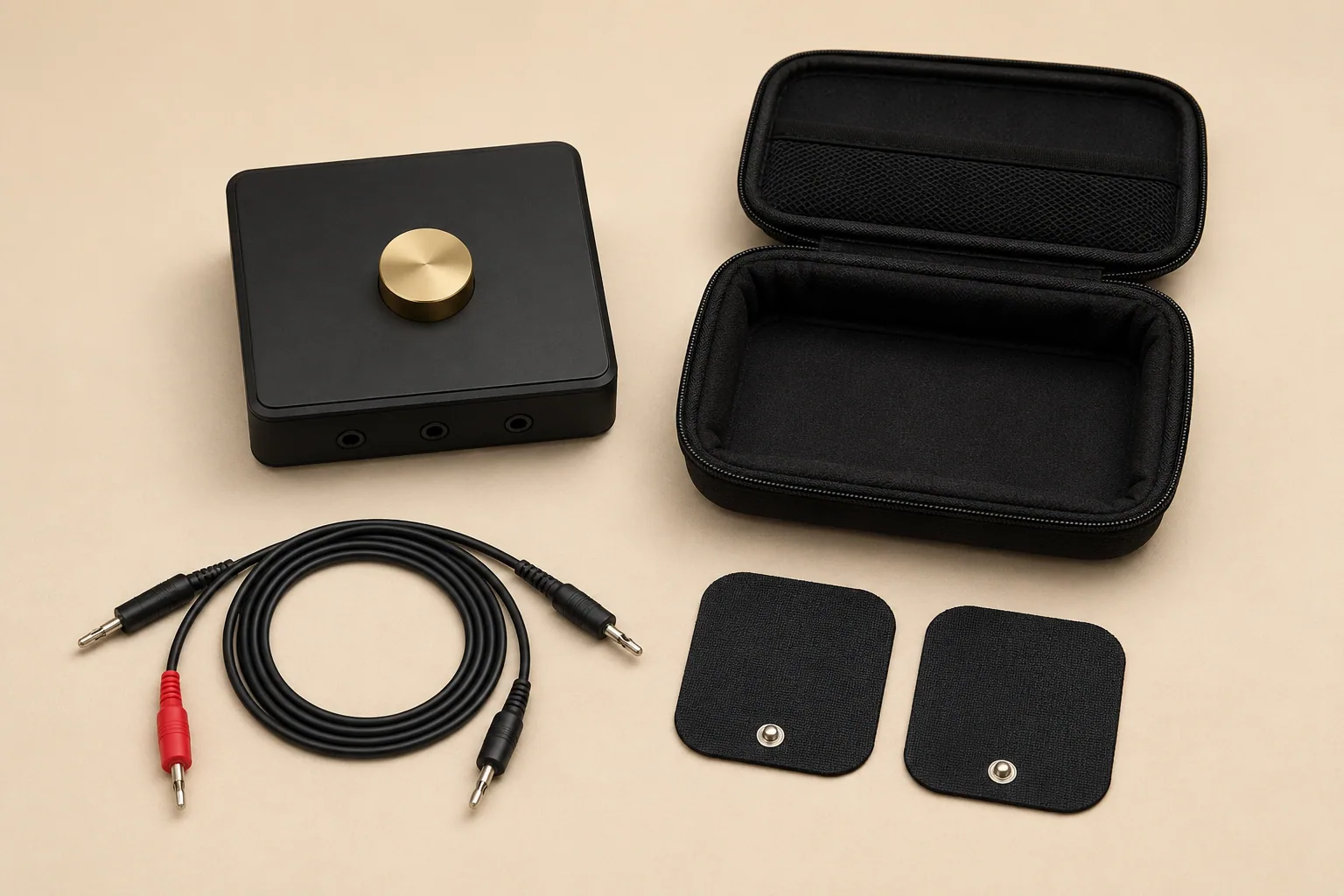
Sensation & activity
Illustration created using generative AI; not documentary evidence.
In brief
A specialist device category—not a licence to improvise.
Erotic electrostimulation, often shortened to e-stim, uses a purpose-designed low-voltage device to create bodily sensation in a consensual adult context. The category is not interchangeable with clinical TENS, muscle stimulation, mains electricity or improvised electrical equipment. Device design, health history and where current may travel all matter, so this entry explains the distinction without giving settings, placements or operating instructions.
What evidence can—and cannot—show
Direct research on erotic electrostimulation is scarce. Clinical reviews of TENS examine regulated therapeutic use for pain, not erotic devices or body sites, and cannot be used to certify an adult product or technique.
Self-report kink surveys show that electrical sensation exists within a wider range of adult interests, but selected community samples cannot establish population prevalence, a typical motivation or a safe pattern of use. See the broader Sensation play and Consent negotiation field notes.
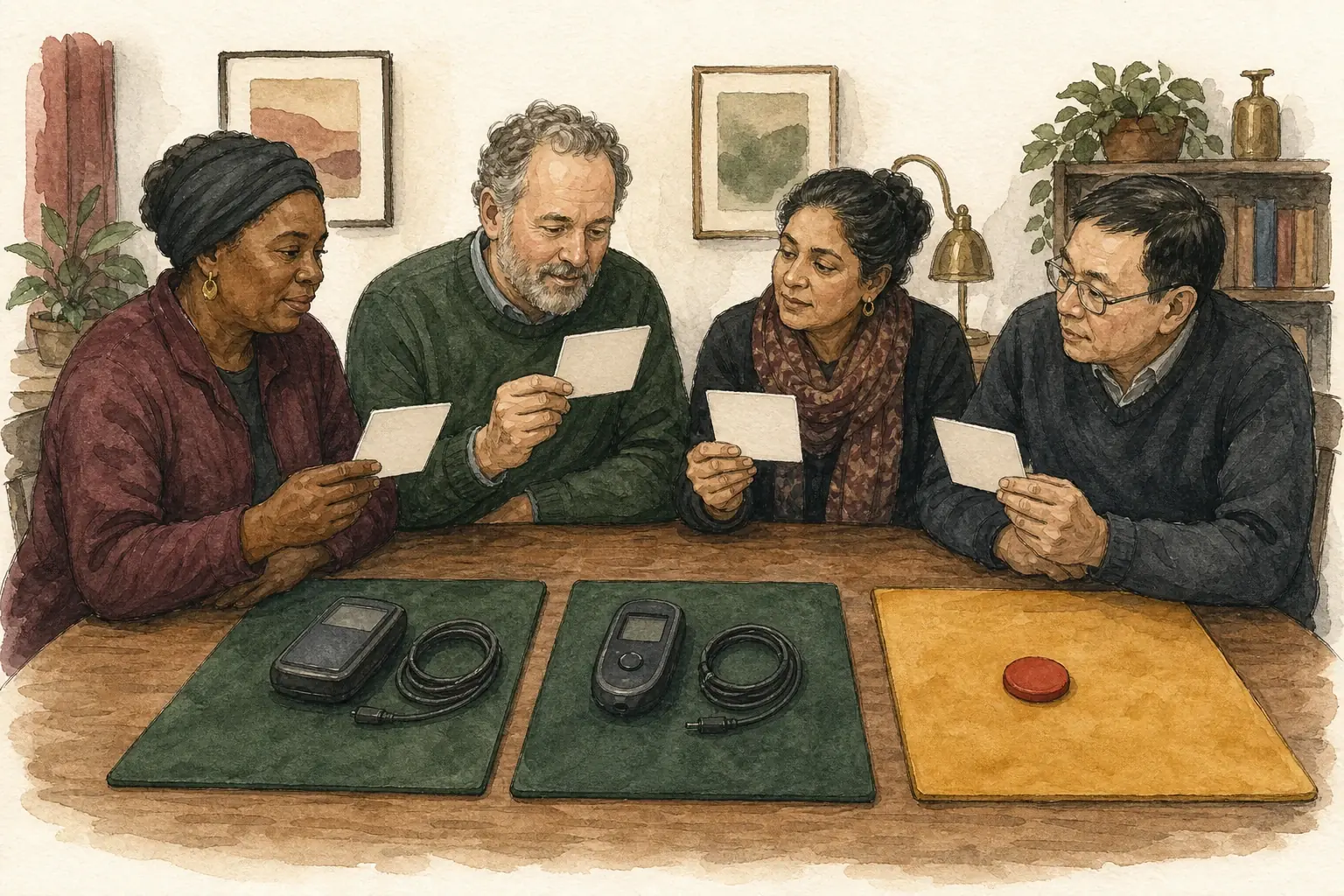
Erotic devices, clinical TENS or EMS equipment and household electricity are different categories. Limited evidence cannot validate a setting, placement or improvised substitute.
Illustration created using generative AI; not documentary evidence.- Status
- Detailed editorial draft
- Publisher
- The UK Kink Guide
- Reviewed
- Structured draft present; individual review date not recorded
- Evidence
- 5 cited sources · types labelled below
- Jurisdiction
- UK-focused general education
Read the rest: evidence, law, safety and sources
Equipment marketed for adult sensation; a product label does not remove contraindications or guarantee safe use.
A medical-device category intended for temporary pain relief, with its own manufacturer and NHS guidance.
Clinical or fitness devices intended to stimulate muscle; they are not automatically suitable for erotic use.
Household electricity and modified appliances can cause burns, arrhythmia, injury or death and sit outside this guide.
Devices, surfaces and sensory meaning
Associated objects include a switched-off control unit, insulated leads, connectors and unused surface pads. Adults may value tingling, rhythm, anticipation, visible controls or a negotiated power-exchange meaning; the same device can carry different significance for different people.
Controls, waveforms, electrodes and conductive accessories are not interchangeable. UKCA or CE marking indicates conformity for a product's stated purpose, not approval for every use, and a medical TENS machine is not evidence that erotic electrostimulation is medically beneficial.
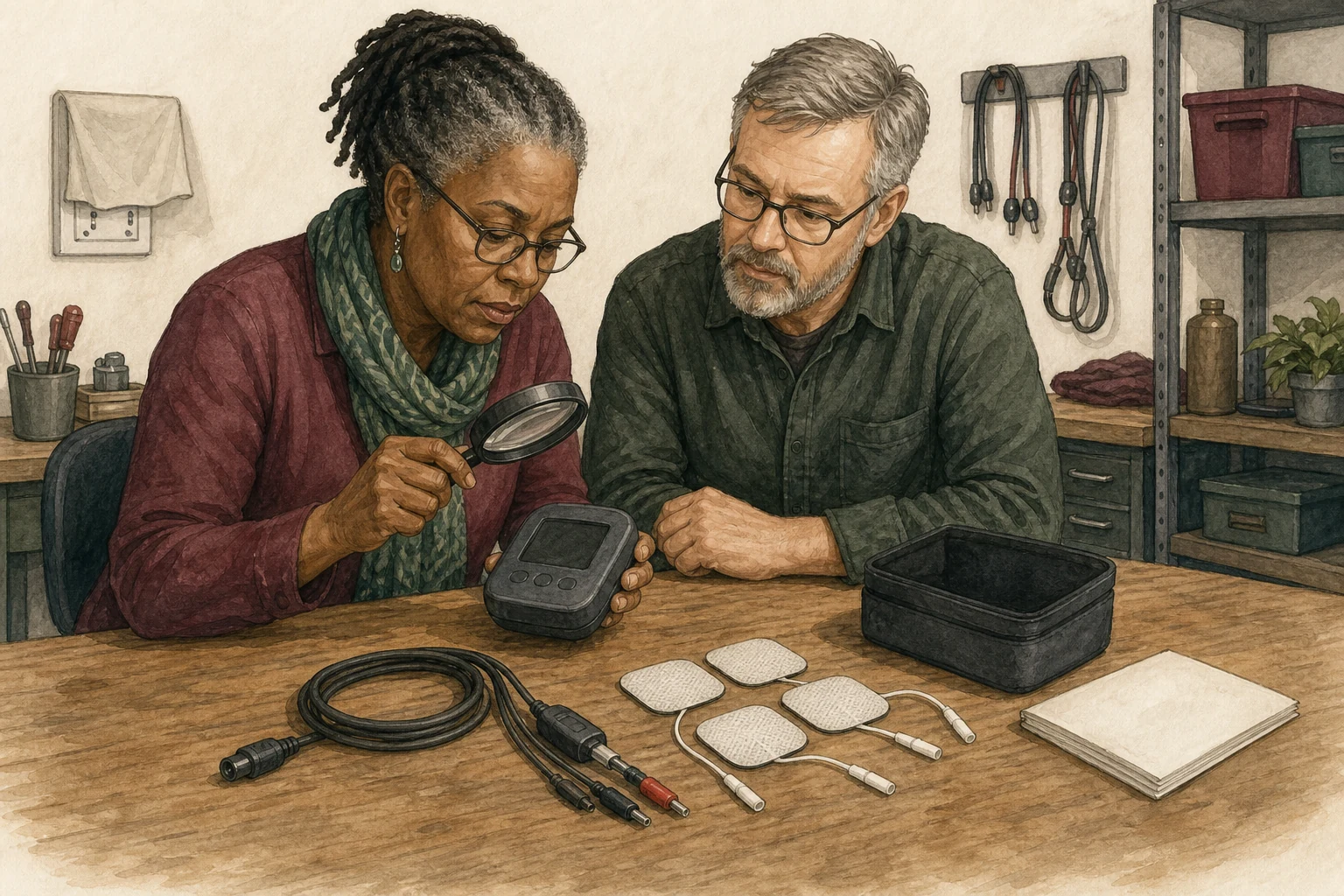
Device design, intact leads, electrode condition and manufacturer restrictions matter. A familiar casing or adult retail label does not remove contraindications.
Illustration created using generative AI; not documentary evidence.Health boundaries and consent
NHS TENS guidance identifies important exclusions and cautions involving pacemakers, epilepsy, pregnancy, damaged or numb skin and certain body areas. Those warnings concern TENS and do not form a complete e-stim safety list; uncertainty about an implant, heart condition, reduced sensation or other health issue needs qualified medical advice.
Consent must cover electrical sensation and control of the device specifically. Pain, burning, skin change, unexpected muscle contraction, dizziness, chest symptoms or equipment failure are reasons to stop and seek appropriate help rather than increase intensity or treat the response as part of a role.
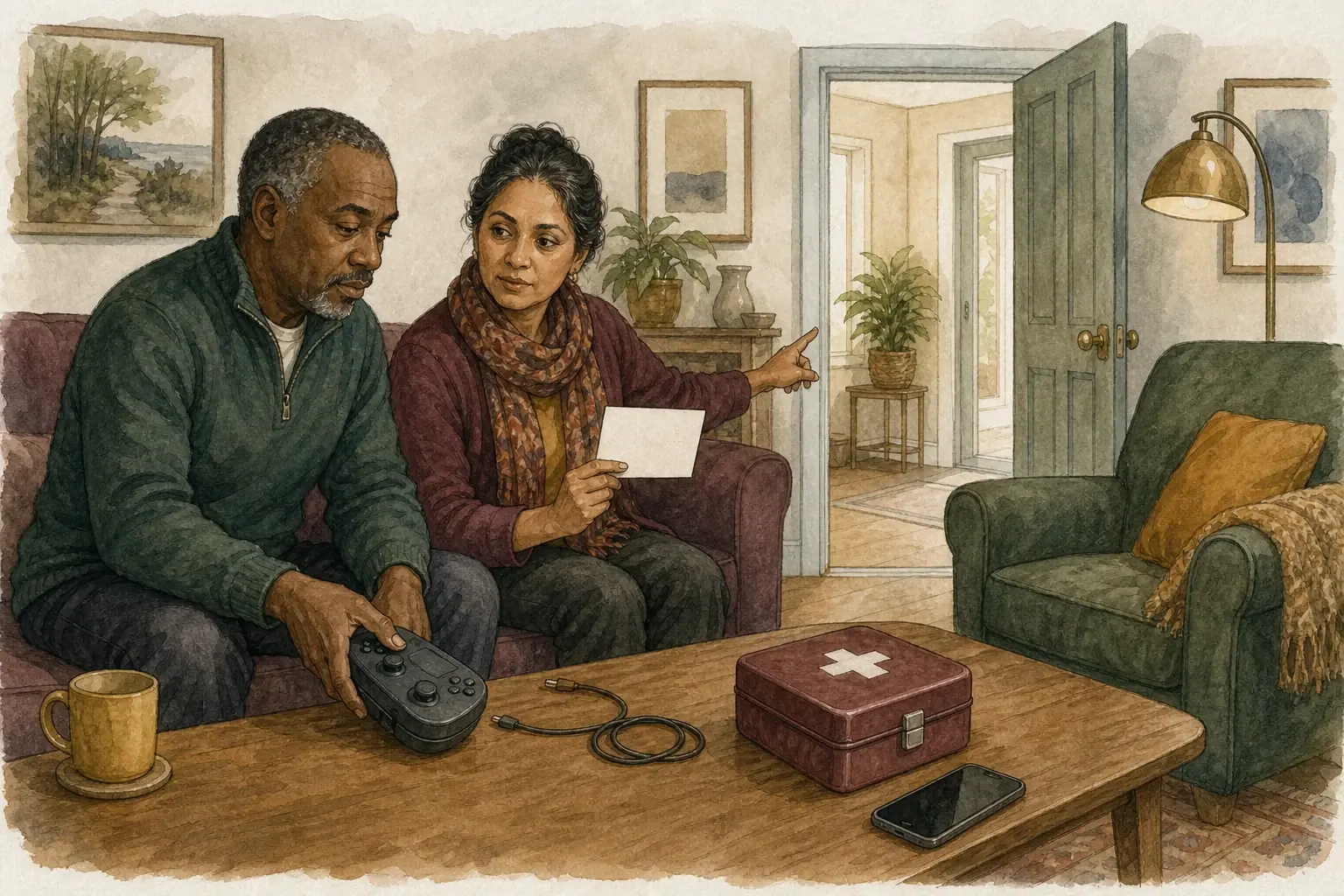
Implanted devices, heart conditions, epilepsy, pregnancy, skin injury and altered sensation may require professional advice. Pain, burns or concerning symptoms are reasons to stop and seek care.
Illustration created using generative AI; not documentary evidence.Clinical and legal distinction
A consensual adult interest in electrical sensation is not a paraphilic disorder by default. WHO guidance distinguishes an atypical interest from disorder through factors such as marked distress, significant impairment, serious risk and non-consent.
Consent does not make every injury lawful, and a power-exchange role does not transfer responsibility for electrical safety. This page gives no legal conclusion about a particular event; serious injury, ignored withdrawal or use in abuse needs appropriate medical, safeguarding or legal support.
Non-graphic examples
What the umbrella may include
- Recognising a switched-off control box and detached pads as symbols of e-stim without implying a setup.
- An adult being interested in the anticipation or sound of a controller rather than strong sensation.
- Treating a pacemaker, unexplained numbness or heart condition as a reason to seek clinical advice.
- Agreeing who can stop the device without assuming a dominant role removes that right.
- Keeping household current and modified appliances entirely outside erotic exploration.
Prepare for an appointment
Questions you could ask a professional
- What information would help you understand my question?
- What are the realistic options and uncertainties?
- How can disability, communication or privacy needs be accommodated?
- When should the situation be reviewed again?
These prompts do not replace assessment and do not imply that every reader needs professional care.
Continue learning
Take the next step from definition to context.
Continue with independent guidance connecting erotic electrostimulation to evidence, consent, safety, uncertainty and practical decisions.
Plan sensation play around the person, with specific limits, a working stop route, symptom awareness and UK support.
Read the guide