Also known as feeder/feedee dynamic · feeder relationship · feeding kink · feeder · feedee · weight-gain fantasy
A consensual adult interest involving feeding, being fed, indulgence, fullness, weight-change fantasy or feeder-and-feedee roles, with wide variation in goals and conduct. A fantasy does not establish a real-world health goal, and each person retains control of food, treatment and bodily choices.
Sources and evidence type
Manual claim and limitation notes are shown where an individual source audit is complete. Other evidence-type labels are a publisher aid awaiting source-by-source confirmation.
Terry & Vasey (2011), feederism overviewResearch study
Source design
Peer-reviewed research or review
What it can support
The specific population, measures and findings reported by the paper.
Important limitation
It cannot automatically establish UK prevalence, causation, diagnosis, consent or an individual outcome. Check recruitment, definitions and study design.
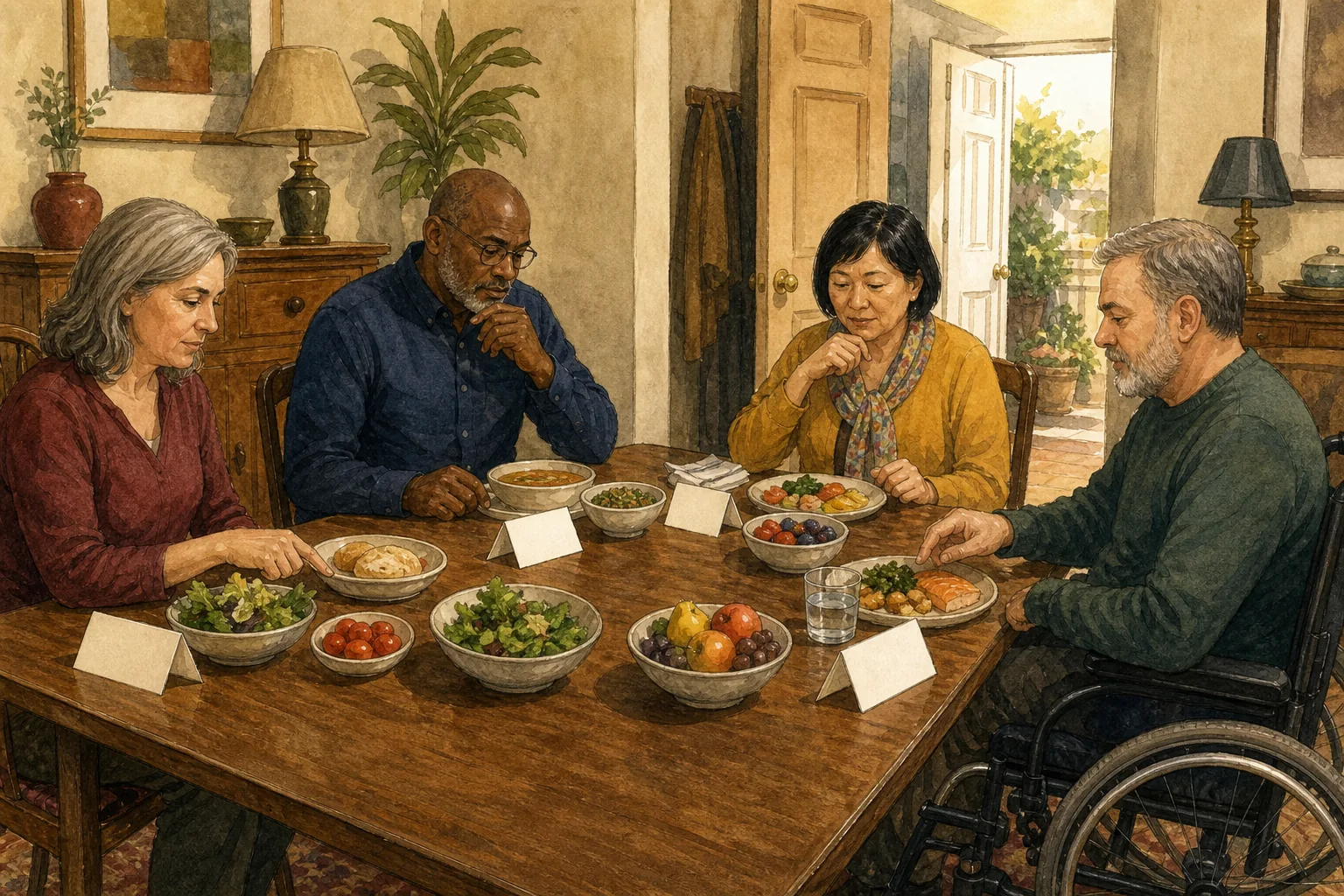
Illustration created using generative AI; not documentary evidence.
In brief
Feeding fantasy, body autonomy and clinical nutrition must remain distinguishable.
Feederism can centre on nurturing, service, appetite, power, body transformation or imagined weight change. Fantasy-only participation, occasional feeding ritual and an ongoing wish to change weight are materially different. Consent to a role does not transfer control of another person's food, healthcare or body, and it cannot remove nutritional, metabolic, mobility or eating-disorder risks. Weight alone cannot diagnose health or an eating disorder, and larger bodies should not be stigmatised or treated as evidence of feederism.
Scope and ongoing consent
Clarify whether the interest is fictional, occasional, relational or connected to real weight change. Agree food, quantity, allergies, timing, language, privacy and the right to stop eating immediately.
A feeder role does not authorise hidden ingredients, withheld food, healthcare sabotage, medication interference, financial control or pressure after refusal.
Feeder and feedee describe roles, while weight-gain fantasy can remain imagined. None of these labels implies dietary control, a health goal or permission to monitor someone's body. Discuss food, body comments, images, spending and treatment decisions separately.
Agree food, quantity, allergies, language and privacy while preserving the right to stop immediately. A role never authorises hidden ingredients or pressure.
Illustration created using generative AI; not documentary evidence.
Status
Source-checked editorial page
Publisher
The UK Kink Guide
Reviewed
Targeted additions checked 15 October 2026
Evidence
5 cited sources · types labelled below
Jurisdiction
UK-focused general education
Read the rest: evidence, law, safety and sources
Feederism
Consensual adult fantasy or dynamic involving feeding, indulgence or weight-change themes.
Food play
Sensory or symbolic use of food that need not involve eating, weight change or feeder roles.
Binge-eating disorder
A clinical condition involving recurrent loss-of-control eating and marked distress, not a synonym for indulgence or body size.
Reproductive or domestic coercion around food
Control, sabotage or pressure affecting diet and healthcare; consent labels do not make abuse acceptable.
Health and clinical autonomy
Real weight change can affect individuals differently and should not be managed through anonymous kink rules. A person controls whether clinicians are involved and may change their goal at any time.
Symptoms such as loss of control, secrecy, marked distress, purging, restriction or compulsive patterns warrant sensitive professional support. Do not diagnose from size or appetite.
Real weight change and healthcare are personal decisions that can change. Size or appetite cannot diagnose health, motive or capacity.
Illustration created using generative AI; not documentary evidence.
Stigma, accessibility and care
Avoid humiliation based on weight unless narrowly negotiated, and never carry it into ordinary life. Weight stigma itself can damage wellbeing and access to care.
Consider seating, mobility, breathlessness, pain, clothing fit and venue access without treating a larger body as failure. Care should support autonomy rather than dependence engineered by a partner.
Evidence and limitations
Feederism research is small and often based on online or self-selected communities. It cannot define a standard motivation, safe rate of change or inevitable health outcome.
Eating-disorder and obesity research addresses different populations and must not be used to pathologise every participant. Behaviour, distress, function, consent and medical context matter individually.
Feederism research cannot define a standard motive, safe rate of change or inevitable outcome. Behaviour, distress, function, consent and context matter individually.
Illustration created using generative AI; not documentary evidence.
Common misunderstandings
A person can find a fantasy meaningful without wanting to change their weight or eating habits. The label does not diagnose an eating disorder, describe someone’s body size or tell a partner what food to provide. Do not treat photographs or community membership as evidence of a health goal.
Safety and consent
Keep ordinary eating, healthcare and money under the individual’s control. An agreement about a fantasy must not become pressure to eat, conceal ingredients, accept unwanted body comments or avoid professional advice. A person can stop or change their mind without having to defend their appetite or appearance.
The main guide discusses consent and support rather than plans for weight change. If eating, body image or a relationship dynamic is causing distress, seek appropriate help for that concern. The aim is individual autonomy and care, not using a label to justify a predetermined outcome.
Non-graphic examples
What the umbrella may include
Keeping a weight-gain theme entirely in fiction.
Sharing a negotiated meal without pressure to finish.
Checking allergens before a feeding ritual.
Supporting a feedee who changes their mind about weight change.
Seeking eating-disorder support without framing body size as proof.
Prepare for an appointment
Questions you could ask a professional
What information would help you understand my question?
What are the realistic options and uncertainties?
How can disability, communication or privacy needs be accommodated?
When should the situation be reviewed again?
These prompts do not replace assessment and do not imply that every reader needs professional care.
Continue learning
Take the next step from definition to context.
Continue with independent guidance connecting feederism to evidence, consent, safety, uncertainty and practical decisions.
For health concerns, pressure or support after a boundary crossing, use the UK help directory. Describe the actual concern; you do not need a particular label to seek help.