Advanced restraint in which much of an adult participant's body is wrapped or enclosed to create stillness, pressure, sensory change or transformation symbolism.
Sources and evidence type
Manual claim and limitation notes are shown where an individual source audit is complete. Other evidence-type labels are a publisher aid awaiting source-by-source confirmation.
SIA: guide to safer restraint and positional asphyxiaLaw or regulator
Source design
Primary legislation, prosecutorial or regulator guidance
What it can support
The legal provision or official regulatory position for the jurisdiction and date stated.
Important limitation
It is not fact-specific legal advice. Commencement, amendments, jurisdiction and case law may affect application.
The specific population, measures and findings reported by the paper.
Important limitation
It cannot automatically establish UK prevalence, causation, diagnosis, consent or an individual outcome. Check recruitment, definitions and study design.
Illustration created using generative AI; not documentary evidence.
In brief
Whole-body enclosure concentrates heat, circulation, communication and rescue risks.
Mummification can restrict movement across multiple joints and make ordinary self-release, temperature regulation and communication difficult. Film, plastic wrap, fabric, tape and specialised bags behave differently, but none makes airway obstruction acceptable. The primary educational questions are whether breathing and circulation remain unrestricted, whether distress can be detected continuously and whether complete release is immediately possible.
Consent and communication
Agree body areas, material, duration, visibility, touch, images and immediate-release signals while everyone is fully able to communicate. Claustrophobia or trauma history need not be disclosed to justify a limit.
Maintain an unmistakable non-verbal signal and continuous attentive supervision. Silence or stillness cannot be interpreted as wellbeing when movement is constrained.
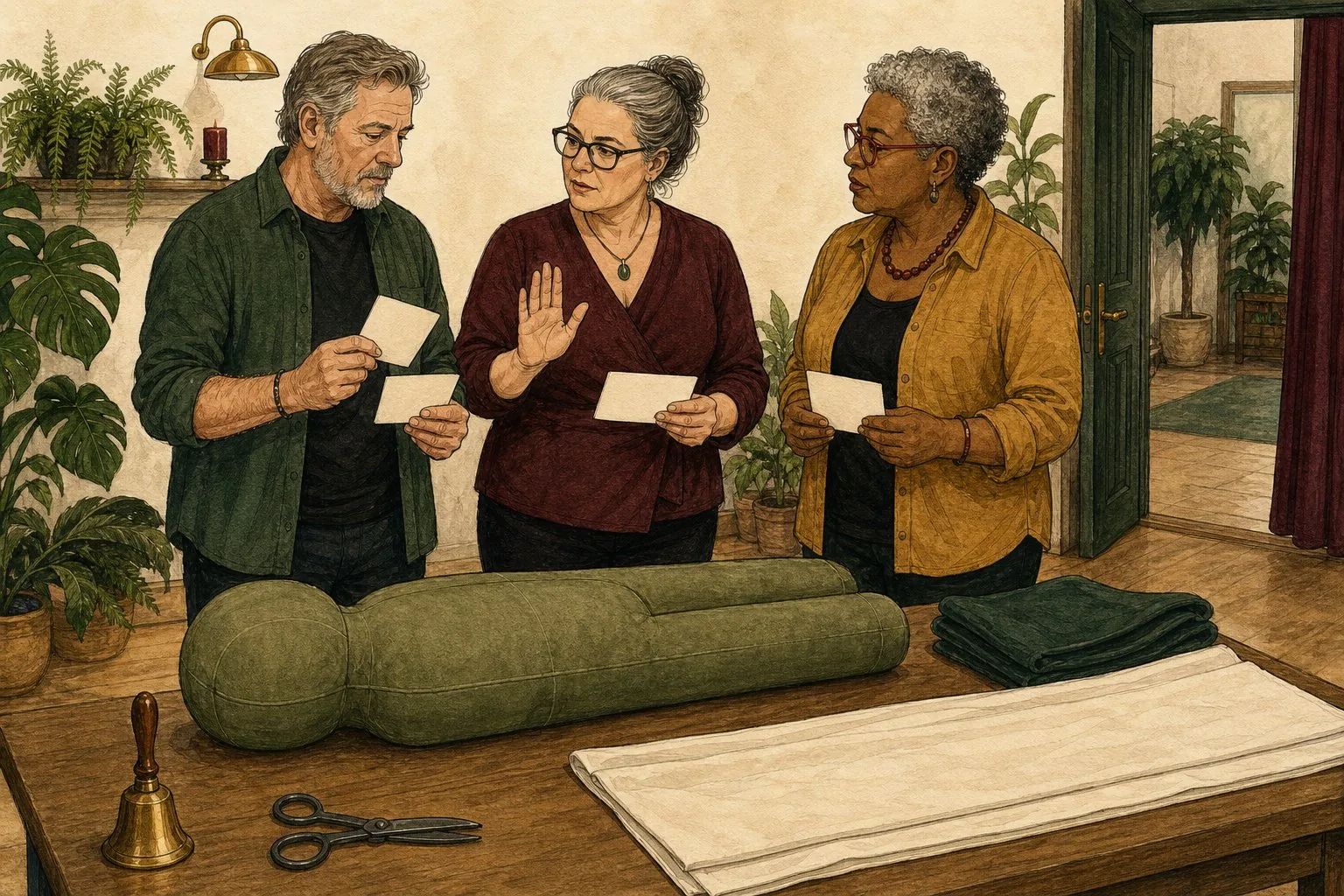
EDITORIAL ILLUSTRATIONAgree communication before restriction
Extensive enclosure can remove ordinary movement and speech. Boundaries, images, supervision and a distinctive release signal must be agreed while everyone can still communicate freely.
Illustration created using generative AI; not documentary evidence.
Status
Detailed editorial draft
Publisher
The UK Kink Guide
Reviewed
Structured draft present; individual review date not recorded
Evidence
3 cited sources · types labelled below
Jurisdiction
UK-focused general education
Read the rest: evidence, law, safety and sources
Mummification bondage
Extensive wrapping or enclosure that substantially restricts movement.
Body wrapping
A broader practice that may use limited, loose or decorative coverage without near-total immobilisation.
Compression garment
Purpose-designed clothing with specified fit; it is not equivalent to improvised restraint.
Vacuum enclosure
Specialised suction equipment adding breathing-access and mechanical-failure hazards.
Breathing and position
Keep the face and airway completely free and avoid pressure on the neck, chest or abdomen. Breathing difficulty, voice change, vomiting, confusion or collapse is an emergency.
Avoid positions that impair chest movement or create positional asphyxia risk. Never leave a wrapped person alone or unable to summon help.
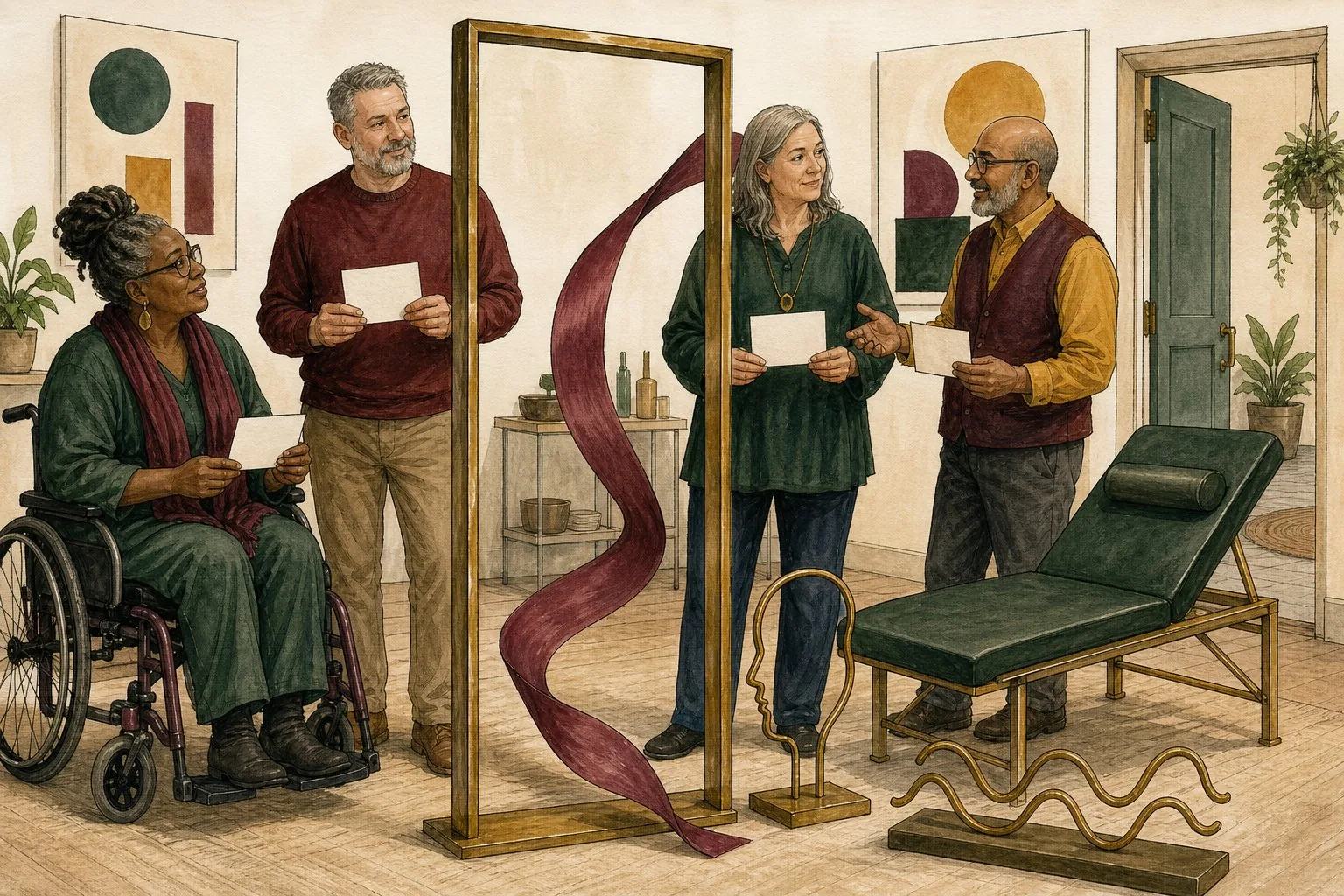
EDITORIAL ILLUSTRATIONAirway and position come first
The face, airway, neck, chest and abdomen must remain unrestricted. Stillness cannot be treated as evidence of wellbeing, and breathing difficulty, confusion or collapse is an emergency.
Illustration created using generative AI; not documentary evidence.
Heat, circulation and skin
Impermeable layers can trap heat and sweat, while a cold environment can also become hazardous after release. Stop for overheating, shivering, pallor, blue colour, swelling, numbness, burning or weakness.
Check exposed extremities and pressure areas frequently. Adhesives, latex, dyes and friction can injure skin or provoke allergy.
Release and evidence limits
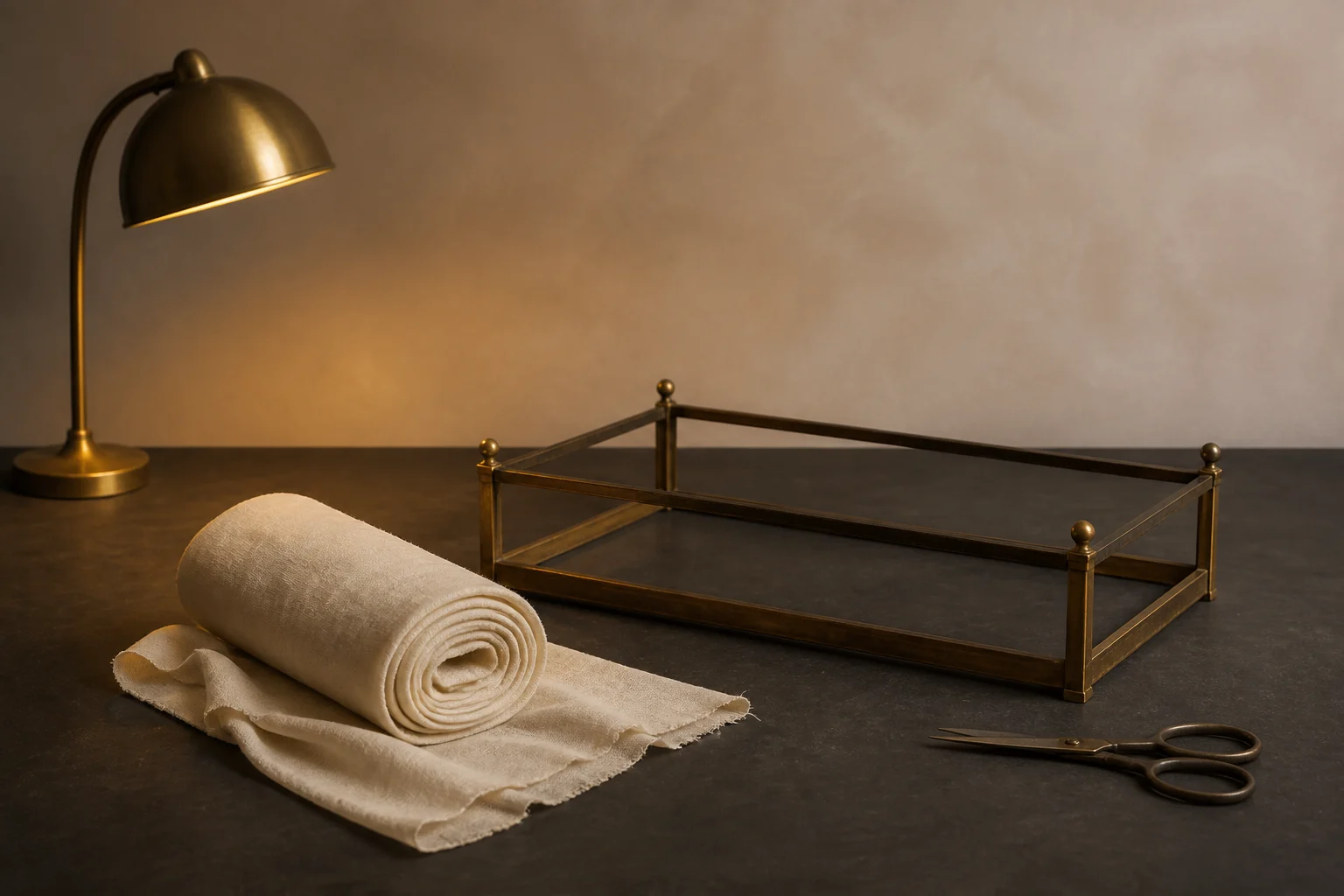
Have suitable cutting tools immediately accessible, protect skin from blades and design release so one failed seam or unconscious participant cannot trap the person.
Direct research on erotic mummification is minimal. General restraint and thermal guidance identifies hazards but does not validate a material, duration or wrapping method.
EDITORIAL ILLUSTRATIONPlan complete release
Heat, circulation, skin and delayed rescue risks can escalate together. Evidence does not validate a material or duration, so immediate release capability and continuous attentive monitoring remain essential.
Illustration created using generative AI; not documentary evidence.
Non-graphic examples
What the umbrella may include
Keeping all wrapping away from the face and neck.
Using a distinct hand-held release signal.
Stopping after new finger numbness.
Keeping safety cutters at the participant rather than across the room.
Choosing partial decorative wrapping instead of full immobilisation.
Prepare for an appointment
Questions you could ask a professional
What information would help you understand my question?
What are the realistic options and uncertainties?
How can disability, communication or privacy needs be accommodated?
When should the situation be reviewed again?
These prompts do not replace assessment and do not imply that every reader needs professional care.
Continue learning
Take the next step from definition to context.
Continue with independent guidance connecting mummification bondage to evidence, consent, safety, uncertainty and practical decisions.