Rope bondage is consensual adult use of rope for restraint, connection, visual composition, pressure or ritual. Some people focus on the textile and shared attention; others value a temporary role or artistic form.
 The UK Kink GuideEvidence-led glossary
 Back to the glossarySensation & activityIn plain English Words in context A non-graphic adult example What not to assume
Rope bondage
Also known as shibari · kinbaku
A form of bondage using rope for restraint, connection, visual composition or ritual. Japanese-derived practices are often called shibari or kinbaku in English-language communities, though histories and preferred terminology are debated.
Start here
New to this term?
Rope bondage is the broad English label. Shibari and kinbaku are Japanese-derived terms used differently across communities and histories; neither word guarantees a particular tradition or level of skill. Suspension is a separate advanced category involving body weight and fall risk.
Adults may value an unoccupied rope arrangement as craft or photography, or agree that rope is a symbolic part of a scene without suspension. A decorative knot hobby can look related while having no erotic meaning.
A visually calm tie is not proof of comfort, circulation or nerve safety, and a role label is not evidence of competence. Consent to rope does not imply consent to immobilisation, suspension or photography. Research identifies nerve and circulation injuries but cannot make a generic pattern safe, so this entry gives no tying instructions.
Sources and evidence type
Manual claim and limitation notes are shown where an individual source audit is complete. Other evidence-type labels are a publisher aid awaiting source-by-source confirmation.
Khodulev et al. (2023), rope-bondage neuropathyResearch study
- Source design
- Peer-reviewed research or review
- What it can support
- The specific population, measures and findings reported by the paper.
- Important limitation
- It cannot automatically establish UK prevalence, causation, diagnosis, consent or an individual outcome. Check recruitment, definitions and study design.
Drouin et al. (2023), BDSM-related injury surveyResearch study
- Source design
- Peer-reviewed research or review
- What it can support
- The specific population, measures and findings reported by the paper.
- Important limitation
- It cannot automatically establish UK prevalence, causation, diagnosis, consent or an individual outcome. Check recruitment, definitions and study design.
Dunkley & Brotto (2020), BDSM consent reviewResearch study
- Source design
- Peer-reviewed research or review
- What it can support
- The specific population, measures and findings reported by the paper.
- Important limitation
- It cannot automatically establish UK prevalence, causation, diagnosis, consent or an individual outcome. Check recruitment, definitions and study design.
Domestic Abuse Act 2021, section 71Law or regulator
- Source design
- Primary legislation, prosecutorial or regulator guidance
- What it can support
- The legal provision or official regulatory position for the jurisdiction and date stated.
- Important limitation
- It is not fact-specific legal advice. Commencement, amendments, jurisdiction and case law may affect application.
WHO ICD-11 clinical requirements (2024)Clinical guideline
- Source design
- Current public-health or clinical guidance
- What it can support
- Service pathways, health definitions and recommended public-health or clinical actions within its stated scope.
- Important limitation
- General guidance cannot assess an individual’s symptoms, exposure, medicine, contraindications or urgency.
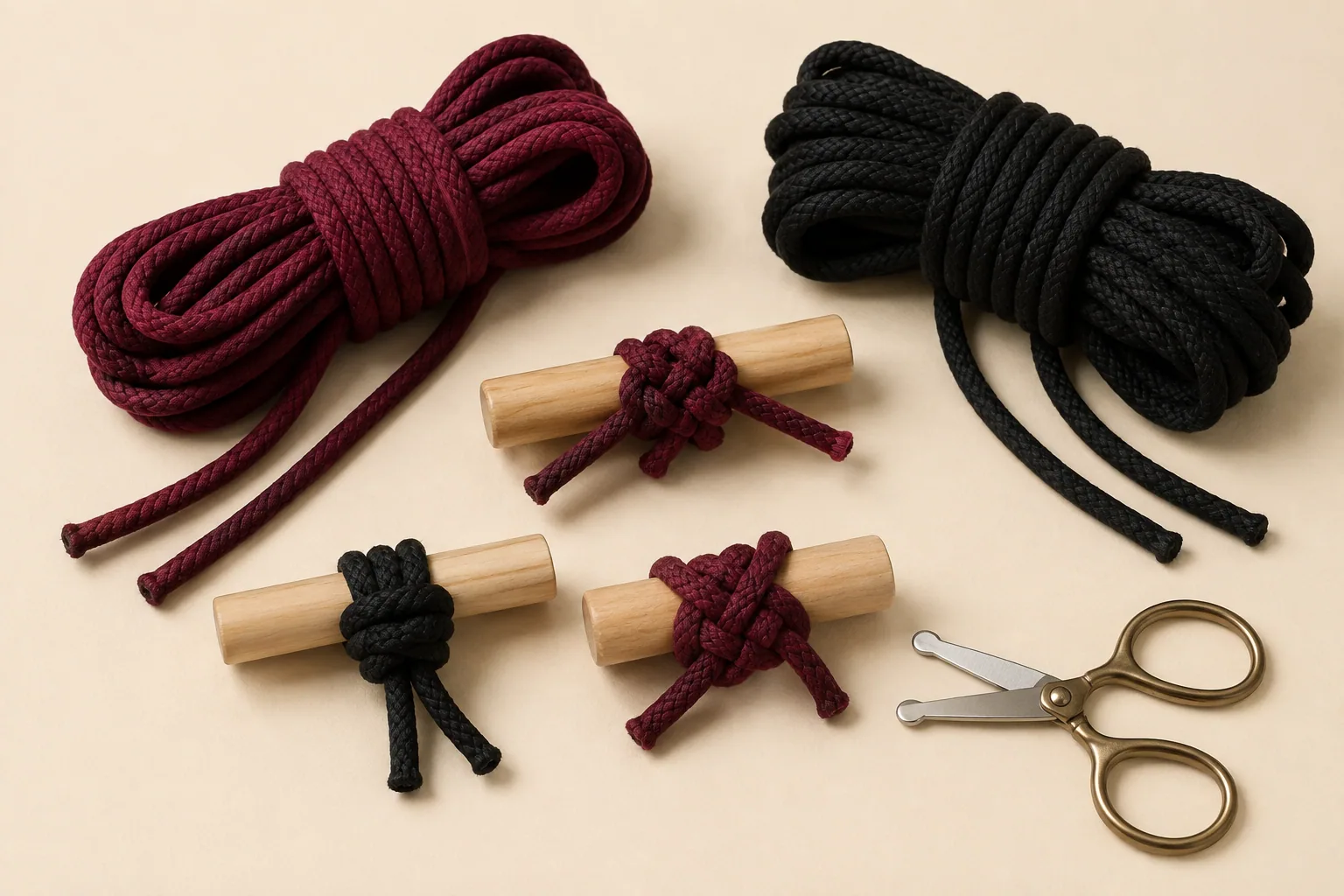
Sensation & activity
Illustration created using generative AI; not documentary evidence.
In brief
A textile practice with cultural, sensory and physical weight.
Rope bondage uses rope as an adult medium for restraint, connection, visual composition, pressure or ritual. Shibari and kinbaku are Japanese terms used unevenly in English-language communities; neither word guarantees a single lineage, aesthetic or safety standard. Rope can injure nerves and circulation even when a tie looks calm, and suspension adds fall and load-bearing hazards, so this field note stays descriptive rather than instructional.
Research and terminology
Rope-specific research is limited. A 2023 clinical paper described acute radial-nerve compression as a recurring injury pattern in Japanese rope bondage, while broader BDSM injury surveys capture self-reported harms across many activities. Neither source provides a prevalence rate for all rope participants or a safe tying formula.
Community language has travelled across countries, teachers and commercial scenes. A glossary can clarify current usage but cannot settle the history of shibari or kinbaku, certify a school or assume that everyone using the same label follows the same practice.
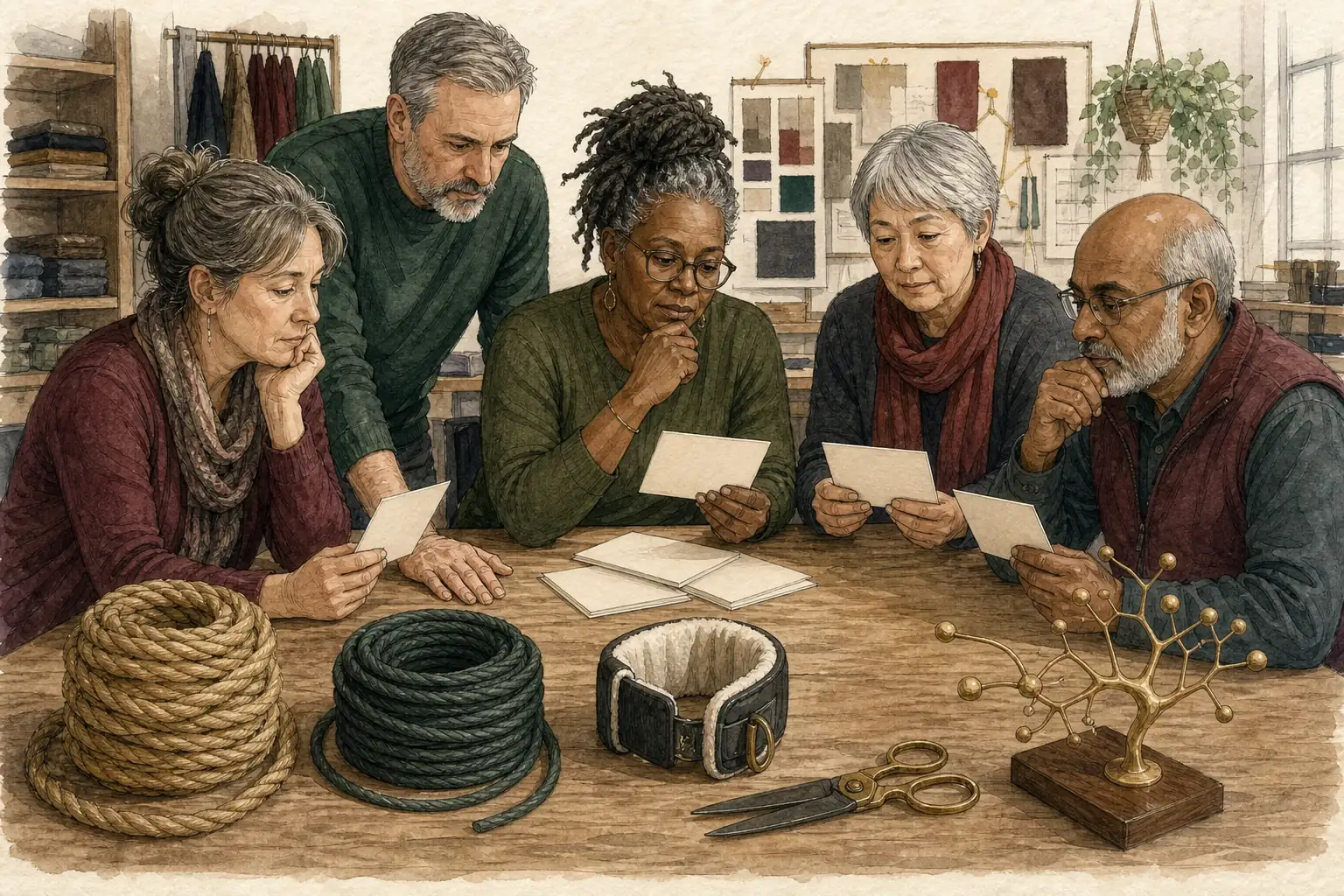
Rope evidence includes clinical injury reports and broader self-reported surveys. It can identify plausible harms but not a universally safe tie, school or practice.
Illustration created using generative AI; not documentary evidence.- Status
- Detailed editorial draft
- Publisher
- The UK Kink Guide
- Reviewed
- Structured draft present; individual review date not recorded
- Evidence
- 5 cited sources · types labelled below
- Jurisdiction
- UK-focused general education
Read the rest: evidence, law, safety and sources
Broad English term for consensual adult restraint or connection using rope.
A Japanese word commonly used internationally for decorative or structured rope practice; usage and translation vary.
Another Japanese-derived term, often used to emphasise binding, eroticism or a particular tradition; meanings are contested.
A distinct advanced category in which rope supports some or all body weight and introduces major fall and compression risks.
Rope, hardware and visual meaning
Associated objects include coiled natural- or synthetic-fibre rope, storage bags, safety shears, rated connectors and practice forms. Fibre, diameter, stretch, construction, wear and contamination affect handling and care; appearance alone does not show load rating or suitability.
For some adults, lines, knots, compression, stillness, craftsmanship or the act of being held matter more than immobilisation. Decorative rope, floor-based restraint and suspension should not be treated as equivalent simply because they share material.
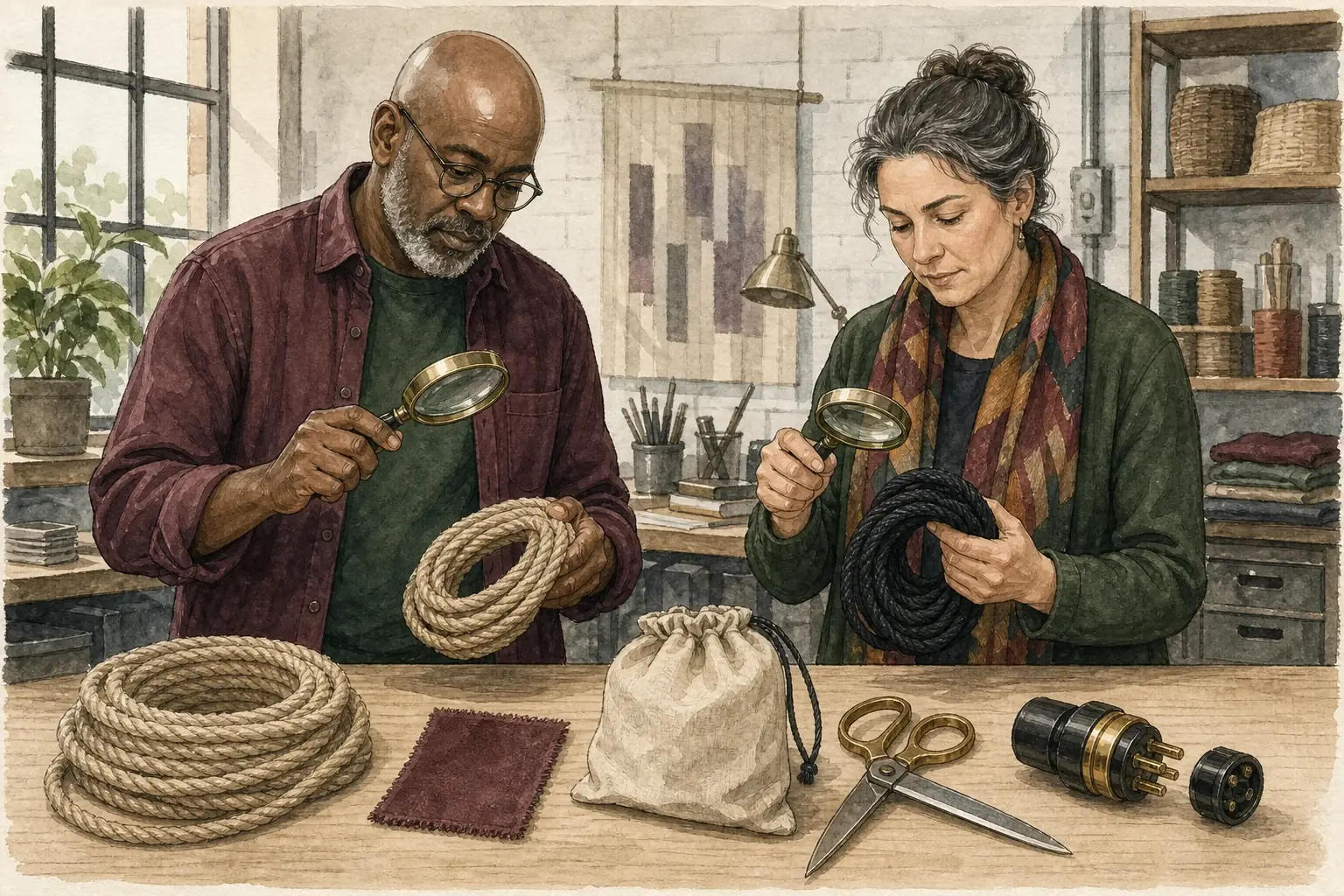
Fibre, construction, stretch, wear, contamination and hardware rating affect handling and care. Appearance alone cannot establish suitability or load capacity.
Illustration created using generative AI; not documentary evidence.Communication, nerves and circulation
Consent needs to cover rope, degree of restriction, body areas, movement, photography and the possibility that communication may change. A rope bottom remains able to withdraw consent, and silence, stillness or endurance is not continuing permission.
Numbness, weakness, loss of movement, unusual colour, severe pain, breathing difficulty or a fall are warning signs, not achievements. Nerve injury may not be immediately obvious and aftercare cannot repair it; urgent or persistent symptoms need appropriate medical assessment.
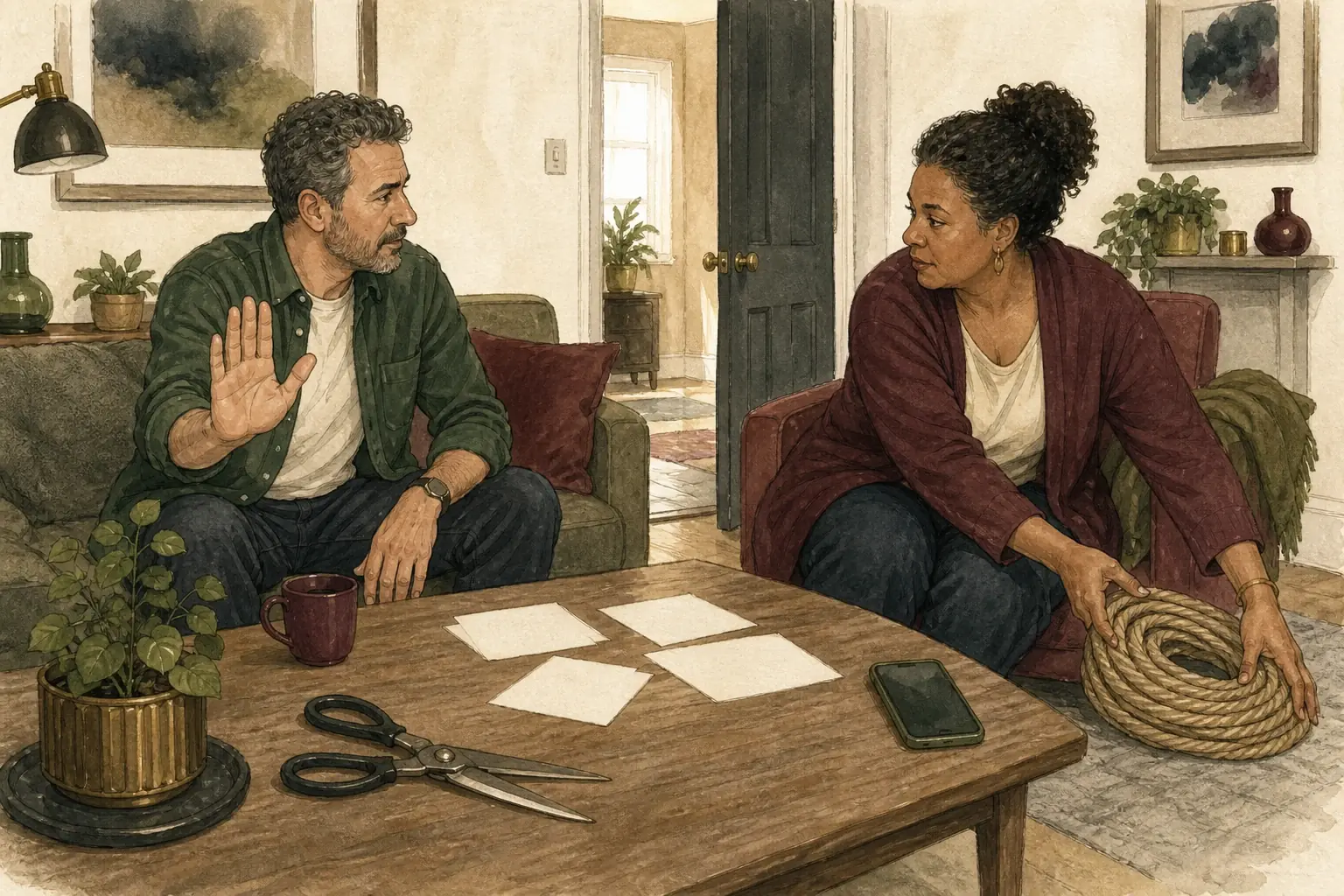
A rope bottom remains able to withdraw consent. Numbness, weakness, colour change, breathing difficulty or a fall are warning signs, not achievements.
Illustration created using generative AI; not documentary evidence.Risk and UK legal context
Suspension, neck loading and ties that restrict breathing sit outside this non-procedural page. Qualified in-person education can reduce uncertainty but does not eliminate human error, equipment failure or individual vulnerability.
Consent is specific and withdrawable, and it does not settle every legal question where injury occurs. In England and Wales, section 71 of the Domestic Abuse Act 2021 restricts consent as a defence to serious harm for sexual gratification; other UK jurisdictions have their own law.
Non-graphic examples
What the umbrella may include
- Admiring an unoccupied rope composition as textile craft and visual geometry.
- Using rope language for a negotiated feeling of connection without assuming dominance or submission.
- Discussing photography separately from permission to tie.
- Keeping suspension outside an entry-level scene and seeking specialist in-person education.
- Treating new weakness or numbness as a medical concern rather than routine soreness.
Prepare for an appointment
Questions you could ask a professional
- What information would help you understand my question?
- What are the realistic options and uncertainties?
- How can disability, communication or privacy needs be accommodated?
- When should the situation be reviewed again?
These prompts do not replace assessment and do not imply that every reader needs professional care.
Continue learning
Take the next step from definition to context.
Continue with independent guidance connecting rope bondage to evidence, consent, safety, uncertainty and practical decisions.
Plan restraint release before use: check manufacturer instructions, accessible exits and backup shears, with warning signs and UK help routes.
Read the guideRelated in-depth reading
Read the full guide.
Explore a connected question with context and UK support routes.
Shibari classes in the UK: check beginner suitability, consent policies, safety teaching, access and partner requirements before booking.
Read the full guide Community & cultureShibari and kinbaku: meaning, history and safetyShibari and kinbaku meaning, Japanese history, respectful learning, teacher checks, consent and rope risks without tying instructions.
Read the full guide Products, materials and safetyRope bondage for beginners: nerves and circulationRecognise rope restraint warning signs, plan immediate release, and know when numbness, weakness or other symptoms need medical help.
Read the full guideOptional product education
Check materials, fit and care independently.
Some product guides include a separate, disclosed optional retailer box. A term alone does not make a product suitable or safe for a person.
Read the criteria before deciding whether to shop.
Open the guide Independent product guideChoosing bondage ropeRead the criteria before deciding whether to shop.
Open the guide