An interest in affirmation, approval or being told one has performed well, often within a negotiated role or intimacy dynamic. The appeal may be emotional, erotic, reassuring or all three. The wording, speaker, setting and freedom to decline remain individual choices rather than assumptions attached to the label.
Sources and evidence type
Manual claim and limitation notes are shown where an individual source audit is complete. Other evidence-type labels are a publisher aid awaiting source-by-source confirmation.
Dunkley & Brotto (2020), BDSM consent reviewResearch study
Source design
Peer-reviewed research or review
What it can support
The specific population, measures and findings reported by the paper.
Important limitation
It cannot automatically establish UK prevalence, causation, diagnosis, consent or an individual outcome. Check recruitment, definitions and study design.
The specific population, measures and findings reported by the paper.
Important limitation
It cannot automatically establish UK prevalence, causation, diagnosis, consent or an individual outcome. Check recruitment, definitions and study design.
The specific population, measures and findings reported by the paper.
Important limitation
It cannot automatically establish UK prevalence, causation, diagnosis, consent or an individual outcome. Check recruitment, definitions and study design.
Illustration created using generative AI; not documentary evidence.
In brief
Affirmation works through meaning, not a universal script.
Praise kink is an adult interest in approval, affirmation or being told that one's actions, role or presence are valued. It may be playful, emotionally reassuring, erotic or part of dominance and submission. Praise is personal: the same title or compliment can feel warm, patronising, gendered or uncomfortable depending on the speaker, relationship and context.
Language, context and evidence
Direct research isolating praise kink is scarce. Broader BDSM studies describe negotiated roles, communication and reinforcement-like rituals, while relationship research studies responsiveness and affirmation in different contexts. Neither can establish a prevalence, cause or universal psychological benefit for erotic praise.
A compliment may focus on effort, service, appearance, courage, character or belonging. Adults differ in whether they prefer explicit words, quiet acknowledgement or no praise at all. The label cannot reveal someone's history, attachment style, self-esteem or preferred title.
EDITORIAL ILLUSTRATIONThere is no universal praise profile
Direct praise-kink research is scarce. Wider studies of communication and affirmation cannot establish prevalence, cause or a guaranteed effect on self-esteem or attachment.
Illustration created using generative AI; not documentary evidence.
Status
Source-checked editorial page
Publisher
The UK Kink Guide
Reviewed
Targeted additions checked 15 October 2026
Evidence
6 cited sources · types labelled below
Jurisdiction
UK-focused general education
Read the rest: evidence, law, safety and sources
General affirmation
Warm acknowledgement or reassurance with no necessary erotic or power-exchange meaning.
Performance praise
Approval linked to an agreed task, role or scene; it can function as attention or symbolic reward.
Identity-affirming language
Chosen names, titles or descriptions that feel validating; wording must come from the recipient's preferences.
Manipulative approval
Withholding basic respect or using praise to pressure compliance is not made healthy by calling it kink.
Words, tone and symbolic objects
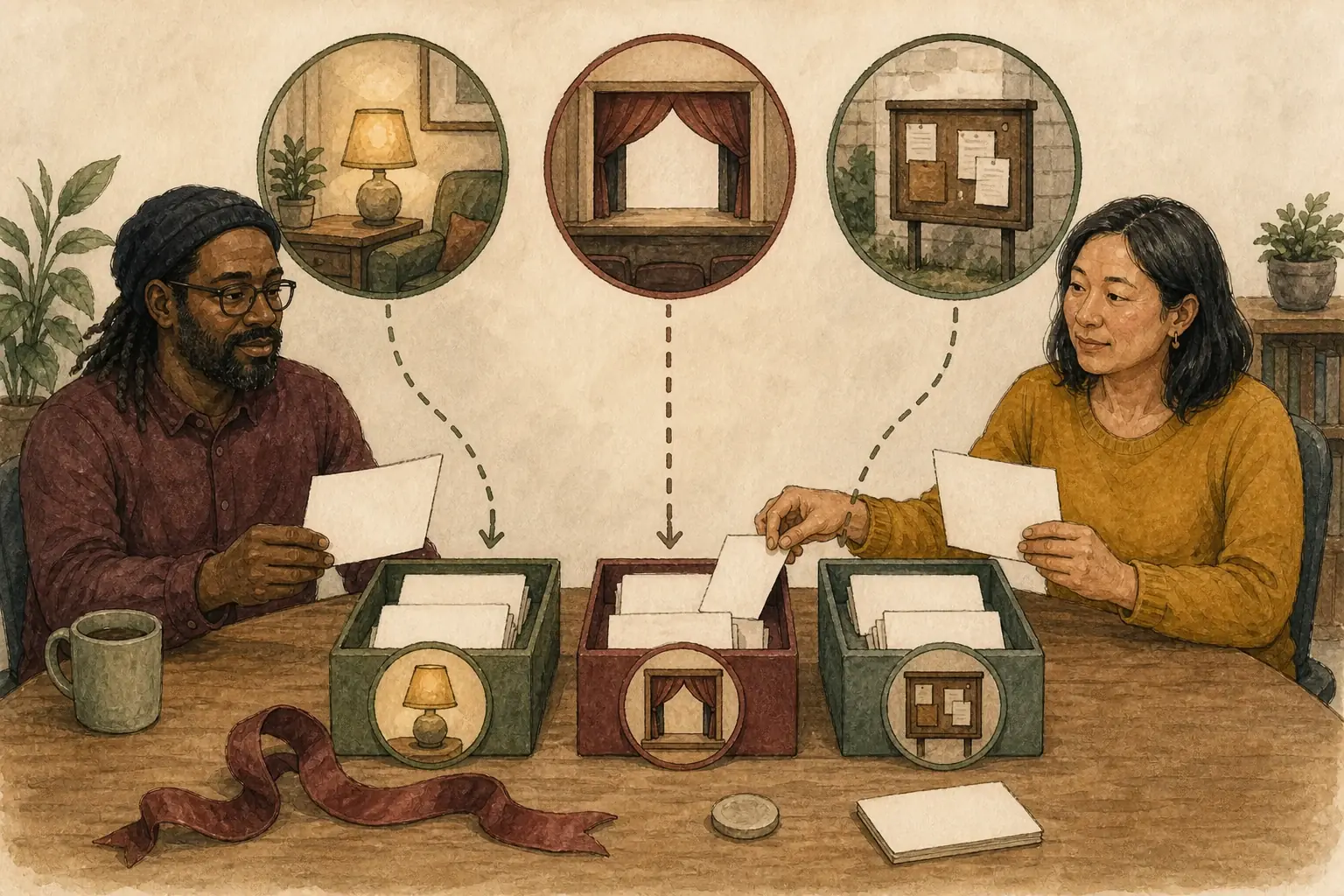
A handwritten note, blank award ribbon, token, scorecard, chosen title card or small bell can make approval tangible. Tone, timing, repetition and who speaks may matter more than the object. A symbol should remain reversible and should not be displayed publicly without agreement.
Identity-linked language requires particular care. A term that affirms gender, role or belonging for one person may feel infantilising or demeaning to another. Praise does not need to exaggerate, compare partners or turn private information into a public performance.
EDITORIAL ILLUSTRATIONContext changes the meaning
Words, tone, repetition, identity and audience can turn the same phrase from affirming to patronising or exposing. Private role language should not travel into public life without agreement.
Illustration created using generative AI; not documentary evidence.
Consent and emotional boundaries
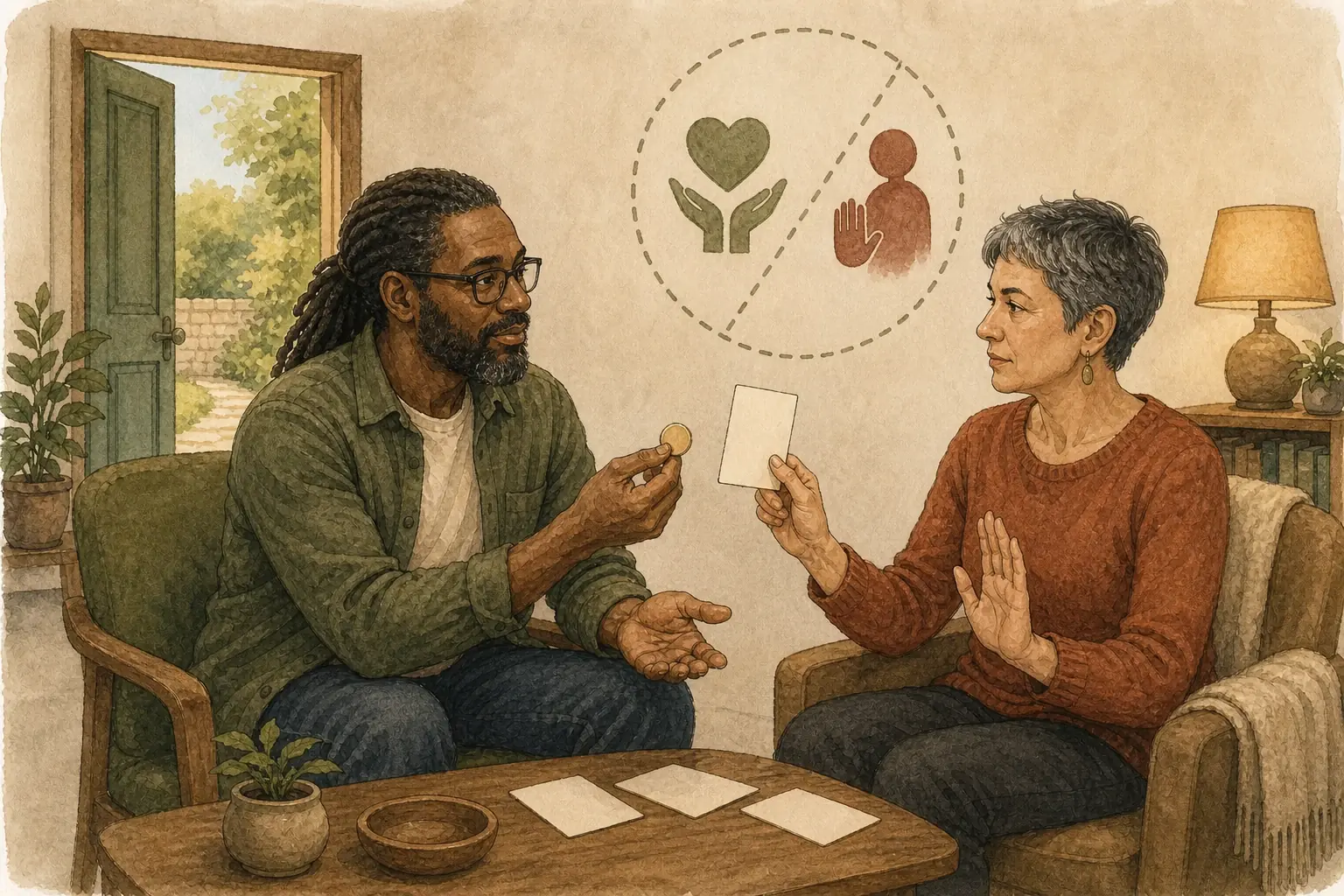
Agreement can cover titles, topics, audience, messages and whether praise continues outside a scene. Consent to a role is not consent to be evaluated at work, in public or during conflict. A person may also want ordinary affection to remain available rather than becoming conditional on performance.
Approval can be powerful, but it should not be used to secure unwanted acts, discourage withdrawal or make someone's self-worth dependent on compliance. Partners remain responsible for accepting a no without withdrawing basic respect or threatening the relationship.
EDITORIAL ILLUSTRATIONRespect cannot depend on performance
Praise may be welcomed, revised or declined. It must not buy consent, discourage withdrawal or make ordinary affection and dignity conditional on compliance.
Illustration created using generative AI; not documentary evidence.
Clinical distinction and overlap
Praise kink is not a paraphilic disorder merely because affirmation has erotic meaning. WHO guidance focuses clinical concern on marked distress, impairment, serious risk and non-consent. Wanting compliments, reassurance or a chosen title is not diagnostic evidence.
Praise can overlap with Service submission, Discipline, Reward and punishment or Consensual degradation, but it does not imply those interests. If approval-seeking causes persistent distress or interferes with daily life, support should address the person's experience and goals rather than treating a popular label as a diagnosis.
Common misunderstandings
Enjoying praise does not prove low self-esteem or a particular personal history. A person may like quiet acknowledgement but dislike public compliments, performance scores or identity-based titles. Ask about the words and context instead of copying language from someone else’s relationship.
Safety and consent
Separate ordinary kindness from an agreed praise dynamic. Approval should not be withheld to obtain an unwanted act or make refusal feel costly. The full guide offers optional adult wording and ways to discuss limits; none of its examples should be assigned to a partner without asking.
Non-graphic examples
What the umbrella may include
An adult asking a partner to acknowledge effort after an agreed role-play task.
Using a chosen title that feels affirming only while a scene is active.
Leaving a private written note that can be kept or discarded without obligation.
Checking whether appearance-based praise is welcome instead of assuming it is.
Responding respectfully when a person dislikes a familiar compliment or wants neutral language.
Prepare for an appointment
Questions you could ask a professional
What information would help you understand my question?
What are the realistic options and uncertainties?
How can disability, communication or privacy needs be accommodated?
When should the situation be reviewed again?
These prompts do not replace assessment and do not imply that every reader needs professional care.
Continue learning
Take the next step from definition to context.
Continue with independent guidance connecting praise kink to evidence, consent, safety, uncertainty and practical decisions.
For health concerns, pressure or support after a boundary crossing, use the UK help directory. Describe the actual concern; you do not need a particular label to seek help.