A broad label for erotic or romantic interest shaped by technology, such as robots, artificial agents, virtual bodies or technologically mediated intimacy. Meanings change with the technology and are not captured by a single clinical category.
Sources and evidence type
Manual claim and limitation notes are shown where an individual source audit is complete. Other evidence-type labels are a publisher aid awaiting source-by-source confirmation.
Döring et al. (2024), generative AI and sexuality reviewCommunity context
Source design
Contextual or community source
What it can support
Terminology, reported practice or community context within the source’s own setting.
Important limitation
Community usage is not universal and does not establish safety, prevalence, clinical benefit or legal permission.
The specific population, measures and findings reported by the paper.
Important limitation
It cannot automatically establish UK prevalence, causation, diagnosis, consent or an individual outcome. Check recruitment, definitions and study design.
The specific population, measures and findings reported by the paper.
Important limitation
It cannot automatically establish UK prevalence, causation, diagnosis, consent or an individual outcome. Check recruitment, definitions and study design.
Illustration created using generative AI; not documentary evidence.
In brief
The technology changes; consent and data boundaries remain human questions.
Technosexual interest is a broad, evolving label for adult erotic or romantic meaning shaped by technology. It can include fictional robots, virtual bodies, avatars, artificial agents, interactive devices or the mediated presence of another adult. These are not one practice or diagnosis: attachment to an AI interface, attraction to a robot image and intimacy through a networked device raise different questions about agency, privacy, design and evidence.
An emerging and unstable evidence base
Döring and colleagues' review maps potential sexual-health uses and risks of generative AI, while Bertoni and colleagues review research on intimacy with human-like and personified technologies. Both emphasise that technologies, definitions and evidence are developing quickly; neither establishes a single effect on wellbeing.
Eichenberg and colleagues surveyed therapists and physicians about sex-robot use, documenting professional attitudes rather than outcomes for users. Much of the literature measures hypothetical acceptance, small user groups or rapidly obsolete products. Claims that AI companions cure loneliness, cause isolation or replace relationships therefore exceed the current evidence.
Much technosexuality research studies hypothetical attitudes, small groups or products that quickly change. It cannot establish one cause, prevalence figure or universal effect on wellbeing.
Illustration created using generative AI; not documentary evidence.
Status
Detailed editorial draft
Publisher
The UK Kink Guide
Reviewed
Structured draft present; individual review date not recorded
Evidence
5 cited sources · types labelled below
Jurisdiction
UK-focused general education
Read the rest: evidence, law, safety and sources
Technological mediation
Technology connects consenting adults through messages, audio, video, avatars or devices.
Artificial agent
A chatbot or embodied system presents responsive behaviour; simulated reciprocity is not the same as human capacity or consent.
Robot or synthetic-body fantasy
An imagined or designed non-human body may be the focus without any interactive AI.
Device interest
Attention to form, materials, sound or interface can overlap with objectophilia but need not involve romantic attachment.
Interfaces, materials and sensory features
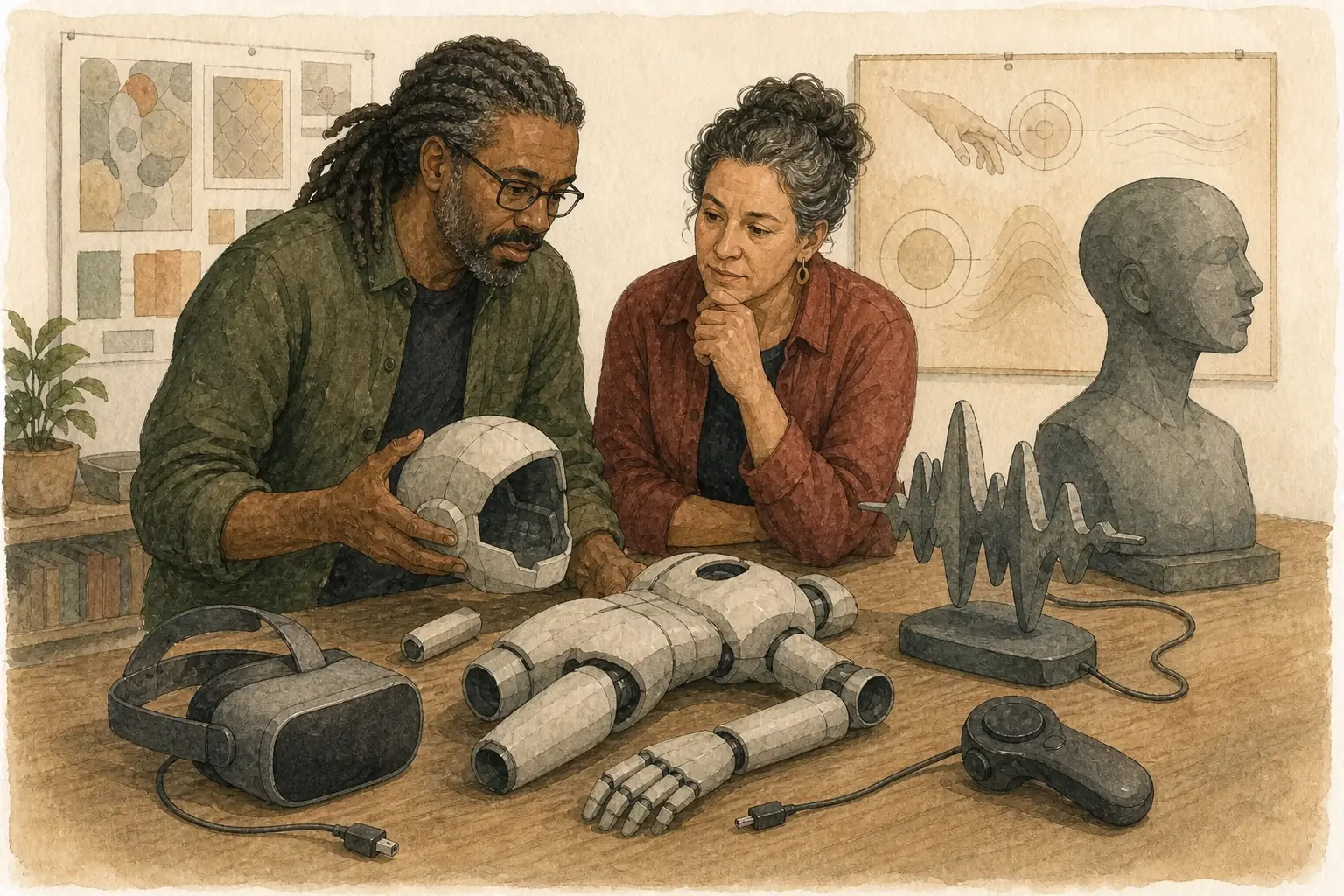
Relevant objects can include an unoccupied robot shell, abstract circuit pattern, headset, haptic interface, avatar silhouette, voice visualiser or indicator light. Smooth surfaces, synthetic voices, mechanical movement, customisation, responsiveness and the contrast between human and machine may matter in different combinations.
Networked objects differ from inert props because software providers may process conversations, sensor readings, purchases and intimate preferences. A convincing persona does not reveal who operates the service, how long data is retained or whether outputs are accurate.
EDITORIAL ILLUSTRATIONSeparate interface from imagined agency
Material form, voice, movement, customisation and simulated responsiveness may matter differently. A convincing persona does not reveal who operates a service or where intimate data travels.
Illustration created using generative AI; not documentary evidence.
Consent, privacy and representation
When another person is connected, their consent governs recording, remote control, screenshots, avatar use and data sharing. A platform feature cannot supply permission on their behalf. Using a real person's face, voice or likeness in synthetic adult material raises separate consent, privacy and legal concerns.
The ICO treats data about sex life and sexual orientation as special-category data. Before treating an intimate system as confidential, adults should recognise that terms, moderation, staff access, breaches and model training may affect where data travels. This is a privacy principle, not a claim that any named product is safe or unsafe.
EDITORIAL ILLUSTRATIONReal people's data still needs permission
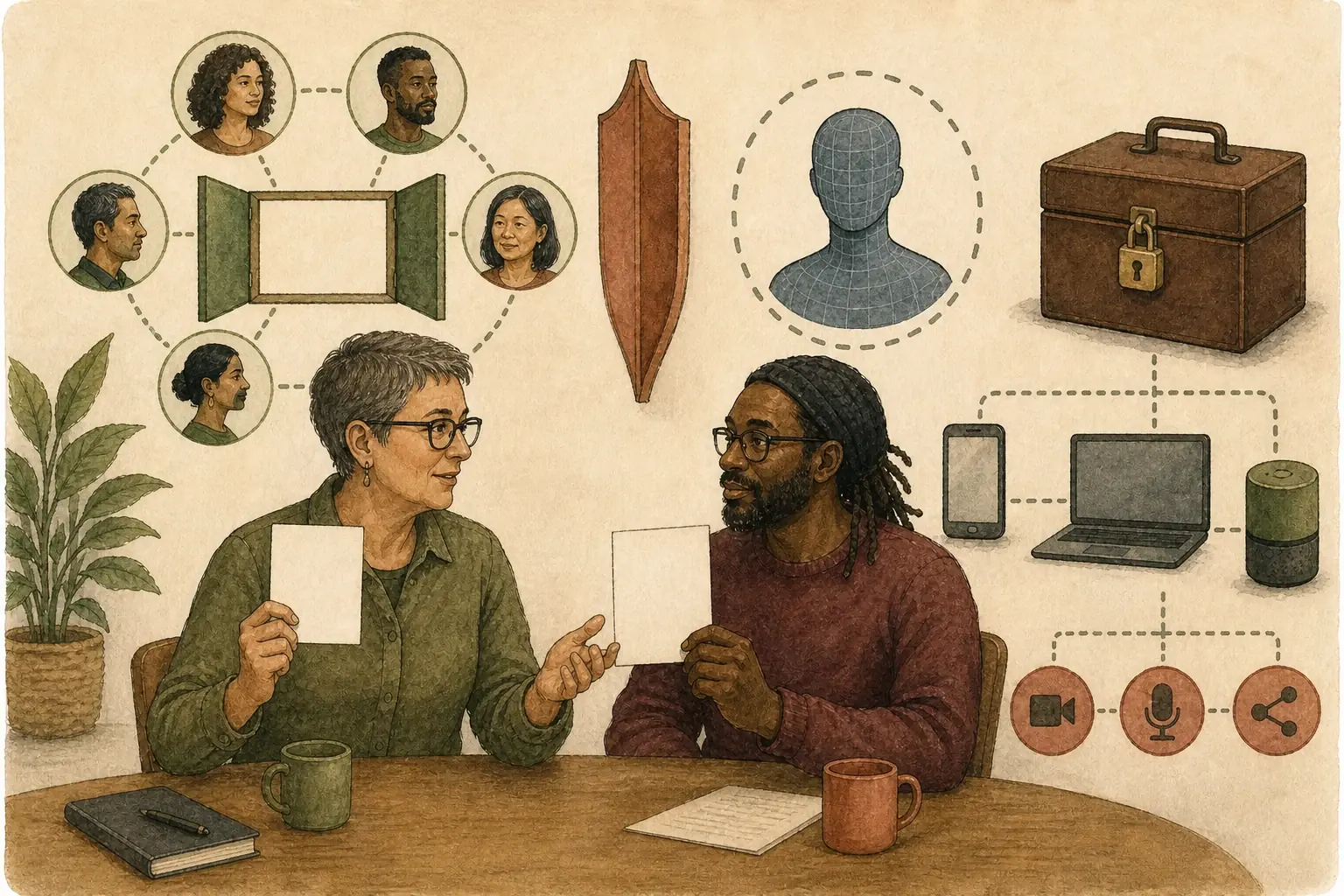
Likeness, voice, recording, remote control and sharing require specific consent from connected adults. Terms, staff access, model training and breaches may affect confidentiality.
Illustration created using generative AI; not documentary evidence.
Clinical and ethical distinction
A consensual adult interest in fictional or technological intimacy is not a paraphilic disorder by default. WHO criteria focus on marked distress, impairment, serious risk and non-consent. Frequency of use, novelty or emotional attachment alone cannot diagnose an individual.
Artificial agents do not have human legal capacity, but systems can still affect real people through data, labour, impersonation and design. Distress, compulsive spending, loss of sleep or interference with relationships may warrant support based on their actual impact, not moral panic about technology. See Objectophilia and Cyber and avatar role-play for overlaps.
Non-graphic examples
What the umbrella may include
An adult enjoying fiction about a clearly synthetic robot body.
Two adults using avatars for remote role-play after agreeing recording and privacy boundaries.
Finding a mechanical voice or abstract interface aesthetically compelling without treating it as a person.
Keeping a fictional AI character distinct from claims that the system has human feelings or confidentiality.
Declining to upload another person's face or voice without their specific permission.
Prepare for an appointment
Questions you could ask a professional
What information would help you understand my question?
What are the realistic options and uncertainties?
How can disability, communication or privacy needs be accommodated?
When should the situation be reviewed again?
These prompts do not replace assessment and do not imply that every reader needs professional care.
Continue learning
Take the next step from definition to context.
Continue with independent guidance connecting technosexual interest to evidence, consent, safety, uncertainty and practical decisions.