Wax play is an adult interest in melted wax as a visual, ritual or sensory element of temperature play. Its appeal may involve colour, anticipation, the change from liquid to solid or the symbolism of a candlelit scene.
 The UK Kink GuideEvidence-led glossary
 Back to the glossarySensation & activityIn plain English Words in context A non-graphic adult example What not to assume
Wax play
What it means
A form of temperature and sensation play involving melted wax. Products and formulations transfer heat differently, and no candle or label makes skin contact inherently safe. An adult may value the theme without wanting bodily contact; consent to candlelight does not extend to melted wax.
Start here
New to this term?
A household candle, a product sold for wax play and wax used for craft are different product contexts, but none of those labels guarantees suitability for skin contact. Wax play is one form of temperature play and also introduces hot-liquid and fire concerns.
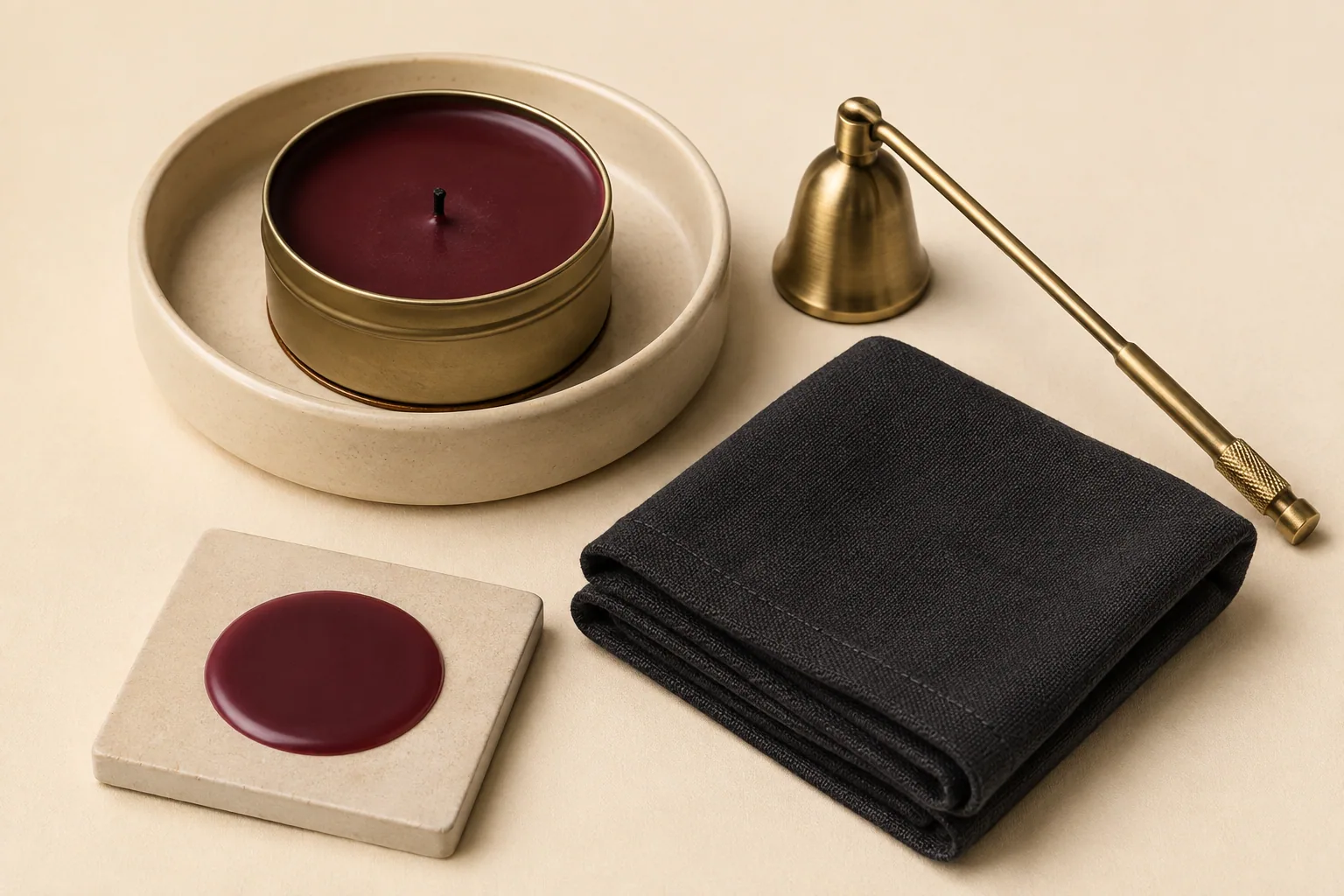
An adult may value an unlit candle as a symbolic prop or use cooled decorative wax in a display without bodily contact. That can evoke the theme without assuming that melted wax must touch anyone.
A low-temperature or specialist marketing claim does not make a formulation safe for every person. Additives, fragrance, dyes, allergies, burns and fire all matter, and consent to a candlelit atmosphere is not consent to contact. Evidence supports the hazards of heat and flame more strongly than any claim about a universally safe wax-play method.
Sources and evidence type
Manual claim and limitation notes are shown where an individual source audit is complete. Other evidence-type labels are a publisher aid awaiting source-by-source confirmation.
Drouin et al. (2023), BDSM-related injury surveyResearch study
- Source design
- Peer-reviewed research or review
- What it can support
- The specific population, measures and findings reported by the paper.
- Important limitation
- It cannot automatically establish UK prevalence, causation, diagnosis, consent or an individual outcome. Check recruitment, definitions and study design.
Dunkley & Brotto (2020), BDSM consent reviewResearch study
- Source design
- Peer-reviewed research or review
- What it can support
- The specific population, measures and findings reported by the paper.
- Important limitation
- It cannot automatically establish UK prevalence, causation, diagnosis, consent or an individual outcome. Check recruitment, definitions and study design.
NHS, burns and scaldsClinical guideline
- Source design
- Current public-health or clinical guidance
- What it can support
- Service pathways, health definitions and recommended public-health or clinical actions within its stated scope.
- Important limitation
- General guidance cannot assess an individual’s symptoms, exposure, medicine, contraindications or urgency.
London Fire Brigade, candle fire safetyLaw or regulator
- Source design
- Primary legislation, prosecutorial or regulator guidance
- What it can support
- The legal provision or official regulatory position for the jurisdiction and date stated.
- Important limitation
- It is not fact-specific legal advice. Commencement, amendments, jurisdiction and case law may affect application.
Domestic Abuse Act 2021, section 71Law or regulator
- Source design
- Primary legislation, prosecutorial or regulator guidance
- What it can support
- The legal provision or official regulatory position for the jurisdiction and date stated.
- Important limitation
- It is not fact-specific legal advice. Commencement, amendments, jurisdiction and case law may affect application.
WHO ICD-11 clinical requirements (2024)Clinical guideline
- Source design
- Current public-health or clinical guidance
- What it can support
- Service pathways, health definitions and recommended public-health or clinical actions within its stated scope.
- Important limitation
- General guidance cannot assess an individual’s symptoms, exposure, medicine, contraindications or urgency.
NHS Every Mind Matters: healthy relationships and boundariesProfessional guidance
- Source design
- Professional guidance · source record checked manually
- What it can support
- General communication, checking understanding and support boundaries.
- Important limitation
- Not activity-specific safety research or a validation of a kink label.
- Destination checked
- 15 October 2026
Mental Health Foundation: communication and respect for boundariesProfessional guidance
- Source design
- Professional guidance · source record checked manually
- What it can support
- General listening and boundary-setting principles.
- Important limitation
- Does not establish clinical effects, causes or safety of a particular activity.
- Destination checked
- 15 October 2026
Sensation & activity
Illustration created using generative AI; not documentary evidence.
In brief
Aesthetic ritual does not remove burn, allergy or fire risk.
Wax play is an adult form of temperature and sensation play in which melted wax carries visual, ritual or sensory meaning. It combines burn risk, hot liquid, material composition and an open flame or heat source, so it is not simply another kind of candle use. This entry explains the subject without recommending products, temperatures, distances or techniques.
What evidence cannot establish
There is little direct peer-reviewed research isolating wax play. Broader BDSM injury surveys confirm that injuries occur, while consent reviews describe negotiation; neither provides a universally safe wax, exposure or method.
Retail phrases such as massage candle, low-temperature wax or skin-safe are not a clinical guarantee. Formulation, additives, dyes, fragrance, container, heat source and individual skin can all alter the outcome.

Wax-play-specific research is extremely limited. Broader injury and consent studies establish boundaries but cannot define a universally safe wax, product or exposure.
Illustration created using generative AI; not documentary evidence.- Status
- Source-checked editorial page
- Publisher
- The UK Kink Guide
- Reviewed
- Targeted additions checked 15 October 2026
- Evidence
- 8 cited sources · types labelled below
- Jurisdiction
- UK-focused general education
Read the rest: evidence, law, safety and sources
Household product intended for light or scent, not evidence of suitability for skin contact.
Retail category whose label does not guarantee safety for every person, formulation or use.
Broader category including warm and cool sensations without necessarily involving wax or flame.
Artistic carving, pouring or display with no adult sensory context.
Objects, materials and visual meaning
Associated objects may include an unlit candle, wax beads, coloured blocks, drip trays, heatproof stands, extinguishers and abstract photographs of cooled wax. Colour, pooling, gradual change, scent and the contrast between solid and liquid can be part of the appeal.
Paraffin, soy blends, beeswax and other formulations have different physical properties, and fragrance or colour additives may irritate some skin. This page deliberately does not rank materials or provide preparation instructions.
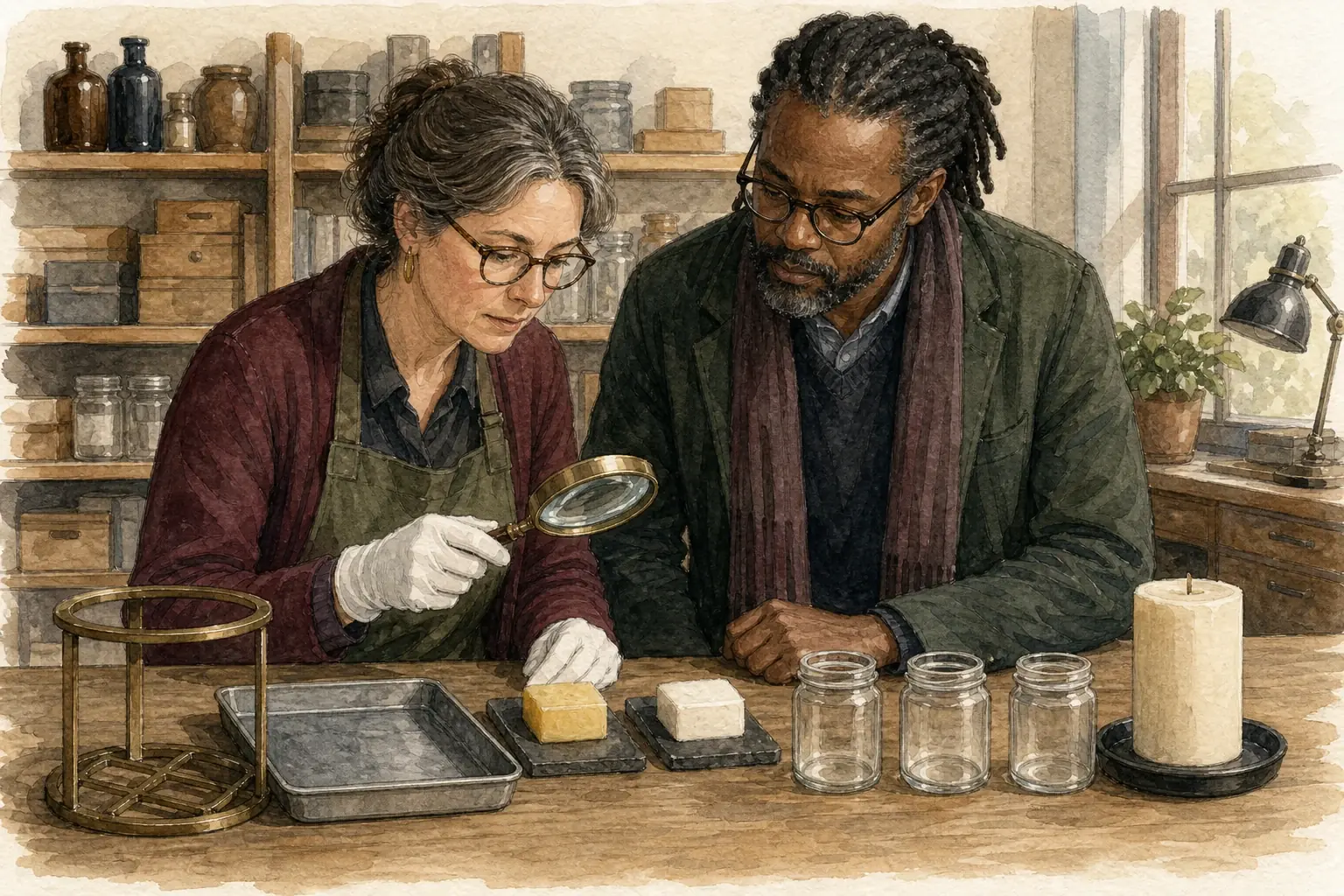
Waxes, additives, dyes and fragrances have different physical and skin effects. A retail phrase or familiar candle shape is not a clinical guarantee.
Illustration created using generative AI; not documentary evidence.Consent, burns and fire
Consent needs to cover wax specifically; agreement to other sensation or temperature play does not transfer automatically. Clothing, hair, mobility, skin history, allergies, fire alarms, people nearby and the surrounding environment create risks beyond the intended point of contact.
NHS guidance treats burns and scalds as injuries and describes when medical attention is required. London Fire Brigade advises never leaving candles unattended and keeping them away from materials that can catch fire. Scene language never overrides those boundaries.
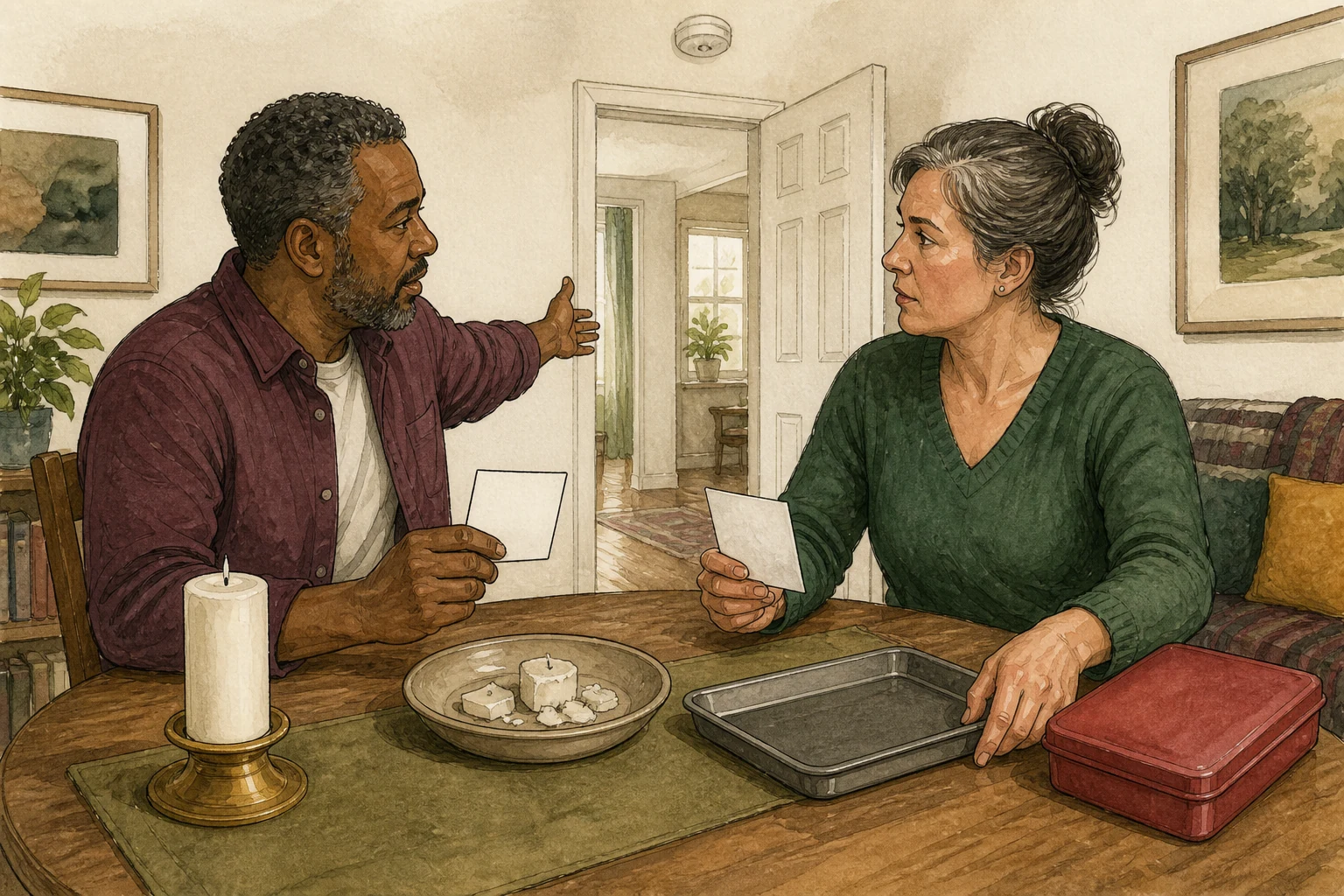
Agreement to another sensation does not imply agreement to wax. Burn, allergy, clothing and environmental fire risks remain relevant even in a negotiated adult scene.
Illustration created using generative AI; not documentary evidence.Clinical and legal distinction
A consensual adult interest in wax is not a paraphilic disorder merely because it is unusual. WHO guidance considers distress, impairment, serious risk and non-consent; owning candles or cooled wax objects is not diagnostic evidence.
Consent does not make serious injury lawful in every circumstance. In England and Wales, section 71 of the Domestic Abuse Act 2021 limits consent as a defence to serious harm for sexual gratification; other UK jurisdictions have their own law.
Common misunderstandings
A product description such as specialist, natural or low-temperature is not a personal safety assessment. A decorative atmosphere and contact with melted material are different proposals. Someone can like the appearance of candles while rejecting bodily contact, heat or an open flame entirely.
Safety and consent
Keep the discussion specific to the material, setting and what the person does not want. If the aim is visual symbolism, it can remain a conversation or an unlit display. This entry does not supply temperatures, distances, recipes or a method for applying wax.
Treat a burn as an injury, not a required part of a theme or evidence that somebody tolerated an experience well. The full guide links NHS care and fire-safety information. Ask for appropriate help when there is an injury or worrying symptom instead of relying on a retailer’s wording.
Non-graphic examples
What the umbrella may include
- Displaying cooled coloured wax as an abstract symbol of change and anticipation.
- Discussing wax separately from other temperature interests before any adult scene.
- Choosing an unlit candle still life to explain the terminology without implying technique.
- Stopping because fragrance, skin history or the environment creates uncertainty.
- Following NHS burn guidance and seeking care rather than treating aftercare as medicine.
Prepare for an appointment
Questions you could ask a professional
- What information would help you understand my question?
- What are the realistic options and uncertainties?
- How can disability, communication or privacy needs be accommodated?
- When should the situation be reviewed again?
These prompts do not replace assessment and do not imply that every reader needs professional care.
Continue learning
Take the next step from definition to context.
Continue with independent guidance connecting wax play to evidence, consent, safety, uncertainty and practical decisions.
Plan sensation play around the person, with specific limits, a working stop route, symptom awareness and UK support.
Read the guideRelated in-depth reading
Read the full guide.
Explore a connected question with context and UK support routes.
A non-instructional guide to candle claims, heat uncertainty, burn prevention and NHS first aid.
Read the full guide