Measurements
Compare chest and shoulder measurements with the maker’s diagram.
 The UK Kink GuideIndependent product discovery
Product discovery / Clothing and accessories
Body harnesses compared as adult fashion: chest and shoulder fit, leather, faux leather, elastic and chain, skin comfort and UK buying rights. This guide names no preferred company or individual product.
Independent education · optional affiliate linksAn optional Uberkinky category box below is clearly disclosed and separate from the guidance. It is not a product recommendation. No on-site affiliate tracking is added. This is publisher-reviewed category education; no external approval or individual-product certification is claimed.
Start here
Choose a garment that fits comfortably and can be removed easily; decorative hardware is not a safety rating.
Buying checklist
Compare chest and shoulder measurements with the maker’s diagram.
Ask for the usable range rather than relying on one size labels.
Identify straps, lining, coatings and metal contact points.
Check reachable fastenings and straightforward removal.
Obtain instructions for each material and finish.
Read dress codes and plan privacy before travelling.
Compare approaches
Compare structured appearance and flexibility.
Check: Exact composition, backing and finish-specific care.
Compare stretch with the stated measurement range.
Check: Recovery, edges and closure accessibility.
Compare weight and metal contact.
Check: Coating, edges and snagging on clothing.
Choose a fashion body harness by comparing actual chest and shoulder measurements, the adjustment range and every material that touches skin. Look for closures that can be reached and removed comfortably, and written care instructions. A striking shape or a one-size label is not evidence of good fit.
This guide concerns fashion and fetish wear for adults aged 18 and over. A decorative harness is not restraint, lifting or suspension equipment, and its rings do not establish a load rating. The fetish-clothing buying guide offers a wider comparison when a harness is only one possible garment.
Adults may choose a harness for an outfit, an event or private self-expression without attaching a relationship role to it. Start with the wearer’s preference and access needs. Consider dexterity, reach, shoulder movement, sensory sensitivities and whether assistance with fastening would be welcome. A garment should not require someone to tolerate discomfort to satisfy an expected look.
Check with a GP or relevant clinician if existing skin problems, reduced sensation, circulation concerns or an injury make close-fitting straps uncertain. NHS contact-dermatitis information explains that contact can cause irritated, itchy or cracked skin. Known metal or material sensitivities deserve clear composition information before purchase. Remove a garment that causes pain, numbness or irritation rather than assuming the skin must get used to it.
Use the maker’s measurement diagram: chest circumference alone may not describe shoulder straps, vertical distances or the intended layer underneath. Ask whether the chart refers to body measurements or finished garment dimensions. Compare the smallest and largest usable settings and how they are secured. Measure for the intended clothing arrangement rather than buying a smaller size to create a particular silhouette.
Check where buckles, rings and strap edges will rest during ordinary movement, sitting and reaching. If buying online, request clear photographs of the back, inside surfaces and fastenings. The inclusive-sizing entry explains why alphabetic sizes and model photographs cannot substitute for measurements. A returnable fitting check is useful only when the seller’s conditions are understood first.
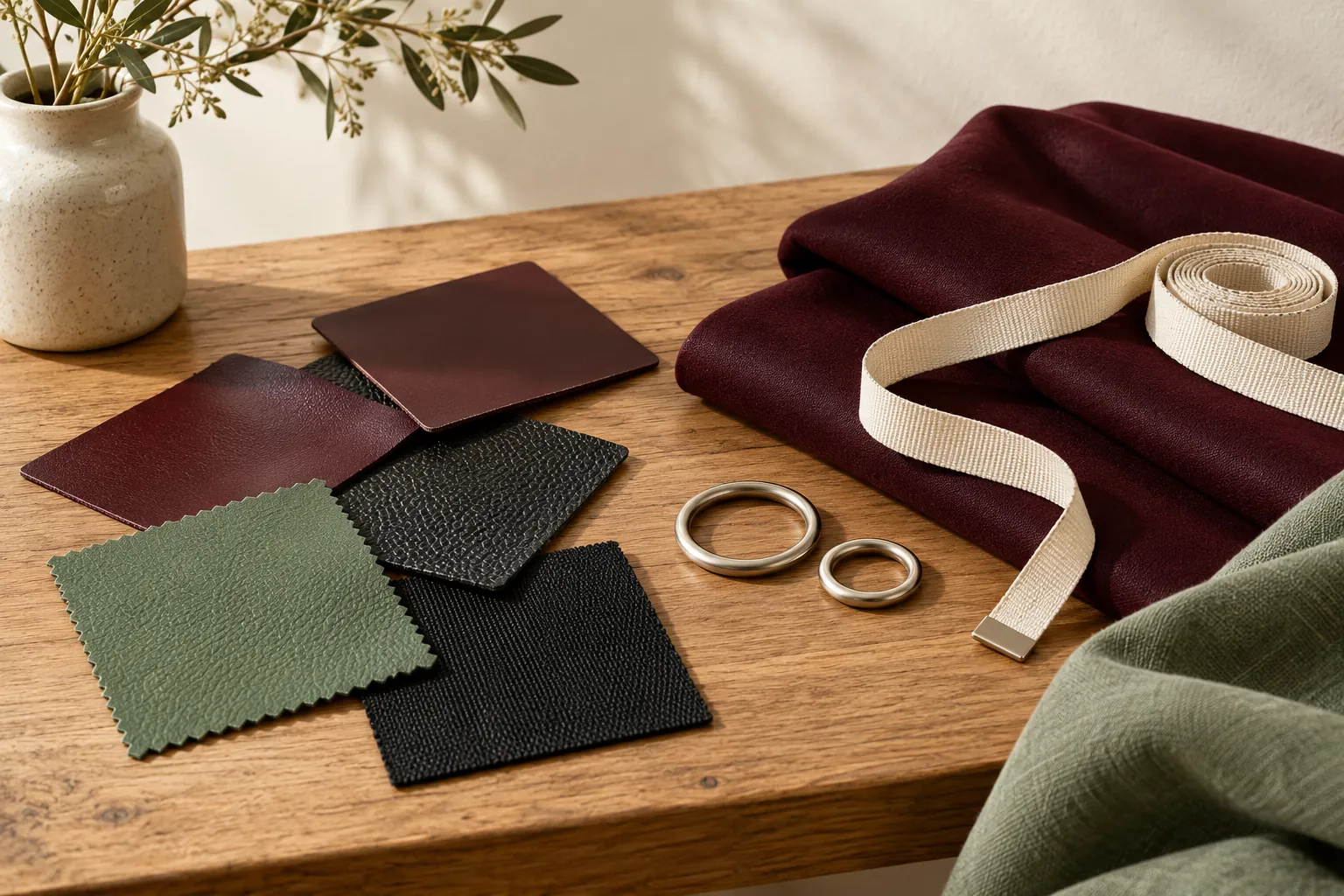
Leather varies in finish, stiffness and lining. Faux leather is a different construction, often involving a coated backing; obtain its exact composition rather than assuming identical care. Elastic changes the feel of adjustment but does not guarantee comfort throughout its stretch range. Chain adds metal contact and weight, with edges and possible snagging to consider. Compare these properties without treating one material as universally better.
Identify hardware composition and coatings, especially with a known sensitivity. Look for smooth edges and closures that do not press into skin. The PVC and wetlook glossary helps distinguish appearance from composition. Decorative rings should not be used as attachment points for force or lifting. Written specifications should explain the garment’s intended use, rather than leaving a buyer to infer it from styling.
A fashion harness is clothing or decoration. A bondage harness has a different intended purpose, which must be stated by its maker. Similar-looking straps and rings do not establish strength, safe restraint or a load rating. Never use a fashion harness for restraint or suspension. Choose for the stated purpose, comfortable fit and easy removal; this guide covers fashion only.
Read the organiser’s current dress code and entry information before choosing an outfit. A harness may suit one adult venue’s code and fail another’s requirements; no garment guarantees entry. Pride settings also vary, and the event’s audience, public setting and photography policy matter. This guide names no events or ticket sellers. The UK clubs and events guide explains how to vet information.
Plan ordinary travel clothing, a cover-up if wanted and a secure place for belongings. Decide whether photographs are welcome, who may share them and whether identifying details should stay private. Wearing fetish fashion is not consent to touch, photography or participation. The latex and leather guide separates personal interest from assumptions about someone’s availability or role.
Follow instructions for the exact leather finish, faux-leather coating, elastic and metal components. Leather UK stresses identifying the leather before selecting care products and warns against household cleaning shortcuts. Conditioner is appropriate only if the particular maker approves it. Do not transfer a leather treatment to coated fabric or elastic, and do not soak a mixed-material garment unless its instructions permit that.
Allow permitted cleaning to dry fully away from direct heat. Store without crushing straps or letting hardware scratch adjacent surfaces; Leather UK advises keeping leather away from direct sunlight and heat and using breathable clothing covers. Inspect cracking, flaking coatings, stretched elastic, loose stitching, corrosion and damaged closures. Stop wearing damaged pieces and ask about approved repair or replacement. A fashion item’s age alone does not establish its condition.
The Consumer Rights Act 2015 applies in England, Wales, Scotland and Northern Ireland. Its quality, description and fitness-for-particular-purpose provisions are in force, checked on legislation.gov.uk on 10 October 2026. Keep the size chart and material description alongside the receipt. Fitness for a particular purpose depends on telling the trader that purpose and reasonable reliance; a seller’s styling language is not a substitute for explaining an access requirement.
The Consumer Contracts Regulations 2013 are UK-wide and in force on that checked date. Regulation 28(3)(a) concerns sealed goods unsuitable for return for health-protection or hygiene reasons once unsealed; it does not automatically exclude every adult-fashion garment. Ask about seals and fitting before opening packaging. Applicable fault remedies remain separate from change-of-mind cancellation. See UK returns and consumer rights before relying on a warranty.
How do I measure for a body harness? Follow the maker’s chest and shoulder diagram and compare actual adjustment ranges.
Is faux leather cared for like leather? No. Identify its coating and follow its own instructions.
Can a fashion harness be used for suspension? No. Decorative hardware provides no verified lifting or safety rating.
Will a harness guarantee club entry? No. Check the organiser’s current code and entry conditions.
What if metal fittings irritate my skin? Remove the garment, check composition and seek clinical advice for persistent symptoms.
A pharmacist or GP can advise about persistent skin irritation. NHS guidance directs blue or grey hands or feet to 111; sudden blue or grey lips, tongue or face or breathing difficulty require 999. OPSS provides unsafe-product reporting routes through Citizens Advice, Advice Direct Scotland and Northern Ireland district councils. Use UK help for additional support and advice services.
Ask before buying
Evidence and limits
These sources support the category-level checks and signposting. They do not certify an individual product or turn general guidance into a safety guarantee.
Keep learning