Fibre
Identify whether the rope is natural or synthetic and read the maker’s description of finish, stretch, washing and intended use.
 The UK Kink GuideIndependent product discovery
Product discovery / Bondage materials and care
Rope is a material with limits, not a shortcut to skill. Compare fibre, finish, care and cutting access before deciding whether it belongs in a plan. This guide names no preferred company or individual product.
Independent education · optional affiliate linksAn optional Uberkinky category box below is clearly disclosed and separate from the guidance. It is not a product recommendation. No on-site affiliate tracking is added. This is publisher-reviewed category education; no external approval or individual-product certification is claimed.
Start here
Choose rope only when the people involved understand its material, condition and immediate release plan. This is a buying guide, not a tying lesson.
Buying checklist
Identify whether the rope is natural or synthetic and read the maker’s description of finish, stretch, washing and intended use.
Compare a stated diameter and surface finish rather than assuming a category label predicts comfort or handling.
Plan a quick cutting route before rope is used around anyone; the tool must be reachable and suitable for the material.
Reject rope with fraying, contamination, mould, cuts, melted fibres, unknown history or a finish that irritates skin.
Rope should not be used near the neck or in any way that risks breathing, circulation or a delayed release.
Keep cleaning and drying instructions with the rope, because natural and synthetic fibres can need different treatment.
Compare approaches
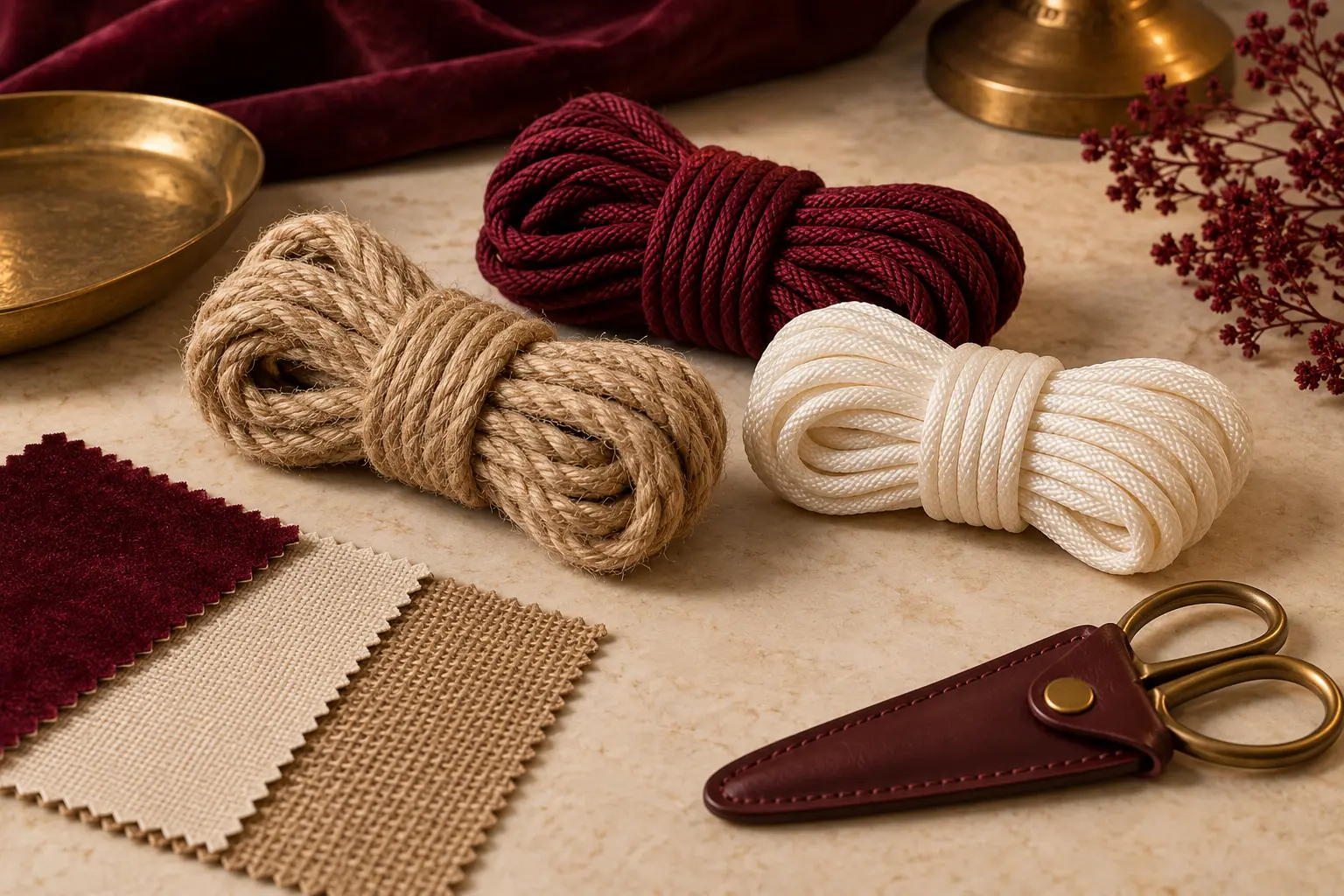
Can have a distinctive texture and care needs, but fibre type and treatment must be disclosed rather than assumed.
Check: Finish, fraying, washing, drying, shedding and any dye or oil treatment.
May differ in stretch, surface feel and melting behaviour; it still requires an immediate release plan.
Check: Exact polymer, stretch, finish, heat sensitivity, care instructions and damage signs.
Can make storage and inspection easier when the stated length, ends and material are known.
Check: Finished ends, length, labels, storage and whether the rope has been altered or joined.
Choosing rope begins with deciding whether rope is appropriate for the planned situation at all. It is not a beginner technique and it is not a material that becomes safe because a listing calls it ‘bondage rope’. A buyer needs the exact fibre, finish, diameter, care directions and a way to cut or release it immediately. If those basics are missing, choose not to buy rather than treating an online photograph as evidence.
This guide does not teach knots, placement or suspension. Those subjects carry risks that cannot be made safe by a product description. In particular, do not use rope near the neck or in any way that could affect breathing. The relevant question is whether everyone can stop, communicate and be released quickly if comfort, circulation or anxiety changes.
Natural fibres and synthetic fibres can feel, stretch, absorb moisture and show damage differently. The broad category is not enough: look for the maker’s exact material statement and any treatment, dye, oil, coating or washing advice. A product described only as ‘soft’ or ‘premium’ leaves too much unanswered, especially for people with a known skin sensitivity or a need to wash items thoroughly between uses.
A rope’s stated diameter can make comparisons less vague, but it does not predict how it will feel on an individual person or how it behaves in a particular arrangement. Avoid copying another person’s preference as a prescription. Handle a small section while nobody is restrained, inspect the surface in good light and read the care instructions before deciding whether to keep it.
Inspect rope every time. Fraying, cut strands, melted synthetic fibres, mould, embedded dirt, loose end finishing or an unknown storage history are reasons not to use it. A repair, glued end or decorative wrap may hide a weak point rather than solve it. Keep rope dry and stored so that it can be checked easily; do not leave it compressed, damp or mixed with products that could damage the surface.
Cleaning needs to follow the manufacturer’s directions. Natural rope can absorb moisture and take longer to dry, while synthetic rope can be damaged by unsuitable heat or chemicals. Do not guess from a similar-looking household cord. If irritation, rash or broken skin follows contact, stop using the item and consider a pharmacist, GP or sexual-health service for advice if symptoms are severe, persistent or worrying.
A cutting tool is an emergency tool, not a substitute for planning. Keep an appropriate, accessible tool where it can be reached immediately, and make sure the people involved know that cutting is an acceptable response to a problem. Do not put it in a locked drawer, leave it with a spectator or assume that the person who tied the rope will always be able to act. Plan how help will be called if needed.
Agree words and signals that mean slow down, pause and stop. A person may become quiet because they are focused, anxious, unable to breathe comfortably or unable to speak; silence should not be treated as enthusiastic agreement. Check in plainly and release rather than debating a warning sign. Alcohol, drugs, fatigue and privacy pressure all make careful monitoring harder and are reasons to simplify or postpone.
A responsible seller should be able to tell you what the rope is made from, its dimensions, care requirements and how to report a fault. Check product-safety notices and retain the order information. No generic label guarantees suitability for every body or use, and a price difference may reflect packaging or marketing rather than a verified safety advantage.
Buy only what can be stored, inspected and cared for. A short, clearly labelled length that remains in good condition is more useful than a large quantity that becomes tangled, damp or anonymous. Keep it away from children, pets, heat sources and anything that could contaminate it. If the material or history becomes uncertain, retire it rather than trying to reason away the uncertainty.
Is natural rope always kinder to skin? No. Fibre, finish, individual sensitivity, friction and the plan all matter. Is synthetic rope automatically easier to care for? Not necessarily; follow the maker’s instructions for that exact material. Can a beginner buy rope before taking any specialist education? Yes, but buying it does not create the knowledge or conditions to use it safely.
Do shears make every rope activity safe? No. They are one part of a release plan. Can rope be used around the neck if everyone agrees? No: consent does not remove the serious risk of breathing restriction. If anyone reports numbness, tingling, coldness, colour change, panic or pain, stop and release promptly rather than trying to adjust while they remain restricted.
Call 999 for an emergency, including breathing difficulty, loss of consciousness or a serious injury. NHS 111 can advise on urgent but non-life-threatening symptoms. A GP, pharmacist or sexual-health service can help with a persistent skin reaction, pain, anxiety or another concern after an encounter. It is useful to tell a clinician plainly about materials and pressure involved so that they can assess the problem.
For defective rope or unclear product information, stop using it, contact the seller and check GOV.UK product-safety alerts and recalls. Citizens Advice can help people understand consumer options after a faulty or misdescribed purchase. If pressure, fear or an inability to say no is part of the situation, reach out to a trusted person or specialist support rather than treating it as an equipment issue.
Ask before buying
Evidence and limits
These sources support the category-level checks and signposting. They do not certify an individual product or turn general guidance into a safety guarantee.
Keep learning