
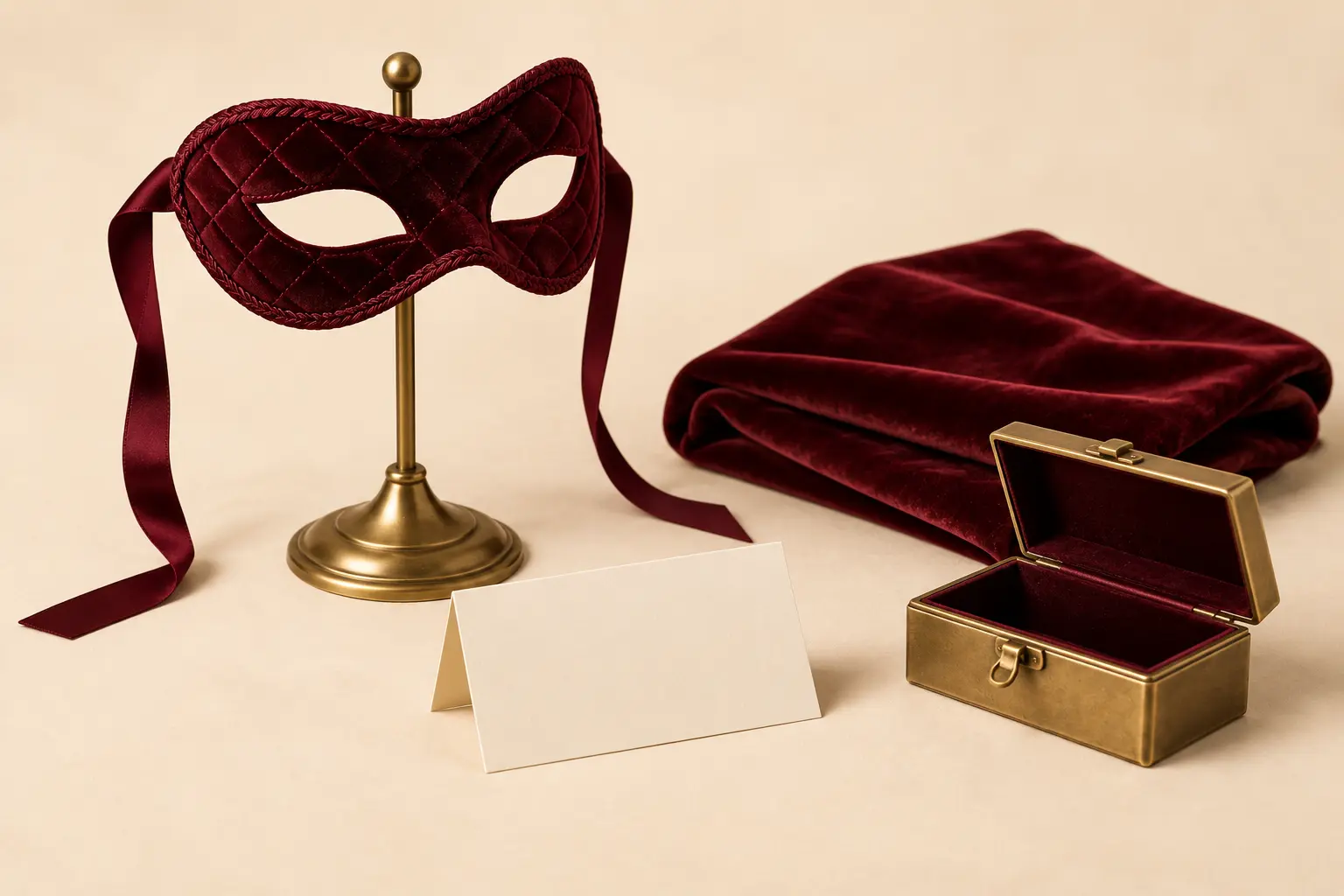
What dollification can mean
Dollification is an adult fantasy or role-play theme involving styling, posing, scripted words or a doll-like persona. Its meaning may be visual, theatrical, comforting, playful or linked to negotiated power. Enjoying dressing or photography implies no wish for touch, restriction or objectifying language. The label prescribes neither gender, orientation, relationship role nor fixed identity.
It overlaps with transformation fantasy, consensual objectification and costume play but is not identical to any of them. A theatrical persona is not permission to ignore the adult underneath. Someone may like the imagery in fiction while declining an embodied performance. Ask which elements appeal and which are off limits instead of using a subculture label as an instruction set.
Consent remains with the person
A role may call a participant a doll, but their real voice and autonomy remain intact. Agree who chooses clothing, names, poses, words, photographs and the moment the role ends. Decide whether the idea is private, whether other people may know and what kind of contact, if any, is welcome. A yes to a costume does not cover a photo; a yes to a photo does not cover sharing. Specific negotiation prevents an aesthetic idea from becoming unwanted conduct.
The CPS guidance for England and Wales defines sexual consent as a free choice made with freedom and capacity. Whether any particular dollification activity is sexual or legally significant depends on what actually occurs; this guide makes no blanket legal claim. A person can withdraw from a role at any point without needing to justify it. The other participant must respond to ordinary 'stop' or distress, not insist on hearing a formal safeword.
Stillness is a performance, not an instruction to endure
Some descriptions of dollification mention stillness or passivity. Do not turn those words into a demand to suppress pain, hunger, breathing difficulty or the need to move. Holding a posture can be uncomfortable or inaccessible. Restricting movement, vision or speech increases risk and weakens communication; this guide does not teach such techniques. Agree that the participant can move, speak and leave whenever needed.
If a scene depends on another adult appearing unable to respond, the observer must not treat that appearance as actual agreement. Silence may reflect concentration, uncertainty or a freeze response. Agree a check-in that works when someone is in character and stop if the answer is unclear. Safeword systems are useful only alongside active attention to the person.
Clothing, makeup and material comfort
A costume can involve fabric, shoes, wigs, makeup or props. Fit, heat, skin sensitivity and mobility matter more than an image's perfection. Ask how long someone wants to wear an item and whether it can be removed easily. Do not use adhesives, cosmetics or materials on irritated skin without checking their intended use and personal tolerance. The clothing and fit guide and skin-contact guide give broader context.
A person may also change how they feel about a look once wearing it. Make it easy to switch clothing, remove a wig or end a role without a disappointed reaction. A costume should not prevent access to the toilet, water, medication or ordinary mobility. No one needs to keep a look on for the sake of a photograph or another person's fantasy. Practical comfort can be part of a successful plan.
Language, identity and respect
Some adults use doll-like language as a temporary, agreed fiction. Others find it depersonalising or tied to painful experiences. Ask which terms feel playful and which feel diminishing. A gendered costume or name does not reveal a person's gender identity. The identity distinction guide can help where presentation and identity are being confused. Do not reveal someone's private role to explain their clothing to others.
Consent to objectifying language is limited to the agreed context. The participant still has ordinary preferences, relationships and responsibilities. If someone says 'you are my doll' to override a real-world decision about money, work, food or healthcare, the problem is coercion rather than performance. The coercive-control guide helps separate a bounded scene from a pattern of control.
Photographs and audiences
A doll-like visual may tempt people to document or share it. Agree whether any photo may be taken, who may see it, where it is stored and how long it may be kept. A platform can make copies even when a post is deleted. The fact that a participant posed does not imply consent to publication, tagging or identifying details. Digital consent is a separate conversation from costume or performance.
If another adult is in the room, their presence and role should be agreed too. A public or semi-public performance may expose the participant to people who have not consented to a sexualised scenario. Keep it private or use an appropriate adult event with clear house rules. No one should be pressured to reveal a private identity for a 'better' photograph or a more convincing scene.
Aftercare and revision
Ending the role should be straightforward: remove props if wanted, use the person's ordinary name and ask what kind of check-in they prefer. Some people want to discuss how the performance felt; others need quiet or ordinary conversation. A delayed feeling of embarrassment or unease is valid even when the scene was agreed. Aftercare plans can include privacy, practical comfort and a later conversation.
Review whether the agreed words, clothing, stillness and images matched expectations. Listen if someone felt invisible or unable to ask for a change. Do not argue that the role required them to stay silent. A next time is optional. Many people find that the imaginative or styling element works better without any power exchange, and others decide the theme is not for them at all.
Decide what is performance and what is everyday life
A doll persona may use a name, a voice or carefully chosen gestures. Define where it applies: a private photo session, a short conversation or a particular adult event are different contexts. The ordinary person should be able to resume their own name and choices immediately. If another participant begins using the role title in public, around family or during a disagreement, ask them to stop. A performance should not become a way to silence a person in decisions about work, health, housing or money.
The visual theme may involve a strong ideal of perfection or stillness. Avoid turning that aesthetic into criticism of someone's body, gender expression or disability. Clothing and makeup can be adapted or abandoned; a photograph can be left untaken. The person wearing the costume should choose when to rest, move or remove it. If a partner insists that discomfort proves commitment, the role has crossed into pressure. The same is true if a person feels they cannot disclose that a word or pose now feels demeaning.
Review the image from the participant's perspective, not only the audience's. Did they feel seen as an adult with preferences, or treated as a prop? Was a photograph kept private as agreed? Could they end the scene in ordinary words? A 'yes' to the theme does not answer any of these questions forever. The next conversation may produce a narrower boundary, a different style of play or a decision to keep the idea in fiction. Every one of those outcomes is legitimate.
The word doll may carry a different meaning for each participant. One may picture an elegant costume, another a carefully staged photograph, and another a temporary role. Ask how the person wants to be addressed before using a label in front of anyone else. The fantasy should never be read as a claim that a human being has become property or lost the right to object. If the desired effect depends on ignoring a person's question or treating discomfort as realism, redesign the plan or decline it. Consider how a costume or image might be understood months later if the relationship changes. A participant may want a private copy, no copy or deletion from a device; discuss those preferences before taking pictures, and do not promise that a platform can erase every duplicate. A role can end instantly even if an image remains.
Common questions
Is dollification always BDSM? No. It can be aesthetic or theatrical without a power exchange. Does a doll role mean a person gives up consent? Never. Is stillness required? No; comfort, movement and communication take priority. Does a costume reveal gender identity? No; presentation and identity are distinct.
Can a partner share a posed picture? Only with specific agreement to that use; posing is not publication consent. Is the interest a disorder? A label alone says nothing clinical. Seek support for persistent distress, risk or coercion rather than assuming a diagnosis. What if I change my mind mid-scene? Say stop in any ordinary way and leave the role. A partner should make that easy.
UK routes to help
For skin irritation, pain or another health concern, ask a pharmacist, GP or NHS 111 about appropriate care. Call 999 for immediate danger or severe breathing difficulty. The medical-help guide can help choose a route. If anxiety or distress persists, a qualified professional in the COSRT register can discuss it without treating an adult costume interest as inherently pathological.
If images were shared without permission, the image-abuse reporting guide sets out platform, police and specialist support. If a partner ignores stops or uses a role to control everyday choices, Galop and the UK help directory offer confidential help. Relate's pressure guidance may help with a conversation when it is safe to have one.