A glove fetish is an adult interest in gloves as objects, clothing or symbols. The attraction may concern material and fit, the altered appearance of a hand, or associations such as formality, care, work, cleanliness or concealment.
 The UK Kink GuideEvidence-led glossary
 Back to the glossaryMaterials & dressIn plain English Words in context A non-graphic adult example What not to assume
Glove fetish
An attraction to gloves as objects, materials or symbols of formality, cleanliness, authority or concealment. The focus may be on leather, latex, satin or another particular texture.
Start here
New to this term?
Fashion gloves, protective gloves and costume gloves may use similar shapes but serve different purposes. Leather, natural-rubber latex, synthetic rubber, nitrile and satin are different materials; a material focus may overlap with a glove focus without being the same thing.
One adult may notice a glove's smoothness, sheen, sound or length. Another may value its formal symbolism, while a healthcare or workplace user may wear a visually similar glove solely for protection.
Gloves do not signal consent, profession, authority or sexuality. Protective equipment should be chosen for its real task rather than its appearance, and natural-rubber latex can cause allergy. Research can document varied clothing and material interests but cannot establish a single cause or dependable prevalence for glove fetish specifically.
Sources and evidence type
Manual claim and limitation notes are shown where an individual source audit is complete. Other evidence-type labels are a publisher aid awaiting source-by-source confirmation.
Scorolli et al. (2007), online fetish-group studyResearch study
- Source design
- Peer-reviewed research or review
- What it can support
- The specific population, measures and findings reported by the paper.
- Important limitation
- It cannot automatically establish UK prevalence, causation, diagnosis, consent or an individual outcome. Check recruitment, definitions and study design.
Rehor (2015), survey of women from kink communitiesResearch study
- Source design
- Peer-reviewed research or review
- What it can support
- The specific population, measures and findings reported by the paper.
- Important limitation
- It cannot automatically establish UK prevalence, causation, diagnosis, consent or an individual outcome. Check recruitment, definitions and study design.
HSE, natural-rubber latex allergiesLaw or regulator
- Source design
- Primary legislation, prosecutorial or regulator guidance
- What it can support
- The legal provision or official regulatory position for the jurisdiction and date stated.
- Important limitation
- It is not fact-specific legal advice. Commencement, amendments, jurisdiction and case law may affect application.
HSE, choosing gloves to protect skinLaw or regulator
- Source design
- Primary legislation, prosecutorial or regulator guidance
- What it can support
- The legal provision or official regulatory position for the jurisdiction and date stated.
- Important limitation
- It is not fact-specific legal advice. Commencement, amendments, jurisdiction and case law may affect application.
NHS, contact-dermatitis causesClinical guideline
- Source design
- Current public-health or clinical guidance
- What it can support
- Service pathways, health definitions and recommended public-health or clinical actions within its stated scope.
- Important limitation
- General guidance cannot assess an individual’s symptoms, exposure, medicine, contraindications or urgency.
WHO ICD-11 clinical requirements (2024)Clinical guideline
- Source design
- Current public-health or clinical guidance
- What it can support
- Service pathways, health definitions and recommended public-health or clinical actions within its stated scope.
- Important limitation
- General guidance cannot assess an individual’s symptoms, exposure, medicine, contraindications or urgency.
Materials & dress
Illustration created using generative AI; not documentary evidence.
In brief
One garment can be fashion, protection, costume or a fetish object.
A glove fetish focuses on gloves as objects, garments or symbols. Material, fit, sheen, sound, length and the way a glove changes the appearance of a hand may matter, as may associations with formality, care, work, concealment or authority. Gloves can also be ordinary fashion or protective equipment; context and consent determine meaning.
Evidence and overlapping interests
Research generally places gloves within broad clothing and body-associated object categories rather than studying them separately. Scorolli and colleagues' analysis and Rehor's community survey demonstrate diversity, but neither supports a current UK prevalence figure or a single explanation.
A glove interest may overlap with hand partialism, uniform, leather, latex or medical role-play. Those overlaps are possibilities, not conclusions: a person can value the glove itself without any adjacent theme.

Gloves may be fashion, protective equipment, material objects or role symbols. Overlapping categories do not establish a person's motive, identity or behaviour.
Illustration created using generative AI; not documentary evidence.- Status
- Detailed editorial draft
- Publisher
- The UK Kink Guide
- Reviewed
- Structured draft present; individual review date not recorded
- Evidence
- 6 cited sources · types labelled below
- Jurisdiction
- UK-focused general education
Read the rest: evidence, law, safety and sources
Accessory chosen for warmth, style, colour or period dress.
Work or medical equipment selected for a real task and governed by safety requirements.
Interest in leather, natural-rubber latex, synthetic rubber, satin or another texture.
A costume or role cue suggesting formality, cleanliness, care or concealment.
Materials, garments and sensory qualities
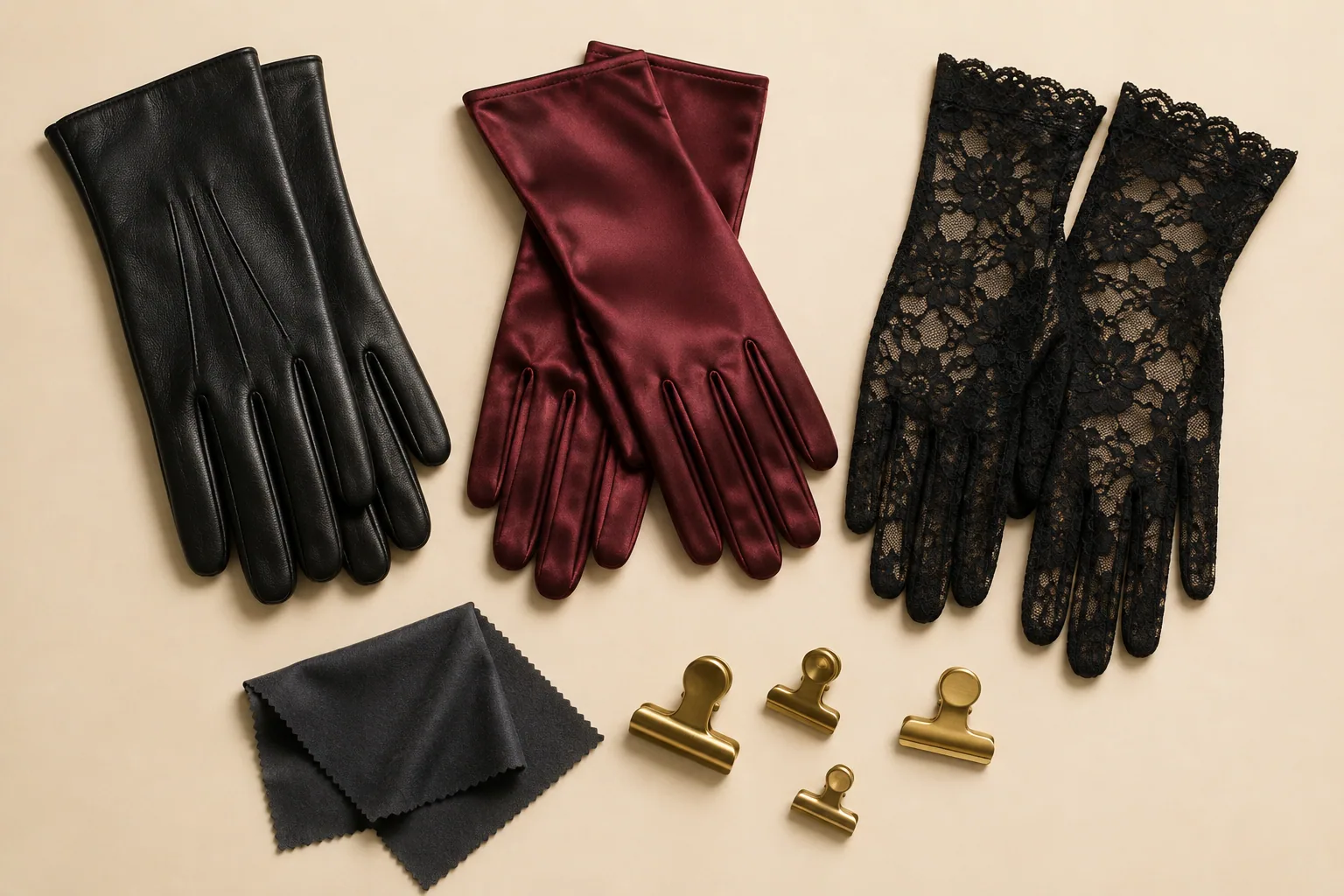
Objects may include adult-sized leather, satin, lace, fabric, vinyl, nitrile or natural-rubber latex gloves, as well as unworn pairs, boxes and material samples. Length, seams, lining, powder, gloss, snap, scent and concealment can each change the experience.
Protective appearance does not guarantee real protection. HSE guidance stresses that glove material must suit the hazard in occupational use. In an adult-interest context, accurate composition still matters for skin sensitivity, allergy and informed choice.
Leather, natural-rubber latex, synthetic rubber and textiles differ in feel, care, heat and skin effects. Appearance alone cannot identify composition or suitability.
Illustration created using generative AI; not documentary evidence.Latex, skin and comfort
HSE states that natural-rubber latex proteins can cause dermatitis and asthma, with serious allergic reactions also possible. NHS guidance lists rubber among possible contact-dermatitis triggers. Latex and synthetic rubber are not interchangeable, and appearance alone cannot identify composition.
Heat, moisture, friction, dyes and cleaning products may affect comfort. A person should be free to remove a glove immediately; an aesthetic or role never outweighs breathing symptoms, swelling, pain, numbness or a skin reaction.
Consent and clinical distinction
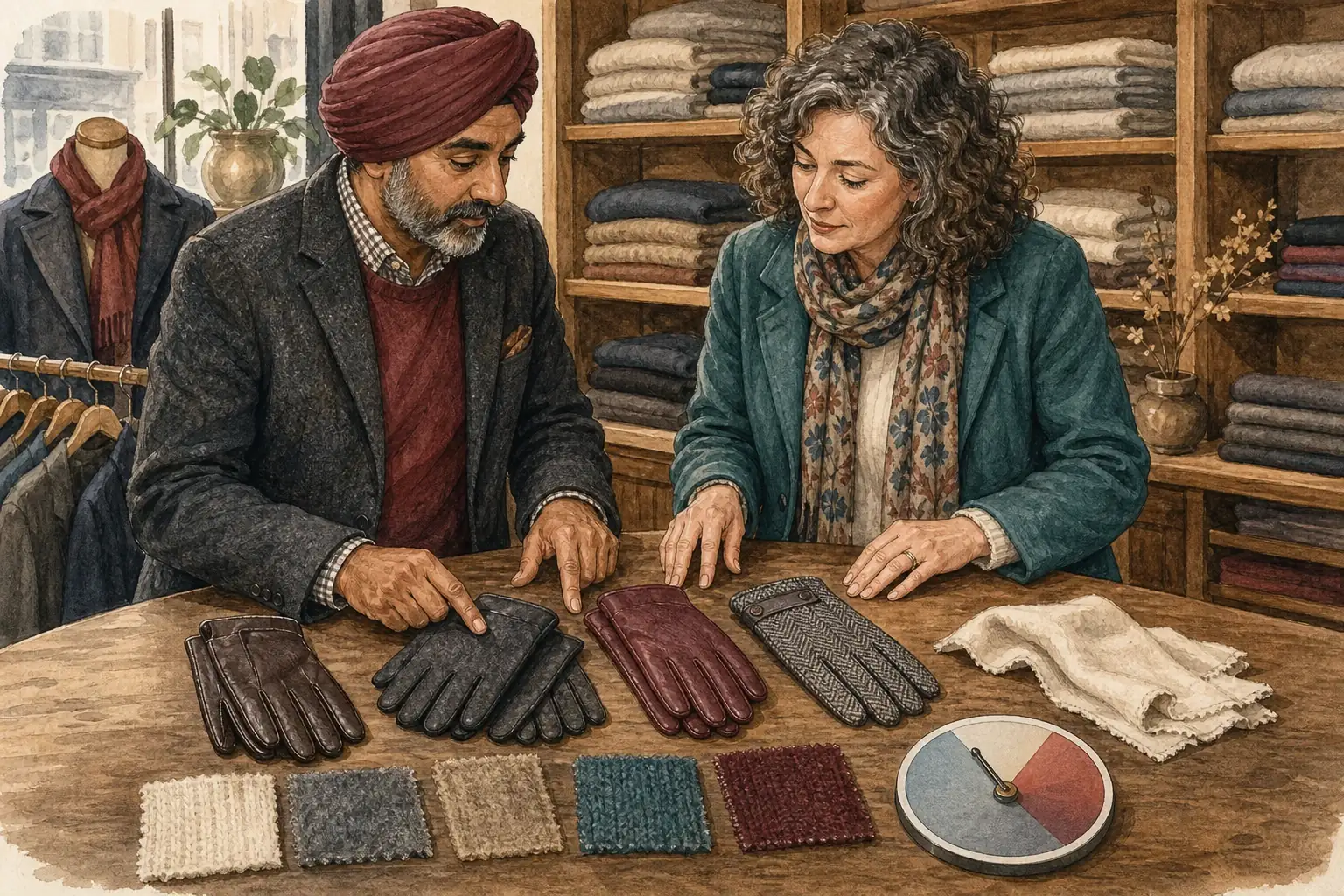
Permission to wear gloves does not imply permission to touch another person, perform a task, be photographed or surrender the item. Real workers wearing gloves are not participating in someone else's fantasy.
WHO guidance does not classify an unconventional consensual-adult clothing interest as a disorder merely because it is unusual. Clinical concern depends on distress, impairment, serious risk or non-consent; owning gloves is not diagnostic evidence.

Touching, borrowing, wearing, keeping or photographing another person's glove each needs the relevant permission. A garment is not evidence of consent or diagnosis.
Illustration created using generative AI; not documentary evidence.Non-graphic examples
What the umbrella may include
- Collecting unworn adult gloves for their material, length or historical design.
- Choosing satin, leather or synthetic rubber for a particular texture or appearance.
- Using a glove as an agreed costume cue without implying real professional authority.
- Displaying a paired set or material swatches as symbolic objects.
- Checking composition because a similar-looking glove may contain different allergens.
Prepare for an appointment
Questions you could ask a professional
- What information would help you understand my question?
- What are the realistic options and uncertainties?
- How can disability, communication or privacy needs be accommodated?
- When should the situation be reviewed again?
These prompts do not replace assessment and do not imply that every reader needs professional care.
Continue learning
Take the next step from definition to context.
Continue with independent guidance connecting glove fetish to evidence, consent, safety, uncertainty and practical decisions.
Choose clothing by the wearer's goal, fit, movement, skin comfort, care and privacy rather than inferring identity or consent from a look.
Read the guideOptional product education
Check materials, fit and care independently.
Some product guides include a separate, disclosed optional retailer box. A term alone does not make a product suitable or safe for a person.
Read the criteria before deciding whether to shop.
Open the guide