This is an adult interest focused on shoes or boots. The appeal may lie in the object itself, its shape and materials, the way it changes posture or sound, or the cultural role associated with a style.
 The UK Kink GuideEvidence-led glossary
 Back to the glossaryMaterials & dressIn plain English Words in context A non-graphic adult example What not to assume
Footwear and boot fetish
An attraction to shoes or boots, sometimes focused on a specific shape, material, heel, wear pattern or cultural association. It may overlap with foot fetishism but can centre primarily on the object.
Start here
New to this term?
A footwear fetish centres mainly on the shoe or boot; a foot fetish centres on an adult body part. Fashion collecting, shoe craft and historical interest can look similar from outside without having erotic meaning.
One adult might value the silhouette, heel, leather grain, fastenings or sound of a boot. Another may respond to a uniform association, while a collector may care only about design and construction.
Owning or wearing footwear does not communicate consent, authority, sexuality or a wish to participate. Research documents varied object and body-part interests but does not establish one cause or dependable prevalence for this category. Fit, balance, mobility and pain matter to wellbeing, especially when a style changes walking or standing.
Sources and evidence type
Manual claim and limitation notes are shown where an individual source audit is complete. Other evidence-type labels are a publisher aid awaiting source-by-source confirmation.
Scorolli et al. (2007), online fetish-group studyResearch study
- Source design
- Peer-reviewed research or review
- What it can support
- The specific population, measures and findings reported by the paper.
- Important limitation
- It cannot automatically establish UK prevalence, causation, diagnosis, consent or an individual outcome. Check recruitment, definitions and study design.
Rees & Garcia (2017), object-fetish mixed-methods studyResearch study
- Source design
- Peer-reviewed research or review
- What it can support
- The specific population, measures and findings reported by the paper.
- Important limitation
- It cannot automatically establish UK prevalence, causation, diagnosis, consent or an individual outcome. Check recruitment, definitions and study design.
Ventriglio et al. (2019), fetishism reviewResearch study
- Source design
- Peer-reviewed research or review
- What it can support
- The specific population, measures and findings reported by the paper.
- Important limitation
- It cannot automatically establish UK prevalence, causation, diagnosis, consent or an individual outcome. Check recruitment, definitions and study design.
V&A, history of shoe designCommunity context
- Source design
- Contextual or community source
- What it can support
- Terminology, reported practice or community context within the source’s own setting.
- Important limitation
- Community usage is not universal and does not establish safety, prevalence, clinical benefit or legal permission.
WHO ICD-11 clinical requirements (2024)Clinical guideline
- Source design
- Current public-health or clinical guidance
- What it can support
- Service pathways, health definitions and recommended public-health or clinical actions within its stated scope.
- Important limitation
- General guidance cannot assess an individual’s symptoms, exposure, medicine, contraindications or urgency.
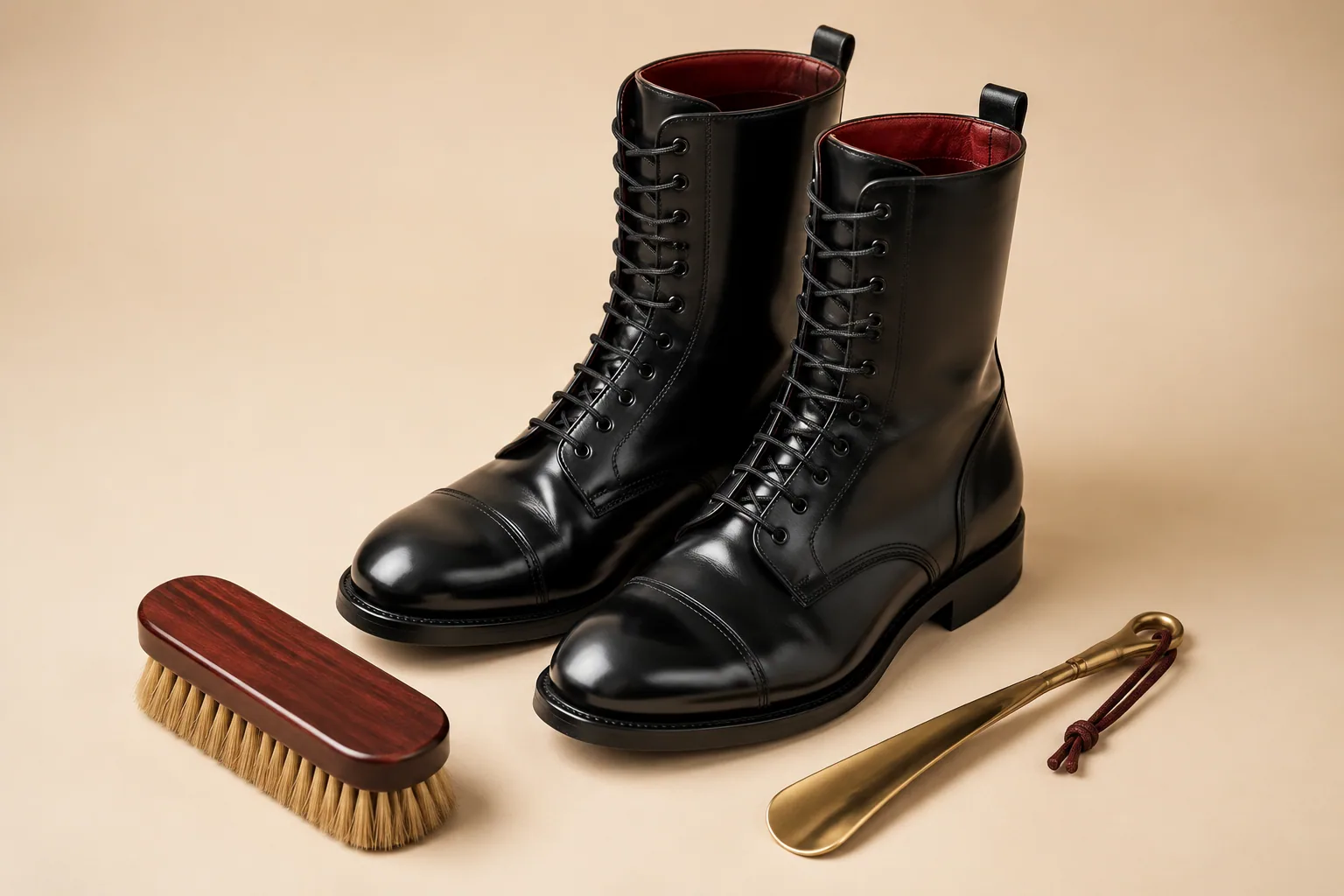
Materials & dress
Illustration created using generative AI; not documentary evidence.
In brief
The object, its design and its context can matter separately.
A footwear or boot fetish places particular meaning on shoes, boots or their materials, construction and associations. The focus may be an unoccupied object, a style, the ritual of dressing, or footwear worn by a consenting adult. It can overlap with foot, leather, uniform or hosiery interests, but none of those labels automatically implies the others.
What research can show
Scorolli and colleagues found feet and objects associated with feet prominent among the online fetish groups they studied. That finding shows the visibility of these interests in a particular internet sample; it is not a representative estimate of how many UK adults have a footwear interest.
Rees and colleagues' mixed-methods research on sexual object fetishism found that many participants could enjoy sexual activity without the preferred object. It challenges the assumption that an object is always compulsory, while leaving substantial individual variation and no single established cause.
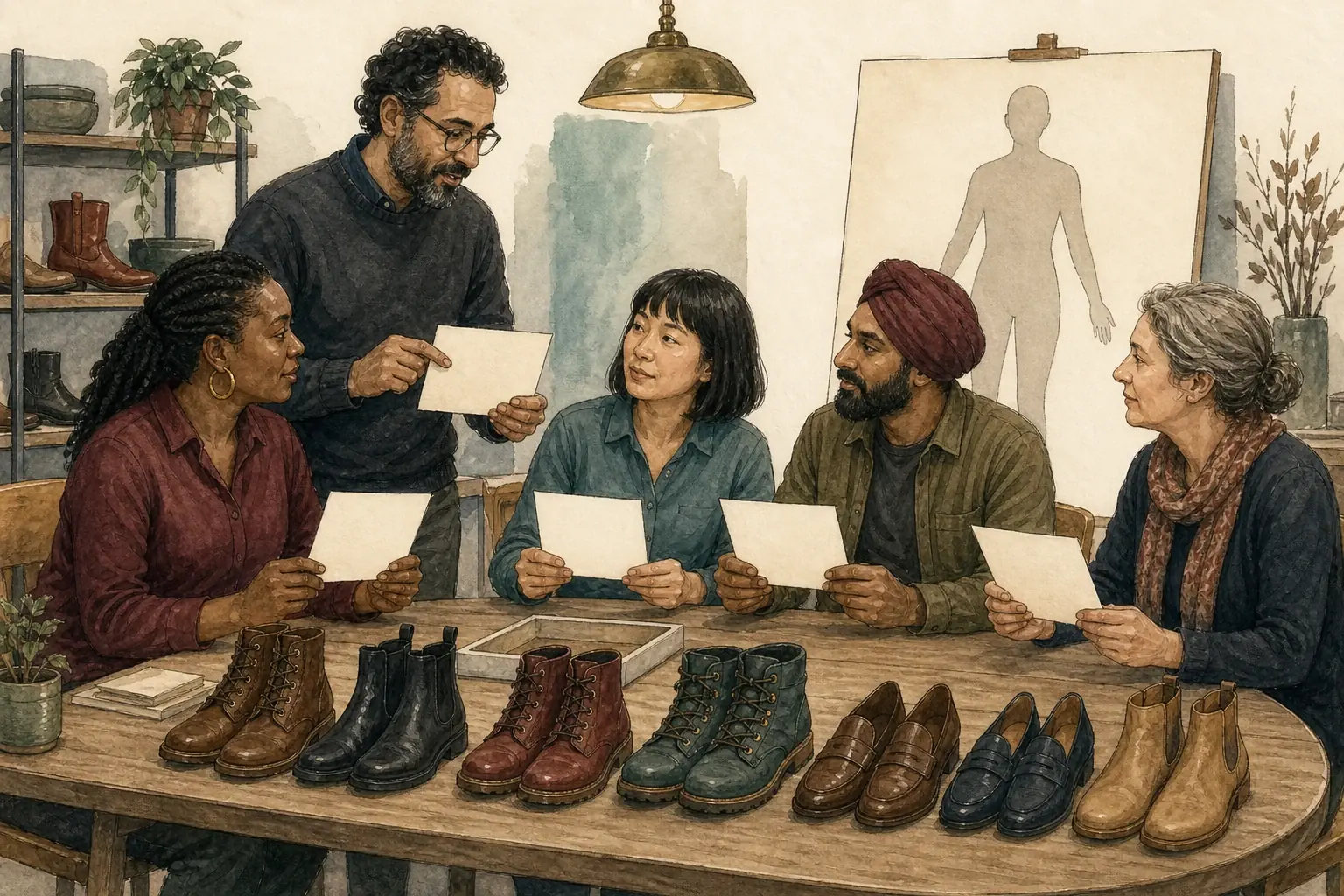
Online-group studies show that footwear interests are visible, but they do not provide a current UK prevalence estimate. Object focus and body-part focus can overlap without being identical.
Illustration created using generative AI; not documentary evidence.- Status
- Detailed editorial draft
- Publisher
- The UK Kink Guide
- Reviewed
- Structured draft present; individual review date not recorded
- Evidence
- 5 cited sources · types labelled below
- Jurisdiction
- UK-focused general education
Read the rest: evidence, law, safety and sources
Attention centres on the shoe or boot as an object, including shape, material, construction, sound or wear.
Attention centres on an adult body part; footwear may be secondary or absent.
Design, craft, history or collecting can be important without an erotic meaning.
A boot may evoke an occupation or fictional role, but it does not confer real authority.
Objects, construction and sensory qualities
Possible objects include adult-sized boots, shoes, trainers, heels, laces, buckles, boxes, catalogues and material swatches. Leather grain, synthetic gloss, polish, weight, heel shape, fastening, scent, sound or visible wear may each be meaningful; no feature has a universal interpretation.
The V&A's footwear collection documents more than three millennia of changing shapes, heights and materials. That history shows how footwear can signal fashion, work, status, rebellion or memory, but museum evidence does not explain an individual's attraction.
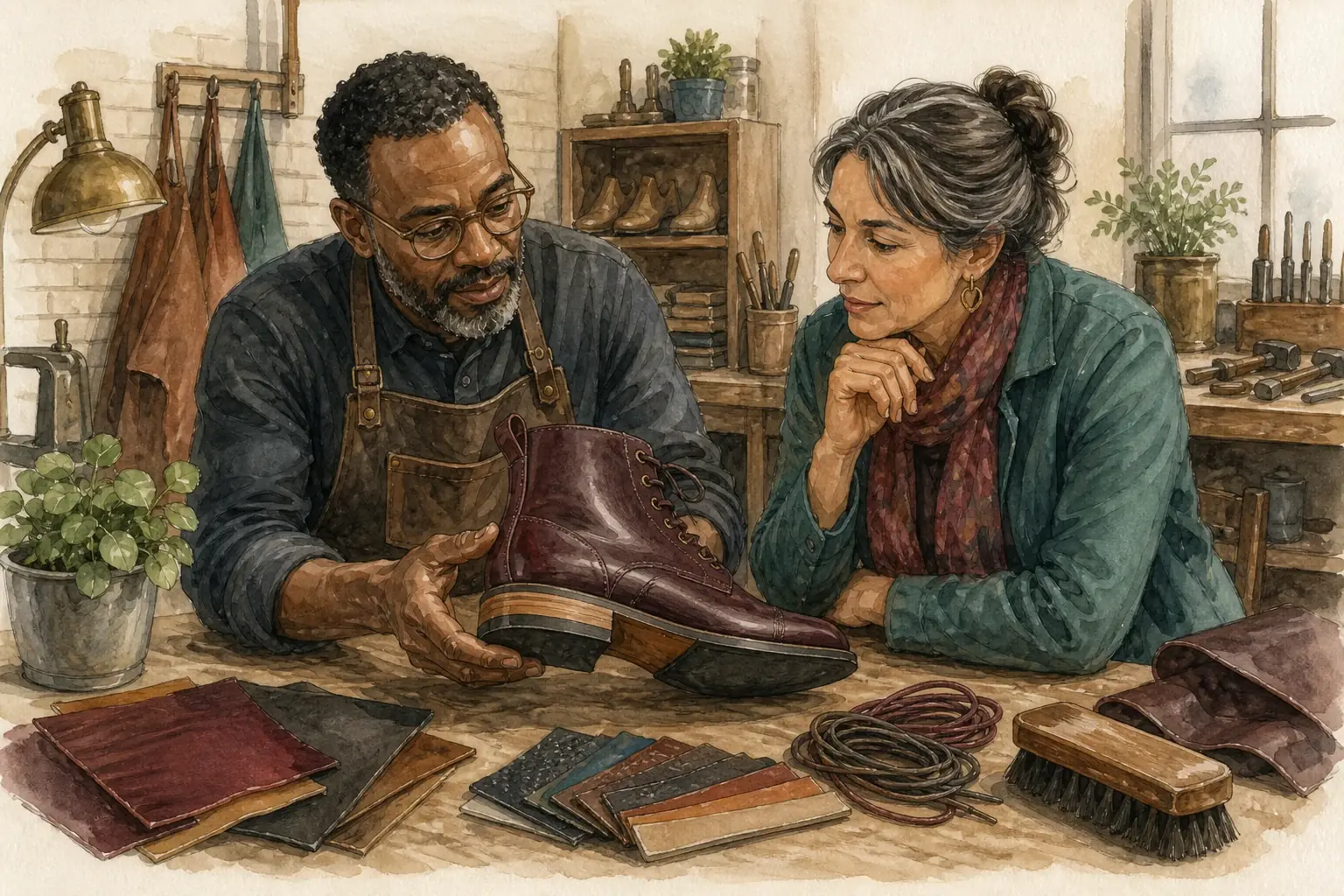
Shape, material, fastening, sound, craft and visible wear may each matter. No feature has a universal meaning, and fashion history cannot determine personal motivation.
Illustration created using generative AI; not documentary evidence.Ownership, wearing and privacy
Looking at, touching, wearing, borrowing, smelling, retaining or photographing another person's footwear are separate permissions. Attraction does not excuse taking an item, damaging it, secretly recording its wearer or involving an unaware salesperson or member of the public.
Size and retail category do not determine gender, sexuality or preferred role. Footwear may also affect balance, mobility, pain or skin comfort, so the wearer's access needs and ordinary wish to remove it take priority over an aesthetic.
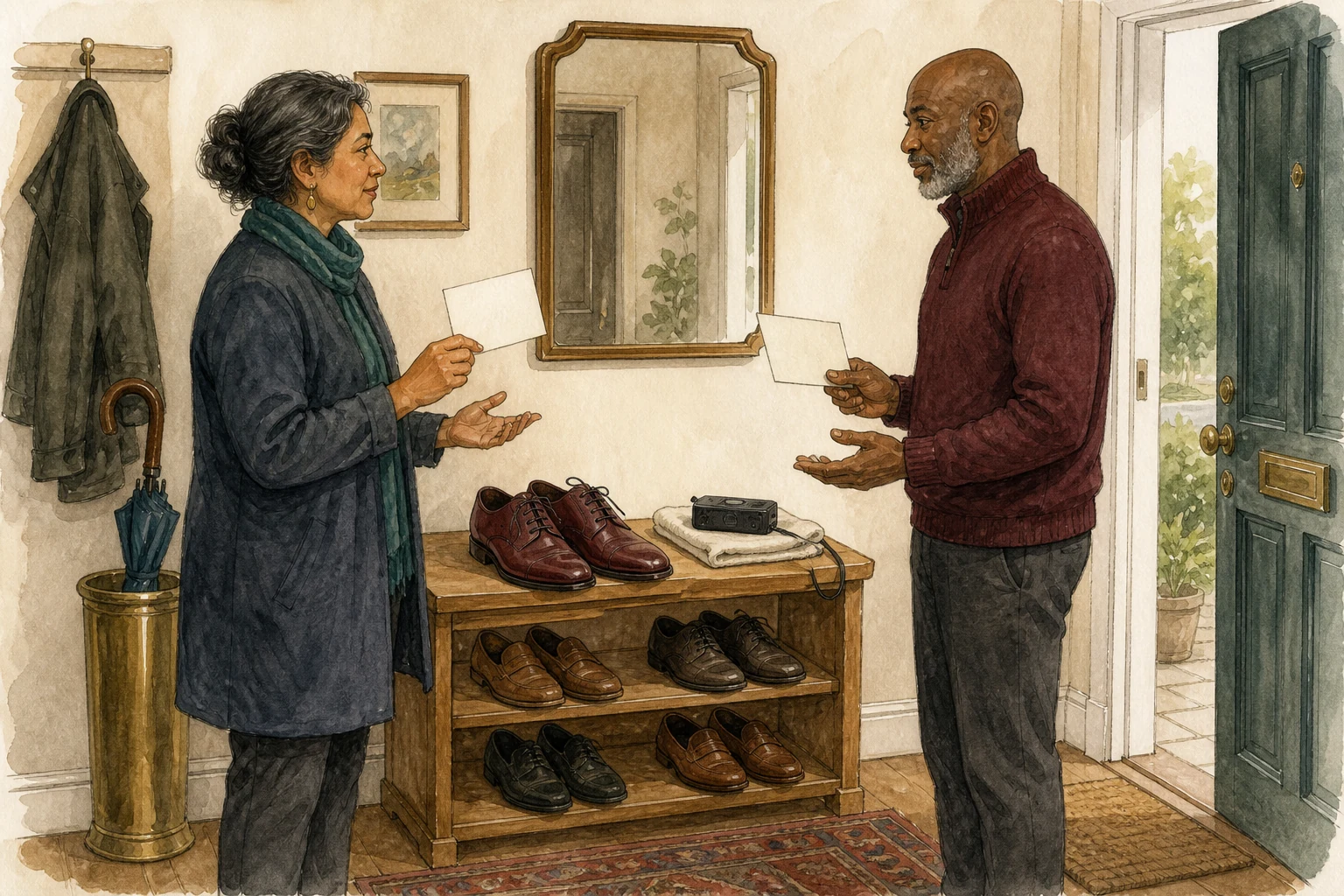
Touching, wearing, borrowing, smelling, retaining and photographing another person's footwear are separate permissions. Attraction does not create access to the item or its wearer.
Illustration created using generative AI; not documentary evidence.Clinical distinction
A consensual adult interest in footwear is not a paraphilic disorder merely because it is unconventional. WHO guidance distinguishes interests from disorders by considering marked distress, significant impairment, serious risk and non-consent.
A collection, style preference or worn pair of boots is not diagnostic evidence. Research cannot determine a person's motives, health or conduct from an object; professional assessment depends on experience and behaviour, not stereotypes.
Non-graphic examples
What the umbrella may include
- Collecting unoccupied vintage boots for their design, craft or personal symbolism.
- Preferring a particular heel shape, fastening, colour or material finish.
- Using adult-sized footwear as an agreed costume cue in a fictional role-play.
- Enjoying the sound or movement of shoes worn by a consenting adult.
- Photographing a pair or its wearer only with the owner's and wearer's permission.
Prepare for an appointment
Questions you could ask a professional
- What information would help you understand my question?
- What are the realistic options and uncertainties?
- How can disability, communication or privacy needs be accommodated?
- When should the situation be reviewed again?
These prompts do not replace assessment and do not imply that every reader needs professional care.
Continue learning
Take the next step from definition to context.
Continue with independent guidance connecting footwear and boot fetish to evidence, consent, safety, uncertainty and practical decisions.
Choose clothing by the wearer's goal, fit, movement, skin comfort, care and privacy rather than inferring identity or consent from a look.
Read the guideRelated in-depth reading
Read the full guide.
Explore a connected question with context and UK support routes.
What foot worship and foot fetish mean, how they differ, and how adults discuss comfort, hygiene and boundaries without assumptions.
Read the full guide