A lingerie fetish is an adult interest in intimate garments as objects, clothing, images or symbols. The focus may be a fabric or design, the experience of dressing, or the contrast between clothing usually kept private and clothing deliberately displayed.
 The UK Kink GuideEvidence-led glossary
 Back to the glossaryMaterials & dressIn plain English Words in context A non-graphic adult example What not to assume
Lingerie fetish
An attraction to intimate apparel as an object, aesthetic or part of dressing and role expression. It can involve particular fabrics, construction, styles or the contrast between concealment and display.
Start here
New to this term?
Lingerie can mean practical underwear, design-led fashion, costume, gender expression or an erotically significant object. Fetish describes a focused significance for a person; it does not mean every wearer or collector experiences the garment in that way.
One adult may value lace, satin, mesh, colour or structured construction. Another may use lingerie for self-expression or a consensual role, while someone else chooses the same garment only for comfort or support.
Lingerie does not determine gender, sexuality, role, availability or consent. Research can describe clothing-related meanings and preferences, but not a single cause or reliable prevalence for lingerie fetish specifically. Fit, seams, elastic and material sensitivity are ordinary wellbeing considerations, not evidence that a garment is inherently safe or unsafe.
Sources and evidence type
Manual claim and limitation notes are shown where an individual source audit is complete. Other evidence-type labels are a publisher aid awaiting source-by-source confirmation.
Scorolli et al. (2007), online fetish-group studyResearch study
- Source design
- Peer-reviewed research or review
- What it can support
- The specific population, measures and findings reported by the paper.
- Important limitation
- It cannot automatically establish UK prevalence, causation, diagnosis, consent or an individual outcome. Check recruitment, definitions and study design.
Rehor (2015), survey of women from kink communitiesResearch study
- Source design
- Peer-reviewed research or review
- What it can support
- The specific population, measures and findings reported by the paper.
- Important limitation
- It cannot automatically establish UK prevalence, causation, diagnosis, consent or an individual outcome. Check recruitment, definitions and study design.
Joyal & Carpentier (2022), interests and behaviourResearch study
- Source design
- Peer-reviewed research or review
- What it can support
- The specific population, measures and findings reported by the paper.
- Important limitation
- It cannot automatically establish UK prevalence, causation, diagnosis, consent or an individual outcome. Check recruitment, definitions and study design.
V&A, knitted underwear historyCommunity context
- Source design
- Contextual or community source
- What it can support
- Terminology, reported practice or community context within the source’s own setting.
- Important limitation
- Community usage is not universal and does not establish safety, prevalence, clinical benefit or legal permission.
V&A, Victorian corsets and underwearCommunity context
- Source design
- Contextual or community source
- What it can support
- Terminology, reported practice or community context within the source’s own setting.
- Important limitation
- Community usage is not universal and does not establish safety, prevalence, clinical benefit or legal permission.
WHO ICD-11 clinical requirements (2024)Clinical guideline
- Source design
- Current public-health or clinical guidance
- What it can support
- Service pathways, health definitions and recommended public-health or clinical actions within its stated scope.
- Important limitation
- General guidance cannot assess an individual’s symptoms, exposure, medicine, contraindications or urgency.
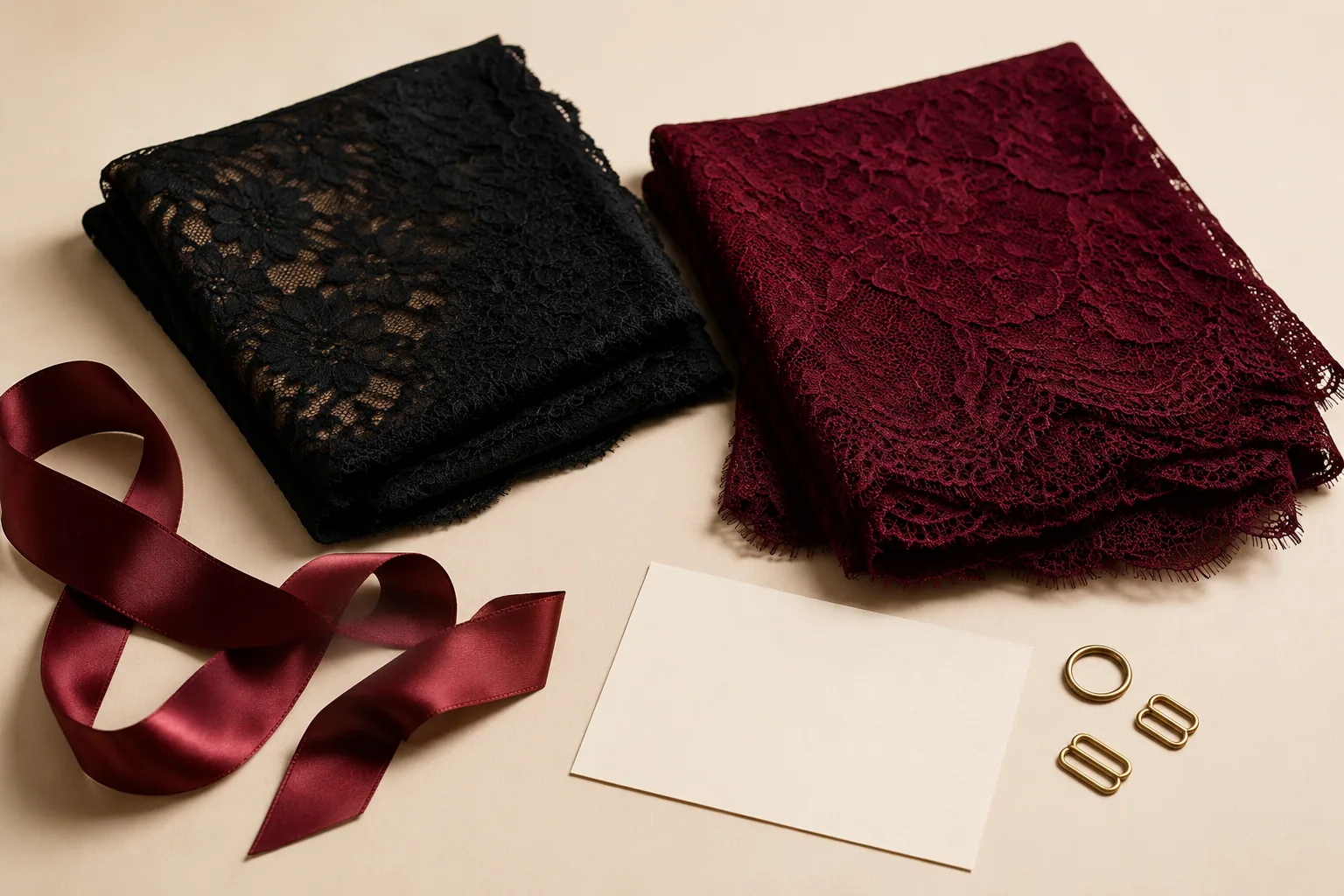
Materials & dress
Illustration created using generative AI; not documentary evidence.
In brief
Intimate clothing can carry material, historical and personal meanings.
A lingerie fetish focuses on intimate apparel as an object, textile, image or part of dressing. Lace, satin, mesh, elastic, boning, colour, construction and the contrast between private and visible clothing may matter. Lingerie can also be ordinary underwear, fashion, costume or gender expression, so the garment alone says nothing about its wearer's interests or consent.
Research categories and their limits
Scorolli and colleagues counted underwear-focused online groups within the wider category of objects associated with the body. Rehor's kink-community survey also documented varied clothing and role-related behaviours among women. These sources confirm diversity but are self-selected and cannot establish current UK prevalence or one typical wearer.
Interest and behaviour are not interchangeable. Population research by Joyal and Carpentier found that reported atypical interests do not perfectly predict corresponding actions. Seeing lingerie as attractive therefore does not imply owning it, wearing it, involving a partner or needing it for arousal.
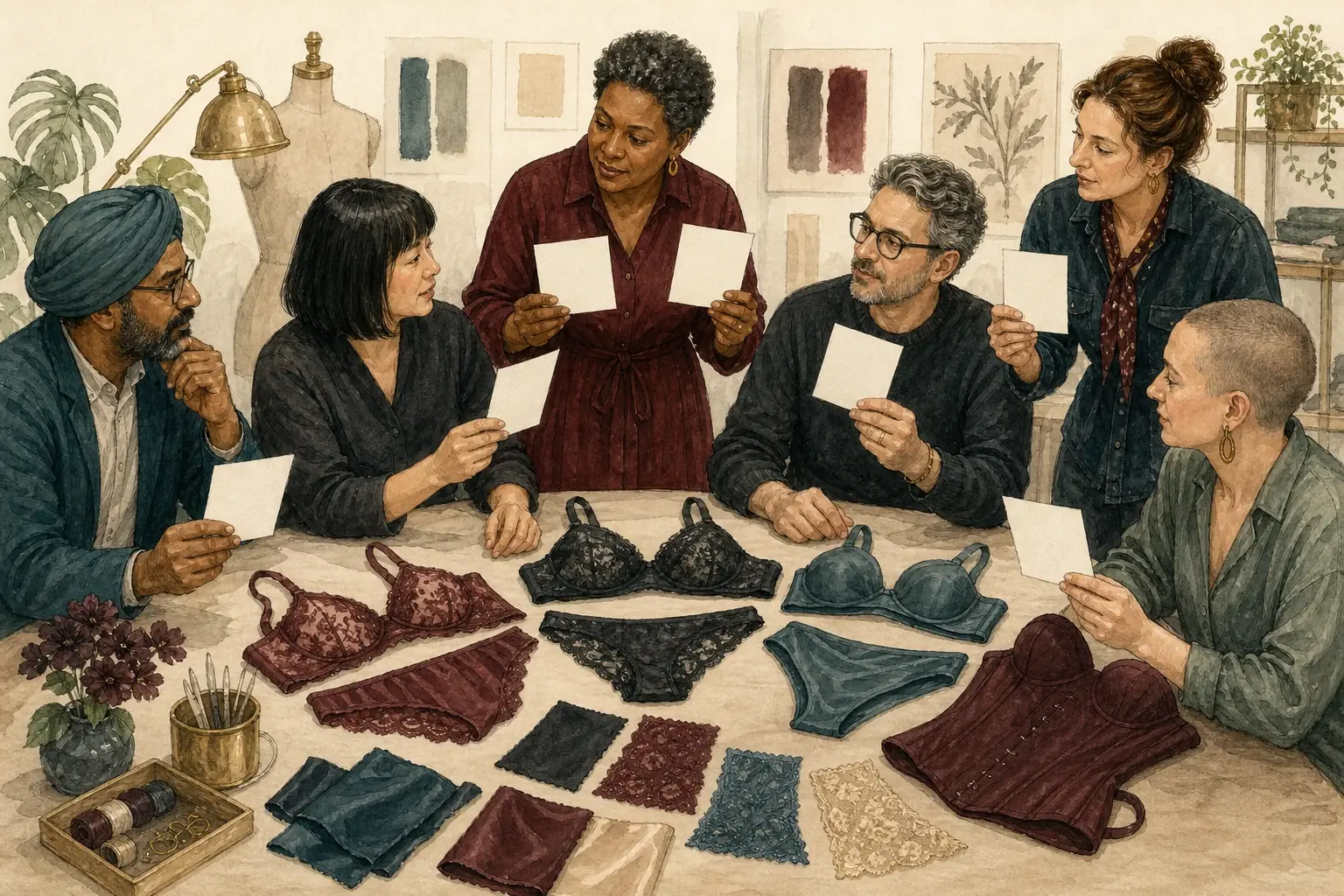
Research often groups several clothing interests together and frequently draws on self-selected communities. Those categories cannot establish population prevalence or an individual profile.
Illustration created using generative AI; not documentary evidence.- Status
- Detailed editorial draft
- Publisher
- The UK Kink Guide
- Reviewed
- Structured draft present; individual review date not recorded
- Evidence
- 6 cited sources · types labelled below
- Jurisdiction
- UK-focused general education
Read the rest: evidence, law, safety and sources
Practical garments worn for support, comfort, hygiene or layering, without any fetish meaning.
Design-led intimate apparel valued for colour, cut, textiles, history or self-presentation.
Focused attraction to the garment, material, dressing ritual, image or symbolic intimacy.
Lingerie may support role-play or gender exploration; style does not determine gender, sexuality or role.
Fabrics, construction and history
Lingerie may use cotton, silk, satin weaves, lace, mesh, elastic, synthetic microfibres, foam, underwires, boning, fasteners and decorative ribbon. People may focus on softness, transparency, structure, sound, craftsmanship, period styling or the transition involved in dressing.
V&A histories show that underwear has changed with technology, fashion and social ideas about body shape—from knitted garments and stockings to corsetry and modern stretch textiles. Historical associations can influence a fetish or aesthetic, but they do not explain every individual's interest.
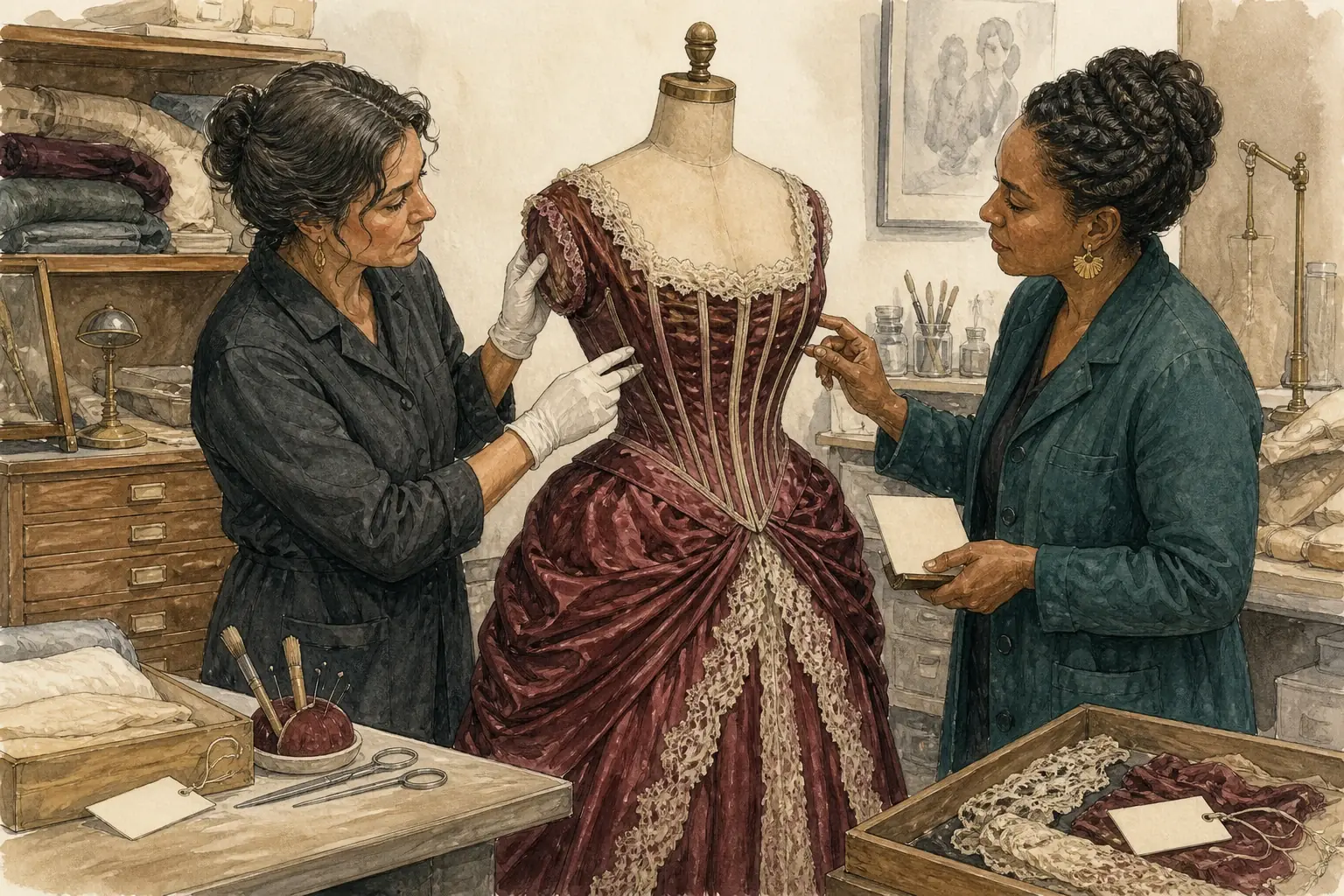
Fabric, structure, craft and dressing rituals may matter separately. Museum evidence documents changing garments and techniques; it does not explain any one person's attraction.
Illustration created using generative AI; not documentary evidence.Garments, collections and personal meaning
Relevant objects may include bras, briefs, slips, camisoles, robes, corsets, suspenders, bodysuits, packaging, sample cards or vintage advertisements. Some people value unworn collections and design archives; others focus on wearing, a partner's chosen outfit or the contrast between lingerie and outer clothing.
Sizing labels differ between makers and countries and do not define who may wear a garment. A style can support confidence, privacy, gender affirmation, playfulness or role-play. None of those meanings should be assigned to someone from appearance alone.
Consent, ownership and clinical distinction
Intimate clothing is personal property. Permission to see or touch it, wear it, keep it, smell it, photograph it and share an image are separate choices. Secretly taking garments or images is not made consensual by attraction, a relationship or previous access.
Fit, wire, boning, seams, adhesives and fibre sensitivity may affect comfort; a wearer should not have to tolerate pain or skin symptoms to match an aesthetic. WHO guidance does not treat an unconventional consensual-adult clothing interest as a disorder by default. Distress, impairment, serious risk and non-consent—not a drawer of garments—are the relevant clinical distinctions.
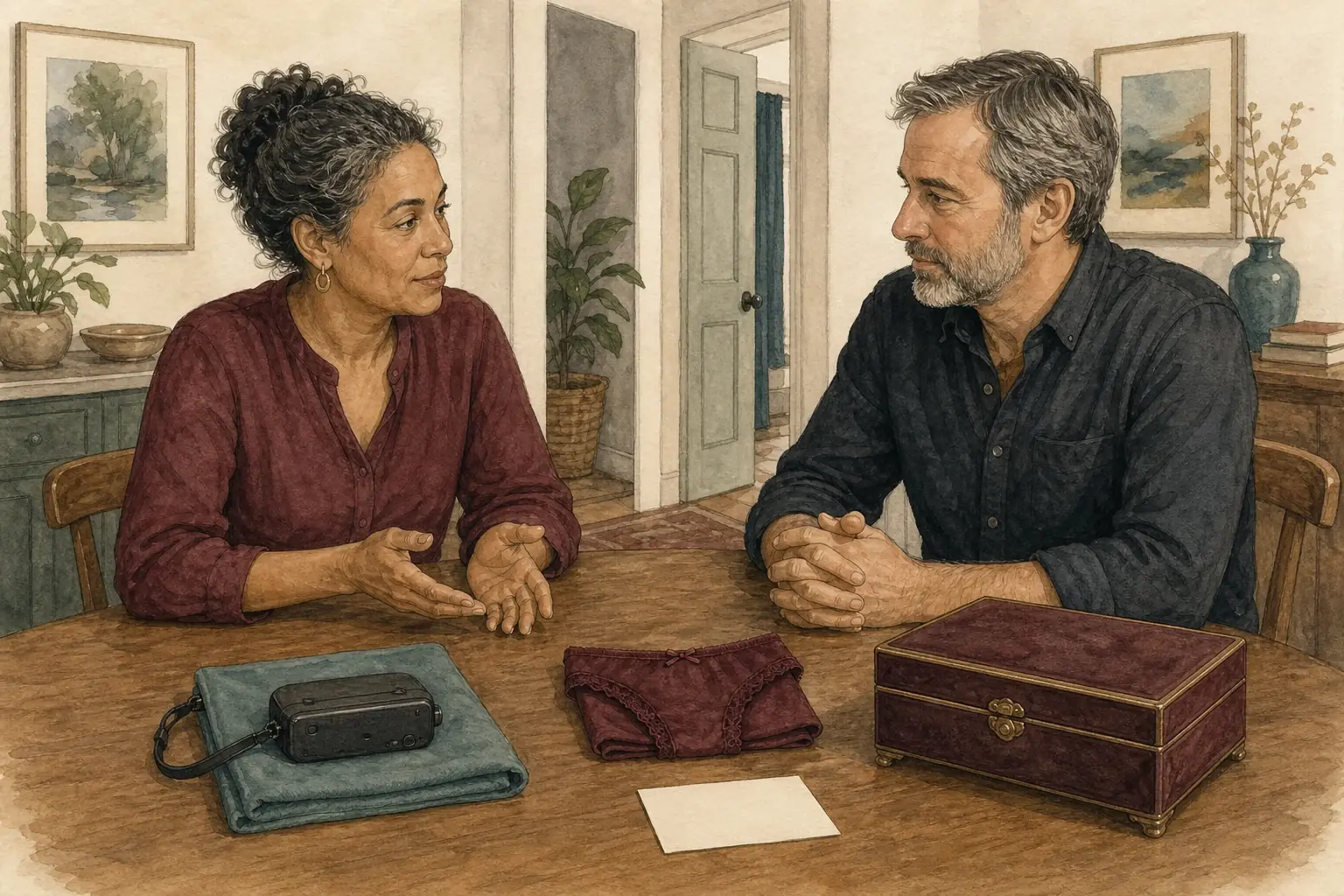
Ownership, wearing, touching, keeping and photographing intimate apparel are separate choices. A garment does not signal consent, availability, gender, role or diagnosis.
Illustration created using generative AI; not documentary evidence.Non-graphic examples
What the umbrella may include
- Collecting unworn or vintage lingerie for textile, construction or design history.
- Choosing lace, satin, mesh or structured fabric for its sensory qualities.
- Wearing lingerie as fashion, private self-expression or an agreed adult costume.
- Enjoying the ritual of selecting and arranging garments without involving another person.
- Photographing a chosen outfit only with the wearer's separate permission.
Prepare for an appointment
Questions you could ask a professional
- What information would help you understand my question?
- What are the realistic options and uncertainties?
- How can disability, communication or privacy needs be accommodated?
- When should the situation be reviewed again?
These prompts do not replace assessment and do not imply that every reader needs professional care.
Continue learning
Take the next step from definition to context.
Continue with independent guidance connecting lingerie fetish to evidence, consent, safety, uncertainty and practical decisions.
Feminisation clothing: choose adult lingerie, hosiery and outfits by measurements, fabrics, comfort and budget, with clear personal choice.
Read the full guideOptional product education
Check materials, fit and care independently.
Some product guides include a separate, disclosed optional retailer box. A term alone does not make a product suitable or safe for a person.
Read the criteria before deciding whether to shop.
Open the guide