A hosiery fetish is an adult interest in stockings, tights, socks or similar knitted garments. The focus can be the garment as an object, how it looks or feels, or the act and symbolism of dressing.
 The UK Kink GuideEvidence-led glossary
 Back to the glossaryMaterials & dressIn plain English Words in context A non-graphic adult example What not to assume
Hosiery fetish
A focus on stockings, tights, socks or related garments. Attention may involve texture, sheen, pattern, the act of dressing or the way hosiery frames the legs and feet.
Start here
New to this term?
Hosiery is a broad clothing category. Stockings are separate leg garments, tights extend to the waist, and socks cover part of the lower leg. Hosiery interests may overlap with foot, leg, footwear or lingerie interests, but one label does not imply another.
An adult may notice a garment's knit, sheerness, pattern, seam, sheen or movement. Another may associate a style with formal dress or a historical era, while an ordinary wearer may choose it only for warmth, comfort or fashion.
Wearing hosiery is not an invitation and says nothing about a person's sexuality or consent. A focused preference is not automatically a disorder. Research can document that clothing and body-part interests occur, but it cannot reliably identify one cause, meaning or prevalence for everyone using this specific label.
Sources and evidence type
Manual claim and limitation notes are shown where an individual source audit is complete. Other evidence-type labels are a publisher aid awaiting source-by-source confirmation.
Scorolli et al. (2007), online fetish-group studyResearch study
- Source design
- Peer-reviewed research or review
- What it can support
- The specific population, measures and findings reported by the paper.
- Important limitation
- It cannot automatically establish UK prevalence, causation, diagnosis, consent or an individual outcome. Check recruitment, definitions and study design.
Joyal & Carpentier (2017), adult population surveyResearch study
- Source design
- Peer-reviewed research or review
- What it can support
- The specific population, measures and findings reported by the paper.
- Important limitation
- It cannot automatically establish UK prevalence, causation, diagnosis, consent or an individual outcome. Check recruitment, definitions and study design.
Ventriglio et al. (2019), fetishism reviewResearch study
- Source design
- Peer-reviewed research or review
- What it can support
- The specific population, measures and findings reported by the paper.
- Important limitation
- It cannot automatically establish UK prevalence, causation, diagnosis, consent or an individual outcome. Check recruitment, definitions and study design.
V&A, history of knitted underwear and stockingsCommunity context
- Source design
- Contextual or community source
- What it can support
- Terminology, reported practice or community context within the source’s own setting.
- Important limitation
- Community usage is not universal and does not establish safety, prevalence, clinical benefit or legal permission.
WHO ICD-11 clinical requirements (2024)Clinical guideline
- Source design
- Current public-health or clinical guidance
- What it can support
- Service pathways, health definitions and recommended public-health or clinical actions within its stated scope.
- Important limitation
- General guidance cannot assess an individual’s symptoms, exposure, medicine, contraindications or urgency.
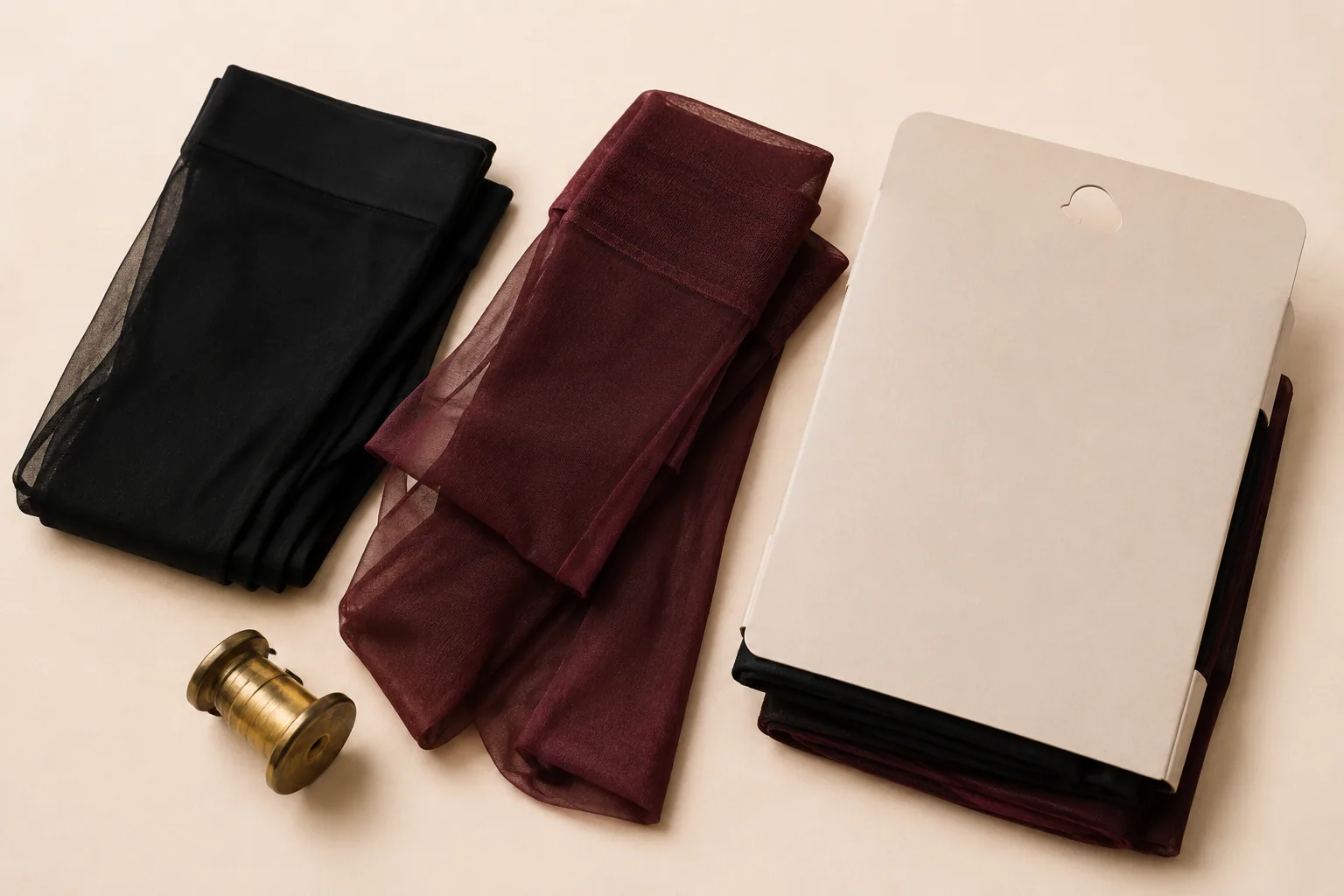
Materials & dress
Illustration created using generative AI; not documentary evidence.
In brief
Garment, texture and cultural meaning can each be the focus.
A hosiery fetish centres on stockings, tights, socks or related garments as objects, materials, images or parts of dressing. Interest may involve knit, transparency, sheen, pattern, seams, fit, movement or associations with fashion and particular eras. It can overlap with foot, leg, footwear or lingerie interests without being reducible to any of them.
What the evidence does—and does not—count
Scorolli and colleagues' analysis of online fetish groups placed stockings and socks among objects associated with the body. It is useful for showing that garment-focused communities exist, but group membership is not a population survey and cannot reveal how many UK adults privately share the interest.
Ventriglio and colleagues' review includes clothing among fetish themes, while Joyal and Carpentier distinguish reported interests from enacted behaviour. Together these sources caution against assuming that liking an image, owning a garment, wearing it and involving a partner are the same thing.
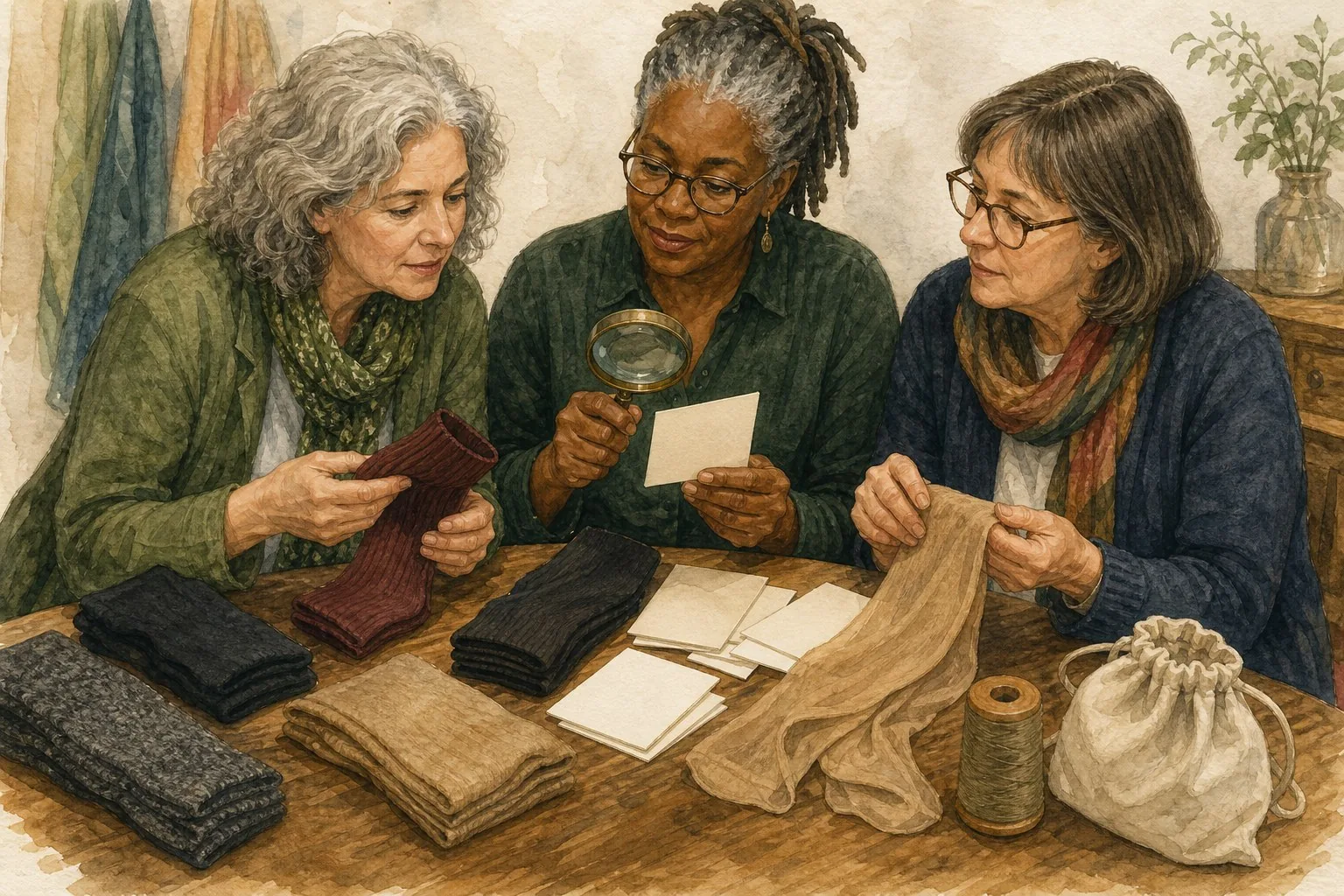
Fibre, knit, denier, seams, finishes and wear can affect texture, transparency, durability and cleaning. A category name does not establish one sensory experience or meaning.
Illustration created using generative AI; not documentary evidence.- Status
- Detailed editorial draft
- Publisher
- The UK Kink Guide
- Reviewed
- Structured draft present; individual review date not recorded
- Evidence
- 5 cited sources · types labelled below
- Jurisdiction
- UK-focused general education
Read the rest: evidence, law, safety and sources
Separate leg garments whose tops, seams, materials and support systems may be part of the aesthetic.
Waist-high hosiery that creates a continuous colour or texture across the legs and body.
A broad everyday category in which length, knit, wear, uniform associations or relation to footwear may matter.
Foot, leg, shoe and lingerie fetishes may overlap, but a person may focus on the garment itself.
Textiles, construction and sensory detail
Hosiery can be knitted from silk, wool, cotton, nylon, elastane and blended fibres, with matte, glossy, sheer, opaque, ribbed or patterned finishes. Seams, reinforced areas, ladders, stretch, compression and the sound of fabric movement may all contribute to the focus.
The V&A's history of knitted underwear shows that stockings have long moved between practical clothing and fashion display. Modern tights and synthetic fibres add further associations with colour, mass fashion and uniform dressing. Historical meaning can be part of an interest without determining it.
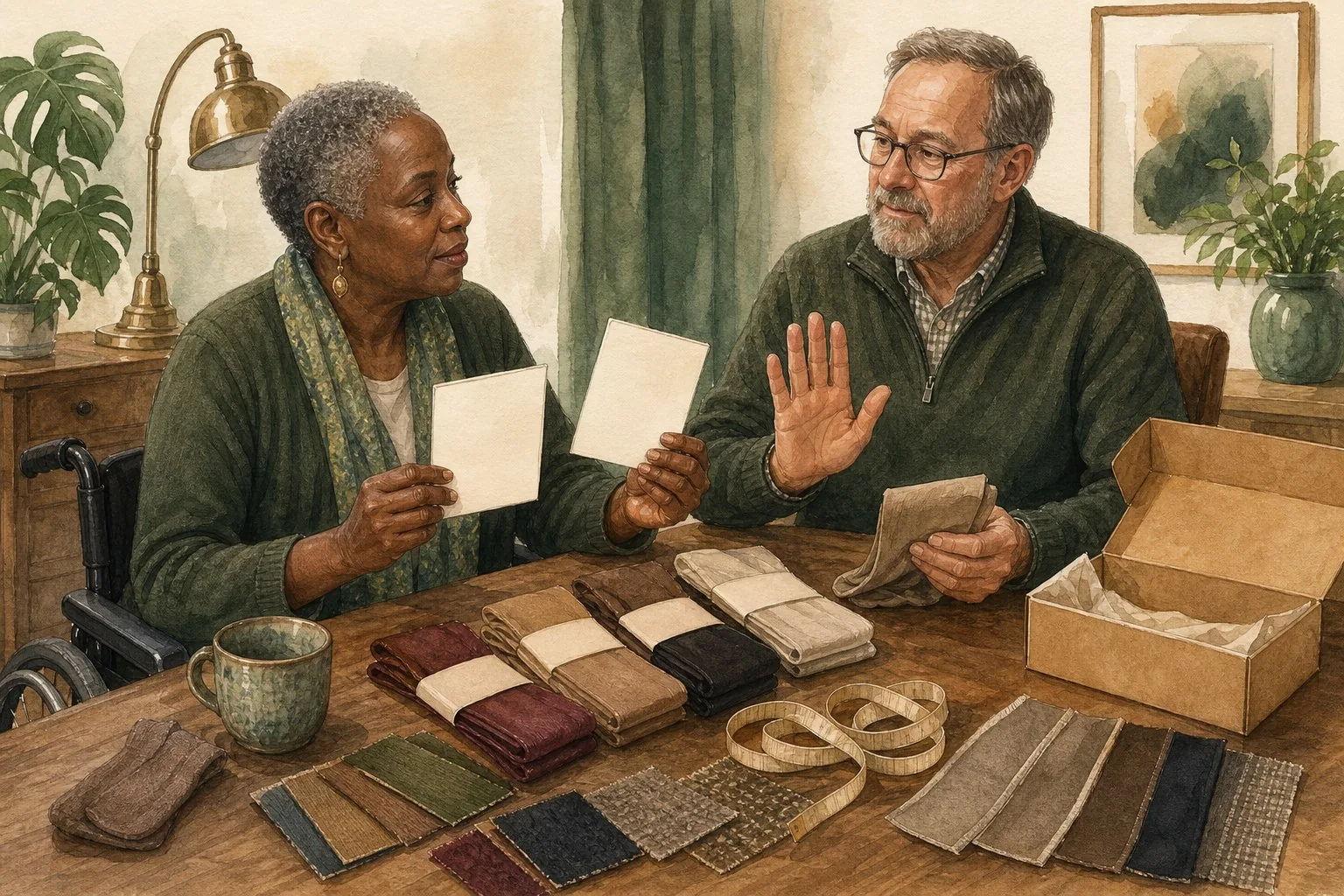
Sizing labels are inconsistent, and seams, waistbands, compression, dexterity and sensory needs can affect comfort. Pain, numbness or circulation concerns should not be ignored.
Illustration created using generative AI; not documentary evidence.Objects, ownership and privacy
People may collect unopened hosiery, vintage packaging, sample cards, garter-style accessories, photographs or carefully stored worn garments. A garment may be valued for rarity, memory, scent, texture or connection to a partner, but those meanings are personal rather than inherent.
Borrowing, smelling, photographing, purchasing or keeping another person's hosiery requires permission. Consent to wear an item is not consent to someone retaining it or sharing images. Retail size labels are also inconsistent and do not determine gender identity or who may wear a style.
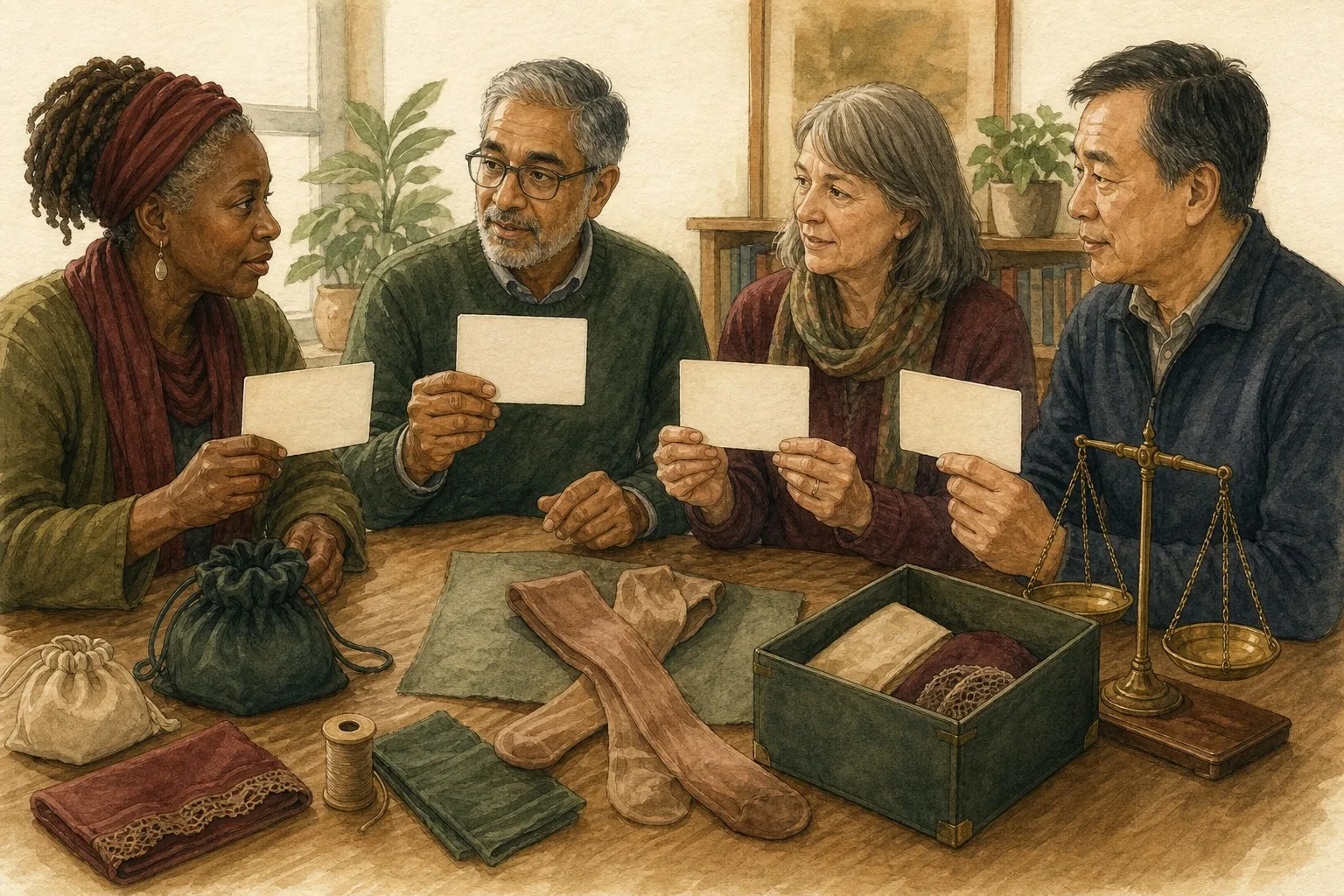
Wearing or owning hosiery does not invite touch, photography, borrowing or disclosure. Sharing, laundering, storing and using another person's garment each require permission.
Illustration created using generative AI; not documentary evidence.Comfort and clinical distinction
Fit, seams, fibre sensitivity, heat and mobility affect comfort. Tightness is not a measure of authenticity or commitment, and damaged or irritating garments need not be tolerated to satisfy a label. Medical compression hosiery is prescribed for health purposes and should not be confused with ordinary fashion products.
WHO guidance does not classify a consensual adult clothing interest as a disorder merely because it is unconventional. Clinical requirements concern marked distress, impairment, serious risk or non-consent. A hosiery collection, fashion preference or private fantasy is not diagnostic evidence.
Non-graphic examples
What the umbrella may include
- Collecting unopened stockings for their packaging, period design or textile construction.
- Preferring a particular sheen, seam, knit or colour in adult hosiery.
- Wearing tights or socks as part of fashion, gender expression or an agreed role.
- Enjoying the visual pairing of hosiery and footwear while focusing mainly on the garment.
- Keeping a partner's garment only after explicit permission to do so.
Prepare for an appointment
Questions you could ask a professional
- What information would help you understand my question?
- What are the realistic options and uncertainties?
- How can disability, communication or privacy needs be accommodated?
- When should the situation be reviewed again?
These prompts do not replace assessment and do not imply that every reader needs professional care.
Continue learning
Take the next step from definition to context.
Continue with independent guidance connecting hosiery fetish to evidence, consent, safety, uncertainty and practical decisions.
Choose clothing by the wearer's goal, fit, movement, skin comfort, care and privacy rather than inferring identity or consent from a look.
Read the guideOptional product education
Check materials, fit and care independently.
Some product guides include a separate, disclosed optional retailer box. A term alone does not make a product suitable or safe for a person.
Read the criteria before deciding whether to shop.
Open the guide