This is an adult interest in latex, rubber or a similar-looking material. The focus may be the material itself, a garment made from it, or the visual sense of transformation created by a smooth, glossy surface.
 The UK Kink GuideEvidence-led glossary
 Back to the glossaryMaterials & dressIn plain English Words in context A non-graphic adult example What not to assume
Latex and rubber fetish
Also known as rubberism
An attraction to the appearance, feel, scent, sound or ritual of wearing latex or rubber. Interest may centre on fashion, transformation, uniformity, compression or the material itself.
Start here
New to this term?
Natural-rubber latex, synthetic rubber and latex-look coated fabrics are not the same substance, even when they look alike. A material fetish means the material has particular erotic significance; enjoying latex fashion, craft or community does not automatically mean someone uses that label.
One adult might value the gloss, close fit and sound of a latex garment, while another is interested mainly in the scent or in rubber-culture symbolism. Someone else may simply enjoy the fashion without any erotic meaning.
Latex clothing does not reveal a person's role, identity, consent or preferred activity. Research documents varied sensory and social meanings but does not establish one cause or dependable prevalence for this specific interest. Natural-rubber latex can cause allergy, so a glossy appearance must not be treated as proof of composition or suitability.
Sources and evidence type
Manual claim and limitation notes are shown where an individual source audit is complete. Other evidence-type labels are a publisher aid awaiting source-by-source confirmation.
Scorolli et al. (2007), online fetish-group studyResearch study
- Source design
- Peer-reviewed research or review
- What it can support
- The specific population, measures and findings reported by the paper.
- Important limitation
- It cannot automatically establish UK prevalence, causation, diagnosis, consent or an individual outcome. Check recruitment, definitions and study design.
Ventriglio et al. (2019), fetishism reviewResearch study
- Source design
- Peer-reviewed research or review
- What it can support
- The specific population, measures and findings reported by the paper.
- Important limitation
- It cannot automatically establish UK prevalence, causation, diagnosis, consent or an individual outcome. Check recruitment, definitions and study design.
HSE, natural-rubber latex allergiesLaw or regulator
- Source design
- Primary legislation, prosecutorial or regulator guidance
- What it can support
- The legal provision or official regulatory position for the jurisdiction and date stated.
- Important limitation
- It is not fact-specific legal advice. Commencement, amendments, jurisdiction and case law may affect application.
NHS, contact-dermatitis causesClinical guideline
- Source design
- Current public-health or clinical guidance
- What it can support
- Service pathways, health definitions and recommended public-health or clinical actions within its stated scope.
- Important limitation
- General guidance cannot assess an individual’s symptoms, exposure, medicine, contraindications or urgency.
WHO ICD-11 clinical requirements (2024)Clinical guideline
- Source design
- Current public-health or clinical guidance
- What it can support
- Service pathways, health definitions and recommended public-health or clinical actions within its stated scope.
- Important limitation
- General guidance cannot assess an individual’s symptoms, exposure, medicine, contraindications or urgency.
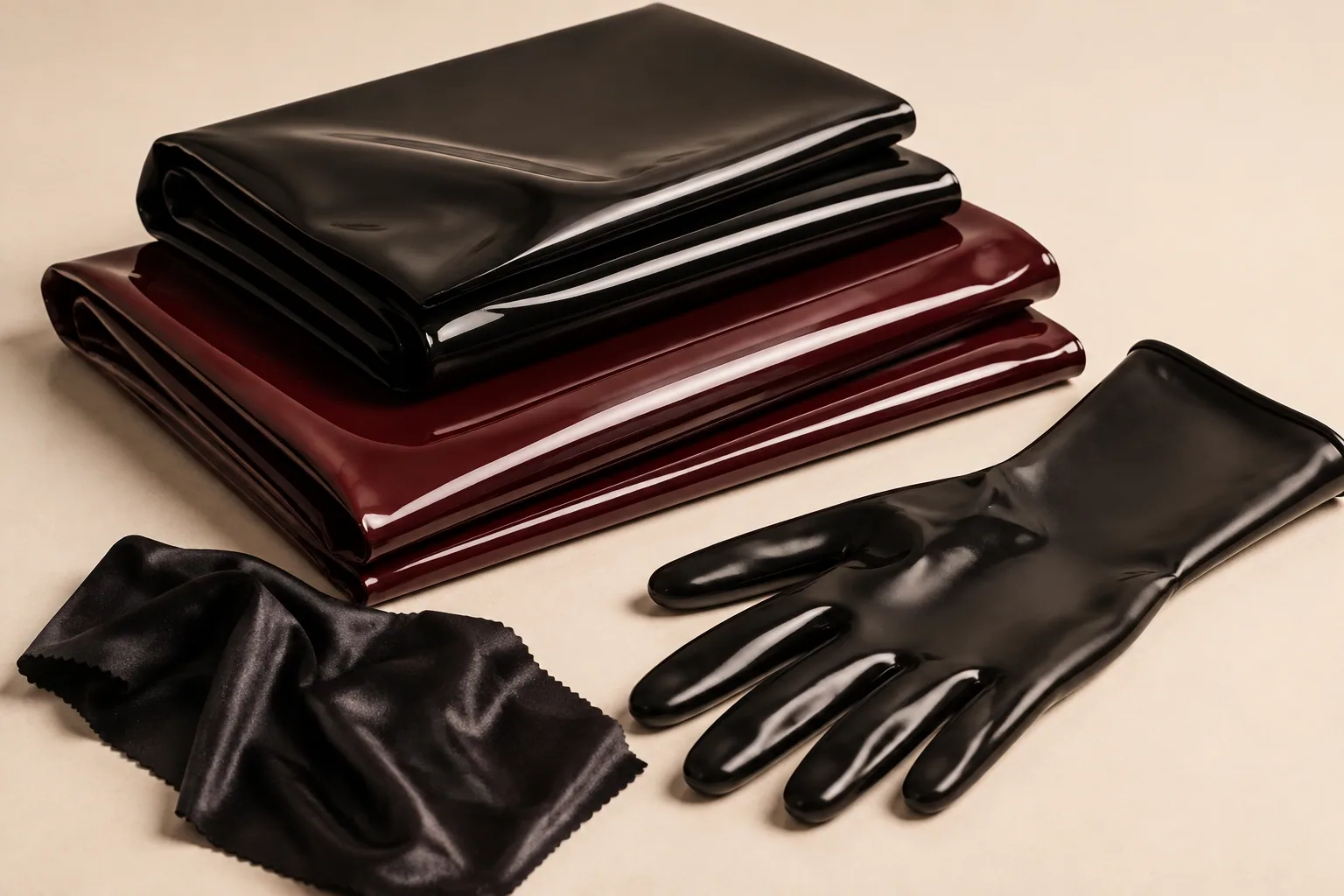
Materials & dress
Illustration created using generative AI; not documentary evidence.
In brief
One glossy look, several different materials and meanings.
A latex or rubber fetish centres on a material, garment or the transformation associated with it. Gloss, smoothness, scent, sound, close fit and a highly finished silhouette may all matter. Natural-rubber latex, synthetic rubber and latex-look textiles are different materials, so appearance alone does not establish composition, allergy risk or care needs.
What fetish research records
Scorolli and colleagues analysed membership in hundreds of online fetish discussion groups and found that objects associated with the body, including clothing, were prominent. Ventriglio and colleagues' clinical review likewise notes rubber and clothing among reported fetish focuses. Neither source establishes current UK prevalence or explains why a particular person values latex.
Online-group counts measure participation in named communities rather than all private interests, and clinical case literature overrepresents people seeking assessment. Research therefore supports describing material-focused attraction, not a universal cause, gender, intensity or need to act on it.
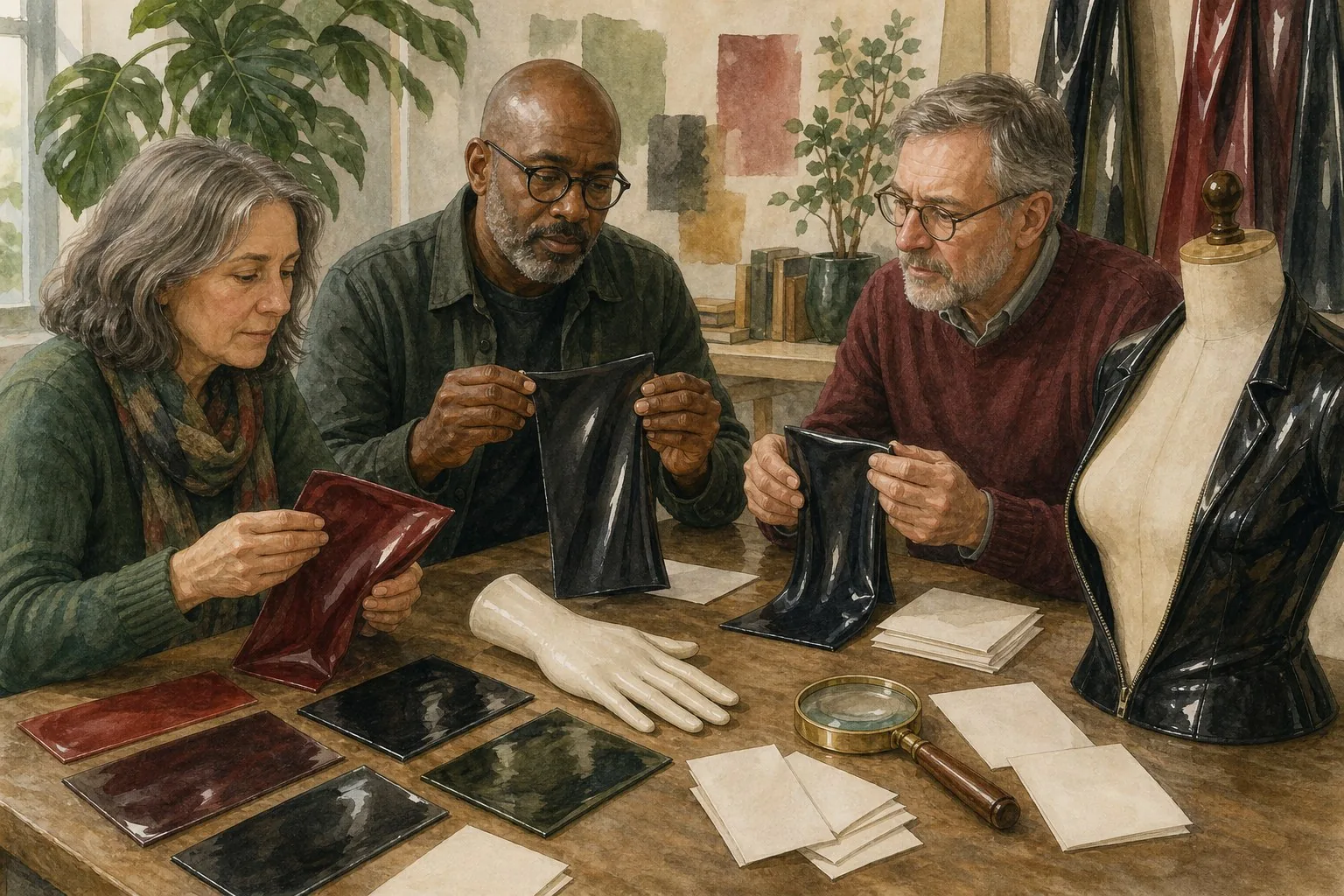
Natural rubber latex, synthetic rubber and finished garments can differ in additives, thickness, seams, coatings and care. Appearance alone cannot establish composition or suitability.
Illustration created using generative AI; not documentary evidence.- Status
- Detailed editorial draft
- Publisher
- The UK Kink Guide
- Reviewed
- Structured draft present; individual review date not recorded
- Evidence
- 5 cited sources · types labelled below
- Jurisdiction
- UK-focused general education
Read the rest: evidence, law, safety and sources
A material made from natural rubber latex; its proteins can cause allergy in some people.
A family of manufactured elastomers with different properties and additives; 'rubber' is not one universal substance.
Glossy coated or stretch textiles designed to resemble latex without necessarily containing natural rubber.
A social, fashion or identity context that may overlap with BDSM and leather communities but is not reducible to a garment.
Garments, objects and sensory features
Adult garments may include gloves, stockings, shirts, trousers, dresses, coats, masks or full-body fashion pieces; unoccupied sheets and samples may also be collected for colour, thickness, shine or craft. Polishing, folding, display and the sound of movement can become part of the aesthetic without any sexual activity.
The visual effect can suggest uniformity, transformation, futurism, protection or anonymity. A garment's meaning is not fixed, however: the same black glove may be fashion, protective equipment, costume, community symbol or fetish object depending on its owner and context.
Skin, heat and material information
The UK Health and Safety Executive states that proteins in natural rubber latex can cause dermatitis and asthma, with serious allergic reactions also possible. Rubber chemicals may also contribute to contact dermatitis, including in some synthetic materials. A label saying 'latex-like' is not enough information for someone with an allergy.
Close, non-breathable clothing may retain heat and moisture, while friction can aggravate irritated skin. Product composition, fit, care instructions and a wearer's medical history therefore matter more than a retailer's broad category. Sudden breathing difficulty or a severe allergic reaction requires urgent medical help rather than garment-care advice.

Latex allergy can be serious, while heat, sweat, friction and care products can cause other reactions. Concerning symptoms need removal from exposure and appropriate medical assessment.
Illustration created using generative AI; not documentary evidence.Consent and clinical distinction
Wearing, touching, smelling or photographing someone else's garment requires permission; ownership of an item does not create access to its wearer. Allergies and sensory needs also belong in negotiation because a material comfortable for one adult may be unsuitable for another.
WHO's ICD-11 framework does not treat an unconventional consensual-adult material interest as a disorder merely because it is unusual. Clinical concern turns on marked distress, significant impairment, serious risk or non-consent. A collection, clothing preference or community identity is not diagnostic evidence.

Wearing, owning or discussing a material does not authorise touch, photography, disclosure or an activity. Fit, help with dressing and privacy require separate permission.
Illustration created using generative AI; not documentary evidence.Non-graphic examples
What the umbrella may include
- Collecting colour and thickness samples for their gloss, texture or craft value.
- Wearing an adult latex-look garment as fashion without identifying with a fetish community.
- Valuing the sound and visual transformation of a natural-rubber garment.
- Choosing a synthetic alternative because material composition or allergy matters.
- Displaying an unworn glove or garment as a personal symbolic object.
Prepare for an appointment
Questions you could ask a professional
- What information would help you understand my question?
- What are the realistic options and uncertainties?
- How can disability, communication or privacy needs be accommodated?
- When should the situation be reviewed again?
These prompts do not replace assessment and do not imply that every reader needs professional care.
Continue learning
Take the next step from definition to context.
Continue with independent guidance connecting latex and rubber fetish to evidence, consent, safety, uncertainty and practical decisions.
Choose clothing by the wearer's goal, fit, movement, skin comfort, care and privacy rather than inferring identity or consent from a look.
Read the guideRelated in-depth reading
Read the full guide.
Explore a connected question with context and UK support routes.
Latex allergy and sex: recognise reactions, choose latex-free condoms, check lubricant compatibility and get NHS help without guesswork.
Read the full guide Community & cultureLatex and leather fetish: meaning, care and safetyA non-graphic adult guide to latex and leather interests, materials, allergy, heat, care, storage and community etiquette.
Read the full guideOptional product education
Check materials, fit and care independently.
Some product guides include a separate, disclosed optional retailer box. A term alone does not make a product suitable or safe for a person.
Read the criteria before deciding whether to shop.
Read the full guide Independent product guideLatex clothing and fetish wear: how to choose and care for itRead the criteria before deciding whether to shop.
Open the guide