
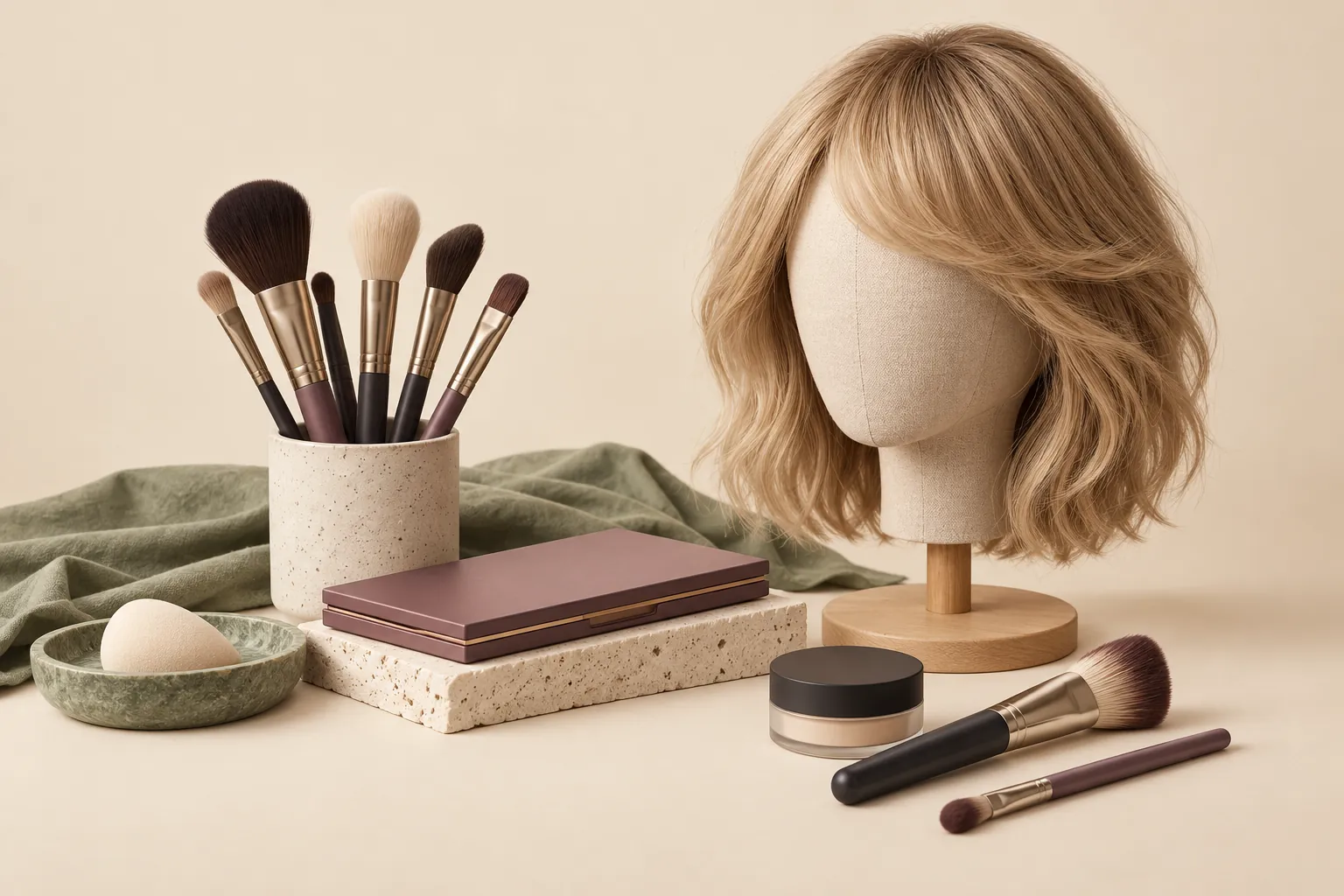
Wigs and makeup can change a look temporarily, but neither is required for transformation play. Choose products for fit, comfort and the wearer's goal; read labels, keep applicators clean and stop if skin, scalp or eyes become irritated. Decide before any photos or public use, and let the wearer choose when to remove or keep the presentation.
Choose a look without a stereotype
Ask what the person wants from a wig or makeup: a different colour, a character, a subtle change or simply the pleasure of experimenting. There is no single “feminine” face or hairstyle to reproduce. A participant may want a glamorous look, a practical everyday one or a blend. Avoid correcting their preferences to match someone else's idea of authenticity.
Test one element at a time so it is easier to notice comfort and appearance. A scarf or hair accessory may do the job without a wig. A small amount of makeup may be preferable to a complete routine, and some people prefer none. If another person is helping, ask before touching the face or hair and make room for the wearer to see and approve the result.
Discuss where the look may be seen. A wig or cosmetic change can be part of private roleplay without being a public disclosure. Ask separately about photographs and messaging. The person who wears the look controls whether it continues after the scene. Feminisation and gender identity explains why a chosen presentation need not carry an identity claim.
Wig fit and scalp comfort
Check cap size against the maker's guidance. A cap that is too tight, painful pins, excessive tension around the hairline or overheating are reasons to adjust or remove it. Consider whether the wearer can put it on and take it off without help. If hair is secured underneath, do so gently rather than forcing it into a shape that pulls at the scalp.
A fibre's feel, weight and care requirements matter as much as the colour. Read the maker's instructions before washing, heat styling or using products. Some fibres and adhesives are not suited to a proposed method. Do not improvise with an unlabelled product. A person with scalp sensitivity can choose a different cap material or avoid the wig altogether.
If adhesives or removers are involved, read the directions and test suitability for the wearer; stop for irritation. Avoid the eyes, and do not share combs or caps without appropriate cleaning. A wig worn by one person can still pick up cosmetics, skin oils and styling product, so storage without cleaning is not a substitute for care.
Makeup and hygiene
Choose a small set of products that match the wearer's preferences and can be removed comfortably. Read ingredients and the maker's directions, particularly for eye-area products. An unfamiliar cosmetic can cause a reaction even if another person has used it safely. Do not apply a product to broken or irritated skin, and stop for burning, swelling or discomfort.
Keep brushes and applicators clean according to the product guidance. Avoid sharing items that touch eyes or lips unless hygiene can be managed appropriately. Check expiry or period-after-opening information where provided. A kit accumulated for a costume should still be inspected before reuse; old products and unwashed tools can undermine an otherwise careful plan.
Plan removal before beginning. Ask whether the wearer has the right cleanser, water and time to take the look off gently. Rubbing aggressively to erase a look at the end of a scene can cause irritation. If an eye product gets into an eye or a reaction develops, follow current NHS first-aid guidance and seek medical advice for persistent or serious symptoms.
Cleaning and storing the kit
Separate the care of a wig, garment and cosmetic tools. Let cleaned items dry fully before closing a storage box. Detangle a wig as directed by its maker and protect its shape with a stand or net if suitable. Keep liquids sealed and away from fabric that could stain. A dry, discreet place may also protect privacy in a shared home.
Inspect labels after purchase and retain any warnings or care directions. If a product has no clear maker or contents, it may be difficult to assess what touches the skin. The site's product safety claims guide offers a way to assess claims and traceability without treating a marketing slogan as certification.
If a partner borrows or stores the kit, discuss access and who can see it. A photo of the result, an order notification or a shared cloud album can reveal more than the physical box. The privacy guide covers consent to images and outing risks.
A small, clean kit
A first kit can consist of one optional wig, a brush or comb suited to its fibre, a few cosmetics the wearer already tolerates and a removal product that follows the maker's directions. Keep the packaging. Avoid buying several adhesive or styling products before knowing whether the person even likes the look or cap feel. A minimal setup also makes it easier to notice which product caused discomfort.
Discuss who applies makeup. If another adult is helping, ask before each eye-area product and give the wearer a mirror and a way to stop. Share the decision about colour and placement; the helper is not the owner of the face. Keep tools and hands clean, and avoid applying makeup over a visible reaction. A comfortable partial look is better than a complete routine that causes irritation.
For the wig, check the cap, the hairline and the wearer's temperature after a short interval. A few minutes may reveal pressure behind the ears or a headache. Removing the cap promptly is a useful adjustment rather than a failed transformation. When packing, separate the wig from wet brushes and liquids, and let all cleaned items dry before a closed box is used.
Privacy planning should include the result and the tools. A partner may photograph a finished look without realising the wearer intended a mirror-only experiment. Ask first and consider what a shared device could display. An order confirmation or visible storage box can also reveal the interest. Let the person decide which traces are welcome in their everyday space.
If a product causes discomfort
Stop applying it, identify the exact product and retain its label. A single reaction does not establish which ingredient was responsible, especially if several new products were used together. Do not mask pain with another cosmetic or rub a sensitive area repeatedly to remove colour. Use current NHS advice for concerning eye or skin symptoms and seek clinical help when needed.
After a problem, a person may decide to use fewer products or none. That choice does not make a character less valid. Transformation can be expressed through a name, colour, garment or posture without the troublesome material. A partner can help by listening to what felt difficult instead of immediately proposing a replacement purchase.
An event-day check
Before leaving, ask whether the wig can be removed or adjusted discreetly if it becomes hot, and whether the person has what they need to remove makeup later. Pack a small container for clean tools and a separate place for used items. Avoid carrying a liquid that could leak into fabric or important documents. If a planned venue has bright lights or a long wait, the wearer's comfort may differ from a brief trial at home.
Agree what another person may say about the look in public. A supportive compliment can also draw attention the wearer does not want. Ask whether a name, pronoun or role should be used at the event or only privately. No item in the kit creates consent to being touched, photographed or discussed with strangers.
At home, clean tools and garment surfaces according to their labels. Let the wig and brushes dry before closing them in a box. If a product caused an unexpected reaction, keep its packaging and avoid reusing it while seeking advice. A simpler kit next time is a valid response; transformation should serve the wearer, not the other way around.
Common questions
**Do I need a wig to try a different presentation?** No. Hair styling, accessories or no change at all may suit the person's goal.
**Can I share makeup brushes?** Treat hygiene and product instructions seriously; personal eye-area tools are a prudent choice. Clean tools as directed and do not share when an infection or irritation is present.
**What if the wig gives me a headache?** Remove or loosen it. Do not keep wearing a painful cap to maintain the character; seek clinical advice if symptoms persist.
**Does makeup have to be visible in public?** No. A private trial is complete in itself, and the wearer decides what is disclosed.
**How do I plan the end of the scene?** Allow time and suitable products for gentle removal, while leaving the choice to keep a look on to the person wearing it.
When to get help
A pharmacist or GP can advise on persistent skin or scalp problems; urgent eye symptoms need appropriate NHS assessment. LGBT Foundation and Switchboard can offer support for expression and identity questions. If someone is pressured into photography or threatened with disclosure, consult the site's intimate-image support guide. Definitions: transformation fantasy, feminisation, gender expression, material sensitivity and digital consent.